 English
  Български
  简体中文(中国)




Show map events
Monday 07 September 2026
07 September 2026 - 13 September 2026
October 2026
 30.07.2026 - 04.10.2026
EUGÈNE CARRIÈRE. THE VISIONARY
The exhibition offers a novel, more conceptual look at one of the most prominent French artists of the second half of the 19th century, emphasising the influence he had on his contemporaries, as well as on the oeuvres of key figures of Early Modernism in the 20th century.
Although Eugène Carrière is well represented in the National Gallery permanent exposition at Kvadrat 500, his name remains relatively unknown to the general public. The team’s ambition is to present all his paintings, lithographs and drawings from the museum collection for the first time. During the research, it was discovered that these lithographs of high collectible worth were extremely valuable copies of unique bibliophilic compendia published in limited editions in Paris in the closing quarter of the 19th century. It is only the Metropolitan Museum in New York, the State Museum in Stuttgart, the Musée d’Orsay in Paris, the State Museum in Amsterdam, and the Cleveland Museum of Art, that can boast possession of such prints.
Carrière was among those artists who won recognition during their lifetime, and whose works were displayed in major museums. He invariably worked beyond the stylistic categories of the time without claiming to belong to any specific trend. Defying any sort of labelling, the painter, engraver and draughtsman, Carrière—a contemporary of Gustave Moreau, Odilon Redon and Paul Gauguin—soon surrounded himself with the most influential figures in the artistic and literary worlds of his time. His oeuvre influenced Picasso who drew inspiration from his monochromatic painting.
Beyond the modernity of his subjects, it is precisely in the artist’s painting style that the great adventure of his art lies. A distinguished portraitist and master of family scenes and the theme of motherhood, and precursor of Minimalism, he eliminated details transforming images into archetypes and expressions of feeling beyond the conventional framework of a specific time. Achieving a soft, monochromic sfumato allowed him to create a complex and mysterious interplay of transparency and depth. Like fleeting apparitions, elusive to the brush, his figures seem to emerge from the landscape, from the background, as if from another time-space.
Although Eugène Carrière is well represented in the National Gallery permanent exposition at Kvadrat 500, his name remains relatively unknown to the general public. The team’s ambition is to present all his paintings, lithographs and drawings from the museum collection for the first time. During the research, it was discovered that these lithographs of high collectible worth were extremely valuable copies of unique bibliophilic compendia published in limited editions in Paris in the closing quarter of the 19th century. It is only the Metropolitan Museum in New York, the State Museum in Stuttgart, the Musée d’Orsay in Paris, the State Museum in Amsterdam, and the Cleveland Museum of Art, that can boast possession of such prints.
Carrière was among those artists who won recognition during their lifetime, and whose works were displayed in major museums. He invariably worked beyond the stylistic categories of the time without claiming to belong to any specific trend. Defying any sort of labelling, the painter, engraver and draughtsman, Carrière—a contemporary of Gustave Moreau, Odilon Redon and Paul Gauguin—soon surrounded himself with the most influential figures in the artistic and literary worlds of his time. His oeuvre influenced Picasso who drew inspiration from his monochromatic painting.
Beyond the modernity of his subjects, it is precisely in the artist’s painting style that the great adventure of his art lies. A distinguished portraitist and master of family scenes and the theme of motherhood, and precursor of Minimalism, he eliminated details transforming images into archetypes and expressions of feeling beyond the conventional framework of a specific time. Achieving a soft, monochromic sfumato allowed him to create a complex and mysterious interplay of transparency and depth. Like fleeting apparitions, elusive to the brush, his figures seem to emerge from the landscape, from the background, as if from another time-space.
Exhibitions
 04.08.2026 - 21.10.2026
FRANCISCO GOYA - DREAMS OF A KEEN MIND
The Spaniard FRANCISCO GOYA (1746–1828) was one of the most prominent and influential creative figures in world culture. He produced over 1,000 paintings, as well as the graphic series titled Los Caprichos, Los Desastres de la Guerra, Tauromaquia, and Los Disparates.
His stylistic and philosophical spectrum had a strong influence on the subsequent dynamic development of art, defining him as the last of the Old Masters and one of the earliest of Modernism. His extensive output—paintings, graphics and drawings—served as a leading aesthetic principle for many artistic trends of the 19th and 20th centuries, including Impressionism, Expressionism and Surrealism.
The twenty-one prints from the National Gallery collection follow Goya’s development from his earliest etchings, influenced by Diego Velázquez’s style, to his peak achievements as a social interpreter, remarkable for his sharpness, and a chronicler of dour events and complex human characters. The high artistic level of his four graphic series has left a deep imprint on the history of art.
The National Gallery houses seven works from Los Caprichos (The Caprices) series, 1799. Satirising the institutional pillars of power, the church, the Inquisition, the parasitism of the feudal nobility, and the decay of the moral values of social classes, was the reason for the series to be banned from exhibiting.
Los Desastres de la Guerra (The Disasters of War) series, which Goya began ca. 1810, and returned to ca. 1820, was not published by the artist during his lifetime. One of the works is titled ‘Prisoner. The Custody Is as Barbarous as the Crime’. It is considered unique, as it is rarely found in other museum and private collections around the world.
La Tauromaquia (The Art of Bullfighting) series, probably created between 1815 and 1816, reflected the artist’s interest in bullfighting. These works combine the flagrant cruelty of the corrida and his admiration for the skill and exciting action of the games. Of the thirty-three prints in the series, the National Gallery owns five.
While still working on La Tauromaquia, the artist in all probability launched into another series titled Los Disparates (The Follies), the meaning in his time being along the lines of stupidity or madness. The fantastic compositions are encrypted allegories whose impressive depth fascinated artists such as Baudelaire, Hugo, and Delacroix. The National Gallery’s collection houses four of those; two of them—‘Little Bulls’ Folly’ and ‘A Way of Flying’—are emblematic of the artist’s genius.
The National Gallery also owns the etching ‘Blind Singer’, emotionally described by Nikolay Raynov, in his ‘History of the Plastic Arts’ (1939), as ‘first’ among the ‘curious and significant’ graphic works of Goya.
The exhibition also includes a work by the Spanish surrealist artist, Salvador Dali (1904–1989), dedicated to Goya and his Caprichos.
His stylistic and philosophical spectrum had a strong influence on the subsequent dynamic development of art, defining him as the last of the Old Masters and one of the earliest of Modernism. His extensive output—paintings, graphics and drawings—served as a leading aesthetic principle for many artistic trends of the 19th and 20th centuries, including Impressionism, Expressionism and Surrealism.
The twenty-one prints from the National Gallery collection follow Goya’s development from his earliest etchings, influenced by Diego Velázquez’s style, to his peak achievements as a social interpreter, remarkable for his sharpness, and a chronicler of dour events and complex human characters. The high artistic level of his four graphic series has left a deep imprint on the history of art.
The National Gallery houses seven works from Los Caprichos (The Caprices) series, 1799. Satirising the institutional pillars of power, the church, the Inquisition, the parasitism of the feudal nobility, and the decay of the moral values of social classes, was the reason for the series to be banned from exhibiting.
Los Desastres de la Guerra (The Disasters of War) series, which Goya began ca. 1810, and returned to ca. 1820, was not published by the artist during his lifetime. One of the works is titled ‘Prisoner. The Custody Is as Barbarous as the Crime’. It is considered unique, as it is rarely found in other museum and private collections around the world.
La Tauromaquia (The Art of Bullfighting) series, probably created between 1815 and 1816, reflected the artist’s interest in bullfighting. These works combine the flagrant cruelty of the corrida and his admiration for the skill and exciting action of the games. Of the thirty-three prints in the series, the National Gallery owns five.
While still working on La Tauromaquia, the artist in all probability launched into another series titled Los Disparates (The Follies), the meaning in his time being along the lines of stupidity or madness. The fantastic compositions are encrypted allegories whose impressive depth fascinated artists such as Baudelaire, Hugo, and Delacroix. The National Gallery’s collection houses four of those; two of them—‘Little Bulls’ Folly’ and ‘A Way of Flying’—are emblematic of the artist’s genius.
The National Gallery also owns the etching ‘Blind Singer’, emotionally described by Nikolay Raynov, in his ‘History of the Plastic Arts’ (1939), as ‘first’ among the ‘curious and significant’ graphic works of Goya.
The exhibition also includes a work by the Spanish surrealist artist, Salvador Dali (1904–1989), dedicated to Goya and his Caprichos.
Exhibitions
 18.06.2026 - 20.09.2026
IVAN HRISTOV (1900–1987)
Ivan Hristov (1900–1987), one of the most prominent masters of Bulgarian landscape painting, created hundreds of canvases reflecting the intransient in our native nature and Revivalist architecture, recreating and preserving their rich spiritual impact. He worked in this genre alongside Boris Denev, Nikola Tanev, Sirak Skitnik, Vladimir Rilski, Atanas Staykov, Danail Dechev, Pencho Georgiev, Mario Zhekov, among many others. He was a member of the Native Art Society. The painter’s oeuvre is recognisable by its rich colour palette and expressive brushstrokes. The building elements of his style are in harmony with the material power of nature. Critics responded favourably to his strong individuality and idiosyncratic painting technique. High international recognition for the artist was the Gold Medal at the 1937 Paris International Exhibition, where he showed his painting, ‘Sozopol Houses’.
Ivan Hristov’s retrospectives have been held at the Nikola Petrov Art Gallery in Vidin (2015) and the Hristo Tsokev Art Gallery in Gabrovo (2017). The current extensive exposition comprises predominantly unexhibited works owned by his heirs and by admirers of his art, as well as paintings from the collections of the National Gallery and the Plovdiv City Art Gallery.
In 1919, young Hristov enrolled in the Faculty of Law of Sofia University and concurrently attended the Academy of Arts. He chose to study painting under professors Nikola Ganushev, Nikola Marinov and Stefan Ivanov. Between 1926 and 1927, he specialised in Painting in Munich. Towards the end of his stay there, he held his first solo exhibition at the Kunstverein Gallery, where, along with portraits, he also showed several townscapes of Tryavna.
After returning to his homeland, he was appointed as teacher at the Carpentry School in Tryavna, and became one of the initiators of the foundation of a local museum preserving the masterpieces of woodcarving and iconography. He continued his intensive creative work, presenting a series of over 50 solo exhibitions not only in Bulgaria but also abroad, including the Munich Kunsthaus Brakl Gallery (1928), the Camera degli Artisti Gallery in Rome (1930), the Turin Gallery at Palazzo Carignano (1931), the Salita di Santa Caterina Gallery in Genova, La Bottega dell’Arte Gallery in Brescia, the Salon Artistiozi Sztuki I Reproductsia in Warsaw (1934), the Sala Centrala a Atensumi in Bucharest (1935), and the Berlin Gallerie von der Heyde (1938).
His works are owned by the National Gallery, the Sofia City Art Gallery, and all regional galleries; state institutions, embassies and public organisations in Bulgaria; the Museum of Fine Arts in Budapest; the National Museum in Schwerin; the Anastasia Sima Museum in Bucharest; the UN, state institutions of Germany, Russia, Poland, Romania, Cuba and Hungary; the City Hall of Rome; many private collections in Bulgaria and around the world.
Bearer of high state awards and titles in the fine arts, and honorary citizen of Veliko Tarnovo and Tryavna.
Media partner: BTA / Bulgarian News Agency.
Ivan Hristov’s retrospectives have been held at the Nikola Petrov Art Gallery in Vidin (2015) and the Hristo Tsokev Art Gallery in Gabrovo (2017). The current extensive exposition comprises predominantly unexhibited works owned by his heirs and by admirers of his art, as well as paintings from the collections of the National Gallery and the Plovdiv City Art Gallery.
In 1919, young Hristov enrolled in the Faculty of Law of Sofia University and concurrently attended the Academy of Arts. He chose to study painting under professors Nikola Ganushev, Nikola Marinov and Stefan Ivanov. Between 1926 and 1927, he specialised in Painting in Munich. Towards the end of his stay there, he held his first solo exhibition at the Kunstverein Gallery, where, along with portraits, he also showed several townscapes of Tryavna.
After returning to his homeland, he was appointed as teacher at the Carpentry School in Tryavna, and became one of the initiators of the foundation of a local museum preserving the masterpieces of woodcarving and iconography. He continued his intensive creative work, presenting a series of over 50 solo exhibitions not only in Bulgaria but also abroad, including the Munich Kunsthaus Brakl Gallery (1928), the Camera degli Artisti Gallery in Rome (1930), the Turin Gallery at Palazzo Carignano (1931), the Salita di Santa Caterina Gallery in Genova, La Bottega dell’Arte Gallery in Brescia, the Salon Artistiozi Sztuki I Reproductsia in Warsaw (1934), the Sala Centrala a Atensumi in Bucharest (1935), and the Berlin Gallerie von der Heyde (1938).
His works are owned by the National Gallery, the Sofia City Art Gallery, and all regional galleries; state institutions, embassies and public organisations in Bulgaria; the Museum of Fine Arts in Budapest; the National Museum in Schwerin; the Anastasia Sima Museum in Bucharest; the UN, state institutions of Germany, Russia, Poland, Romania, Cuba and Hungary; the City Hall of Rome; many private collections in Bulgaria and around the world.
Bearer of high state awards and titles in the fine arts, and honorary citizen of Veliko Tarnovo and Tryavna.
Media partner: BTA / Bulgarian News Agency.
Exhibitions
 29.04.2026 - 05.09.2026
LIKA YANKO - Journey to the Image
National Gallery / The Palace
The National Gallery owns one of the most appreciable and representative collections of artworks by Lika Yanko (1928–2001). This became possible thanks to the donation gesture the artist made while still living. Whereas the two extensive exhibitions, held in 2002 and 2011, were based on the most comprehensive chronology possible, the current exhibition focuses attention on issues of her early oeuvre.
In choosing the title, ‘Journey to the Image’, we saw an opportunity to verbalise the two major threads in the exhibition. The first relates to the 1960s, the decade these artworks were produced. Lika Yanko was at the beginning of her career, and it was through the images of the object world that she sought her own truth about art. The second line traces the artist’s ‘journey’ into herself, where she was not alone. Spontaneously, rather like a playful act, or fully consciously as a quiet rebellion against the norms of official art, a small informal group of female artists launched into annual creative trips in the Rhodope Mountains, the environs of Melnik, Karlanovo, and other places. The party included Vanya Decheva, Dora Kancheva, Olga Valnarova, Mimi Veselinova, Kostadinka Tsvetkova, and Zheni Mehandzhiyska… We have no first-hand evidence of a common aesthetic platform of theirs, but, standing before their pictorial works, we may form, with a great deal of certainty, an impression of the moods that had overwhelmed them, and of the sources they followed.
We say all this clearly aware of the broadest outline of a problem in the history of Bulgarian art that has so far been only sketched out, without being supported by the necessary visualisation and professional commentary.
The exhibition does not claim to be exhaustive on this topic.
It only outlines the general silhouettes of names, events and artistic facts that have not been studied or analysed in detail. They inhabit those border or extreme zones removed from the official line, where absence, silence and insufficiency still dominate, but without them, the overall picture of Bulgarian art history will not be full and complete.
Curated by Nikolay Ushtavaliiski and Iva Veleva.
The National Gallery owns one of the most appreciable and representative collections of artworks by Lika Yanko (1928–2001). This became possible thanks to the donation gesture the artist made while still living. Whereas the two extensive exhibitions, held in 2002 and 2011, were based on the most comprehensive chronology possible, the current exhibition focuses attention on issues of her early oeuvre.
In choosing the title, ‘Journey to the Image’, we saw an opportunity to verbalise the two major threads in the exhibition. The first relates to the 1960s, the decade these artworks were produced. Lika Yanko was at the beginning of her career, and it was through the images of the object world that she sought her own truth about art. The second line traces the artist’s ‘journey’ into herself, where she was not alone. Spontaneously, rather like a playful act, or fully consciously as a quiet rebellion against the norms of official art, a small informal group of female artists launched into annual creative trips in the Rhodope Mountains, the environs of Melnik, Karlanovo, and other places. The party included Vanya Decheva, Dora Kancheva, Olga Valnarova, Mimi Veselinova, Kostadinka Tsvetkova, and Zheni Mehandzhiyska… We have no first-hand evidence of a common aesthetic platform of theirs, but, standing before their pictorial works, we may form, with a great deal of certainty, an impression of the moods that had overwhelmed them, and of the sources they followed.
We say all this clearly aware of the broadest outline of a problem in the history of Bulgarian art that has so far been only sketched out, without being supported by the necessary visualisation and professional commentary.
The exhibition does not claim to be exhaustive on this topic.
It only outlines the general silhouettes of names, events and artistic facts that have not been studied or analysed in detail. They inhabit those border or extreme zones removed from the official line, where absence, silence and insufficiency still dominate, but without them, the overall picture of Bulgarian art history will not be full and complete.
Curated by Nikolay Ushtavaliiski and Iva Veleva.
Exhibitions
 09.07.2026 - 05.09.2026
OVER THE PAST YEAR
Sofia Arsenal – Museum of Contemporary Art
This is the second exhibition in the Over the Past Year series, organised by the team of the National Gallery. SAMCA’s summer exhibition exemplifies the globally popular form of accrochage—a collective display of works by various artists bound solely by the subjective interest of the exhibition organisers. The idea belongs to Nadezhda Dzhakova, who invited her colleagues—curators at the National Gallery—as her collaborators, to present their impressions of the Bulgarian art scene over the past year.
Curators Gergana Mihova, Diana Draganova-Stier, Iva Veleva, Mariya Kodinova, Nikolay Ushtavaliyski, Tanya Staneva, Theodossiy Gueorguiev, Yana Bratanova, along with the initiator herself, have selected works created by artists with different perceptions of art emanating from their individual concepts, and having taken part in disparate curatorial projects.
This fragmentary sample does not claim to reconstruct the entire landscape of Bulgarian contemporary art, but is a singular attempt to visualise its diversity in that very moment before the public.
The exhibition brings together works by artists Aaron Roth, Anastasiya Parvanova, Gergana Tabakova, Deyan Yanev, Dimitar Nikolov, Dina Stoev, Dragana Pavlovska, Ivaylo Avramov, Kaliya Kalacheva, Milko Pavlov, Nevelin Ivanov, Nevena Ekimova, Nedko Water, Rafail Georgiev – Raffo, Sevda Chkoutova, Silvia Bogoeva, Stanislav Belovski and Tsvetina Zdravkova.
Media partners: BTA / Bulgarian News Agency; ELLE and rozali.com
Nadezhda Dzhakova, Head of SAMCA
This is the second exhibition in the Over the Past Year series, organised by the team of the National Gallery. SAMCA’s summer exhibition exemplifies the globally popular form of accrochage—a collective display of works by various artists bound solely by the subjective interest of the exhibition organisers. The idea belongs to Nadezhda Dzhakova, who invited her colleagues—curators at the National Gallery—as her collaborators, to present their impressions of the Bulgarian art scene over the past year.
Curators Gergana Mihova, Diana Draganova-Stier, Iva Veleva, Mariya Kodinova, Nikolay Ushtavaliyski, Tanya Staneva, Theodossiy Gueorguiev, Yana Bratanova, along with the initiator herself, have selected works created by artists with different perceptions of art emanating from their individual concepts, and having taken part in disparate curatorial projects.
This fragmentary sample does not claim to reconstruct the entire landscape of Bulgarian contemporary art, but is a singular attempt to visualise its diversity in that very moment before the public.
The exhibition brings together works by artists Aaron Roth, Anastasiya Parvanova, Gergana Tabakova, Deyan Yanev, Dimitar Nikolov, Dina Stoev, Dragana Pavlovska, Ivaylo Avramov, Kaliya Kalacheva, Milko Pavlov, Nevelin Ivanov, Nevena Ekimova, Nedko Water, Rafail Georgiev – Raffo, Sevda Chkoutova, Silvia Bogoeva, Stanislav Belovski and Tsvetina Zdravkova.
Media partners: BTA / Bulgarian News Agency; ELLE and rozali.com
Nadezhda Dzhakova, Head of SAMCA
Exhibitions
 23.06.2026 - 07.09.2026
Photo Exhibition “Midsummer’s Day: Europe’s Longest Herbal Tradition”
by Assoc. Prof. Dr. Roxandra Pamukova-Michaelson
from 1 to 7 September from 10:00 to 18:00 o'clock
Entrance with museum tickets
from 1 to 7 September from 10:00 to 18:00 o'clock
Entrance with museum tickets
Exhibitions
 24.08.2026 - 07.09.2026
Photo Exhibition “The Unbroken: Light in the Darkness”
from 1 to 7 September from 10:00 to 18:00 o'clock
Entrance with museum tickets.
Entrance with museum tickets.
Exhibitions
 16.06.2026 - 16.06.2027
Temporary Exhibition New Acquisitions
from 10:00 to 18:00 o'clock
Entrance with museum tickets
Entrance with museum tickets
Exhibitions
 12.02.2026 - 31.12.2026
Temporary exhibition "Copper - Ancient and Modern"
from 10:00 to 18:00 o'clock
Entrance with museum tickets.
Entrance with museum tickets.
Exhibitions
 11.04.2025 - 31.12.2026
Temporary exhibition "Minerals and Colorful Creatures. Drawings by Nature"
The Minerals of Bulgaria exposition has been expanded with a new theme: Unique mineral finds from Bulgaria, a project financed by the Ministry of culture. In 6 display cases, minerals with the most beautiful crystals, rare colors and shapes are exhibited, selected for tens of years by hundreds of geologists and collectors from all over Bulgaria.
from 10:00 to 18:00 o'clock
Entrance with museum tickets
from 10:00 to 18:00 o'clock
Entrance with museum tickets
Exhibitions
 01.04.2026 - 31.12.2026
Temporary exhibition "Natural Art from Chalcedony"
from 10:00 to 18:00 o'clock
Entrance with museum tickets.
Entrance with museum tickets.
Exhibitions
 01.01.2023 - 31.12.2026
Temporary exhibition "Smart Minerals for Smartphones"
from 10:00 to 18:00 o'clock
Entrance with museum tickets.
Entrance with museum tickets.
Exhibitions
 01.09.2026 - 24.09.2026
We Came To Be Human. Mustafa Horasan (1965–2026) and Hüseyin Işık
UBA, Shipka 6, 2 A
A curatorial project by Krasimir Linkov
Every artist tries to transform their own reality into another reality - that is, into a work of art.
– Mustafa Horasan
We Came to Be Human brings together in Sofia the intersecting artistic paths of Mustafa Horasan and Husein Işık, shaped by friendship, shared memory, and the responsibility of being human. Developed between Istanbul and Vienna, this encounter brings together the works of two artists shaped by the same artistic education, the difficult historical experiences of their era, and a shared sensibility.
Following Horasan’s tragic death during the preparation of the exhibition, the project also takes on the powerful character of a tribute, keeping his memory alive. Focusing on human vulnerability, resilience, the search for goodness, and the invisible bonds we forge with others, the exhibition confronts the viewer not only with works of art, but also with the ethical and emotional depth of what it means to remain human.
A curatorial project by Krasimir Linkov
Every artist tries to transform their own reality into another reality - that is, into a work of art.
– Mustafa Horasan
We Came to Be Human brings together in Sofia the intersecting artistic paths of Mustafa Horasan and Husein Işık, shaped by friendship, shared memory, and the responsibility of being human. Developed between Istanbul and Vienna, this encounter brings together the works of two artists shaped by the same artistic education, the difficult historical experiences of their era, and a shared sensibility.
Following Horasan’s tragic death during the preparation of the exhibition, the project also takes on the powerful character of a tribute, keeping his memory alive. Focusing on human vulnerability, resilience, the search for goodness, and the invisible bonds we forge with others, the exhibition confronts the viewer not only with works of art, but also with the ethical and emotional depth of what it means to remain human.
Exhibitions
 10.12.2025 - 30.01.2027
Zahari Zograph Immersive Exhibition
The National Gallery presents one of the most iconic figures in the history of Bulgarian art – Zahari Zograph. This first immersive exhibition introduces a new way of experiencing the masterpieces of the the museum’s collection. Harnessing new technologies, the 20-minute project, created by Senzor Studio, brings his religious and secular masterpieces to life, revealing essential elements of his creative process.
The initiative promotes Bulgarian Revival аrt, a period characterized by economic, social, and cultural growth, closely tied to the pursuit of ecclesiastical and national independence. The period traces its origins to the mid-18th century, when Paisius of Hilendar wrote Istoriya Slavyanobulgarskaya (History of the Slavs and Bulgarians) in 1762—which profoundly shaped the spiritual awakening of the population and contributed significantly to the development of national consciousness…
The exhibition features a selection of icons, drawings, copies, letters, documents, and secular portraits from the artist’s early period. It also showcases a substantive collection of murals, ranging from his earliest works—created in 1838 for the Chapel of St John the Baptist at the Church of the Holy Virgin—Annunciation in Asenovgrad—to what is considered as his “final masterpiece,” the murals adorning the narthex of the Great Lavra Monastery on Mount Athos, completed between 1851 and 1852.
Zahari Zograph emerged as a defining figure of Bulgarian Revival art. His relentlessly inquisitive artistic spirit was ahead of its era, and his extensive body of work reflects the vitality of the approaching modern age, the artistry of traditional imagery, the strength of line, and the emotive power of color.
The project is realised with the financial support of the National Culture Fund of Bulgaria under the Creation programme 2024.
Media partners: BTA / Bulgarian News Agency and SOF Connect.
The initiative promotes Bulgarian Revival аrt, a period characterized by economic, social, and cultural growth, closely tied to the pursuit of ecclesiastical and national independence. The period traces its origins to the mid-18th century, when Paisius of Hilendar wrote Istoriya Slavyanobulgarskaya (History of the Slavs and Bulgarians) in 1762—which profoundly shaped the spiritual awakening of the population and contributed significantly to the development of national consciousness…
The exhibition features a selection of icons, drawings, copies, letters, documents, and secular portraits from the artist’s early period. It also showcases a substantive collection of murals, ranging from his earliest works—created in 1838 for the Chapel of St John the Baptist at the Church of the Holy Virgin—Annunciation in Asenovgrad—to what is considered as his “final masterpiece,” the murals adorning the narthex of the Great Lavra Monastery on Mount Athos, completed between 1851 and 1852.
Zahari Zograph emerged as a defining figure of Bulgarian Revival art. His relentlessly inquisitive artistic spirit was ahead of its era, and his extensive body of work reflects the vitality of the approaching modern age, the artistry of traditional imagery, the strength of line, and the emotive power of color.
The project is realised with the financial support of the National Culture Fund of Bulgaria under the Creation programme 2024.
Media partners: BTA / Bulgarian News Agency and SOF Connect.
Exhibitions
 01.09.2026
Desperate Husbands
behind the building of the Earth and Man National Museum
Boyko Krastanov, Daniel Peev, and Yavor Baharov are “Desperate Husbands.” The three of them talk about the successes—or rather, the failures—in their love lives. The first has just been dumped via a letter, the second has found a new girlfriend, and the third has been with his partner for 10 years.
The three men’s stories are linked by Boyko’s desperate attempts to win back his beloved. You can imagine what follows. We’ve all found ourselves in similar situations in the complex realm of male-female relationships.
The actors use their own names in the production to make it as personal as possible. And the script of this French stand-up comedy has been adapted to Bulgarian reality. The musical atmosphere, meanwhile, comes from Mitko-Hendrix’s guitar.
Grab a beer, bring your good mood, and come see “Desperate Husbands.”
–––––
Cast: Boyko Krastanov, Yavor Baharov, Daniel Peev, and Dimitar Zahariev
Director: Vasil Duev
Written by: Alexi Makar, Jérôme Darran, and Stéphane Mura
Translation: Snezhina Zdravkova
Runtime: 2 hours
The performance is suitable for ages 16 and up.
The three men’s stories are linked by Boyko’s desperate attempts to win back his beloved. You can imagine what follows. We’ve all found ourselves in similar situations in the complex realm of male-female relationships.
The actors use their own names in the production to make it as personal as possible. And the script of this French stand-up comedy has been adapted to Bulgarian reality. The musical atmosphere, meanwhile, comes from Mitko-Hendrix’s guitar.
Grab a beer, bring your good mood, and come see “Desperate Husbands.”
–––––
Cast: Boyko Krastanov, Yavor Baharov, Daniel Peev, and Dimitar Zahariev
Director: Vasil Duev
Written by: Alexi Makar, Jérôme Darran, and Stéphane Mura
Translation: Snezhina Zdravkova
Runtime: 2 hours
The performance is suitable for ages 16 and up.
Festivals
30.07.2026 - 04.10.2026
EUGÈNE CARRIÈRE. THE VISIONARY
The exhibition offers a novel, more conceptual look at one of the most prominent French artists of the second half of the 19th century, emphasising the influence he had on his contemporaries, as well as on the oeuvres of key figures of Early Modernism in the 20th century.
Although Eugène Carrière is well represented in the National Gallery permanent exposition at Kvadrat 500, his name remains relatively unknown to the general public. The team’s ambition is to present all his paintings, lithographs and drawings from the museum collection for the first time. During the research, it was discovered that these lithographs of high collectible worth were extremely valuable copies of unique bibliophilic compendia published in limited editions in Paris in the closing quarter of the 19th century. It is only the Metropolitan Museum in New York, the State Museum in Stuttgart, the Musée d’Orsay in Paris, the State Museum in Amsterdam, and the Cleveland Museum of Art, that can boast possession of such prints.
Carrière was among those artists who won recognition during their lifetime, and whose works were displayed in major museums. He invariably worked beyond the stylistic categories of the time without claiming to belong to any specific trend. Defying any sort of labelling, the painter, engraver and draughtsman, Carrière—a contemporary of Gustave Moreau, Odilon Redon and Paul Gauguin—soon surrounded himself with the most influential figures in the artistic and literary worlds of his time. His oeuvre influenced Picasso who drew inspiration from his monochromatic painting.
Beyond the modernity of his subjects, it is precisely in the artist’s painting style that the great adventure of his art lies. A distinguished portraitist and master of family scenes and the theme of motherhood, and precursor of Minimalism, he eliminated details transforming images into archetypes and expressions of feeling beyond the conventional framework of a specific time. Achieving a soft, monochromic sfumato allowed him to create a complex and mysterious interplay of transparency and depth. Like fleeting apparitions, elusive to the brush, his figures seem to emerge from the landscape, from the background, as if from another time-space.
Although Eugène Carrière is well represented in the National Gallery permanent exposition at Kvadrat 500, his name remains relatively unknown to the general public. The team’s ambition is to present all his paintings, lithographs and drawings from the museum collection for the first time. During the research, it was discovered that these lithographs of high collectible worth were extremely valuable copies of unique bibliophilic compendia published in limited editions in Paris in the closing quarter of the 19th century. It is only the Metropolitan Museum in New York, the State Museum in Stuttgart, the Musée d’Orsay in Paris, the State Museum in Amsterdam, and the Cleveland Museum of Art, that can boast possession of such prints.
Carrière was among those artists who won recognition during their lifetime, and whose works were displayed in major museums. He invariably worked beyond the stylistic categories of the time without claiming to belong to any specific trend. Defying any sort of labelling, the painter, engraver and draughtsman, Carrière—a contemporary of Gustave Moreau, Odilon Redon and Paul Gauguin—soon surrounded himself with the most influential figures in the artistic and literary worlds of his time. His oeuvre influenced Picasso who drew inspiration from his monochromatic painting.
Beyond the modernity of his subjects, it is precisely in the artist’s painting style that the great adventure of his art lies. A distinguished portraitist and master of family scenes and the theme of motherhood, and precursor of Minimalism, he eliminated details transforming images into archetypes and expressions of feeling beyond the conventional framework of a specific time. Achieving a soft, monochromic sfumato allowed him to create a complex and mysterious interplay of transparency and depth. Like fleeting apparitions, elusive to the brush, his figures seem to emerge from the landscape, from the background, as if from another time-space.
Exhibitions
04.08.2026 - 21.10.2026
FRANCISCO GOYA - DREAMS OF A KEEN MIND
The Spaniard FRANCISCO GOYA (1746–1828) was one of the most prominent and influential creative figures in world culture. He produced over 1,000 paintings, as well as the graphic series titled Los Caprichos, Los Desastres de la Guerra, Tauromaquia, and Los Disparates.
His stylistic and philosophical spectrum had a strong influence on the subsequent dynamic development of art, defining him as the last of the Old Masters and one of the earliest of Modernism. His extensive output—paintings, graphics and drawings—served as a leading aesthetic principle for many artistic trends of the 19th and 20th centuries, including Impressionism, Expressionism and Surrealism.
The twenty-one prints from the National Gallery collection follow Goya’s development from his earliest etchings, influenced by Diego Velázquez’s style, to his peak achievements as a social interpreter, remarkable for his sharpness, and a chronicler of dour events and complex human characters. The high artistic level of his four graphic series has left a deep imprint on the history of art.
The National Gallery houses seven works from Los Caprichos (The Caprices) series, 1799. Satirising the institutional pillars of power, the church, the Inquisition, the parasitism of the feudal nobility, and the decay of the moral values of social classes, was the reason for the series to be banned from exhibiting.
Los Desastres de la Guerra (The Disasters of War) series, which Goya began ca. 1810, and returned to ca. 1820, was not published by the artist during his lifetime. One of the works is titled ‘Prisoner. The Custody Is as Barbarous as the Crime’. It is considered unique, as it is rarely found in other museum and private collections around the world.
La Tauromaquia (The Art of Bullfighting) series, probably created between 1815 and 1816, reflected the artist’s interest in bullfighting. These works combine the flagrant cruelty of the corrida and his admiration for the skill and exciting action of the games. Of the thirty-three prints in the series, the National Gallery owns five.
While still working on La Tauromaquia, the artist in all probability launched into another series titled Los Disparates (The Follies), the meaning in his time being along the lines of stupidity or madness. The fantastic compositions are encrypted allegories whose impressive depth fascinated artists such as Baudelaire, Hugo, and Delacroix. The National Gallery’s collection houses four of those; two of them—‘Little Bulls’ Folly’ and ‘A Way of Flying’—are emblematic of the artist’s genius.
The National Gallery also owns the etching ‘Blind Singer’, emotionally described by Nikolay Raynov, in his ‘History of the Plastic Arts’ (1939), as ‘first’ among the ‘curious and significant’ graphic works of Goya.
The exhibition also includes a work by the Spanish surrealist artist, Salvador Dali (1904–1989), dedicated to Goya and his Caprichos.
His stylistic and philosophical spectrum had a strong influence on the subsequent dynamic development of art, defining him as the last of the Old Masters and one of the earliest of Modernism. His extensive output—paintings, graphics and drawings—served as a leading aesthetic principle for many artistic trends of the 19th and 20th centuries, including Impressionism, Expressionism and Surrealism.
The twenty-one prints from the National Gallery collection follow Goya’s development from his earliest etchings, influenced by Diego Velázquez’s style, to his peak achievements as a social interpreter, remarkable for his sharpness, and a chronicler of dour events and complex human characters. The high artistic level of his four graphic series has left a deep imprint on the history of art.
The National Gallery houses seven works from Los Caprichos (The Caprices) series, 1799. Satirising the institutional pillars of power, the church, the Inquisition, the parasitism of the feudal nobility, and the decay of the moral values of social classes, was the reason for the series to be banned from exhibiting.
Los Desastres de la Guerra (The Disasters of War) series, which Goya began ca. 1810, and returned to ca. 1820, was not published by the artist during his lifetime. One of the works is titled ‘Prisoner. The Custody Is as Barbarous as the Crime’. It is considered unique, as it is rarely found in other museum and private collections around the world.
La Tauromaquia (The Art of Bullfighting) series, probably created between 1815 and 1816, reflected the artist’s interest in bullfighting. These works combine the flagrant cruelty of the corrida and his admiration for the skill and exciting action of the games. Of the thirty-three prints in the series, the National Gallery owns five.
While still working on La Tauromaquia, the artist in all probability launched into another series titled Los Disparates (The Follies), the meaning in his time being along the lines of stupidity or madness. The fantastic compositions are encrypted allegories whose impressive depth fascinated artists such as Baudelaire, Hugo, and Delacroix. The National Gallery’s collection houses four of those; two of them—‘Little Bulls’ Folly’ and ‘A Way of Flying’—are emblematic of the artist’s genius.
The National Gallery also owns the etching ‘Blind Singer’, emotionally described by Nikolay Raynov, in his ‘History of the Plastic Arts’ (1939), as ‘first’ among the ‘curious and significant’ graphic works of Goya.
The exhibition also includes a work by the Spanish surrealist artist, Salvador Dali (1904–1989), dedicated to Goya and his Caprichos.
Exhibitions
18.06.2026 - 20.09.2026
IVAN HRISTOV (1900–1987)
Ivan Hristov (1900–1987), one of the most prominent masters of Bulgarian landscape painting, created hundreds of canvases reflecting the intransient in our native nature and Revivalist architecture, recreating and preserving their rich spiritual impact. He worked in this genre alongside Boris Denev, Nikola Tanev, Sirak Skitnik, Vladimir Rilski, Atanas Staykov, Danail Dechev, Pencho Georgiev, Mario Zhekov, among many others. He was a member of the Native Art Society. The painter’s oeuvre is recognisable by its rich colour palette and expressive brushstrokes. The building elements of his style are in harmony with the material power of nature. Critics responded favourably to his strong individuality and idiosyncratic painting technique. High international recognition for the artist was the Gold Medal at the 1937 Paris International Exhibition, where he showed his painting, ‘Sozopol Houses’.
Ivan Hristov’s retrospectives have been held at the Nikola Petrov Art Gallery in Vidin (2015) and the Hristo Tsokev Art Gallery in Gabrovo (2017). The current extensive exposition comprises predominantly unexhibited works owned by his heirs and by admirers of his art, as well as paintings from the collections of the National Gallery and the Plovdiv City Art Gallery.
In 1919, young Hristov enrolled in the Faculty of Law of Sofia University and concurrently attended the Academy of Arts. He chose to study painting under professors Nikola Ganushev, Nikola Marinov and Stefan Ivanov. Between 1926 and 1927, he specialised in Painting in Munich. Towards the end of his stay there, he held his first solo exhibition at the Kunstverein Gallery, where, along with portraits, he also showed several townscapes of Tryavna.
After returning to his homeland, he was appointed as teacher at the Carpentry School in Tryavna, and became one of the initiators of the foundation of a local museum preserving the masterpieces of woodcarving and iconography. He continued his intensive creative work, presenting a series of over 50 solo exhibitions not only in Bulgaria but also abroad, including the Munich Kunsthaus Brakl Gallery (1928), the Camera degli Artisti Gallery in Rome (1930), the Turin Gallery at Palazzo Carignano (1931), the Salita di Santa Caterina Gallery in Genova, La Bottega dell’Arte Gallery in Brescia, the Salon Artistiozi Sztuki I Reproductsia in Warsaw (1934), the Sala Centrala a Atensumi in Bucharest (1935), and the Berlin Gallerie von der Heyde (1938).
His works are owned by the National Gallery, the Sofia City Art Gallery, and all regional galleries; state institutions, embassies and public organisations in Bulgaria; the Museum of Fine Arts in Budapest; the National Museum in Schwerin; the Anastasia Sima Museum in Bucharest; the UN, state institutions of Germany, Russia, Poland, Romania, Cuba and Hungary; the City Hall of Rome; many private collections in Bulgaria and around the world.
Bearer of high state awards and titles in the fine arts, and honorary citizen of Veliko Tarnovo and Tryavna.
Media partner: BTA / Bulgarian News Agency.
Ivan Hristov’s retrospectives have been held at the Nikola Petrov Art Gallery in Vidin (2015) and the Hristo Tsokev Art Gallery in Gabrovo (2017). The current extensive exposition comprises predominantly unexhibited works owned by his heirs and by admirers of his art, as well as paintings from the collections of the National Gallery and the Plovdiv City Art Gallery.
In 1919, young Hristov enrolled in the Faculty of Law of Sofia University and concurrently attended the Academy of Arts. He chose to study painting under professors Nikola Ganushev, Nikola Marinov and Stefan Ivanov. Between 1926 and 1927, he specialised in Painting in Munich. Towards the end of his stay there, he held his first solo exhibition at the Kunstverein Gallery, where, along with portraits, he also showed several townscapes of Tryavna.
After returning to his homeland, he was appointed as teacher at the Carpentry School in Tryavna, and became one of the initiators of the foundation of a local museum preserving the masterpieces of woodcarving and iconography. He continued his intensive creative work, presenting a series of over 50 solo exhibitions not only in Bulgaria but also abroad, including the Munich Kunsthaus Brakl Gallery (1928), the Camera degli Artisti Gallery in Rome (1930), the Turin Gallery at Palazzo Carignano (1931), the Salita di Santa Caterina Gallery in Genova, La Bottega dell’Arte Gallery in Brescia, the Salon Artistiozi Sztuki I Reproductsia in Warsaw (1934), the Sala Centrala a Atensumi in Bucharest (1935), and the Berlin Gallerie von der Heyde (1938).
His works are owned by the National Gallery, the Sofia City Art Gallery, and all regional galleries; state institutions, embassies and public organisations in Bulgaria; the Museum of Fine Arts in Budapest; the National Museum in Schwerin; the Anastasia Sima Museum in Bucharest; the UN, state institutions of Germany, Russia, Poland, Romania, Cuba and Hungary; the City Hall of Rome; many private collections in Bulgaria and around the world.
Bearer of high state awards and titles in the fine arts, and honorary citizen of Veliko Tarnovo and Tryavna.
Media partner: BTA / Bulgarian News Agency.
Exhibitions
29.04.2026 - 05.09.2026
LIKA YANKO - Journey to the Image
National Gallery / The Palace
The National Gallery owns one of the most appreciable and representative collections of artworks by Lika Yanko (1928–2001). This became possible thanks to the donation gesture the artist made while still living. Whereas the two extensive exhibitions, held in 2002 and 2011, were based on the most comprehensive chronology possible, the current exhibition focuses attention on issues of her early oeuvre.
In choosing the title, ‘Journey to the Image’, we saw an opportunity to verbalise the two major threads in the exhibition. The first relates to the 1960s, the decade these artworks were produced. Lika Yanko was at the beginning of her career, and it was through the images of the object world that she sought her own truth about art. The second line traces the artist’s ‘journey’ into herself, where she was not alone. Spontaneously, rather like a playful act, or fully consciously as a quiet rebellion against the norms of official art, a small informal group of female artists launched into annual creative trips in the Rhodope Mountains, the environs of Melnik, Karlanovo, and other places. The party included Vanya Decheva, Dora Kancheva, Olga Valnarova, Mimi Veselinova, Kostadinka Tsvetkova, and Zheni Mehandzhiyska… We have no first-hand evidence of a common aesthetic platform of theirs, but, standing before their pictorial works, we may form, with a great deal of certainty, an impression of the moods that had overwhelmed them, and of the sources they followed.
We say all this clearly aware of the broadest outline of a problem in the history of Bulgarian art that has so far been only sketched out, without being supported by the necessary visualisation and professional commentary.
The exhibition does not claim to be exhaustive on this topic.
It only outlines the general silhouettes of names, events and artistic facts that have not been studied or analysed in detail. They inhabit those border or extreme zones removed from the official line, where absence, silence and insufficiency still dominate, but without them, the overall picture of Bulgarian art history will not be full and complete.
Curated by Nikolay Ushtavaliiski and Iva Veleva.
The National Gallery owns one of the most appreciable and representative collections of artworks by Lika Yanko (1928–2001). This became possible thanks to the donation gesture the artist made while still living. Whereas the two extensive exhibitions, held in 2002 and 2011, were based on the most comprehensive chronology possible, the current exhibition focuses attention on issues of her early oeuvre.
In choosing the title, ‘Journey to the Image’, we saw an opportunity to verbalise the two major threads in the exhibition. The first relates to the 1960s, the decade these artworks were produced. Lika Yanko was at the beginning of her career, and it was through the images of the object world that she sought her own truth about art. The second line traces the artist’s ‘journey’ into herself, where she was not alone. Spontaneously, rather like a playful act, or fully consciously as a quiet rebellion against the norms of official art, a small informal group of female artists launched into annual creative trips in the Rhodope Mountains, the environs of Melnik, Karlanovo, and other places. The party included Vanya Decheva, Dora Kancheva, Olga Valnarova, Mimi Veselinova, Kostadinka Tsvetkova, and Zheni Mehandzhiyska… We have no first-hand evidence of a common aesthetic platform of theirs, but, standing before their pictorial works, we may form, with a great deal of certainty, an impression of the moods that had overwhelmed them, and of the sources they followed.
We say all this clearly aware of the broadest outline of a problem in the history of Bulgarian art that has so far been only sketched out, without being supported by the necessary visualisation and professional commentary.
The exhibition does not claim to be exhaustive on this topic.
It only outlines the general silhouettes of names, events and artistic facts that have not been studied or analysed in detail. They inhabit those border or extreme zones removed from the official line, where absence, silence and insufficiency still dominate, but without them, the overall picture of Bulgarian art history will not be full and complete.
Curated by Nikolay Ushtavaliiski and Iva Veleva.
Exhibitions
09.07.2026 - 05.09.2026
OVER THE PAST YEAR
Sofia Arsenal – Museum of Contemporary Art
This is the second exhibition in the Over the Past Year series, organised by the team of the National Gallery. SAMCA’s summer exhibition exemplifies the globally popular form of accrochage—a collective display of works by various artists bound solely by the subjective interest of the exhibition organisers. The idea belongs to Nadezhda Dzhakova, who invited her colleagues—curators at the National Gallery—as her collaborators, to present their impressions of the Bulgarian art scene over the past year.
Curators Gergana Mihova, Diana Draganova-Stier, Iva Veleva, Mariya Kodinova, Nikolay Ushtavaliyski, Tanya Staneva, Theodossiy Gueorguiev, Yana Bratanova, along with the initiator herself, have selected works created by artists with different perceptions of art emanating from their individual concepts, and having taken part in disparate curatorial projects.
This fragmentary sample does not claim to reconstruct the entire landscape of Bulgarian contemporary art, but is a singular attempt to visualise its diversity in that very moment before the public.
The exhibition brings together works by artists Aaron Roth, Anastasiya Parvanova, Gergana Tabakova, Deyan Yanev, Dimitar Nikolov, Dina Stoev, Dragana Pavlovska, Ivaylo Avramov, Kaliya Kalacheva, Milko Pavlov, Nevelin Ivanov, Nevena Ekimova, Nedko Water, Rafail Georgiev – Raffo, Sevda Chkoutova, Silvia Bogoeva, Stanislav Belovski and Tsvetina Zdravkova.
Media partners: BTA / Bulgarian News Agency; ELLE and rozali.com
Nadezhda Dzhakova, Head of SAMCA
This is the second exhibition in the Over the Past Year series, organised by the team of the National Gallery. SAMCA’s summer exhibition exemplifies the globally popular form of accrochage—a collective display of works by various artists bound solely by the subjective interest of the exhibition organisers. The idea belongs to Nadezhda Dzhakova, who invited her colleagues—curators at the National Gallery—as her collaborators, to present their impressions of the Bulgarian art scene over the past year.
Curators Gergana Mihova, Diana Draganova-Stier, Iva Veleva, Mariya Kodinova, Nikolay Ushtavaliyski, Tanya Staneva, Theodossiy Gueorguiev, Yana Bratanova, along with the initiator herself, have selected works created by artists with different perceptions of art emanating from their individual concepts, and having taken part in disparate curatorial projects.
This fragmentary sample does not claim to reconstruct the entire landscape of Bulgarian contemporary art, but is a singular attempt to visualise its diversity in that very moment before the public.
The exhibition brings together works by artists Aaron Roth, Anastasiya Parvanova, Gergana Tabakova, Deyan Yanev, Dimitar Nikolov, Dina Stoev, Dragana Pavlovska, Ivaylo Avramov, Kaliya Kalacheva, Milko Pavlov, Nevelin Ivanov, Nevena Ekimova, Nedko Water, Rafail Georgiev – Raffo, Sevda Chkoutova, Silvia Bogoeva, Stanislav Belovski and Tsvetina Zdravkova.
Media partners: BTA / Bulgarian News Agency; ELLE and rozali.com
Nadezhda Dzhakova, Head of SAMCA
Exhibitions
23.06.2026 - 07.09.2026
Photo Exhibition “Midsummer’s Day: Europe’s Longest Herbal Tradition”
by Assoc. Prof. Dr. Roxandra Pamukova-Michaelson
from 1 to 7 September from 10:00 to 18:00 o'clock
Entrance with museum tickets
from 1 to 7 September from 10:00 to 18:00 o'clock
Entrance with museum tickets
Exhibitions
24.08.2026 - 07.09.2026
Photo Exhibition “The Unbroken: Light in the Darkness”
from 1 to 7 September from 10:00 to 18:00 o'clock
Entrance with museum tickets.
Entrance with museum tickets.
Exhibitions
16.06.2026 - 16.06.2027
Temporary Exhibition New Acquisitions
from 10:00 to 18:00 o'clock
Entrance with museum tickets
Entrance with museum tickets
Exhibitions
12.02.2026 - 31.12.2026
Temporary exhibition "Copper - Ancient and Modern"
from 10:00 to 18:00 o'clock
Entrance with museum tickets.
Entrance with museum tickets.
Exhibitions
11.04.2025 - 31.12.2026
Temporary exhibition "Minerals and Colorful Creatures. Drawings by Nature"
The Minerals of Bulgaria exposition has been expanded with a new theme: Unique mineral finds from Bulgaria, a project financed by the Ministry of culture. In 6 display cases, minerals with the most beautiful crystals, rare colors and shapes are exhibited, selected for tens of years by hundreds of geologists and collectors from all over Bulgaria.
from 10:00 to 18:00 o'clock
Entrance with museum tickets
from 10:00 to 18:00 o'clock
Entrance with museum tickets
Exhibitions
01.04.2026 - 31.12.2026
Temporary exhibition "Natural Art from Chalcedony"
from 10:00 to 18:00 o'clock
Entrance with museum tickets.
Entrance with museum tickets.
Exhibitions
01.01.2023 - 31.12.2026
Temporary exhibition "Smart Minerals for Smartphones"
from 10:00 to 18:00 o'clock
Entrance with museum tickets.
Entrance with museum tickets.
Exhibitions
01.09.2026 - 24.09.2026
We Came To Be Human. Mustafa Horasan (1965–2026) and Hüseyin Işık
UBA, Shipka 6, 2 A
A curatorial project by Krasimir Linkov
Every artist tries to transform their own reality into another reality - that is, into a work of art.
– Mustafa Horasan
We Came to Be Human brings together in Sofia the intersecting artistic paths of Mustafa Horasan and Husein Işık, shaped by friendship, shared memory, and the responsibility of being human. Developed between Istanbul and Vienna, this encounter brings together the works of two artists shaped by the same artistic education, the difficult historical experiences of their era, and a shared sensibility.
Following Horasan’s tragic death during the preparation of the exhibition, the project also takes on the powerful character of a tribute, keeping his memory alive. Focusing on human vulnerability, resilience, the search for goodness, and the invisible bonds we forge with others, the exhibition confronts the viewer not only with works of art, but also with the ethical and emotional depth of what it means to remain human.
A curatorial project by Krasimir Linkov
Every artist tries to transform their own reality into another reality - that is, into a work of art.
– Mustafa Horasan
We Came to Be Human brings together in Sofia the intersecting artistic paths of Mustafa Horasan and Husein Işık, shaped by friendship, shared memory, and the responsibility of being human. Developed between Istanbul and Vienna, this encounter brings together the works of two artists shaped by the same artistic education, the difficult historical experiences of their era, and a shared sensibility.
Following Horasan’s tragic death during the preparation of the exhibition, the project also takes on the powerful character of a tribute, keeping his memory alive. Focusing on human vulnerability, resilience, the search for goodness, and the invisible bonds we forge with others, the exhibition confronts the viewer not only with works of art, but also with the ethical and emotional depth of what it means to remain human.
Exhibitions
10.12.2025 - 30.01.2027
Zahari Zograph Immersive Exhibition
The National Gallery presents one of the most iconic figures in the history of Bulgarian art – Zahari Zograph. This first immersive exhibition introduces a new way of experiencing the masterpieces of the the museum’s collection. Harnessing new technologies, the 20-minute project, created by Senzor Studio, brings his religious and secular masterpieces to life, revealing essential elements of his creative process.
The initiative promotes Bulgarian Revival аrt, a period characterized by economic, social, and cultural growth, closely tied to the pursuit of ecclesiastical and national independence. The period traces its origins to the mid-18th century, when Paisius of Hilendar wrote Istoriya Slavyanobulgarskaya (History of the Slavs and Bulgarians) in 1762—which profoundly shaped the spiritual awakening of the population and contributed significantly to the development of national consciousness…
The exhibition features a selection of icons, drawings, copies, letters, documents, and secular portraits from the artist’s early period. It also showcases a substantive collection of murals, ranging from his earliest works—created in 1838 for the Chapel of St John the Baptist at the Church of the Holy Virgin—Annunciation in Asenovgrad—to what is considered as his “final masterpiece,” the murals adorning the narthex of the Great Lavra Monastery on Mount Athos, completed between 1851 and 1852.
Zahari Zograph emerged as a defining figure of Bulgarian Revival art. His relentlessly inquisitive artistic spirit was ahead of its era, and his extensive body of work reflects the vitality of the approaching modern age, the artistry of traditional imagery, the strength of line, and the emotive power of color.
The project is realised with the financial support of the National Culture Fund of Bulgaria under the Creation programme 2024.
Media partners: BTA / Bulgarian News Agency and SOF Connect.
The initiative promotes Bulgarian Revival аrt, a period characterized by economic, social, and cultural growth, closely tied to the pursuit of ecclesiastical and national independence. The period traces its origins to the mid-18th century, when Paisius of Hilendar wrote Istoriya Slavyanobulgarskaya (History of the Slavs and Bulgarians) in 1762—which profoundly shaped the spiritual awakening of the population and contributed significantly to the development of national consciousness…
The exhibition features a selection of icons, drawings, copies, letters, documents, and secular portraits from the artist’s early period. It also showcases a substantive collection of murals, ranging from his earliest works—created in 1838 for the Chapel of St John the Baptist at the Church of the Holy Virgin—Annunciation in Asenovgrad—to what is considered as his “final masterpiece,” the murals adorning the narthex of the Great Lavra Monastery on Mount Athos, completed between 1851 and 1852.
Zahari Zograph emerged as a defining figure of Bulgarian Revival art. His relentlessly inquisitive artistic spirit was ahead of its era, and his extensive body of work reflects the vitality of the approaching modern age, the artistry of traditional imagery, the strength of line, and the emotive power of color.
The project is realised with the financial support of the National Culture Fund of Bulgaria under the Creation programme 2024.
Media partners: BTA / Bulgarian News Agency and SOF Connect.
Exhibitions
 02.09.2026
A Wedding on Hold
behind the building of the Earth and Man National Museum
Just minutes until the wedding! If only time could be turned back, because everything is upside down—and therefore, feet up. Under Bill’s wedding bed, a real bomb is ticking with an explosive mix of tangled situations, surprising twists, unexpected events, and explosive humor. Which of all the characters will be the first to light the spark? Bill, who, along with his bachelor life, might also part ways with his real one? Rachel, who might go from being a permanent wife to a temporary one? Tom, whose girlfriend is “here” instead of “there”? Or the maid Julie, whom everyone mistakes for a call girl?
If you accept the wedding invitation and come with friends, spouses, or your future fiancés to one of the longest-running British comedies, check every corner of the hotel room where author Robin Hawdon has gathered them. One wrong step could lead to a divorce case—or to… deafening laughter.
Just minutes until the wedding! If only time could be turned back, because everything is upside down—and therefore, feet up. Under Bill’s wedding bed, a real bomb is ticking with an explosive mix of tangled situations, surprising twists, unexpected events, and explosive humor. Which of all the characters will be the first to light the spark? Bill, who, along with his bachelor life, might also part ways with his real one? Rachel, who might go from being a permanent wife to a temporary one? Tom, whose girlfriend is “here” instead of “there”? Or the maid Julie, whom everyone mistakes for a call girl?
If you accept the wedding invitation and come with friends, spouses, or your future fiancés to one of the longest-running British comedies, check every corner of the hotel room where author Robin Hawdon has gathered them. One wrong step could lead to a divorce case—or to… deafening laughter.
Festivals
30.07.2026 - 04.10.2026
EUGÈNE CARRIÈRE. THE VISIONARY
The exhibition offers a novel, more conceptual look at one of the most prominent French artists of the second half of the 19th century, emphasising the influence he had on his contemporaries, as well as on the oeuvres of key figures of Early Modernism in the 20th century.
Although Eugène Carrière is well represented in the National Gallery permanent exposition at Kvadrat 500, his name remains relatively unknown to the general public. The team’s ambition is to present all his paintings, lithographs and drawings from the museum collection for the first time. During the research, it was discovered that these lithographs of high collectible worth were extremely valuable copies of unique bibliophilic compendia published in limited editions in Paris in the closing quarter of the 19th century. It is only the Metropolitan Museum in New York, the State Museum in Stuttgart, the Musée d’Orsay in Paris, the State Museum in Amsterdam, and the Cleveland Museum of Art, that can boast possession of such prints.
Carrière was among those artists who won recognition during their lifetime, and whose works were displayed in major museums. He invariably worked beyond the stylistic categories of the time without claiming to belong to any specific trend. Defying any sort of labelling, the painter, engraver and draughtsman, Carrière—a contemporary of Gustave Moreau, Odilon Redon and Paul Gauguin—soon surrounded himself with the most influential figures in the artistic and literary worlds of his time. His oeuvre influenced Picasso who drew inspiration from his monochromatic painting.
Beyond the modernity of his subjects, it is precisely in the artist’s painting style that the great adventure of his art lies. A distinguished portraitist and master of family scenes and the theme of motherhood, and precursor of Minimalism, he eliminated details transforming images into archetypes and expressions of feeling beyond the conventional framework of a specific time. Achieving a soft, monochromic sfumato allowed him to create a complex and mysterious interplay of transparency and depth. Like fleeting apparitions, elusive to the brush, his figures seem to emerge from the landscape, from the background, as if from another time-space.
Although Eugène Carrière is well represented in the National Gallery permanent exposition at Kvadrat 500, his name remains relatively unknown to the general public. The team’s ambition is to present all his paintings, lithographs and drawings from the museum collection for the first time. During the research, it was discovered that these lithographs of high collectible worth were extremely valuable copies of unique bibliophilic compendia published in limited editions in Paris in the closing quarter of the 19th century. It is only the Metropolitan Museum in New York, the State Museum in Stuttgart, the Musée d’Orsay in Paris, the State Museum in Amsterdam, and the Cleveland Museum of Art, that can boast possession of such prints.
Carrière was among those artists who won recognition during their lifetime, and whose works were displayed in major museums. He invariably worked beyond the stylistic categories of the time without claiming to belong to any specific trend. Defying any sort of labelling, the painter, engraver and draughtsman, Carrière—a contemporary of Gustave Moreau, Odilon Redon and Paul Gauguin—soon surrounded himself with the most influential figures in the artistic and literary worlds of his time. His oeuvre influenced Picasso who drew inspiration from his monochromatic painting.
Beyond the modernity of his subjects, it is precisely in the artist’s painting style that the great adventure of his art lies. A distinguished portraitist and master of family scenes and the theme of motherhood, and precursor of Minimalism, he eliminated details transforming images into archetypes and expressions of feeling beyond the conventional framework of a specific time. Achieving a soft, monochromic sfumato allowed him to create a complex and mysterious interplay of transparency and depth. Like fleeting apparitions, elusive to the brush, his figures seem to emerge from the landscape, from the background, as if from another time-space.
Exhibitions
04.08.2026 - 21.10.2026
FRANCISCO GOYA - DREAMS OF A KEEN MIND
The Spaniard FRANCISCO GOYA (1746–1828) was one of the most prominent and influential creative figures in world culture. He produced over 1,000 paintings, as well as the graphic series titled Los Caprichos, Los Desastres de la Guerra, Tauromaquia, and Los Disparates.
His stylistic and philosophical spectrum had a strong influence on the subsequent dynamic development of art, defining him as the last of the Old Masters and one of the earliest of Modernism. His extensive output—paintings, graphics and drawings—served as a leading aesthetic principle for many artistic trends of the 19th and 20th centuries, including Impressionism, Expressionism and Surrealism.
The twenty-one prints from the National Gallery collection follow Goya’s development from his earliest etchings, influenced by Diego Velázquez’s style, to his peak achievements as a social interpreter, remarkable for his sharpness, and a chronicler of dour events and complex human characters. The high artistic level of his four graphic series has left a deep imprint on the history of art.
The National Gallery houses seven works from Los Caprichos (The Caprices) series, 1799. Satirising the institutional pillars of power, the church, the Inquisition, the parasitism of the feudal nobility, and the decay of the moral values of social classes, was the reason for the series to be banned from exhibiting.
Los Desastres de la Guerra (The Disasters of War) series, which Goya began ca. 1810, and returned to ca. 1820, was not published by the artist during his lifetime. One of the works is titled ‘Prisoner. The Custody Is as Barbarous as the Crime’. It is considered unique, as it is rarely found in other museum and private collections around the world.
La Tauromaquia (The Art of Bullfighting) series, probably created between 1815 and 1816, reflected the artist’s interest in bullfighting. These works combine the flagrant cruelty of the corrida and his admiration for the skill and exciting action of the games. Of the thirty-three prints in the series, the National Gallery owns five.
While still working on La Tauromaquia, the artist in all probability launched into another series titled Los Disparates (The Follies), the meaning in his time being along the lines of stupidity or madness. The fantastic compositions are encrypted allegories whose impressive depth fascinated artists such as Baudelaire, Hugo, and Delacroix. The National Gallery’s collection houses four of those; two of them—‘Little Bulls’ Folly’ and ‘A Way of Flying’—are emblematic of the artist’s genius.
The National Gallery also owns the etching ‘Blind Singer’, emotionally described by Nikolay Raynov, in his ‘History of the Plastic Arts’ (1939), as ‘first’ among the ‘curious and significant’ graphic works of Goya.
The exhibition also includes a work by the Spanish surrealist artist, Salvador Dali (1904–1989), dedicated to Goya and his Caprichos.
His stylistic and philosophical spectrum had a strong influence on the subsequent dynamic development of art, defining him as the last of the Old Masters and one of the earliest of Modernism. His extensive output—paintings, graphics and drawings—served as a leading aesthetic principle for many artistic trends of the 19th and 20th centuries, including Impressionism, Expressionism and Surrealism.
The twenty-one prints from the National Gallery collection follow Goya’s development from his earliest etchings, influenced by Diego Velázquez’s style, to his peak achievements as a social interpreter, remarkable for his sharpness, and a chronicler of dour events and complex human characters. The high artistic level of his four graphic series has left a deep imprint on the history of art.
The National Gallery houses seven works from Los Caprichos (The Caprices) series, 1799. Satirising the institutional pillars of power, the church, the Inquisition, the parasitism of the feudal nobility, and the decay of the moral values of social classes, was the reason for the series to be banned from exhibiting.
Los Desastres de la Guerra (The Disasters of War) series, which Goya began ca. 1810, and returned to ca. 1820, was not published by the artist during his lifetime. One of the works is titled ‘Prisoner. The Custody Is as Barbarous as the Crime’. It is considered unique, as it is rarely found in other museum and private collections around the world.
La Tauromaquia (The Art of Bullfighting) series, probably created between 1815 and 1816, reflected the artist’s interest in bullfighting. These works combine the flagrant cruelty of the corrida and his admiration for the skill and exciting action of the games. Of the thirty-three prints in the series, the National Gallery owns five.
While still working on La Tauromaquia, the artist in all probability launched into another series titled Los Disparates (The Follies), the meaning in his time being along the lines of stupidity or madness. The fantastic compositions are encrypted allegories whose impressive depth fascinated artists such as Baudelaire, Hugo, and Delacroix. The National Gallery’s collection houses four of those; two of them—‘Little Bulls’ Folly’ and ‘A Way of Flying’—are emblematic of the artist’s genius.
The National Gallery also owns the etching ‘Blind Singer’, emotionally described by Nikolay Raynov, in his ‘History of the Plastic Arts’ (1939), as ‘first’ among the ‘curious and significant’ graphic works of Goya.
The exhibition also includes a work by the Spanish surrealist artist, Salvador Dali (1904–1989), dedicated to Goya and his Caprichos.
Exhibitions
18.06.2026 - 20.09.2026
IVAN HRISTOV (1900–1987)
Ivan Hristov (1900–1987), one of the most prominent masters of Bulgarian landscape painting, created hundreds of canvases reflecting the intransient in our native nature and Revivalist architecture, recreating and preserving their rich spiritual impact. He worked in this genre alongside Boris Denev, Nikola Tanev, Sirak Skitnik, Vladimir Rilski, Atanas Staykov, Danail Dechev, Pencho Georgiev, Mario Zhekov, among many others. He was a member of the Native Art Society. The painter’s oeuvre is recognisable by its rich colour palette and expressive brushstrokes. The building elements of his style are in harmony with the material power of nature. Critics responded favourably to his strong individuality and idiosyncratic painting technique. High international recognition for the artist was the Gold Medal at the 1937 Paris International Exhibition, where he showed his painting, ‘Sozopol Houses’.
Ivan Hristov’s retrospectives have been held at the Nikola Petrov Art Gallery in Vidin (2015) and the Hristo Tsokev Art Gallery in Gabrovo (2017). The current extensive exposition comprises predominantly unexhibited works owned by his heirs and by admirers of his art, as well as paintings from the collections of the National Gallery and the Plovdiv City Art Gallery.
In 1919, young Hristov enrolled in the Faculty of Law of Sofia University and concurrently attended the Academy of Arts. He chose to study painting under professors Nikola Ganushev, Nikola Marinov and Stefan Ivanov. Between 1926 and 1927, he specialised in Painting in Munich. Towards the end of his stay there, he held his first solo exhibition at the Kunstverein Gallery, where, along with portraits, he also showed several townscapes of Tryavna.
After returning to his homeland, he was appointed as teacher at the Carpentry School in Tryavna, and became one of the initiators of the foundation of a local museum preserving the masterpieces of woodcarving and iconography. He continued his intensive creative work, presenting a series of over 50 solo exhibitions not only in Bulgaria but also abroad, including the Munich Kunsthaus Brakl Gallery (1928), the Camera degli Artisti Gallery in Rome (1930), the Turin Gallery at Palazzo Carignano (1931), the Salita di Santa Caterina Gallery in Genova, La Bottega dell’Arte Gallery in Brescia, the Salon Artistiozi Sztuki I Reproductsia in Warsaw (1934), the Sala Centrala a Atensumi in Bucharest (1935), and the Berlin Gallerie von der Heyde (1938).
His works are owned by the National Gallery, the Sofia City Art Gallery, and all regional galleries; state institutions, embassies and public organisations in Bulgaria; the Museum of Fine Arts in Budapest; the National Museum in Schwerin; the Anastasia Sima Museum in Bucharest; the UN, state institutions of Germany, Russia, Poland, Romania, Cuba and Hungary; the City Hall of Rome; many private collections in Bulgaria and around the world.
Bearer of high state awards and titles in the fine arts, and honorary citizen of Veliko Tarnovo and Tryavna.
Media partner: BTA / Bulgarian News Agency.
Ivan Hristov’s retrospectives have been held at the Nikola Petrov Art Gallery in Vidin (2015) and the Hristo Tsokev Art Gallery in Gabrovo (2017). The current extensive exposition comprises predominantly unexhibited works owned by his heirs and by admirers of his art, as well as paintings from the collections of the National Gallery and the Plovdiv City Art Gallery.
In 1919, young Hristov enrolled in the Faculty of Law of Sofia University and concurrently attended the Academy of Arts. He chose to study painting under professors Nikola Ganushev, Nikola Marinov and Stefan Ivanov. Between 1926 and 1927, he specialised in Painting in Munich. Towards the end of his stay there, he held his first solo exhibition at the Kunstverein Gallery, where, along with portraits, he also showed several townscapes of Tryavna.
After returning to his homeland, he was appointed as teacher at the Carpentry School in Tryavna, and became one of the initiators of the foundation of a local museum preserving the masterpieces of woodcarving and iconography. He continued his intensive creative work, presenting a series of over 50 solo exhibitions not only in Bulgaria but also abroad, including the Munich Kunsthaus Brakl Gallery (1928), the Camera degli Artisti Gallery in Rome (1930), the Turin Gallery at Palazzo Carignano (1931), the Salita di Santa Caterina Gallery in Genova, La Bottega dell’Arte Gallery in Brescia, the Salon Artistiozi Sztuki I Reproductsia in Warsaw (1934), the Sala Centrala a Atensumi in Bucharest (1935), and the Berlin Gallerie von der Heyde (1938).
His works are owned by the National Gallery, the Sofia City Art Gallery, and all regional galleries; state institutions, embassies and public organisations in Bulgaria; the Museum of Fine Arts in Budapest; the National Museum in Schwerin; the Anastasia Sima Museum in Bucharest; the UN, state institutions of Germany, Russia, Poland, Romania, Cuba and Hungary; the City Hall of Rome; many private collections in Bulgaria and around the world.
Bearer of high state awards and titles in the fine arts, and honorary citizen of Veliko Tarnovo and Tryavna.
Media partner: BTA / Bulgarian News Agency.
Exhibitions
 03.09.2026
Khatia Buniatishvili & Nayden Todorov
Bulgaria Concert Hall
Conductor
Nayden Todorov
Solоist/s
Khatia Buniatishvili
Ensemble
Sofia Philharmonic Orchestra
Program
Pyotr Ilyich Tchaikovsky – Concerto for Piano and Orchestra No.1 in B-flat minor, Op.23
Pyotr Ilyich Tchaikovsky – Symphony No.1 “Winter Daydreams”
Conductor
Nayden Todorov
Solоist/s
Khatia Buniatishvili
Ensemble
Sofia Philharmonic Orchestra
Program
Pyotr Ilyich Tchaikovsky – Concerto for Piano and Orchestra No.1 in B-flat minor, Op.23
Pyotr Ilyich Tchaikovsky – Symphony No.1 “Winter Daydreams”
Music and Dance Events
29.04.2026 - 05.09.2026
LIKA YANKO - Journey to the Image
National Gallery / The Palace
The National Gallery owns one of the most appreciable and representative collections of artworks by Lika Yanko (1928–2001). This became possible thanks to the donation gesture the artist made while still living. Whereas the two extensive exhibitions, held in 2002 and 2011, were based on the most comprehensive chronology possible, the current exhibition focuses attention on issues of her early oeuvre.
In choosing the title, ‘Journey to the Image’, we saw an opportunity to verbalise the two major threads in the exhibition. The first relates to the 1960s, the decade these artworks were produced. Lika Yanko was at the beginning of her career, and it was through the images of the object world that she sought her own truth about art. The second line traces the artist’s ‘journey’ into herself, where she was not alone. Spontaneously, rather like a playful act, or fully consciously as a quiet rebellion against the norms of official art, a small informal group of female artists launched into annual creative trips in the Rhodope Mountains, the environs of Melnik, Karlanovo, and other places. The party included Vanya Decheva, Dora Kancheva, Olga Valnarova, Mimi Veselinova, Kostadinka Tsvetkova, and Zheni Mehandzhiyska… We have no first-hand evidence of a common aesthetic platform of theirs, but, standing before their pictorial works, we may form, with a great deal of certainty, an impression of the moods that had overwhelmed them, and of the sources they followed.
We say all this clearly aware of the broadest outline of a problem in the history of Bulgarian art that has so far been only sketched out, without being supported by the necessary visualisation and professional commentary.
The exhibition does not claim to be exhaustive on this topic.
It only outlines the general silhouettes of names, events and artistic facts that have not been studied or analysed in detail. They inhabit those border or extreme zones removed from the official line, where absence, silence and insufficiency still dominate, but without them, the overall picture of Bulgarian art history will not be full and complete.
Curated by Nikolay Ushtavaliiski and Iva Veleva.
The National Gallery owns one of the most appreciable and representative collections of artworks by Lika Yanko (1928–2001). This became possible thanks to the donation gesture the artist made while still living. Whereas the two extensive exhibitions, held in 2002 and 2011, were based on the most comprehensive chronology possible, the current exhibition focuses attention on issues of her early oeuvre.
In choosing the title, ‘Journey to the Image’, we saw an opportunity to verbalise the two major threads in the exhibition. The first relates to the 1960s, the decade these artworks were produced. Lika Yanko was at the beginning of her career, and it was through the images of the object world that she sought her own truth about art. The second line traces the artist’s ‘journey’ into herself, where she was not alone. Spontaneously, rather like a playful act, or fully consciously as a quiet rebellion against the norms of official art, a small informal group of female artists launched into annual creative trips in the Rhodope Mountains, the environs of Melnik, Karlanovo, and other places. The party included Vanya Decheva, Dora Kancheva, Olga Valnarova, Mimi Veselinova, Kostadinka Tsvetkova, and Zheni Mehandzhiyska… We have no first-hand evidence of a common aesthetic platform of theirs, but, standing before their pictorial works, we may form, with a great deal of certainty, an impression of the moods that had overwhelmed them, and of the sources they followed.
We say all this clearly aware of the broadest outline of a problem in the history of Bulgarian art that has so far been only sketched out, without being supported by the necessary visualisation and professional commentary.
The exhibition does not claim to be exhaustive on this topic.
It only outlines the general silhouettes of names, events and artistic facts that have not been studied or analysed in detail. They inhabit those border or extreme zones removed from the official line, where absence, silence and insufficiency still dominate, but without them, the overall picture of Bulgarian art history will not be full and complete.
Curated by Nikolay Ushtavaliiski and Iva Veleva.
Exhibitions
09.07.2026 - 05.09.2026
OVER THE PAST YEAR
Sofia Arsenal – Museum of Contemporary Art
This is the second exhibition in the Over the Past Year series, organised by the team of the National Gallery. SAMCA’s summer exhibition exemplifies the globally popular form of accrochage—a collective display of works by various artists bound solely by the subjective interest of the exhibition organisers. The idea belongs to Nadezhda Dzhakova, who invited her colleagues—curators at the National Gallery—as her collaborators, to present their impressions of the Bulgarian art scene over the past year.
Curators Gergana Mihova, Diana Draganova-Stier, Iva Veleva, Mariya Kodinova, Nikolay Ushtavaliyski, Tanya Staneva, Theodossiy Gueorguiev, Yana Bratanova, along with the initiator herself, have selected works created by artists with different perceptions of art emanating from their individual concepts, and having taken part in disparate curatorial projects.
This fragmentary sample does not claim to reconstruct the entire landscape of Bulgarian contemporary art, but is a singular attempt to visualise its diversity in that very moment before the public.
The exhibition brings together works by artists Aaron Roth, Anastasiya Parvanova, Gergana Tabakova, Deyan Yanev, Dimitar Nikolov, Dina Stoev, Dragana Pavlovska, Ivaylo Avramov, Kaliya Kalacheva, Milko Pavlov, Nevelin Ivanov, Nevena Ekimova, Nedko Water, Rafail Georgiev – Raffo, Sevda Chkoutova, Silvia Bogoeva, Stanislav Belovski and Tsvetina Zdravkova.
Media partners: BTA / Bulgarian News Agency; ELLE and rozali.com
Nadezhda Dzhakova, Head of SAMCA
This is the second exhibition in the Over the Past Year series, organised by the team of the National Gallery. SAMCA’s summer exhibition exemplifies the globally popular form of accrochage—a collective display of works by various artists bound solely by the subjective interest of the exhibition organisers. The idea belongs to Nadezhda Dzhakova, who invited her colleagues—curators at the National Gallery—as her collaborators, to present their impressions of the Bulgarian art scene over the past year.
Curators Gergana Mihova, Diana Draganova-Stier, Iva Veleva, Mariya Kodinova, Nikolay Ushtavaliyski, Tanya Staneva, Theodossiy Gueorguiev, Yana Bratanova, along with the initiator herself, have selected works created by artists with different perceptions of art emanating from their individual concepts, and having taken part in disparate curatorial projects.
This fragmentary sample does not claim to reconstruct the entire landscape of Bulgarian contemporary art, but is a singular attempt to visualise its diversity in that very moment before the public.
The exhibition brings together works by artists Aaron Roth, Anastasiya Parvanova, Gergana Tabakova, Deyan Yanev, Dimitar Nikolov, Dina Stoev, Dragana Pavlovska, Ivaylo Avramov, Kaliya Kalacheva, Milko Pavlov, Nevelin Ivanov, Nevena Ekimova, Nedko Water, Rafail Georgiev – Raffo, Sevda Chkoutova, Silvia Bogoeva, Stanislav Belovski and Tsvetina Zdravkova.
Media partners: BTA / Bulgarian News Agency; ELLE and rozali.com
Nadezhda Dzhakova, Head of SAMCA
Exhibitions
23.06.2026 - 07.09.2026
Photo Exhibition “Midsummer’s Day: Europe’s Longest Herbal Tradition”
by Assoc. Prof. Dr. Roxandra Pamukova-Michaelson
from 1 to 7 September from 10:00 to 18:00 o'clock
Entrance with museum tickets
from 1 to 7 September from 10:00 to 18:00 o'clock
Entrance with museum tickets
Exhibitions
24.08.2026 - 07.09.2026
Photo Exhibition “The Unbroken: Light in the Darkness”
from 1 to 7 September from 10:00 to 18:00 o'clock
Entrance with museum tickets.
Entrance with museum tickets.
Exhibitions
16.06.2026 - 16.06.2027
Temporary Exhibition New Acquisitions
from 10:00 to 18:00 o'clock
Entrance with museum tickets
Entrance with museum tickets
Exhibitions
12.02.2026 - 31.12.2026
Temporary exhibition "Copper - Ancient and Modern"
from 10:00 to 18:00 o'clock
Entrance with museum tickets.
Entrance with museum tickets.
Exhibitions
11.04.2025 - 31.12.2026
Temporary exhibition "Minerals and Colorful Creatures. Drawings by Nature"
The Minerals of Bulgaria exposition has been expanded with a new theme: Unique mineral finds from Bulgaria, a project financed by the Ministry of culture. In 6 display cases, minerals with the most beautiful crystals, rare colors and shapes are exhibited, selected for tens of years by hundreds of geologists and collectors from all over Bulgaria.
from 10:00 to 18:00 o'clock
Entrance with museum tickets
from 10:00 to 18:00 o'clock
Entrance with museum tickets
Exhibitions
01.04.2026 - 31.12.2026
Temporary exhibition "Natural Art from Chalcedony"
from 10:00 to 18:00 o'clock
Entrance with museum tickets.
Entrance with museum tickets.
Exhibitions
01.01.2023 - 31.12.2026
Temporary exhibition "Smart Minerals for Smartphones"
from 10:00 to 18:00 o'clock
Entrance with museum tickets.
Entrance with museum tickets.
Exhibitions
01.09.2026 - 24.09.2026
We Came To Be Human. Mustafa Horasan (1965–2026) and Hüseyin Işık
UBA, Shipka 6, 2 A
A curatorial project by Krasimir Linkov
Every artist tries to transform their own reality into another reality - that is, into a work of art.
– Mustafa Horasan
We Came to Be Human brings together in Sofia the intersecting artistic paths of Mustafa Horasan and Husein Işık, shaped by friendship, shared memory, and the responsibility of being human. Developed between Istanbul and Vienna, this encounter brings together the works of two artists shaped by the same artistic education, the difficult historical experiences of their era, and a shared sensibility.
Following Horasan’s tragic death during the preparation of the exhibition, the project also takes on the powerful character of a tribute, keeping his memory alive. Focusing on human vulnerability, resilience, the search for goodness, and the invisible bonds we forge with others, the exhibition confronts the viewer not only with works of art, but also with the ethical and emotional depth of what it means to remain human.
A curatorial project by Krasimir Linkov
Every artist tries to transform their own reality into another reality - that is, into a work of art.
– Mustafa Horasan
We Came to Be Human brings together in Sofia the intersecting artistic paths of Mustafa Horasan and Husein Işık, shaped by friendship, shared memory, and the responsibility of being human. Developed between Istanbul and Vienna, this encounter brings together the works of two artists shaped by the same artistic education, the difficult historical experiences of their era, and a shared sensibility.
Following Horasan’s tragic death during the preparation of the exhibition, the project also takes on the powerful character of a tribute, keeping his memory alive. Focusing on human vulnerability, resilience, the search for goodness, and the invisible bonds we forge with others, the exhibition confronts the viewer not only with works of art, but also with the ethical and emotional depth of what it means to remain human.
Exhibitions
10.12.2025 - 30.01.2027
Zahari Zograph Immersive Exhibition
The National Gallery presents one of the most iconic figures in the history of Bulgarian art – Zahari Zograph. This first immersive exhibition introduces a new way of experiencing the masterpieces of the the museum’s collection. Harnessing new technologies, the 20-minute project, created by Senzor Studio, brings his religious and secular masterpieces to life, revealing essential elements of his creative process.
The initiative promotes Bulgarian Revival аrt, a period characterized by economic, social, and cultural growth, closely tied to the pursuit of ecclesiastical and national independence. The period traces its origins to the mid-18th century, when Paisius of Hilendar wrote Istoriya Slavyanobulgarskaya (History of the Slavs and Bulgarians) in 1762—which profoundly shaped the spiritual awakening of the population and contributed significantly to the development of national consciousness…
The exhibition features a selection of icons, drawings, copies, letters, documents, and secular portraits from the artist’s early period. It also showcases a substantive collection of murals, ranging from his earliest works—created in 1838 for the Chapel of St John the Baptist at the Church of the Holy Virgin—Annunciation in Asenovgrad—to what is considered as his “final masterpiece,” the murals adorning the narthex of the Great Lavra Monastery on Mount Athos, completed between 1851 and 1852.
Zahari Zograph emerged as a defining figure of Bulgarian Revival art. His relentlessly inquisitive artistic spirit was ahead of its era, and his extensive body of work reflects the vitality of the approaching modern age, the artistry of traditional imagery, the strength of line, and the emotive power of color.
The project is realised with the financial support of the National Culture Fund of Bulgaria under the Creation programme 2024.
Media partners: BTA / Bulgarian News Agency and SOF Connect.
The initiative promotes Bulgarian Revival аrt, a period characterized by economic, social, and cultural growth, closely tied to the pursuit of ecclesiastical and national independence. The period traces its origins to the mid-18th century, when Paisius of Hilendar wrote Istoriya Slavyanobulgarskaya (History of the Slavs and Bulgarians) in 1762—which profoundly shaped the spiritual awakening of the population and contributed significantly to the development of national consciousness…
The exhibition features a selection of icons, drawings, copies, letters, documents, and secular portraits from the artist’s early period. It also showcases a substantive collection of murals, ranging from his earliest works—created in 1838 for the Chapel of St John the Baptist at the Church of the Holy Virgin—Annunciation in Asenovgrad—to what is considered as his “final masterpiece,” the murals adorning the narthex of the Great Lavra Monastery on Mount Athos, completed between 1851 and 1852.
Zahari Zograph emerged as a defining figure of Bulgarian Revival art. His relentlessly inquisitive artistic spirit was ahead of its era, and his extensive body of work reflects the vitality of the approaching modern age, the artistry of traditional imagery, the strength of line, and the emotive power of color.
The project is realised with the financial support of the National Culture Fund of Bulgaria under the Creation programme 2024.
Media partners: BTA / Bulgarian News Agency and SOF Connect.
Exhibitions
 03.09.2026
Papi Hans - The White Concert/ SOLD OUT
behind the building of the Earth and Man National Museum
Papi Hans – The White Concert @ Sofia Summer Fest 2026
South Park II
Papi Hans’ White Concerts need about as much of an introduction as the word “summer” needs an explanation.
This year, we’re continuing with the big white event—under the stars in Sofia.
Thousands of people, united by love and inner purity, will wave their clothes like flags while singing their favorite songs together with the man who wrote them.
This isn’t a concert. It’s a tradition.
And as is tradition—tickets sell out in a matter of days.
——
PLEASE NOTE: No seats for this concert.
We recommend purchasing tickets online in advance.
Doors open & DJ Set: 6:00 PM
Papi Hans: 8:00 PM
Tickets: SOLD OUT
Papi Hans – The White Concert @ Sofia Summer Fest 2026
South Park II
Papi Hans’ White Concerts need about as much of an introduction as the word “summer” needs an explanation.
This year, we’re continuing with the big white event—under the stars in Sofia.
Thousands of people, united by love and inner purity, will wave their clothes like flags while singing their favorite songs together with the man who wrote them.
This isn’t a concert. It’s a tradition.
And as is tradition—tickets sell out in a matter of days.
——
PLEASE NOTE: No seats for this concert.
We recommend purchasing tickets online in advance.
Doors open & DJ Set: 6:00 PM
Papi Hans: 8:00 PM
Tickets: SOLD OUT
Festivals
30.07.2026 - 04.10.2026
EUGÈNE CARRIÈRE. THE VISIONARY
The exhibition offers a novel, more conceptual look at one of the most prominent French artists of the second half of the 19th century, emphasising the influence he had on his contemporaries, as well as on the oeuvres of key figures of Early Modernism in the 20th century.
Although Eugène Carrière is well represented in the National Gallery permanent exposition at Kvadrat 500, his name remains relatively unknown to the general public. The team’s ambition is to present all his paintings, lithographs and drawings from the museum collection for the first time. During the research, it was discovered that these lithographs of high collectible worth were extremely valuable copies of unique bibliophilic compendia published in limited editions in Paris in the closing quarter of the 19th century. It is only the Metropolitan Museum in New York, the State Museum in Stuttgart, the Musée d’Orsay in Paris, the State Museum in Amsterdam, and the Cleveland Museum of Art, that can boast possession of such prints.
Carrière was among those artists who won recognition during their lifetime, and whose works were displayed in major museums. He invariably worked beyond the stylistic categories of the time without claiming to belong to any specific trend. Defying any sort of labelling, the painter, engraver and draughtsman, Carrière—a contemporary of Gustave Moreau, Odilon Redon and Paul Gauguin—soon surrounded himself with the most influential figures in the artistic and literary worlds of his time. His oeuvre influenced Picasso who drew inspiration from his monochromatic painting.
Beyond the modernity of his subjects, it is precisely in the artist’s painting style that the great adventure of his art lies. A distinguished portraitist and master of family scenes and the theme of motherhood, and precursor of Minimalism, he eliminated details transforming images into archetypes and expressions of feeling beyond the conventional framework of a specific time. Achieving a soft, monochromic sfumato allowed him to create a complex and mysterious interplay of transparency and depth. Like fleeting apparitions, elusive to the brush, his figures seem to emerge from the landscape, from the background, as if from another time-space.
Although Eugène Carrière is well represented in the National Gallery permanent exposition at Kvadrat 500, his name remains relatively unknown to the general public. The team’s ambition is to present all his paintings, lithographs and drawings from the museum collection for the first time. During the research, it was discovered that these lithographs of high collectible worth were extremely valuable copies of unique bibliophilic compendia published in limited editions in Paris in the closing quarter of the 19th century. It is only the Metropolitan Museum in New York, the State Museum in Stuttgart, the Musée d’Orsay in Paris, the State Museum in Amsterdam, and the Cleveland Museum of Art, that can boast possession of such prints.
Carrière was among those artists who won recognition during their lifetime, and whose works were displayed in major museums. He invariably worked beyond the stylistic categories of the time without claiming to belong to any specific trend. Defying any sort of labelling, the painter, engraver and draughtsman, Carrière—a contemporary of Gustave Moreau, Odilon Redon and Paul Gauguin—soon surrounded himself with the most influential figures in the artistic and literary worlds of his time. His oeuvre influenced Picasso who drew inspiration from his monochromatic painting.
Beyond the modernity of his subjects, it is precisely in the artist’s painting style that the great adventure of his art lies. A distinguished portraitist and master of family scenes and the theme of motherhood, and precursor of Minimalism, he eliminated details transforming images into archetypes and expressions of feeling beyond the conventional framework of a specific time. Achieving a soft, monochromic sfumato allowed him to create a complex and mysterious interplay of transparency and depth. Like fleeting apparitions, elusive to the brush, his figures seem to emerge from the landscape, from the background, as if from another time-space.
Exhibitions
04.08.2026 - 21.10.2026
FRANCISCO GOYA - DREAMS OF A KEEN MIND
The Spaniard FRANCISCO GOYA (1746–1828) was one of the most prominent and influential creative figures in world culture. He produced over 1,000 paintings, as well as the graphic series titled Los Caprichos, Los Desastres de la Guerra, Tauromaquia, and Los Disparates.
His stylistic and philosophical spectrum had a strong influence on the subsequent dynamic development of art, defining him as the last of the Old Masters and one of the earliest of Modernism. His extensive output—paintings, graphics and drawings—served as a leading aesthetic principle for many artistic trends of the 19th and 20th centuries, including Impressionism, Expressionism and Surrealism.
The twenty-one prints from the National Gallery collection follow Goya’s development from his earliest etchings, influenced by Diego Velázquez’s style, to his peak achievements as a social interpreter, remarkable for his sharpness, and a chronicler of dour events and complex human characters. The high artistic level of his four graphic series has left a deep imprint on the history of art.
The National Gallery houses seven works from Los Caprichos (The Caprices) series, 1799. Satirising the institutional pillars of power, the church, the Inquisition, the parasitism of the feudal nobility, and the decay of the moral values of social classes, was the reason for the series to be banned from exhibiting.
Los Desastres de la Guerra (The Disasters of War) series, which Goya began ca. 1810, and returned to ca. 1820, was not published by the artist during his lifetime. One of the works is titled ‘Prisoner. The Custody Is as Barbarous as the Crime’. It is considered unique, as it is rarely found in other museum and private collections around the world.
La Tauromaquia (The Art of Bullfighting) series, probably created between 1815 and 1816, reflected the artist’s interest in bullfighting. These works combine the flagrant cruelty of the corrida and his admiration for the skill and exciting action of the games. Of the thirty-three prints in the series, the National Gallery owns five.
While still working on La Tauromaquia, the artist in all probability launched into another series titled Los Disparates (The Follies), the meaning in his time being along the lines of stupidity or madness. The fantastic compositions are encrypted allegories whose impressive depth fascinated artists such as Baudelaire, Hugo, and Delacroix. The National Gallery’s collection houses four of those; two of them—‘Little Bulls’ Folly’ and ‘A Way of Flying’—are emblematic of the artist’s genius.
The National Gallery also owns the etching ‘Blind Singer’, emotionally described by Nikolay Raynov, in his ‘History of the Plastic Arts’ (1939), as ‘first’ among the ‘curious and significant’ graphic works of Goya.
The exhibition also includes a work by the Spanish surrealist artist, Salvador Dali (1904–1989), dedicated to Goya and his Caprichos.
His stylistic and philosophical spectrum had a strong influence on the subsequent dynamic development of art, defining him as the last of the Old Masters and one of the earliest of Modernism. His extensive output—paintings, graphics and drawings—served as a leading aesthetic principle for many artistic trends of the 19th and 20th centuries, including Impressionism, Expressionism and Surrealism.
The twenty-one prints from the National Gallery collection follow Goya’s development from his earliest etchings, influenced by Diego Velázquez’s style, to his peak achievements as a social interpreter, remarkable for his sharpness, and a chronicler of dour events and complex human characters. The high artistic level of his four graphic series has left a deep imprint on the history of art.
The National Gallery houses seven works from Los Caprichos (The Caprices) series, 1799. Satirising the institutional pillars of power, the church, the Inquisition, the parasitism of the feudal nobility, and the decay of the moral values of social classes, was the reason for the series to be banned from exhibiting.
Los Desastres de la Guerra (The Disasters of War) series, which Goya began ca. 1810, and returned to ca. 1820, was not published by the artist during his lifetime. One of the works is titled ‘Prisoner. The Custody Is as Barbarous as the Crime’. It is considered unique, as it is rarely found in other museum and private collections around the world.
La Tauromaquia (The Art of Bullfighting) series, probably created between 1815 and 1816, reflected the artist’s interest in bullfighting. These works combine the flagrant cruelty of the corrida and his admiration for the skill and exciting action of the games. Of the thirty-three prints in the series, the National Gallery owns five.
While still working on La Tauromaquia, the artist in all probability launched into another series titled Los Disparates (The Follies), the meaning in his time being along the lines of stupidity or madness. The fantastic compositions are encrypted allegories whose impressive depth fascinated artists such as Baudelaire, Hugo, and Delacroix. The National Gallery’s collection houses four of those; two of them—‘Little Bulls’ Folly’ and ‘A Way of Flying’—are emblematic of the artist’s genius.
The National Gallery also owns the etching ‘Blind Singer’, emotionally described by Nikolay Raynov, in his ‘History of the Plastic Arts’ (1939), as ‘first’ among the ‘curious and significant’ graphic works of Goya.
The exhibition also includes a work by the Spanish surrealist artist, Salvador Dali (1904–1989), dedicated to Goya and his Caprichos.
Exhibitions
18.06.2026 - 20.09.2026
IVAN HRISTOV (1900–1987)
Ivan Hristov (1900–1987), one of the most prominent masters of Bulgarian landscape painting, created hundreds of canvases reflecting the intransient in our native nature and Revivalist architecture, recreating and preserving their rich spiritual impact. He worked in this genre alongside Boris Denev, Nikola Tanev, Sirak Skitnik, Vladimir Rilski, Atanas Staykov, Danail Dechev, Pencho Georgiev, Mario Zhekov, among many others. He was a member of the Native Art Society. The painter’s oeuvre is recognisable by its rich colour palette and expressive brushstrokes. The building elements of his style are in harmony with the material power of nature. Critics responded favourably to his strong individuality and idiosyncratic painting technique. High international recognition for the artist was the Gold Medal at the 1937 Paris International Exhibition, where he showed his painting, ‘Sozopol Houses’.
Ivan Hristov’s retrospectives have been held at the Nikola Petrov Art Gallery in Vidin (2015) and the Hristo Tsokev Art Gallery in Gabrovo (2017). The current extensive exposition comprises predominantly unexhibited works owned by his heirs and by admirers of his art, as well as paintings from the collections of the National Gallery and the Plovdiv City Art Gallery.
In 1919, young Hristov enrolled in the Faculty of Law of Sofia University and concurrently attended the Academy of Arts. He chose to study painting under professors Nikola Ganushev, Nikola Marinov and Stefan Ivanov. Between 1926 and 1927, he specialised in Painting in Munich. Towards the end of his stay there, he held his first solo exhibition at the Kunstverein Gallery, where, along with portraits, he also showed several townscapes of Tryavna.
After returning to his homeland, he was appointed as teacher at the Carpentry School in Tryavna, and became one of the initiators of the foundation of a local museum preserving the masterpieces of woodcarving and iconography. He continued his intensive creative work, presenting a series of over 50 solo exhibitions not only in Bulgaria but also abroad, including the Munich Kunsthaus Brakl Gallery (1928), the Camera degli Artisti Gallery in Rome (1930), the Turin Gallery at Palazzo Carignano (1931), the Salita di Santa Caterina Gallery in Genova, La Bottega dell’Arte Gallery in Brescia, the Salon Artistiozi Sztuki I Reproductsia in Warsaw (1934), the Sala Centrala a Atensumi in Bucharest (1935), and the Berlin Gallerie von der Heyde (1938).
His works are owned by the National Gallery, the Sofia City Art Gallery, and all regional galleries; state institutions, embassies and public organisations in Bulgaria; the Museum of Fine Arts in Budapest; the National Museum in Schwerin; the Anastasia Sima Museum in Bucharest; the UN, state institutions of Germany, Russia, Poland, Romania, Cuba and Hungary; the City Hall of Rome; many private collections in Bulgaria and around the world.
Bearer of high state awards and titles in the fine arts, and honorary citizen of Veliko Tarnovo and Tryavna.
Media partner: BTA / Bulgarian News Agency.
Ivan Hristov’s retrospectives have been held at the Nikola Petrov Art Gallery in Vidin (2015) and the Hristo Tsokev Art Gallery in Gabrovo (2017). The current extensive exposition comprises predominantly unexhibited works owned by his heirs and by admirers of his art, as well as paintings from the collections of the National Gallery and the Plovdiv City Art Gallery.
In 1919, young Hristov enrolled in the Faculty of Law of Sofia University and concurrently attended the Academy of Arts. He chose to study painting under professors Nikola Ganushev, Nikola Marinov and Stefan Ivanov. Between 1926 and 1927, he specialised in Painting in Munich. Towards the end of his stay there, he held his first solo exhibition at the Kunstverein Gallery, where, along with portraits, he also showed several townscapes of Tryavna.
After returning to his homeland, he was appointed as teacher at the Carpentry School in Tryavna, and became one of the initiators of the foundation of a local museum preserving the masterpieces of woodcarving and iconography. He continued his intensive creative work, presenting a series of over 50 solo exhibitions not only in Bulgaria but also abroad, including the Munich Kunsthaus Brakl Gallery (1928), the Camera degli Artisti Gallery in Rome (1930), the Turin Gallery at Palazzo Carignano (1931), the Salita di Santa Caterina Gallery in Genova, La Bottega dell’Arte Gallery in Brescia, the Salon Artistiozi Sztuki I Reproductsia in Warsaw (1934), the Sala Centrala a Atensumi in Bucharest (1935), and the Berlin Gallerie von der Heyde (1938).
His works are owned by the National Gallery, the Sofia City Art Gallery, and all regional galleries; state institutions, embassies and public organisations in Bulgaria; the Museum of Fine Arts in Budapest; the National Museum in Schwerin; the Anastasia Sima Museum in Bucharest; the UN, state institutions of Germany, Russia, Poland, Romania, Cuba and Hungary; the City Hall of Rome; many private collections in Bulgaria and around the world.
Bearer of high state awards and titles in the fine arts, and honorary citizen of Veliko Tarnovo and Tryavna.
Media partner: BTA / Bulgarian News Agency.
Exhibitions
29.04.2026 - 05.09.2026
LIKA YANKO - Journey to the Image
National Gallery / The Palace
The National Gallery owns one of the most appreciable and representative collections of artworks by Lika Yanko (1928–2001). This became possible thanks to the donation gesture the artist made while still living. Whereas the two extensive exhibitions, held in 2002 and 2011, were based on the most comprehensive chronology possible, the current exhibition focuses attention on issues of her early oeuvre.
In choosing the title, ‘Journey to the Image’, we saw an opportunity to verbalise the two major threads in the exhibition. The first relates to the 1960s, the decade these artworks were produced. Lika Yanko was at the beginning of her career, and it was through the images of the object world that she sought her own truth about art. The second line traces the artist’s ‘journey’ into herself, where she was not alone. Spontaneously, rather like a playful act, or fully consciously as a quiet rebellion against the norms of official art, a small informal group of female artists launched into annual creative trips in the Rhodope Mountains, the environs of Melnik, Karlanovo, and other places. The party included Vanya Decheva, Dora Kancheva, Olga Valnarova, Mimi Veselinova, Kostadinka Tsvetkova, and Zheni Mehandzhiyska… We have no first-hand evidence of a common aesthetic platform of theirs, but, standing before their pictorial works, we may form, with a great deal of certainty, an impression of the moods that had overwhelmed them, and of the sources they followed.
We say all this clearly aware of the broadest outline of a problem in the history of Bulgarian art that has so far been only sketched out, without being supported by the necessary visualisation and professional commentary.
The exhibition does not claim to be exhaustive on this topic.
It only outlines the general silhouettes of names, events and artistic facts that have not been studied or analysed in detail. They inhabit those border or extreme zones removed from the official line, where absence, silence and insufficiency still dominate, but without them, the overall picture of Bulgarian art history will not be full and complete.
Curated by Nikolay Ushtavaliiski and Iva Veleva.
The National Gallery owns one of the most appreciable and representative collections of artworks by Lika Yanko (1928–2001). This became possible thanks to the donation gesture the artist made while still living. Whereas the two extensive exhibitions, held in 2002 and 2011, were based on the most comprehensive chronology possible, the current exhibition focuses attention on issues of her early oeuvre.
In choosing the title, ‘Journey to the Image’, we saw an opportunity to verbalise the two major threads in the exhibition. The first relates to the 1960s, the decade these artworks were produced. Lika Yanko was at the beginning of her career, and it was through the images of the object world that she sought her own truth about art. The second line traces the artist’s ‘journey’ into herself, where she was not alone. Spontaneously, rather like a playful act, or fully consciously as a quiet rebellion against the norms of official art, a small informal group of female artists launched into annual creative trips in the Rhodope Mountains, the environs of Melnik, Karlanovo, and other places. The party included Vanya Decheva, Dora Kancheva, Olga Valnarova, Mimi Veselinova, Kostadinka Tsvetkova, and Zheni Mehandzhiyska… We have no first-hand evidence of a common aesthetic platform of theirs, but, standing before their pictorial works, we may form, with a great deal of certainty, an impression of the moods that had overwhelmed them, and of the sources they followed.
We say all this clearly aware of the broadest outline of a problem in the history of Bulgarian art that has so far been only sketched out, without being supported by the necessary visualisation and professional commentary.
The exhibition does not claim to be exhaustive on this topic.
It only outlines the general silhouettes of names, events and artistic facts that have not been studied or analysed in detail. They inhabit those border or extreme zones removed from the official line, where absence, silence and insufficiency still dominate, but without them, the overall picture of Bulgarian art history will not be full and complete.
Curated by Nikolay Ushtavaliiski and Iva Veleva.
Exhibitions
09.07.2026 - 05.09.2026
OVER THE PAST YEAR
Sofia Arsenal – Museum of Contemporary Art
This is the second exhibition in the Over the Past Year series, organised by the team of the National Gallery. SAMCA’s summer exhibition exemplifies the globally popular form of accrochage—a collective display of works by various artists bound solely by the subjective interest of the exhibition organisers. The idea belongs to Nadezhda Dzhakova, who invited her colleagues—curators at the National Gallery—as her collaborators, to present their impressions of the Bulgarian art scene over the past year.
Curators Gergana Mihova, Diana Draganova-Stier, Iva Veleva, Mariya Kodinova, Nikolay Ushtavaliyski, Tanya Staneva, Theodossiy Gueorguiev, Yana Bratanova, along with the initiator herself, have selected works created by artists with different perceptions of art emanating from their individual concepts, and having taken part in disparate curatorial projects.
This fragmentary sample does not claim to reconstruct the entire landscape of Bulgarian contemporary art, but is a singular attempt to visualise its diversity in that very moment before the public.
The exhibition brings together works by artists Aaron Roth, Anastasiya Parvanova, Gergana Tabakova, Deyan Yanev, Dimitar Nikolov, Dina Stoev, Dragana Pavlovska, Ivaylo Avramov, Kaliya Kalacheva, Milko Pavlov, Nevelin Ivanov, Nevena Ekimova, Nedko Water, Rafail Georgiev – Raffo, Sevda Chkoutova, Silvia Bogoeva, Stanislav Belovski and Tsvetina Zdravkova.
Media partners: BTA / Bulgarian News Agency; ELLE and rozali.com
Nadezhda Dzhakova, Head of SAMCA
This is the second exhibition in the Over the Past Year series, organised by the team of the National Gallery. SAMCA’s summer exhibition exemplifies the globally popular form of accrochage—a collective display of works by various artists bound solely by the subjective interest of the exhibition organisers. The idea belongs to Nadezhda Dzhakova, who invited her colleagues—curators at the National Gallery—as her collaborators, to present their impressions of the Bulgarian art scene over the past year.
Curators Gergana Mihova, Diana Draganova-Stier, Iva Veleva, Mariya Kodinova, Nikolay Ushtavaliyski, Tanya Staneva, Theodossiy Gueorguiev, Yana Bratanova, along with the initiator herself, have selected works created by artists with different perceptions of art emanating from their individual concepts, and having taken part in disparate curatorial projects.
This fragmentary sample does not claim to reconstruct the entire landscape of Bulgarian contemporary art, but is a singular attempt to visualise its diversity in that very moment before the public.
The exhibition brings together works by artists Aaron Roth, Anastasiya Parvanova, Gergana Tabakova, Deyan Yanev, Dimitar Nikolov, Dina Stoev, Dragana Pavlovska, Ivaylo Avramov, Kaliya Kalacheva, Milko Pavlov, Nevelin Ivanov, Nevena Ekimova, Nedko Water, Rafail Georgiev – Raffo, Sevda Chkoutova, Silvia Bogoeva, Stanislav Belovski and Tsvetina Zdravkova.
Media partners: BTA / Bulgarian News Agency; ELLE and rozali.com
Nadezhda Dzhakova, Head of SAMCA
Exhibitions
23.06.2026 - 07.09.2026
Photo Exhibition “Midsummer’s Day: Europe’s Longest Herbal Tradition”
by Assoc. Prof. Dr. Roxandra Pamukova-Michaelson
from 1 to 7 September from 10:00 to 18:00 o'clock
Entrance with museum tickets
from 1 to 7 September from 10:00 to 18:00 o'clock
Entrance with museum tickets
Exhibitions
24.08.2026 - 07.09.2026
Photo Exhibition “The Unbroken: Light in the Darkness”
from 1 to 7 September from 10:00 to 18:00 o'clock
Entrance with museum tickets.
Entrance with museum tickets.
Exhibitions
16.06.2026 - 16.06.2027
Temporary Exhibition New Acquisitions
from 10:00 to 18:00 o'clock
Entrance with museum tickets
Entrance with museum tickets
Exhibitions
12.02.2026 - 31.12.2026
Temporary exhibition "Copper - Ancient and Modern"
from 10:00 to 18:00 o'clock
Entrance with museum tickets.
Entrance with museum tickets.
Exhibitions
11.04.2025 - 31.12.2026
Temporary exhibition "Minerals and Colorful Creatures. Drawings by Nature"
The Minerals of Bulgaria exposition has been expanded with a new theme: Unique mineral finds from Bulgaria, a project financed by the Ministry of culture. In 6 display cases, minerals with the most beautiful crystals, rare colors and shapes are exhibited, selected for tens of years by hundreds of geologists and collectors from all over Bulgaria.
from 10:00 to 18:00 o'clock
Entrance with museum tickets
from 10:00 to 18:00 o'clock
Entrance with museum tickets
Exhibitions
01.04.2026 - 31.12.2026
Temporary exhibition "Natural Art from Chalcedony"
from 10:00 to 18:00 o'clock
Entrance with museum tickets.
Entrance with museum tickets.
Exhibitions
01.01.2023 - 31.12.2026
Temporary exhibition "Smart Minerals for Smartphones"
from 10:00 to 18:00 o'clock
Entrance with museum tickets.
Entrance with museum tickets.
Exhibitions
01.09.2026 - 24.09.2026
We Came To Be Human. Mustafa Horasan (1965–2026) and Hüseyin Işık
UBA, Shipka 6, 2 A
A curatorial project by Krasimir Linkov
Every artist tries to transform their own reality into another reality - that is, into a work of art.
– Mustafa Horasan
We Came to Be Human brings together in Sofia the intersecting artistic paths of Mustafa Horasan and Husein Işık, shaped by friendship, shared memory, and the responsibility of being human. Developed between Istanbul and Vienna, this encounter brings together the works of two artists shaped by the same artistic education, the difficult historical experiences of their era, and a shared sensibility.
Following Horasan’s tragic death during the preparation of the exhibition, the project also takes on the powerful character of a tribute, keeping his memory alive. Focusing on human vulnerability, resilience, the search for goodness, and the invisible bonds we forge with others, the exhibition confronts the viewer not only with works of art, but also with the ethical and emotional depth of what it means to remain human.
A curatorial project by Krasimir Linkov
Every artist tries to transform their own reality into another reality - that is, into a work of art.
– Mustafa Horasan
We Came to Be Human brings together in Sofia the intersecting artistic paths of Mustafa Horasan and Husein Işık, shaped by friendship, shared memory, and the responsibility of being human. Developed between Istanbul and Vienna, this encounter brings together the works of two artists shaped by the same artistic education, the difficult historical experiences of their era, and a shared sensibility.
Following Horasan’s tragic death during the preparation of the exhibition, the project also takes on the powerful character of a tribute, keeping his memory alive. Focusing on human vulnerability, resilience, the search for goodness, and the invisible bonds we forge with others, the exhibition confronts the viewer not only with works of art, but also with the ethical and emotional depth of what it means to remain human.
Exhibitions
10.12.2025 - 30.01.2027
Zahari Zograph Immersive Exhibition
The National Gallery presents one of the most iconic figures in the history of Bulgarian art – Zahari Zograph. This first immersive exhibition introduces a new way of experiencing the masterpieces of the the museum’s collection. Harnessing new technologies, the 20-minute project, created by Senzor Studio, brings his religious and secular masterpieces to life, revealing essential elements of his creative process.
The initiative promotes Bulgarian Revival аrt, a period characterized by economic, social, and cultural growth, closely tied to the pursuit of ecclesiastical and national independence. The period traces its origins to the mid-18th century, when Paisius of Hilendar wrote Istoriya Slavyanobulgarskaya (History of the Slavs and Bulgarians) in 1762—which profoundly shaped the spiritual awakening of the population and contributed significantly to the development of national consciousness…
The exhibition features a selection of icons, drawings, copies, letters, documents, and secular portraits from the artist’s early period. It also showcases a substantive collection of murals, ranging from his earliest works—created in 1838 for the Chapel of St John the Baptist at the Church of the Holy Virgin—Annunciation in Asenovgrad—to what is considered as his “final masterpiece,” the murals adorning the narthex of the Great Lavra Monastery on Mount Athos, completed between 1851 and 1852.
Zahari Zograph emerged as a defining figure of Bulgarian Revival art. His relentlessly inquisitive artistic spirit was ahead of its era, and his extensive body of work reflects the vitality of the approaching modern age, the artistry of traditional imagery, the strength of line, and the emotive power of color.
The project is realised with the financial support of the National Culture Fund of Bulgaria under the Creation programme 2024.
Media partners: BTA / Bulgarian News Agency and SOF Connect.
The initiative promotes Bulgarian Revival аrt, a period characterized by economic, social, and cultural growth, closely tied to the pursuit of ecclesiastical and national independence. The period traces its origins to the mid-18th century, when Paisius of Hilendar wrote Istoriya Slavyanobulgarskaya (History of the Slavs and Bulgarians) in 1762—which profoundly shaped the spiritual awakening of the population and contributed significantly to the development of national consciousness…
The exhibition features a selection of icons, drawings, copies, letters, documents, and secular portraits from the artist’s early period. It also showcases a substantive collection of murals, ranging from his earliest works—created in 1838 for the Chapel of St John the Baptist at the Church of the Holy Virgin—Annunciation in Asenovgrad—to what is considered as his “final masterpiece,” the murals adorning the narthex of the Great Lavra Monastery on Mount Athos, completed between 1851 and 1852.
Zahari Zograph emerged as a defining figure of Bulgarian Revival art. His relentlessly inquisitive artistic spirit was ahead of its era, and his extensive body of work reflects the vitality of the approaching modern age, the artistry of traditional imagery, the strength of line, and the emotive power of color.
The project is realised with the financial support of the National Culture Fund of Bulgaria under the Creation programme 2024.
Media partners: BTA / Bulgarian News Agency and SOF Connect.
Exhibitions
 04.09.2026
The Seed/ Summer movie in the shade
behind the building of the Earth and Man National Museum
Summer Movie in the Shade! A ticket for two for only 5 euros!
Sofia Summer Fest is launching a summer movie in the shade. Come enjoy the cool breeze while watching high-quality Bulgarian films.
On February 12 (1905), the legendary Bulgarian illusionist Mr. Senko (Evstati Hristov Karayonchev) was born in Vratsa. World-renowned for his magic, he began his career at the “Bulgaria” Circus and left his mark as one of the greatest artists in the field of illusion. The year 2025 marked the 120th anniversary of his birth. This is also the reason for the creation of the film “The Seed.”
Mr. Senko is an honorary citizen of Paris, Sofia, and his hometown of Vratsa, recognized worldwide as a great magician. Thanks to his talent, hard work, dedication, courage, and generous spirit, Vratsa native Evstati Karayonchev rose to become one of the most gifted Bulgarian magicians of all time. Despite his difficult childhood, he managed to achieve an astonishing creative career. The illusion that brought him worldwide fame and impressed Hollywood was “The Decapitation.” With this act, Mr. Senko won the special award from the American Association of Magicians (1961, Indiana). Other famous illusions of his include “The Electric Chair” and “Sawing a Woman in Half with a Circular Saw.”
“The Seed, a Film About Mr. Senko.”
Director—Stanislav Todorov—Rogi; Screenplay by Mihail Veshim; Cinematography by Tsvetan Nedkov; Music by Mariana Vulkanova; Producer: Tsvetan Nedkov – “Profton” EOOD. Starring: Nencho Ilchev, Stefka Senko, and Academician Alexander Balkanski.
Summer Movie in the Shade! A ticket for two for only 5 euros!
Sofia Summer Fest is launching a summer movie in the shade. Come enjoy the cool breeze while watching high-quality Bulgarian films.
On February 12 (1905), the legendary Bulgarian illusionist Mr. Senko (Evstati Hristov Karayonchev) was born in Vratsa. World-renowned for his magic, he began his career at the “Bulgaria” Circus and left his mark as one of the greatest artists in the field of illusion. The year 2025 marked the 120th anniversary of his birth. This is also the reason for the creation of the film “The Seed.”
Mr. Senko is an honorary citizen of Paris, Sofia, and his hometown of Vratsa, recognized worldwide as a great magician. Thanks to his talent, hard work, dedication, courage, and generous spirit, Vratsa native Evstati Karayonchev rose to become one of the most gifted Bulgarian magicians of all time. Despite his difficult childhood, he managed to achieve an astonishing creative career. The illusion that brought him worldwide fame and impressed Hollywood was “The Decapitation.” With this act, Mr. Senko won the special award from the American Association of Magicians (1961, Indiana). Other famous illusions of his include “The Electric Chair” and “Sawing a Woman in Half with a Circular Saw.”
“The Seed, a Film About Mr. Senko.”
Director—Stanislav Todorov—Rogi; Screenplay by Mihail Veshim; Cinematography by Tsvetan Nedkov; Music by Mariana Vulkanova; Producer: Tsvetan Nedkov – “Profton” EOOD. Starring: Nencho Ilchev, Stefka Senko, and Academician Alexander Balkanski.
Festivals
 04.09.2026
Chamkoria/ SOLD OUT
behind the building of the Earth and Man National Museum
“Chamkoria,” based on the novel by Milen Ruskov, is a play for which it’s nearly impossible to find a ticket.
Zahari Baharov plays the lead role of Bae Slave, and the production is directed by Yavor Gerdov.
“Hop on the bus to Chamkoria to travel back in time, journey to the old mountain resort, and hear directly from the driver, Bae Slave, everything about all personal and intimate matters, everything about all family and ancestral matters, everything about all neighborhood and neighborhood, and urban matters, everything about all Balkan, regional, international, and geopolitical matters, everything about all party, political, military, diplomatic, and state matters, everything about all technical, historical, natural science, automotive, scientific, philosophical, livestock, cinematic, cultural, and social issues, and last but not least—everything regarding all galactic and cosmic issues. The performance also contains moments of verbal revelation, and is therefore not recommended for persons under 16 years of age.”
Synopsis by Yavor Gerdov
*The performance is not suitable for persons under 16 years of age.
Duration: 3 hours (the performance includes an intermission)
“Chamkoria,” based on the novel by Milen Ruskov, is a play for which it’s nearly impossible to find a ticket.
Zahari Baharov plays the lead role of Bae Slave, and the production is directed by Yavor Gerdov.
“Hop on the bus to Chamkoria to travel back in time, journey to the old mountain resort, and hear directly from the driver, Bae Slave, everything about all personal and intimate matters, everything about all family and ancestral matters, everything about all neighborhood and neighborhood, and urban matters, everything about all Balkan, regional, international, and geopolitical matters, everything about all party, political, military, diplomatic, and state matters, everything about all technical, historical, natural science, automotive, scientific, philosophical, livestock, cinematic, cultural, and social issues, and last but not least—everything regarding all galactic and cosmic issues. The performance also contains moments of verbal revelation, and is therefore not recommended for persons under 16 years of age.”
Synopsis by Yavor Gerdov
*The performance is not suitable for persons under 16 years of age.
Duration: 3 hours (the performance includes an intermission)
Festivals
30.07.2026 - 04.10.2026
EUGÈNE CARRIÈRE. THE VISIONARY
The exhibition offers a novel, more conceptual look at one of the most prominent French artists of the second half of the 19th century, emphasising the influence he had on his contemporaries, as well as on the oeuvres of key figures of Early Modernism in the 20th century.
Although Eugène Carrière is well represented in the National Gallery permanent exposition at Kvadrat 500, his name remains relatively unknown to the general public. The team’s ambition is to present all his paintings, lithographs and drawings from the museum collection for the first time. During the research, it was discovered that these lithographs of high collectible worth were extremely valuable copies of unique bibliophilic compendia published in limited editions in Paris in the closing quarter of the 19th century. It is only the Metropolitan Museum in New York, the State Museum in Stuttgart, the Musée d’Orsay in Paris, the State Museum in Amsterdam, and the Cleveland Museum of Art, that can boast possession of such prints.
Carrière was among those artists who won recognition during their lifetime, and whose works were displayed in major museums. He invariably worked beyond the stylistic categories of the time without claiming to belong to any specific trend. Defying any sort of labelling, the painter, engraver and draughtsman, Carrière—a contemporary of Gustave Moreau, Odilon Redon and Paul Gauguin—soon surrounded himself with the most influential figures in the artistic and literary worlds of his time. His oeuvre influenced Picasso who drew inspiration from his monochromatic painting.
Beyond the modernity of his subjects, it is precisely in the artist’s painting style that the great adventure of his art lies. A distinguished portraitist and master of family scenes and the theme of motherhood, and precursor of Minimalism, he eliminated details transforming images into archetypes and expressions of feeling beyond the conventional framework of a specific time. Achieving a soft, monochromic sfumato allowed him to create a complex and mysterious interplay of transparency and depth. Like fleeting apparitions, elusive to the brush, his figures seem to emerge from the landscape, from the background, as if from another time-space.
Although Eugène Carrière is well represented in the National Gallery permanent exposition at Kvadrat 500, his name remains relatively unknown to the general public. The team’s ambition is to present all his paintings, lithographs and drawings from the museum collection for the first time. During the research, it was discovered that these lithographs of high collectible worth were extremely valuable copies of unique bibliophilic compendia published in limited editions in Paris in the closing quarter of the 19th century. It is only the Metropolitan Museum in New York, the State Museum in Stuttgart, the Musée d’Orsay in Paris, the State Museum in Amsterdam, and the Cleveland Museum of Art, that can boast possession of such prints.
Carrière was among those artists who won recognition during their lifetime, and whose works were displayed in major museums. He invariably worked beyond the stylistic categories of the time without claiming to belong to any specific trend. Defying any sort of labelling, the painter, engraver and draughtsman, Carrière—a contemporary of Gustave Moreau, Odilon Redon and Paul Gauguin—soon surrounded himself with the most influential figures in the artistic and literary worlds of his time. His oeuvre influenced Picasso who drew inspiration from his monochromatic painting.
Beyond the modernity of his subjects, it is precisely in the artist’s painting style that the great adventure of his art lies. A distinguished portraitist and master of family scenes and the theme of motherhood, and precursor of Minimalism, he eliminated details transforming images into archetypes and expressions of feeling beyond the conventional framework of a specific time. Achieving a soft, monochromic sfumato allowed him to create a complex and mysterious interplay of transparency and depth. Like fleeting apparitions, elusive to the brush, his figures seem to emerge from the landscape, from the background, as if from another time-space.
Exhibitions
04.08.2026 - 21.10.2026
FRANCISCO GOYA - DREAMS OF A KEEN MIND
The Spaniard FRANCISCO GOYA (1746–1828) was one of the most prominent and influential creative figures in world culture. He produced over 1,000 paintings, as well as the graphic series titled Los Caprichos, Los Desastres de la Guerra, Tauromaquia, and Los Disparates.
His stylistic and philosophical spectrum had a strong influence on the subsequent dynamic development of art, defining him as the last of the Old Masters and one of the earliest of Modernism. His extensive output—paintings, graphics and drawings—served as a leading aesthetic principle for many artistic trends of the 19th and 20th centuries, including Impressionism, Expressionism and Surrealism.
The twenty-one prints from the National Gallery collection follow Goya’s development from his earliest etchings, influenced by Diego Velázquez’s style, to his peak achievements as a social interpreter, remarkable for his sharpness, and a chronicler of dour events and complex human characters. The high artistic level of his four graphic series has left a deep imprint on the history of art.
The National Gallery houses seven works from Los Caprichos (The Caprices) series, 1799. Satirising the institutional pillars of power, the church, the Inquisition, the parasitism of the feudal nobility, and the decay of the moral values of social classes, was the reason for the series to be banned from exhibiting.
Los Desastres de la Guerra (The Disasters of War) series, which Goya began ca. 1810, and returned to ca. 1820, was not published by the artist during his lifetime. One of the works is titled ‘Prisoner. The Custody Is as Barbarous as the Crime’. It is considered unique, as it is rarely found in other museum and private collections around the world.
La Tauromaquia (The Art of Bullfighting) series, probably created between 1815 and 1816, reflected the artist’s interest in bullfighting. These works combine the flagrant cruelty of the corrida and his admiration for the skill and exciting action of the games. Of the thirty-three prints in the series, the National Gallery owns five.
While still working on La Tauromaquia, the artist in all probability launched into another series titled Los Disparates (The Follies), the meaning in his time being along the lines of stupidity or madness. The fantastic compositions are encrypted allegories whose impressive depth fascinated artists such as Baudelaire, Hugo, and Delacroix. The National Gallery’s collection houses four of those; two of them—‘Little Bulls’ Folly’ and ‘A Way of Flying’—are emblematic of the artist’s genius.
The National Gallery also owns the etching ‘Blind Singer’, emotionally described by Nikolay Raynov, in his ‘History of the Plastic Arts’ (1939), as ‘first’ among the ‘curious and significant’ graphic works of Goya.
The exhibition also includes a work by the Spanish surrealist artist, Salvador Dali (1904–1989), dedicated to Goya and his Caprichos.
His stylistic and philosophical spectrum had a strong influence on the subsequent dynamic development of art, defining him as the last of the Old Masters and one of the earliest of Modernism. His extensive output—paintings, graphics and drawings—served as a leading aesthetic principle for many artistic trends of the 19th and 20th centuries, including Impressionism, Expressionism and Surrealism.
The twenty-one prints from the National Gallery collection follow Goya’s development from his earliest etchings, influenced by Diego Velázquez’s style, to his peak achievements as a social interpreter, remarkable for his sharpness, and a chronicler of dour events and complex human characters. The high artistic level of his four graphic series has left a deep imprint on the history of art.
The National Gallery houses seven works from Los Caprichos (The Caprices) series, 1799. Satirising the institutional pillars of power, the church, the Inquisition, the parasitism of the feudal nobility, and the decay of the moral values of social classes, was the reason for the series to be banned from exhibiting.
Los Desastres de la Guerra (The Disasters of War) series, which Goya began ca. 1810, and returned to ca. 1820, was not published by the artist during his lifetime. One of the works is titled ‘Prisoner. The Custody Is as Barbarous as the Crime’. It is considered unique, as it is rarely found in other museum and private collections around the world.
La Tauromaquia (The Art of Bullfighting) series, probably created between 1815 and 1816, reflected the artist’s interest in bullfighting. These works combine the flagrant cruelty of the corrida and his admiration for the skill and exciting action of the games. Of the thirty-three prints in the series, the National Gallery owns five.
While still working on La Tauromaquia, the artist in all probability launched into another series titled Los Disparates (The Follies), the meaning in his time being along the lines of stupidity or madness. The fantastic compositions are encrypted allegories whose impressive depth fascinated artists such as Baudelaire, Hugo, and Delacroix. The National Gallery’s collection houses four of those; two of them—‘Little Bulls’ Folly’ and ‘A Way of Flying’—are emblematic of the artist’s genius.
The National Gallery also owns the etching ‘Blind Singer’, emotionally described by Nikolay Raynov, in his ‘History of the Plastic Arts’ (1939), as ‘first’ among the ‘curious and significant’ graphic works of Goya.
The exhibition also includes a work by the Spanish surrealist artist, Salvador Dali (1904–1989), dedicated to Goya and his Caprichos.
Exhibitions
18.06.2026 - 20.09.2026
IVAN HRISTOV (1900–1987)
Ivan Hristov (1900–1987), one of the most prominent masters of Bulgarian landscape painting, created hundreds of canvases reflecting the intransient in our native nature and Revivalist architecture, recreating and preserving their rich spiritual impact. He worked in this genre alongside Boris Denev, Nikola Tanev, Sirak Skitnik, Vladimir Rilski, Atanas Staykov, Danail Dechev, Pencho Georgiev, Mario Zhekov, among many others. He was a member of the Native Art Society. The painter’s oeuvre is recognisable by its rich colour palette and expressive brushstrokes. The building elements of his style are in harmony with the material power of nature. Critics responded favourably to his strong individuality and idiosyncratic painting technique. High international recognition for the artist was the Gold Medal at the 1937 Paris International Exhibition, where he showed his painting, ‘Sozopol Houses’.
Ivan Hristov’s retrospectives have been held at the Nikola Petrov Art Gallery in Vidin (2015) and the Hristo Tsokev Art Gallery in Gabrovo (2017). The current extensive exposition comprises predominantly unexhibited works owned by his heirs and by admirers of his art, as well as paintings from the collections of the National Gallery and the Plovdiv City Art Gallery.
In 1919, young Hristov enrolled in the Faculty of Law of Sofia University and concurrently attended the Academy of Arts. He chose to study painting under professors Nikola Ganushev, Nikola Marinov and Stefan Ivanov. Between 1926 and 1927, he specialised in Painting in Munich. Towards the end of his stay there, he held his first solo exhibition at the Kunstverein Gallery, where, along with portraits, he also showed several townscapes of Tryavna.
After returning to his homeland, he was appointed as teacher at the Carpentry School in Tryavna, and became one of the initiators of the foundation of a local museum preserving the masterpieces of woodcarving and iconography. He continued his intensive creative work, presenting a series of over 50 solo exhibitions not only in Bulgaria but also abroad, including the Munich Kunsthaus Brakl Gallery (1928), the Camera degli Artisti Gallery in Rome (1930), the Turin Gallery at Palazzo Carignano (1931), the Salita di Santa Caterina Gallery in Genova, La Bottega dell’Arte Gallery in Brescia, the Salon Artistiozi Sztuki I Reproductsia in Warsaw (1934), the Sala Centrala a Atensumi in Bucharest (1935), and the Berlin Gallerie von der Heyde (1938).
His works are owned by the National Gallery, the Sofia City Art Gallery, and all regional galleries; state institutions, embassies and public organisations in Bulgaria; the Museum of Fine Arts in Budapest; the National Museum in Schwerin; the Anastasia Sima Museum in Bucharest; the UN, state institutions of Germany, Russia, Poland, Romania, Cuba and Hungary; the City Hall of Rome; many private collections in Bulgaria and around the world.
Bearer of high state awards and titles in the fine arts, and honorary citizen of Veliko Tarnovo and Tryavna.
Media partner: BTA / Bulgarian News Agency.
Ivan Hristov’s retrospectives have been held at the Nikola Petrov Art Gallery in Vidin (2015) and the Hristo Tsokev Art Gallery in Gabrovo (2017). The current extensive exposition comprises predominantly unexhibited works owned by his heirs and by admirers of his art, as well as paintings from the collections of the National Gallery and the Plovdiv City Art Gallery.
In 1919, young Hristov enrolled in the Faculty of Law of Sofia University and concurrently attended the Academy of Arts. He chose to study painting under professors Nikola Ganushev, Nikola Marinov and Stefan Ivanov. Between 1926 and 1927, he specialised in Painting in Munich. Towards the end of his stay there, he held his first solo exhibition at the Kunstverein Gallery, where, along with portraits, he also showed several townscapes of Tryavna.
After returning to his homeland, he was appointed as teacher at the Carpentry School in Tryavna, and became one of the initiators of the foundation of a local museum preserving the masterpieces of woodcarving and iconography. He continued his intensive creative work, presenting a series of over 50 solo exhibitions not only in Bulgaria but also abroad, including the Munich Kunsthaus Brakl Gallery (1928), the Camera degli Artisti Gallery in Rome (1930), the Turin Gallery at Palazzo Carignano (1931), the Salita di Santa Caterina Gallery in Genova, La Bottega dell’Arte Gallery in Brescia, the Salon Artistiozi Sztuki I Reproductsia in Warsaw (1934), the Sala Centrala a Atensumi in Bucharest (1935), and the Berlin Gallerie von der Heyde (1938).
His works are owned by the National Gallery, the Sofia City Art Gallery, and all regional galleries; state institutions, embassies and public organisations in Bulgaria; the Museum of Fine Arts in Budapest; the National Museum in Schwerin; the Anastasia Sima Museum in Bucharest; the UN, state institutions of Germany, Russia, Poland, Romania, Cuba and Hungary; the City Hall of Rome; many private collections in Bulgaria and around the world.
Bearer of high state awards and titles in the fine arts, and honorary citizen of Veliko Tarnovo and Tryavna.
Media partner: BTA / Bulgarian News Agency.
Exhibitions
29.04.2026 - 05.09.2026
LIKA YANKO - Journey to the Image
National Gallery / The Palace
The National Gallery owns one of the most appreciable and representative collections of artworks by Lika Yanko (1928–2001). This became possible thanks to the donation gesture the artist made while still living. Whereas the two extensive exhibitions, held in 2002 and 2011, were based on the most comprehensive chronology possible, the current exhibition focuses attention on issues of her early oeuvre.
In choosing the title, ‘Journey to the Image’, we saw an opportunity to verbalise the two major threads in the exhibition. The first relates to the 1960s, the decade these artworks were produced. Lika Yanko was at the beginning of her career, and it was through the images of the object world that she sought her own truth about art. The second line traces the artist’s ‘journey’ into herself, where she was not alone. Spontaneously, rather like a playful act, or fully consciously as a quiet rebellion against the norms of official art, a small informal group of female artists launched into annual creative trips in the Rhodope Mountains, the environs of Melnik, Karlanovo, and other places. The party included Vanya Decheva, Dora Kancheva, Olga Valnarova, Mimi Veselinova, Kostadinka Tsvetkova, and Zheni Mehandzhiyska… We have no first-hand evidence of a common aesthetic platform of theirs, but, standing before their pictorial works, we may form, with a great deal of certainty, an impression of the moods that had overwhelmed them, and of the sources they followed.
We say all this clearly aware of the broadest outline of a problem in the history of Bulgarian art that has so far been only sketched out, without being supported by the necessary visualisation and professional commentary.
The exhibition does not claim to be exhaustive on this topic.
It only outlines the general silhouettes of names, events and artistic facts that have not been studied or analysed in detail. They inhabit those border or extreme zones removed from the official line, where absence, silence and insufficiency still dominate, but without them, the overall picture of Bulgarian art history will not be full and complete.
Curated by Nikolay Ushtavaliiski and Iva Veleva.
The National Gallery owns one of the most appreciable and representative collections of artworks by Lika Yanko (1928–2001). This became possible thanks to the donation gesture the artist made while still living. Whereas the two extensive exhibitions, held in 2002 and 2011, were based on the most comprehensive chronology possible, the current exhibition focuses attention on issues of her early oeuvre.
In choosing the title, ‘Journey to the Image’, we saw an opportunity to verbalise the two major threads in the exhibition. The first relates to the 1960s, the decade these artworks were produced. Lika Yanko was at the beginning of her career, and it was through the images of the object world that she sought her own truth about art. The second line traces the artist’s ‘journey’ into herself, where she was not alone. Spontaneously, rather like a playful act, or fully consciously as a quiet rebellion against the norms of official art, a small informal group of female artists launched into annual creative trips in the Rhodope Mountains, the environs of Melnik, Karlanovo, and other places. The party included Vanya Decheva, Dora Kancheva, Olga Valnarova, Mimi Veselinova, Kostadinka Tsvetkova, and Zheni Mehandzhiyska… We have no first-hand evidence of a common aesthetic platform of theirs, but, standing before their pictorial works, we may form, with a great deal of certainty, an impression of the moods that had overwhelmed them, and of the sources they followed.
We say all this clearly aware of the broadest outline of a problem in the history of Bulgarian art that has so far been only sketched out, without being supported by the necessary visualisation and professional commentary.
The exhibition does not claim to be exhaustive on this topic.
It only outlines the general silhouettes of names, events and artistic facts that have not been studied or analysed in detail. They inhabit those border or extreme zones removed from the official line, where absence, silence and insufficiency still dominate, but without them, the overall picture of Bulgarian art history will not be full and complete.
Curated by Nikolay Ushtavaliiski and Iva Veleva.
Exhibitions
09.07.2026 - 05.09.2026
OVER THE PAST YEAR
Sofia Arsenal – Museum of Contemporary Art
This is the second exhibition in the Over the Past Year series, organised by the team of the National Gallery. SAMCA’s summer exhibition exemplifies the globally popular form of accrochage—a collective display of works by various artists bound solely by the subjective interest of the exhibition organisers. The idea belongs to Nadezhda Dzhakova, who invited her colleagues—curators at the National Gallery—as her collaborators, to present their impressions of the Bulgarian art scene over the past year.
Curators Gergana Mihova, Diana Draganova-Stier, Iva Veleva, Mariya Kodinova, Nikolay Ushtavaliyski, Tanya Staneva, Theodossiy Gueorguiev, Yana Bratanova, along with the initiator herself, have selected works created by artists with different perceptions of art emanating from their individual concepts, and having taken part in disparate curatorial projects.
This fragmentary sample does not claim to reconstruct the entire landscape of Bulgarian contemporary art, but is a singular attempt to visualise its diversity in that very moment before the public.
The exhibition brings together works by artists Aaron Roth, Anastasiya Parvanova, Gergana Tabakova, Deyan Yanev, Dimitar Nikolov, Dina Stoev, Dragana Pavlovska, Ivaylo Avramov, Kaliya Kalacheva, Milko Pavlov, Nevelin Ivanov, Nevena Ekimova, Nedko Water, Rafail Georgiev – Raffo, Sevda Chkoutova, Silvia Bogoeva, Stanislav Belovski and Tsvetina Zdravkova.
Media partners: BTA / Bulgarian News Agency; ELLE and rozali.com
Nadezhda Dzhakova, Head of SAMCA
This is the second exhibition in the Over the Past Year series, organised by the team of the National Gallery. SAMCA’s summer exhibition exemplifies the globally popular form of accrochage—a collective display of works by various artists bound solely by the subjective interest of the exhibition organisers. The idea belongs to Nadezhda Dzhakova, who invited her colleagues—curators at the National Gallery—as her collaborators, to present their impressions of the Bulgarian art scene over the past year.
Curators Gergana Mihova, Diana Draganova-Stier, Iva Veleva, Mariya Kodinova, Nikolay Ushtavaliyski, Tanya Staneva, Theodossiy Gueorguiev, Yana Bratanova, along with the initiator herself, have selected works created by artists with different perceptions of art emanating from their individual concepts, and having taken part in disparate curatorial projects.
This fragmentary sample does not claim to reconstruct the entire landscape of Bulgarian contemporary art, but is a singular attempt to visualise its diversity in that very moment before the public.
The exhibition brings together works by artists Aaron Roth, Anastasiya Parvanova, Gergana Tabakova, Deyan Yanev, Dimitar Nikolov, Dina Stoev, Dragana Pavlovska, Ivaylo Avramov, Kaliya Kalacheva, Milko Pavlov, Nevelin Ivanov, Nevena Ekimova, Nedko Water, Rafail Georgiev – Raffo, Sevda Chkoutova, Silvia Bogoeva, Stanislav Belovski and Tsvetina Zdravkova.
Media partners: BTA / Bulgarian News Agency; ELLE and rozali.com
Nadezhda Dzhakova, Head of SAMCA
Exhibitions
23.06.2026 - 07.09.2026
Photo Exhibition “Midsummer’s Day: Europe’s Longest Herbal Tradition”
by Assoc. Prof. Dr. Roxandra Pamukova-Michaelson
from 1 to 7 September from 10:00 to 18:00 o'clock
Entrance with museum tickets
from 1 to 7 September from 10:00 to 18:00 o'clock
Entrance with museum tickets
Exhibitions
24.08.2026 - 07.09.2026
Photo Exhibition “The Unbroken: Light in the Darkness”
from 1 to 7 September from 10:00 to 18:00 o'clock
Entrance with museum tickets.
Entrance with museum tickets.
Exhibitions
16.06.2026 - 16.06.2027
Temporary Exhibition New Acquisitions
from 10:00 to 18:00 o'clock
Entrance with museum tickets
Entrance with museum tickets
Exhibitions
12.02.2026 - 31.12.2026
Temporary exhibition "Copper - Ancient and Modern"
from 10:00 to 18:00 o'clock
Entrance with museum tickets.
Entrance with museum tickets.
Exhibitions
11.04.2025 - 31.12.2026
Temporary exhibition "Minerals and Colorful Creatures. Drawings by Nature"
The Minerals of Bulgaria exposition has been expanded with a new theme: Unique mineral finds from Bulgaria, a project financed by the Ministry of culture. In 6 display cases, minerals with the most beautiful crystals, rare colors and shapes are exhibited, selected for tens of years by hundreds of geologists and collectors from all over Bulgaria.
from 10:00 to 18:00 o'clock
Entrance with museum tickets
from 10:00 to 18:00 o'clock
Entrance with museum tickets
Exhibitions
01.04.2026 - 31.12.2026
Temporary exhibition "Natural Art from Chalcedony"
from 10:00 to 18:00 o'clock
Entrance with museum tickets.
Entrance with museum tickets.
Exhibitions
01.01.2023 - 31.12.2026
Temporary exhibition "Smart Minerals for Smartphones"
from 10:00 to 18:00 o'clock
Entrance with museum tickets.
Entrance with museum tickets.
Exhibitions
01.09.2026 - 24.09.2026
We Came To Be Human. Mustafa Horasan (1965–2026) and Hüseyin Işık
UBA, Shipka 6, 2 A
A curatorial project by Krasimir Linkov
Every artist tries to transform their own reality into another reality - that is, into a work of art.
– Mustafa Horasan
We Came to Be Human brings together in Sofia the intersecting artistic paths of Mustafa Horasan and Husein Işık, shaped by friendship, shared memory, and the responsibility of being human. Developed between Istanbul and Vienna, this encounter brings together the works of two artists shaped by the same artistic education, the difficult historical experiences of their era, and a shared sensibility.
Following Horasan’s tragic death during the preparation of the exhibition, the project also takes on the powerful character of a tribute, keeping his memory alive. Focusing on human vulnerability, resilience, the search for goodness, and the invisible bonds we forge with others, the exhibition confronts the viewer not only with works of art, but also with the ethical and emotional depth of what it means to remain human.
A curatorial project by Krasimir Linkov
Every artist tries to transform their own reality into another reality - that is, into a work of art.
– Mustafa Horasan
We Came to Be Human brings together in Sofia the intersecting artistic paths of Mustafa Horasan and Husein Işık, shaped by friendship, shared memory, and the responsibility of being human. Developed between Istanbul and Vienna, this encounter brings together the works of two artists shaped by the same artistic education, the difficult historical experiences of their era, and a shared sensibility.
Following Horasan’s tragic death during the preparation of the exhibition, the project also takes on the powerful character of a tribute, keeping his memory alive. Focusing on human vulnerability, resilience, the search for goodness, and the invisible bonds we forge with others, the exhibition confronts the viewer not only with works of art, but also with the ethical and emotional depth of what it means to remain human.
Exhibitions
10.12.2025 - 30.01.2027
Zahari Zograph Immersive Exhibition
The National Gallery presents one of the most iconic figures in the history of Bulgarian art – Zahari Zograph. This first immersive exhibition introduces a new way of experiencing the masterpieces of the the museum’s collection. Harnessing new technologies, the 20-minute project, created by Senzor Studio, brings his religious and secular masterpieces to life, revealing essential elements of his creative process.
The initiative promotes Bulgarian Revival аrt, a period characterized by economic, social, and cultural growth, closely tied to the pursuit of ecclesiastical and national independence. The period traces its origins to the mid-18th century, when Paisius of Hilendar wrote Istoriya Slavyanobulgarskaya (History of the Slavs and Bulgarians) in 1762—which profoundly shaped the spiritual awakening of the population and contributed significantly to the development of national consciousness…
The exhibition features a selection of icons, drawings, copies, letters, documents, and secular portraits from the artist’s early period. It also showcases a substantive collection of murals, ranging from his earliest works—created in 1838 for the Chapel of St John the Baptist at the Church of the Holy Virgin—Annunciation in Asenovgrad—to what is considered as his “final masterpiece,” the murals adorning the narthex of the Great Lavra Monastery on Mount Athos, completed between 1851 and 1852.
Zahari Zograph emerged as a defining figure of Bulgarian Revival art. His relentlessly inquisitive artistic spirit was ahead of its era, and his extensive body of work reflects the vitality of the approaching modern age, the artistry of traditional imagery, the strength of line, and the emotive power of color.
The project is realised with the financial support of the National Culture Fund of Bulgaria under the Creation programme 2024.
Media partners: BTA / Bulgarian News Agency and SOF Connect.
The initiative promotes Bulgarian Revival аrt, a period characterized by economic, social, and cultural growth, closely tied to the pursuit of ecclesiastical and national independence. The period traces its origins to the mid-18th century, when Paisius of Hilendar wrote Istoriya Slavyanobulgarskaya (History of the Slavs and Bulgarians) in 1762—which profoundly shaped the spiritual awakening of the population and contributed significantly to the development of national consciousness…
The exhibition features a selection of icons, drawings, copies, letters, documents, and secular portraits from the artist’s early period. It also showcases a substantive collection of murals, ranging from his earliest works—created in 1838 for the Chapel of St John the Baptist at the Church of the Holy Virgin—Annunciation in Asenovgrad—to what is considered as his “final masterpiece,” the murals adorning the narthex of the Great Lavra Monastery on Mount Athos, completed between 1851 and 1852.
Zahari Zograph emerged as a defining figure of Bulgarian Revival art. His relentlessly inquisitive artistic spirit was ahead of its era, and his extensive body of work reflects the vitality of the approaching modern age, the artistry of traditional imagery, the strength of line, and the emotive power of color.
The project is realised with the financial support of the National Culture Fund of Bulgaria under the Creation programme 2024.
Media partners: BTA / Bulgarian News Agency and SOF Connect.
Exhibitions
 05.09.2026
The Three Little Pigs
behind the building of the Earth and Man National Museum
A playful retelling of the classic fairy tale “The Three Little Pigs”
Director: Hristo Botev Stanchev
Set Design: Hristo Botev Stanchev
Music: Razvigor Popov
Choreography by Elizabeth Yakimova
Cast: Ivet Radulova, Vittoria Nikolova, Donka Avramova-Bocheva, Boyan Mladenov, Zhana Rasheva, Kostadinka Aratlkova, Sanya Borisova, Hristo Botev Stanchev
Runtime: 60 minutes
Recommended age: 2+
A playful retelling of the classic fairy tale “The Three Little Pigs”
Director: Hristo Botev Stanchev
Set Design: Hristo Botev Stanchev
Music: Razvigor Popov
Choreography by Elizabeth Yakimova
Cast: Ivet Radulova, Vittoria Nikolova, Donka Avramova-Bocheva, Boyan Mladenov, Zhana Rasheva, Kostadinka Aratlkova, Sanya Borisova, Hristo Botev Stanchev
Runtime: 60 minutes
Recommended age: 2+
Festivals
 05.09.2026
05 September – 16:00 I Am Zlatan / Festival of Contemporary Bulgarian and European Children’s and Youth Cinema
behind the building of the Earth and Man National Museum
I AM ZLATAN – Sweden, Denmark, Netherlands, 2021, 100 mins, Biographical, Drama, Sport
Based on the autobiographical book of the same name, *Jag är Zlatan Ibrahimovic* (2011), by Swedish footballer Zlatan Ibrahimović and Swedish journalist David Lagerkrantz.
The son of immigrants from the Balkans, Zlatan Ibrahimović, born in Sweden in 1981, went on – after a difficult childhood – to become a national football legend over the course of several decades.
Director: Jens Sjögren
Starring: David Lindgren, Cedomir Glisović, Emanuele Aita, Arend Brandlicht
Screenwriter: Jakob Beckman
Producer: Frida Bargo
Based on the book by: David Lagercrantz, Zlatan Ibrahimović
Director of Photography: Josta Riland
The festival is held with the financial support of the National Film Centre
I AM ZLATAN – Sweden, Denmark, Netherlands, 2021, 100 mins, Biographical, Drama, Sport
Based on the autobiographical book of the same name, *Jag är Zlatan Ibrahimovic* (2011), by Swedish footballer Zlatan Ibrahimović and Swedish journalist David Lagerkrantz.
The son of immigrants from the Balkans, Zlatan Ibrahimović, born in Sweden in 1981, went on – after a difficult childhood – to become a national football legend over the course of several decades.
Director: Jens Sjögren
Starring: David Lindgren, Cedomir Glisović, Emanuele Aita, Arend Brandlicht
Screenwriter: Jakob Beckman
Producer: Frida Bargo
Based on the book by: David Lagercrantz, Zlatan Ibrahimović
Director of Photography: Josta Riland
The festival is held with the financial support of the National Film Centre
Festivals
 05.09.2026
GenZ vs Millennials
behind the building of the Earth and Man National Museum
No matter when you were born, whether you wear baggy or skinny jeans, or whether you used to be on mIRC or Tinder, come and join us as we roast the generations over some chilled drinks on the Sofia Summer Fest stage!
This epic stand-up clash of the generations features comedians with experience on stages from Sofia to L.A., TikTokers, former emos and skaters!
Watch live
PETAR EVTIMOV
PLAYBOYKO
NADIA BRIGHT
DIMI DEYANSKI
VLADI NEDKOV
OGI VASILEV
Inside Joke Stand-up Comedy is Bulgaria’s premier stand-up comedy club, founded on 16 May 2011. With performers from all over the world, the diverse line-up of comedians and their unique perspectives guarantee our audience will laugh until they’re in stitches. With sets in both Bulgarian and English, our comedy has people in stitches from Sofia to New York, Chicago, Amsterdam, Berlin, Prague, Varna, Belgrade, Washington and Pleven. To find out when you can catch some of the coolest real stand-up comedians live, check out our Facebook page or Instagram @insidejokestandup.
No matter when you were born, whether you wear baggy or skinny jeans, or whether you used to be on mIRC or Tinder, come and join us as we roast the generations over some chilled drinks on the Sofia Summer Fest stage!
This epic stand-up clash of the generations features comedians with experience on stages from Sofia to L.A., TikTokers, former emos and skaters!
Watch live
PETAR EVTIMOV
PLAYBOYKO
NADIA BRIGHT
DIMI DEYANSKI
VLADI NEDKOV
OGI VASILEV
Inside Joke Stand-up Comedy is Bulgaria’s premier stand-up comedy club, founded on 16 May 2011. With performers from all over the world, the diverse line-up of comedians and their unique perspectives guarantee our audience will laugh until they’re in stitches. With sets in both Bulgarian and English, our comedy has people in stitches from Sofia to New York, Chicago, Amsterdam, Berlin, Prague, Varna, Belgrade, Washington and Pleven. To find out when you can catch some of the coolest real stand-up comedians live, check out our Facebook page or Instagram @insidejokestandup.
Festivals
30.07.2026 - 04.10.2026
EUGÈNE CARRIÈRE. THE VISIONARY
The exhibition offers a novel, more conceptual look at one of the most prominent French artists of the second half of the 19th century, emphasising the influence he had on his contemporaries, as well as on the oeuvres of key figures of Early Modernism in the 20th century.
Although Eugène Carrière is well represented in the National Gallery permanent exposition at Kvadrat 500, his name remains relatively unknown to the general public. The team’s ambition is to present all his paintings, lithographs and drawings from the museum collection for the first time. During the research, it was discovered that these lithographs of high collectible worth were extremely valuable copies of unique bibliophilic compendia published in limited editions in Paris in the closing quarter of the 19th century. It is only the Metropolitan Museum in New York, the State Museum in Stuttgart, the Musée d’Orsay in Paris, the State Museum in Amsterdam, and the Cleveland Museum of Art, that can boast possession of such prints.
Carrière was among those artists who won recognition during their lifetime, and whose works were displayed in major museums. He invariably worked beyond the stylistic categories of the time without claiming to belong to any specific trend. Defying any sort of labelling, the painter, engraver and draughtsman, Carrière—a contemporary of Gustave Moreau, Odilon Redon and Paul Gauguin—soon surrounded himself with the most influential figures in the artistic and literary worlds of his time. His oeuvre influenced Picasso who drew inspiration from his monochromatic painting.
Beyond the modernity of his subjects, it is precisely in the artist’s painting style that the great adventure of his art lies. A distinguished portraitist and master of family scenes and the theme of motherhood, and precursor of Minimalism, he eliminated details transforming images into archetypes and expressions of feeling beyond the conventional framework of a specific time. Achieving a soft, monochromic sfumato allowed him to create a complex and mysterious interplay of transparency and depth. Like fleeting apparitions, elusive to the brush, his figures seem to emerge from the landscape, from the background, as if from another time-space.
Although Eugène Carrière is well represented in the National Gallery permanent exposition at Kvadrat 500, his name remains relatively unknown to the general public. The team’s ambition is to present all his paintings, lithographs and drawings from the museum collection for the first time. During the research, it was discovered that these lithographs of high collectible worth were extremely valuable copies of unique bibliophilic compendia published in limited editions in Paris in the closing quarter of the 19th century. It is only the Metropolitan Museum in New York, the State Museum in Stuttgart, the Musée d’Orsay in Paris, the State Museum in Amsterdam, and the Cleveland Museum of Art, that can boast possession of such prints.
Carrière was among those artists who won recognition during their lifetime, and whose works were displayed in major museums. He invariably worked beyond the stylistic categories of the time without claiming to belong to any specific trend. Defying any sort of labelling, the painter, engraver and draughtsman, Carrière—a contemporary of Gustave Moreau, Odilon Redon and Paul Gauguin—soon surrounded himself with the most influential figures in the artistic and literary worlds of his time. His oeuvre influenced Picasso who drew inspiration from his monochromatic painting.
Beyond the modernity of his subjects, it is precisely in the artist’s painting style that the great adventure of his art lies. A distinguished portraitist and master of family scenes and the theme of motherhood, and precursor of Minimalism, he eliminated details transforming images into archetypes and expressions of feeling beyond the conventional framework of a specific time. Achieving a soft, monochromic sfumato allowed him to create a complex and mysterious interplay of transparency and depth. Like fleeting apparitions, elusive to the brush, his figures seem to emerge from the landscape, from the background, as if from another time-space.
Exhibitions
04.08.2026 - 21.10.2026
FRANCISCO GOYA - DREAMS OF A KEEN MIND
The Spaniard FRANCISCO GOYA (1746–1828) was one of the most prominent and influential creative figures in world culture. He produced over 1,000 paintings, as well as the graphic series titled Los Caprichos, Los Desastres de la Guerra, Tauromaquia, and Los Disparates.
His stylistic and philosophical spectrum had a strong influence on the subsequent dynamic development of art, defining him as the last of the Old Masters and one of the earliest of Modernism. His extensive output—paintings, graphics and drawings—served as a leading aesthetic principle for many artistic trends of the 19th and 20th centuries, including Impressionism, Expressionism and Surrealism.
The twenty-one prints from the National Gallery collection follow Goya’s development from his earliest etchings, influenced by Diego Velázquez’s style, to his peak achievements as a social interpreter, remarkable for his sharpness, and a chronicler of dour events and complex human characters. The high artistic level of his four graphic series has left a deep imprint on the history of art.
The National Gallery houses seven works from Los Caprichos (The Caprices) series, 1799. Satirising the institutional pillars of power, the church, the Inquisition, the parasitism of the feudal nobility, and the decay of the moral values of social classes, was the reason for the series to be banned from exhibiting.
Los Desastres de la Guerra (The Disasters of War) series, which Goya began ca. 1810, and returned to ca. 1820, was not published by the artist during his lifetime. One of the works is titled ‘Prisoner. The Custody Is as Barbarous as the Crime’. It is considered unique, as it is rarely found in other museum and private collections around the world.
La Tauromaquia (The Art of Bullfighting) series, probably created between 1815 and 1816, reflected the artist’s interest in bullfighting. These works combine the flagrant cruelty of the corrida and his admiration for the skill and exciting action of the games. Of the thirty-three prints in the series, the National Gallery owns five.
While still working on La Tauromaquia, the artist in all probability launched into another series titled Los Disparates (The Follies), the meaning in his time being along the lines of stupidity or madness. The fantastic compositions are encrypted allegories whose impressive depth fascinated artists such as Baudelaire, Hugo, and Delacroix. The National Gallery’s collection houses four of those; two of them—‘Little Bulls’ Folly’ and ‘A Way of Flying’—are emblematic of the artist’s genius.
The National Gallery also owns the etching ‘Blind Singer’, emotionally described by Nikolay Raynov, in his ‘History of the Plastic Arts’ (1939), as ‘first’ among the ‘curious and significant’ graphic works of Goya.
The exhibition also includes a work by the Spanish surrealist artist, Salvador Dali (1904–1989), dedicated to Goya and his Caprichos.
His stylistic and philosophical spectrum had a strong influence on the subsequent dynamic development of art, defining him as the last of the Old Masters and one of the earliest of Modernism. His extensive output—paintings, graphics and drawings—served as a leading aesthetic principle for many artistic trends of the 19th and 20th centuries, including Impressionism, Expressionism and Surrealism.
The twenty-one prints from the National Gallery collection follow Goya’s development from his earliest etchings, influenced by Diego Velázquez’s style, to his peak achievements as a social interpreter, remarkable for his sharpness, and a chronicler of dour events and complex human characters. The high artistic level of his four graphic series has left a deep imprint on the history of art.
The National Gallery houses seven works from Los Caprichos (The Caprices) series, 1799. Satirising the institutional pillars of power, the church, the Inquisition, the parasitism of the feudal nobility, and the decay of the moral values of social classes, was the reason for the series to be banned from exhibiting.
Los Desastres de la Guerra (The Disasters of War) series, which Goya began ca. 1810, and returned to ca. 1820, was not published by the artist during his lifetime. One of the works is titled ‘Prisoner. The Custody Is as Barbarous as the Crime’. It is considered unique, as it is rarely found in other museum and private collections around the world.
La Tauromaquia (The Art of Bullfighting) series, probably created between 1815 and 1816, reflected the artist’s interest in bullfighting. These works combine the flagrant cruelty of the corrida and his admiration for the skill and exciting action of the games. Of the thirty-three prints in the series, the National Gallery owns five.
While still working on La Tauromaquia, the artist in all probability launched into another series titled Los Disparates (The Follies), the meaning in his time being along the lines of stupidity or madness. The fantastic compositions are encrypted allegories whose impressive depth fascinated artists such as Baudelaire, Hugo, and Delacroix. The National Gallery’s collection houses four of those; two of them—‘Little Bulls’ Folly’ and ‘A Way of Flying’—are emblematic of the artist’s genius.
The National Gallery also owns the etching ‘Blind Singer’, emotionally described by Nikolay Raynov, in his ‘History of the Plastic Arts’ (1939), as ‘first’ among the ‘curious and significant’ graphic works of Goya.
The exhibition also includes a work by the Spanish surrealist artist, Salvador Dali (1904–1989), dedicated to Goya and his Caprichos.
Exhibitions
18.06.2026 - 20.09.2026
IVAN HRISTOV (1900–1987)
Ivan Hristov (1900–1987), one of the most prominent masters of Bulgarian landscape painting, created hundreds of canvases reflecting the intransient in our native nature and Revivalist architecture, recreating and preserving their rich spiritual impact. He worked in this genre alongside Boris Denev, Nikola Tanev, Sirak Skitnik, Vladimir Rilski, Atanas Staykov, Danail Dechev, Pencho Georgiev, Mario Zhekov, among many others. He was a member of the Native Art Society. The painter’s oeuvre is recognisable by its rich colour palette and expressive brushstrokes. The building elements of his style are in harmony with the material power of nature. Critics responded favourably to his strong individuality and idiosyncratic painting technique. High international recognition for the artist was the Gold Medal at the 1937 Paris International Exhibition, where he showed his painting, ‘Sozopol Houses’.
Ivan Hristov’s retrospectives have been held at the Nikola Petrov Art Gallery in Vidin (2015) and the Hristo Tsokev Art Gallery in Gabrovo (2017). The current extensive exposition comprises predominantly unexhibited works owned by his heirs and by admirers of his art, as well as paintings from the collections of the National Gallery and the Plovdiv City Art Gallery.
In 1919, young Hristov enrolled in the Faculty of Law of Sofia University and concurrently attended the Academy of Arts. He chose to study painting under professors Nikola Ganushev, Nikola Marinov and Stefan Ivanov. Between 1926 and 1927, he specialised in Painting in Munich. Towards the end of his stay there, he held his first solo exhibition at the Kunstverein Gallery, where, along with portraits, he also showed several townscapes of Tryavna.
After returning to his homeland, he was appointed as teacher at the Carpentry School in Tryavna, and became one of the initiators of the foundation of a local museum preserving the masterpieces of woodcarving and iconography. He continued his intensive creative work, presenting a series of over 50 solo exhibitions not only in Bulgaria but also abroad, including the Munich Kunsthaus Brakl Gallery (1928), the Camera degli Artisti Gallery in Rome (1930), the Turin Gallery at Palazzo Carignano (1931), the Salita di Santa Caterina Gallery in Genova, La Bottega dell’Arte Gallery in Brescia, the Salon Artistiozi Sztuki I Reproductsia in Warsaw (1934), the Sala Centrala a Atensumi in Bucharest (1935), and the Berlin Gallerie von der Heyde (1938).
His works are owned by the National Gallery, the Sofia City Art Gallery, and all regional galleries; state institutions, embassies and public organisations in Bulgaria; the Museum of Fine Arts in Budapest; the National Museum in Schwerin; the Anastasia Sima Museum in Bucharest; the UN, state institutions of Germany, Russia, Poland, Romania, Cuba and Hungary; the City Hall of Rome; many private collections in Bulgaria and around the world.
Bearer of high state awards and titles in the fine arts, and honorary citizen of Veliko Tarnovo and Tryavna.
Media partner: BTA / Bulgarian News Agency.
Ivan Hristov’s retrospectives have been held at the Nikola Petrov Art Gallery in Vidin (2015) and the Hristo Tsokev Art Gallery in Gabrovo (2017). The current extensive exposition comprises predominantly unexhibited works owned by his heirs and by admirers of his art, as well as paintings from the collections of the National Gallery and the Plovdiv City Art Gallery.
In 1919, young Hristov enrolled in the Faculty of Law of Sofia University and concurrently attended the Academy of Arts. He chose to study painting under professors Nikola Ganushev, Nikola Marinov and Stefan Ivanov. Between 1926 and 1927, he specialised in Painting in Munich. Towards the end of his stay there, he held his first solo exhibition at the Kunstverein Gallery, where, along with portraits, he also showed several townscapes of Tryavna.
After returning to his homeland, he was appointed as teacher at the Carpentry School in Tryavna, and became one of the initiators of the foundation of a local museum preserving the masterpieces of woodcarving and iconography. He continued his intensive creative work, presenting a series of over 50 solo exhibitions not only in Bulgaria but also abroad, including the Munich Kunsthaus Brakl Gallery (1928), the Camera degli Artisti Gallery in Rome (1930), the Turin Gallery at Palazzo Carignano (1931), the Salita di Santa Caterina Gallery in Genova, La Bottega dell’Arte Gallery in Brescia, the Salon Artistiozi Sztuki I Reproductsia in Warsaw (1934), the Sala Centrala a Atensumi in Bucharest (1935), and the Berlin Gallerie von der Heyde (1938).
His works are owned by the National Gallery, the Sofia City Art Gallery, and all regional galleries; state institutions, embassies and public organisations in Bulgaria; the Museum of Fine Arts in Budapest; the National Museum in Schwerin; the Anastasia Sima Museum in Bucharest; the UN, state institutions of Germany, Russia, Poland, Romania, Cuba and Hungary; the City Hall of Rome; many private collections in Bulgaria and around the world.
Bearer of high state awards and titles in the fine arts, and honorary citizen of Veliko Tarnovo and Tryavna.
Media partner: BTA / Bulgarian News Agency.
Exhibitions
23.06.2026 - 07.09.2026
Photo Exhibition “Midsummer’s Day: Europe’s Longest Herbal Tradition”
by Assoc. Prof. Dr. Roxandra Pamukova-Michaelson
from 1 to 7 September from 10:00 to 18:00 o'clock
Entrance with museum tickets
from 1 to 7 September from 10:00 to 18:00 o'clock
Entrance with museum tickets
Exhibitions
24.08.2026 - 07.09.2026
Photo Exhibition “The Unbroken: Light in the Darkness”
from 1 to 7 September from 10:00 to 18:00 o'clock
Entrance with museum tickets.
Entrance with museum tickets.
Exhibitions
16.06.2026 - 16.06.2027
Temporary Exhibition New Acquisitions
from 10:00 to 18:00 o'clock
Entrance with museum tickets
Entrance with museum tickets
Exhibitions
12.02.2026 - 31.12.2026
Temporary exhibition "Copper - Ancient and Modern"
from 10:00 to 18:00 o'clock
Entrance with museum tickets.
Entrance with museum tickets.
Exhibitions
11.04.2025 - 31.12.2026
Temporary exhibition "Minerals and Colorful Creatures. Drawings by Nature"
The Minerals of Bulgaria exposition has been expanded with a new theme: Unique mineral finds from Bulgaria, a project financed by the Ministry of culture. In 6 display cases, minerals with the most beautiful crystals, rare colors and shapes are exhibited, selected for tens of years by hundreds of geologists and collectors from all over Bulgaria.
from 10:00 to 18:00 o'clock
Entrance with museum tickets
from 10:00 to 18:00 o'clock
Entrance with museum tickets
Exhibitions
01.04.2026 - 31.12.2026
Temporary exhibition "Natural Art from Chalcedony"
from 10:00 to 18:00 o'clock
Entrance with museum tickets.
Entrance with museum tickets.
Exhibitions
01.01.2023 - 31.12.2026
Temporary exhibition "Smart Minerals for Smartphones"
from 10:00 to 18:00 o'clock
Entrance with museum tickets.
Entrance with museum tickets.
Exhibitions
 01.09.2026 - 24.09.2026
We Came To Be Human. Mustafa Horasan (1965–2026) and Hüseyin Işık
UBA, Shipka 6, 2 A
A curatorial project by Krasimir Linkov
Every artist tries to transform their own reality into another reality - that is, into a work of art.
– Mustafa Horasan
We Came to Be Human brings together in Sofia the intersecting artistic paths of Mustafa Horasan and Husein Işık, shaped by friendship, shared memory, and the responsibility of being human. Developed between Istanbul and Vienna, this encounter brings together the works of two artists shaped by the same artistic education, the difficult historical experiences of their era, and a shared sensibility.
Following Horasan’s tragic death during the preparation of the exhibition, the project also takes on the powerful character of a tribute, keeping his memory alive. Focusing on human vulnerability, resilience, the search for goodness, and the invisible bonds we forge with others, the exhibition confronts the viewer not only with works of art, but also with the ethical and emotional depth of what it means to remain human.
A curatorial project by Krasimir Linkov
Every artist tries to transform their own reality into another reality - that is, into a work of art.
– Mustafa Horasan
We Came to Be Human brings together in Sofia the intersecting artistic paths of Mustafa Horasan and Husein Işık, shaped by friendship, shared memory, and the responsibility of being human. Developed between Istanbul and Vienna, this encounter brings together the works of two artists shaped by the same artistic education, the difficult historical experiences of their era, and a shared sensibility.
Following Horasan’s tragic death during the preparation of the exhibition, the project also takes on the powerful character of a tribute, keeping his memory alive. Focusing on human vulnerability, resilience, the search for goodness, and the invisible bonds we forge with others, the exhibition confronts the viewer not only with works of art, but also with the ethical and emotional depth of what it means to remain human.
Exhibitions
10.12.2025 - 30.01.2027
Zahari Zograph Immersive Exhibition
The National Gallery presents one of the most iconic figures in the history of Bulgarian art – Zahari Zograph. This first immersive exhibition introduces a new way of experiencing the masterpieces of the the museum’s collection. Harnessing new technologies, the 20-minute project, created by Senzor Studio, brings his religious and secular masterpieces to life, revealing essential elements of his creative process.
The initiative promotes Bulgarian Revival аrt, a period characterized by economic, social, and cultural growth, closely tied to the pursuit of ecclesiastical and national independence. The period traces its origins to the mid-18th century, when Paisius of Hilendar wrote Istoriya Slavyanobulgarskaya (History of the Slavs and Bulgarians) in 1762—which profoundly shaped the spiritual awakening of the population and contributed significantly to the development of national consciousness…
The exhibition features a selection of icons, drawings, copies, letters, documents, and secular portraits from the artist’s early period. It also showcases a substantive collection of murals, ranging from his earliest works—created in 1838 for the Chapel of St John the Baptist at the Church of the Holy Virgin—Annunciation in Asenovgrad—to what is considered as his “final masterpiece,” the murals adorning the narthex of the Great Lavra Monastery on Mount Athos, completed between 1851 and 1852.
Zahari Zograph emerged as a defining figure of Bulgarian Revival art. His relentlessly inquisitive artistic spirit was ahead of its era, and his extensive body of work reflects the vitality of the approaching modern age, the artistry of traditional imagery, the strength of line, and the emotive power of color.
The project is realised with the financial support of the National Culture Fund of Bulgaria under the Creation programme 2024.
Media partners: BTA / Bulgarian News Agency and SOF Connect.
The initiative promotes Bulgarian Revival аrt, a period characterized by economic, social, and cultural growth, closely tied to the pursuit of ecclesiastical and national independence. The period traces its origins to the mid-18th century, when Paisius of Hilendar wrote Istoriya Slavyanobulgarskaya (History of the Slavs and Bulgarians) in 1762—which profoundly shaped the spiritual awakening of the population and contributed significantly to the development of national consciousness…
The exhibition features a selection of icons, drawings, copies, letters, documents, and secular portraits from the artist’s early period. It also showcases a substantive collection of murals, ranging from his earliest works—created in 1838 for the Chapel of St John the Baptist at the Church of the Holy Virgin—Annunciation in Asenovgrad—to what is considered as his “final masterpiece,” the murals adorning the narthex of the Great Lavra Monastery on Mount Athos, completed between 1851 and 1852.
Zahari Zograph emerged as a defining figure of Bulgarian Revival art. His relentlessly inquisitive artistic spirit was ahead of its era, and his extensive body of work reflects the vitality of the approaching modern age, the artistry of traditional imagery, the strength of line, and the emotive power of color.
The project is realised with the financial support of the National Culture Fund of Bulgaria under the Creation programme 2024.
Media partners: BTA / Bulgarian News Agency and SOF Connect.
Exhibitions
 06.09.2026
Little Red Riding Hood
behind the building of the Earth and Man National Museum
Charles Perrault’s fairy-tale characters come to life on our stage!
“… Once upon a time, there was a little girl so beautiful that there was no one more beautiful in the whole world. Her mother loved her with all her heart, and her grandmother loved her even more. Her kind grandmother knitted her a little red cap that suited her so well that everywhere people began to call her Little Red Riding Hood. And so on, and so forth…”
Author Charles Perrault
Adaptation by Keva Apostolova
Director Georgi Georgiev
Set Design by Vesela Sarivanova
Music by Razvigor Popov
Cast: Lili Shomova, Robert Yanakiev, Ivet Radulova, Anatoli Lazarov, Donka Avramova-Bocheva, Mariana Zhikich
Running Time: 60 minutes
Recommended Age: 2+
Charles Perrault’s fairy-tale characters come to life on our stage!
“… Once upon a time, there was a little girl so beautiful that there was no one more beautiful in the whole world. Her mother loved her with all her heart, and her grandmother loved her even more. Her kind grandmother knitted her a little red cap that suited her so well that everywhere people began to call her Little Red Riding Hood. And so on, and so forth…”
Author Charles Perrault
Adaptation by Keva Apostolova
Director Georgi Georgiev
Set Design by Vesela Sarivanova
Music by Razvigor Popov
Cast: Lili Shomova, Robert Yanakiev, Ivet Radulova, Anatoli Lazarov, Donka Avramova-Bocheva, Mariana Zhikich
Running Time: 60 minutes
Recommended Age: 2+
Festivals
 06.09.2026
OFFICIAL CHANGE OF THE GUARD IN FRONT OF THE PRESIDENCY
In front of the Presidency
The ceremonial change of the guard in front of the Presidency marks the national and public holidays in Bulgaria. The officialchange of the guard takes place on the first Wednesday of every month at 12:00 o’clock.
Festivals
 06.09.2026
John Vardar vs. The Galaxy/ Festival of Bulgarian and European Children’s and Youth Cinema
behind the building of the Earth and Man National Museum
We will close this year’s edition of the Festival of Bulgarian and European Children’s and Youth Cinema with *John Vardar vs. the Galaxy*.
The craziest and most colourful animated film for children and grown-up children, *John Vardar vs. the Galaxy*, takes us on an indescribable interstellar adventure. Dubbed into Bulgarian by the much-loved Orlin Pavlov, Silvia Petkova, 100 Kila and Kitodar Todorov, now only one very ordinary bloke from planet Earth with the resounding name of John Vardar can get us out of this zany mess of intergalactic proportions. When Zark, a creature resembling a shapeless rubbish bin, abducts John onto his spaceship, he is forced to battle green monsters, a blue alien hacker, tin robots and pink man-eaters to save himself. The reward, however, is well worth it – new, genuine friends and a great love.
This zany animated film won’t solve our problems with heating bills, but it will at least make us forget about them for a while and have a laugh at the cinema with our little ones – and those not-so-little ones too. ‘John Vardar vs. the Galaxy’ is a charming, quirky and hilariously funny family film – for everyone who has ever dreamt of going into space and believes that aliens exist. And even if they don’t.
The galaxy’s salvation lies in the hands of the very last person who should ever be entrusted with such a momentous task!
Genre: animation, children’s, family, sci-fi, comedy
Countries: co-production between North Macedonia, Bulgaria, Croatia and Hungary
Year of production: 2024
Running time: 86 mins
Dubbed into Bulgarian
Director and screenwriter: Goce Tsvetanovski
Art director: Mihail Dimitrievski
Music: Miroslav Dimov
Voices: Orlin Pavlov, Yavor Yanakiev – 100 Kila, Silvia Petkova, Kitodar Todorov, Alexander Kalinov, Bogomil Kalinov, Kalin Kalinov
Producers: Alan Castillo, the Kalinov Brothers, Eva Konrad, Lado Skorin
The festival is held with the financial support of the National Film Centre
We will close this year’s edition of the Festival of Bulgarian and European Children’s and Youth Cinema with *John Vardar vs. the Galaxy*.
The craziest and most colourful animated film for children and grown-up children, *John Vardar vs. the Galaxy*, takes us on an indescribable interstellar adventure. Dubbed into Bulgarian by the much-loved Orlin Pavlov, Silvia Petkova, 100 Kila and Kitodar Todorov, now only one very ordinary bloke from planet Earth with the resounding name of John Vardar can get us out of this zany mess of intergalactic proportions. When Zark, a creature resembling a shapeless rubbish bin, abducts John onto his spaceship, he is forced to battle green monsters, a blue alien hacker, tin robots and pink man-eaters to save himself. The reward, however, is well worth it – new, genuine friends and a great love.
This zany animated film won’t solve our problems with heating bills, but it will at least make us forget about them for a while and have a laugh at the cinema with our little ones – and those not-so-little ones too. ‘John Vardar vs. the Galaxy’ is a charming, quirky and hilariously funny family film – for everyone who has ever dreamt of going into space and believes that aliens exist. And even if they don’t.
The galaxy’s salvation lies in the hands of the very last person who should ever be entrusted with such a momentous task!
Genre: animation, children’s, family, sci-fi, comedy
Countries: co-production between North Macedonia, Bulgaria, Croatia and Hungary
Year of production: 2024
Running time: 86 mins
Dubbed into Bulgarian
Director and screenwriter: Goce Tsvetanovski
Art director: Mihail Dimitrievski
Music: Miroslav Dimov
Voices: Orlin Pavlov, Yavor Yanakiev – 100 Kila, Silvia Petkova, Kitodar Todorov, Alexander Kalinov, Bogomil Kalinov, Kalin Kalinov
Producers: Alan Castillo, the Kalinov Brothers, Eva Konrad, Lado Skorin
The festival is held with the financial support of the National Film Centre
Festivals
 06.09.2026
A Murderous Comedy
behind the building of the Earth and Man National Museum
“Golden Cockerel 2025” in the category
BEST ACTOR Yordan Rusin
for his role as MOSYU BONIFAS
The Cannes Film Festival! The most glamorous of all possible occasions for celebration. In the late afternoon, just a few hours before the triumphant premiere of her latest film, the lifeless body of the last true diva of the global film world—Grace Gervais—is discovered on the terrace of a luxury hotel.
The cast of suspected murderers is impressively colorful and even amusing: an extravagant actor, a jealous impresario, a flamboyant blonde, and a rookie thief. Each of them has their own version of what happened, and every one is ready to instantly rewrite the chronology of events, just to get their hands on the murdered star’s diamonds. Only the hotel manager—Monsieur Boniface, an unproven descendant of Hercule Poirot—is capable of uncovering the truth amid the thick fog of delusions, clumsy lies, and lustful thoughts.
The lively French Riviera has never before witnessed a more unpredictable series of irreversible events!
Never has Hollywood offered such a catalog of criminal conspiracies! Is it possible for real life to be this unrestrained, or is it simply that when you throw a few celebrities together, things are bound to spiral out of control?
Comedy or crime—you choose! Or why not both?
Author Robin Howden
Translation and Direction Ventsislav Asenov
Set Design and Costumes Chaika Petrusheva
Music Pavel Vasev
Stage Combat Emil Videv
Photographer Ivan Donchev
Starring Lily Shomova, Boyan Mladenov, Anatoli Lazarov, Georgi Nyagolov, Kostadinka Aratlkova/Nikol Otashliyska, Yordan Rasin
Runtime: 120 minutes
Rated 16+
“Golden Cockerel 2025” in the category
BEST ACTOR Yordan Rusin
for his role as MOSYU BONIFAS
The Cannes Film Festival! The most glamorous of all possible occasions for celebration. In the late afternoon, just a few hours before the triumphant premiere of her latest film, the lifeless body of the last true diva of the global film world—Grace Gervais—is discovered on the terrace of a luxury hotel.
The cast of suspected murderers is impressively colorful and even amusing: an extravagant actor, a jealous impresario, a flamboyant blonde, and a rookie thief. Each of them has their own version of what happened, and every one is ready to instantly rewrite the chronology of events, just to get their hands on the murdered star’s diamonds. Only the hotel manager—Monsieur Boniface, an unproven descendant of Hercule Poirot—is capable of uncovering the truth amid the thick fog of delusions, clumsy lies, and lustful thoughts.
The lively French Riviera has never before witnessed a more unpredictable series of irreversible events!
Never has Hollywood offered such a catalog of criminal conspiracies! Is it possible for real life to be this unrestrained, or is it simply that when you throw a few celebrities together, things are bound to spiral out of control?
Comedy or crime—you choose! Or why not both?
Author Robin Howden
Translation and Direction Ventsislav Asenov
Set Design and Costumes Chaika Petrusheva
Music Pavel Vasev
Stage Combat Emil Videv
Photographer Ivan Donchev
Starring Lily Shomova, Boyan Mladenov, Anatoli Lazarov, Georgi Nyagolov, Kostadinka Aratlkova/Nikol Otashliyska, Yordan Rasin
Runtime: 120 minutes
Rated 16+
Festivals
30.07.2026 - 04.10.2026
EUGÈNE CARRIÈRE. THE VISIONARY
The exhibition offers a novel, more conceptual look at one of the most prominent French artists of the second half of the 19th century, emphasising the influence he had on his contemporaries, as well as on the oeuvres of key figures of Early Modernism in the 20th century.
Although Eugène Carrière is well represented in the National Gallery permanent exposition at Kvadrat 500, his name remains relatively unknown to the general public. The team’s ambition is to present all his paintings, lithographs and drawings from the museum collection for the first time. During the research, it was discovered that these lithographs of high collectible worth were extremely valuable copies of unique bibliophilic compendia published in limited editions in Paris in the closing quarter of the 19th century. It is only the Metropolitan Museum in New York, the State Museum in Stuttgart, the Musée d’Orsay in Paris, the State Museum in Amsterdam, and the Cleveland Museum of Art, that can boast possession of such prints.
Carrière was among those artists who won recognition during their lifetime, and whose works were displayed in major museums. He invariably worked beyond the stylistic categories of the time without claiming to belong to any specific trend. Defying any sort of labelling, the painter, engraver and draughtsman, Carrière—a contemporary of Gustave Moreau, Odilon Redon and Paul Gauguin—soon surrounded himself with the most influential figures in the artistic and literary worlds of his time. His oeuvre influenced Picasso who drew inspiration from his monochromatic painting.
Beyond the modernity of his subjects, it is precisely in the artist’s painting style that the great adventure of his art lies. A distinguished portraitist and master of family scenes and the theme of motherhood, and precursor of Minimalism, he eliminated details transforming images into archetypes and expressions of feeling beyond the conventional framework of a specific time. Achieving a soft, monochromic sfumato allowed him to create a complex and mysterious interplay of transparency and depth. Like fleeting apparitions, elusive to the brush, his figures seem to emerge from the landscape, from the background, as if from another time-space.
Although Eugène Carrière is well represented in the National Gallery permanent exposition at Kvadrat 500, his name remains relatively unknown to the general public. The team’s ambition is to present all his paintings, lithographs and drawings from the museum collection for the first time. During the research, it was discovered that these lithographs of high collectible worth were extremely valuable copies of unique bibliophilic compendia published in limited editions in Paris in the closing quarter of the 19th century. It is only the Metropolitan Museum in New York, the State Museum in Stuttgart, the Musée d’Orsay in Paris, the State Museum in Amsterdam, and the Cleveland Museum of Art, that can boast possession of such prints.
Carrière was among those artists who won recognition during their lifetime, and whose works were displayed in major museums. He invariably worked beyond the stylistic categories of the time without claiming to belong to any specific trend. Defying any sort of labelling, the painter, engraver and draughtsman, Carrière—a contemporary of Gustave Moreau, Odilon Redon and Paul Gauguin—soon surrounded himself with the most influential figures in the artistic and literary worlds of his time. His oeuvre influenced Picasso who drew inspiration from his monochromatic painting.
Beyond the modernity of his subjects, it is precisely in the artist’s painting style that the great adventure of his art lies. A distinguished portraitist and master of family scenes and the theme of motherhood, and precursor of Minimalism, he eliminated details transforming images into archetypes and expressions of feeling beyond the conventional framework of a specific time. Achieving a soft, monochromic sfumato allowed him to create a complex and mysterious interplay of transparency and depth. Like fleeting apparitions, elusive to the brush, his figures seem to emerge from the landscape, from the background, as if from another time-space.
Exhibitions
04.08.2026 - 21.10.2026
FRANCISCO GOYA - DREAMS OF A KEEN MIND
The Spaniard FRANCISCO GOYA (1746–1828) was one of the most prominent and influential creative figures in world culture. He produced over 1,000 paintings, as well as the graphic series titled Los Caprichos, Los Desastres de la Guerra, Tauromaquia, and Los Disparates.
His stylistic and philosophical spectrum had a strong influence on the subsequent dynamic development of art, defining him as the last of the Old Masters and one of the earliest of Modernism. His extensive output—paintings, graphics and drawings—served as a leading aesthetic principle for many artistic trends of the 19th and 20th centuries, including Impressionism, Expressionism and Surrealism.
The twenty-one prints from the National Gallery collection follow Goya’s development from his earliest etchings, influenced by Diego Velázquez’s style, to his peak achievements as a social interpreter, remarkable for his sharpness, and a chronicler of dour events and complex human characters. The high artistic level of his four graphic series has left a deep imprint on the history of art.
The National Gallery houses seven works from Los Caprichos (The Caprices) series, 1799. Satirising the institutional pillars of power, the church, the Inquisition, the parasitism of the feudal nobility, and the decay of the moral values of social classes, was the reason for the series to be banned from exhibiting.
Los Desastres de la Guerra (The Disasters of War) series, which Goya began ca. 1810, and returned to ca. 1820, was not published by the artist during his lifetime. One of the works is titled ‘Prisoner. The Custody Is as Barbarous as the Crime’. It is considered unique, as it is rarely found in other museum and private collections around the world.
La Tauromaquia (The Art of Bullfighting) series, probably created between 1815 and 1816, reflected the artist’s interest in bullfighting. These works combine the flagrant cruelty of the corrida and his admiration for the skill and exciting action of the games. Of the thirty-three prints in the series, the National Gallery owns five.
While still working on La Tauromaquia, the artist in all probability launched into another series titled Los Disparates (The Follies), the meaning in his time being along the lines of stupidity or madness. The fantastic compositions are encrypted allegories whose impressive depth fascinated artists such as Baudelaire, Hugo, and Delacroix. The National Gallery’s collection houses four of those; two of them—‘Little Bulls’ Folly’ and ‘A Way of Flying’—are emblematic of the artist’s genius.
The National Gallery also owns the etching ‘Blind Singer’, emotionally described by Nikolay Raynov, in his ‘History of the Plastic Arts’ (1939), as ‘first’ among the ‘curious and significant’ graphic works of Goya.
The exhibition also includes a work by the Spanish surrealist artist, Salvador Dali (1904–1989), dedicated to Goya and his Caprichos.
His stylistic and philosophical spectrum had a strong influence on the subsequent dynamic development of art, defining him as the last of the Old Masters and one of the earliest of Modernism. His extensive output—paintings, graphics and drawings—served as a leading aesthetic principle for many artistic trends of the 19th and 20th centuries, including Impressionism, Expressionism and Surrealism.
The twenty-one prints from the National Gallery collection follow Goya’s development from his earliest etchings, influenced by Diego Velázquez’s style, to his peak achievements as a social interpreter, remarkable for his sharpness, and a chronicler of dour events and complex human characters. The high artistic level of his four graphic series has left a deep imprint on the history of art.
The National Gallery houses seven works from Los Caprichos (The Caprices) series, 1799. Satirising the institutional pillars of power, the church, the Inquisition, the parasitism of the feudal nobility, and the decay of the moral values of social classes, was the reason for the series to be banned from exhibiting.
Los Desastres de la Guerra (The Disasters of War) series, which Goya began ca. 1810, and returned to ca. 1820, was not published by the artist during his lifetime. One of the works is titled ‘Prisoner. The Custody Is as Barbarous as the Crime’. It is considered unique, as it is rarely found in other museum and private collections around the world.
La Tauromaquia (The Art of Bullfighting) series, probably created between 1815 and 1816, reflected the artist’s interest in bullfighting. These works combine the flagrant cruelty of the corrida and his admiration for the skill and exciting action of the games. Of the thirty-three prints in the series, the National Gallery owns five.
While still working on La Tauromaquia, the artist in all probability launched into another series titled Los Disparates (The Follies), the meaning in his time being along the lines of stupidity or madness. The fantastic compositions are encrypted allegories whose impressive depth fascinated artists such as Baudelaire, Hugo, and Delacroix. The National Gallery’s collection houses four of those; two of them—‘Little Bulls’ Folly’ and ‘A Way of Flying’—are emblematic of the artist’s genius.
The National Gallery also owns the etching ‘Blind Singer’, emotionally described by Nikolay Raynov, in his ‘History of the Plastic Arts’ (1939), as ‘first’ among the ‘curious and significant’ graphic works of Goya.
The exhibition also includes a work by the Spanish surrealist artist, Salvador Dali (1904–1989), dedicated to Goya and his Caprichos.
Exhibitions
18.06.2026 - 20.09.2026
IVAN HRISTOV (1900–1987)
Ivan Hristov (1900–1987), one of the most prominent masters of Bulgarian landscape painting, created hundreds of canvases reflecting the intransient in our native nature and Revivalist architecture, recreating and preserving their rich spiritual impact. He worked in this genre alongside Boris Denev, Nikola Tanev, Sirak Skitnik, Vladimir Rilski, Atanas Staykov, Danail Dechev, Pencho Georgiev, Mario Zhekov, among many others. He was a member of the Native Art Society. The painter’s oeuvre is recognisable by its rich colour palette and expressive brushstrokes. The building elements of his style are in harmony with the material power of nature. Critics responded favourably to his strong individuality and idiosyncratic painting technique. High international recognition for the artist was the Gold Medal at the 1937 Paris International Exhibition, where he showed his painting, ‘Sozopol Houses’.
Ivan Hristov’s retrospectives have been held at the Nikola Petrov Art Gallery in Vidin (2015) and the Hristo Tsokev Art Gallery in Gabrovo (2017). The current extensive exposition comprises predominantly unexhibited works owned by his heirs and by admirers of his art, as well as paintings from the collections of the National Gallery and the Plovdiv City Art Gallery.
In 1919, young Hristov enrolled in the Faculty of Law of Sofia University and concurrently attended the Academy of Arts. He chose to study painting under professors Nikola Ganushev, Nikola Marinov and Stefan Ivanov. Between 1926 and 1927, he specialised in Painting in Munich. Towards the end of his stay there, he held his first solo exhibition at the Kunstverein Gallery, where, along with portraits, he also showed several townscapes of Tryavna.
After returning to his homeland, he was appointed as teacher at the Carpentry School in Tryavna, and became one of the initiators of the foundation of a local museum preserving the masterpieces of woodcarving and iconography. He continued his intensive creative work, presenting a series of over 50 solo exhibitions not only in Bulgaria but also abroad, including the Munich Kunsthaus Brakl Gallery (1928), the Camera degli Artisti Gallery in Rome (1930), the Turin Gallery at Palazzo Carignano (1931), the Salita di Santa Caterina Gallery in Genova, La Bottega dell’Arte Gallery in Brescia, the Salon Artistiozi Sztuki I Reproductsia in Warsaw (1934), the Sala Centrala a Atensumi in Bucharest (1935), and the Berlin Gallerie von der Heyde (1938).
His works are owned by the National Gallery, the Sofia City Art Gallery, and all regional galleries; state institutions, embassies and public organisations in Bulgaria; the Museum of Fine Arts in Budapest; the National Museum in Schwerin; the Anastasia Sima Museum in Bucharest; the UN, state institutions of Germany, Russia, Poland, Romania, Cuba and Hungary; the City Hall of Rome; many private collections in Bulgaria and around the world.
Bearer of high state awards and titles in the fine arts, and honorary citizen of Veliko Tarnovo and Tryavna.
Media partner: BTA / Bulgarian News Agency.
Ivan Hristov’s retrospectives have been held at the Nikola Petrov Art Gallery in Vidin (2015) and the Hristo Tsokev Art Gallery in Gabrovo (2017). The current extensive exposition comprises predominantly unexhibited works owned by his heirs and by admirers of his art, as well as paintings from the collections of the National Gallery and the Plovdiv City Art Gallery.
In 1919, young Hristov enrolled in the Faculty of Law of Sofia University and concurrently attended the Academy of Arts. He chose to study painting under professors Nikola Ganushev, Nikola Marinov and Stefan Ivanov. Between 1926 and 1927, he specialised in Painting in Munich. Towards the end of his stay there, he held his first solo exhibition at the Kunstverein Gallery, where, along with portraits, he also showed several townscapes of Tryavna.
After returning to his homeland, he was appointed as teacher at the Carpentry School in Tryavna, and became one of the initiators of the foundation of a local museum preserving the masterpieces of woodcarving and iconography. He continued his intensive creative work, presenting a series of over 50 solo exhibitions not only in Bulgaria but also abroad, including the Munich Kunsthaus Brakl Gallery (1928), the Camera degli Artisti Gallery in Rome (1930), the Turin Gallery at Palazzo Carignano (1931), the Salita di Santa Caterina Gallery in Genova, La Bottega dell’Arte Gallery in Brescia, the Salon Artistiozi Sztuki I Reproductsia in Warsaw (1934), the Sala Centrala a Atensumi in Bucharest (1935), and the Berlin Gallerie von der Heyde (1938).
His works are owned by the National Gallery, the Sofia City Art Gallery, and all regional galleries; state institutions, embassies and public organisations in Bulgaria; the Museum of Fine Arts in Budapest; the National Museum in Schwerin; the Anastasia Sima Museum in Bucharest; the UN, state institutions of Germany, Russia, Poland, Romania, Cuba and Hungary; the City Hall of Rome; many private collections in Bulgaria and around the world.
Bearer of high state awards and titles in the fine arts, and honorary citizen of Veliko Tarnovo and Tryavna.
Media partner: BTA / Bulgarian News Agency.
Exhibitions
23.06.2026 - 07.09.2026
Photo Exhibition “Midsummer’s Day: Europe’s Longest Herbal Tradition”
by Assoc. Prof. Dr. Roxandra Pamukova-Michaelson
from 1 to 7 September from 10:00 to 18:00 o'clock
Entrance with museum tickets
from 1 to 7 September from 10:00 to 18:00 o'clock
Entrance with museum tickets
Exhibitions
24.08.2026 - 07.09.2026
Photo Exhibition “The Unbroken: Light in the Darkness”
from 1 to 7 September from 10:00 to 18:00 o'clock
Entrance with museum tickets.
Entrance with museum tickets.
Exhibitions
16.06.2026 - 16.06.2027
Temporary Exhibition New Acquisitions
from 10:00 to 18:00 o'clock
Entrance with museum tickets
Entrance with museum tickets
Exhibitions
12.02.2026 - 31.12.2026
Temporary exhibition "Copper - Ancient and Modern"
from 10:00 to 18:00 o'clock
Entrance with museum tickets.
Entrance with museum tickets.
Exhibitions
11.04.2025 - 31.12.2026
Temporary exhibition "Minerals and Colorful Creatures. Drawings by Nature"
The Minerals of Bulgaria exposition has been expanded with a new theme: Unique mineral finds from Bulgaria, a project financed by the Ministry of culture. In 6 display cases, minerals with the most beautiful crystals, rare colors and shapes are exhibited, selected for tens of years by hundreds of geologists and collectors from all over Bulgaria.
from 10:00 to 18:00 o'clock
Entrance with museum tickets
from 10:00 to 18:00 o'clock
Entrance with museum tickets
Exhibitions
01.04.2026 - 31.12.2026
Temporary exhibition "Natural Art from Chalcedony"
from 10:00 to 18:00 o'clock
Entrance with museum tickets.
Entrance with museum tickets.
Exhibitions
01.01.2023 - 31.12.2026
Temporary exhibition "Smart Minerals for Smartphones"
from 10:00 to 18:00 o'clock
Entrance with museum tickets.
Entrance with museum tickets.
Exhibitions
01.09.2026 - 24.09.2026
We Came To Be Human. Mustafa Horasan (1965–2026) and Hüseyin Işık
UBA, Shipka 6, 2 A
A curatorial project by Krasimir Linkov
Every artist tries to transform their own reality into another reality - that is, into a work of art.
– Mustafa Horasan
We Came to Be Human brings together in Sofia the intersecting artistic paths of Mustafa Horasan and Husein Işık, shaped by friendship, shared memory, and the responsibility of being human. Developed between Istanbul and Vienna, this encounter brings together the works of two artists shaped by the same artistic education, the difficult historical experiences of their era, and a shared sensibility.
Following Horasan’s tragic death during the preparation of the exhibition, the project also takes on the powerful character of a tribute, keeping his memory alive. Focusing on human vulnerability, resilience, the search for goodness, and the invisible bonds we forge with others, the exhibition confronts the viewer not only with works of art, but also with the ethical and emotional depth of what it means to remain human.
A curatorial project by Krasimir Linkov
Every artist tries to transform their own reality into another reality - that is, into a work of art.
– Mustafa Horasan
We Came to Be Human brings together in Sofia the intersecting artistic paths of Mustafa Horasan and Husein Işık, shaped by friendship, shared memory, and the responsibility of being human. Developed between Istanbul and Vienna, this encounter brings together the works of two artists shaped by the same artistic education, the difficult historical experiences of their era, and a shared sensibility.
Following Horasan’s tragic death during the preparation of the exhibition, the project also takes on the powerful character of a tribute, keeping his memory alive. Focusing on human vulnerability, resilience, the search for goodness, and the invisible bonds we forge with others, the exhibition confronts the viewer not only with works of art, but also with the ethical and emotional depth of what it means to remain human.
Exhibitions
10.12.2025 - 30.01.2027
Zahari Zograph Immersive Exhibition
The National Gallery presents one of the most iconic figures in the history of Bulgarian art – Zahari Zograph. This first immersive exhibition introduces a new way of experiencing the masterpieces of the the museum’s collection. Harnessing new technologies, the 20-minute project, created by Senzor Studio, brings his religious and secular masterpieces to life, revealing essential elements of his creative process.
The initiative promotes Bulgarian Revival аrt, a period characterized by economic, social, and cultural growth, closely tied to the pursuit of ecclesiastical and national independence. The period traces its origins to the mid-18th century, when Paisius of Hilendar wrote Istoriya Slavyanobulgarskaya (History of the Slavs and Bulgarians) in 1762—which profoundly shaped the spiritual awakening of the population and contributed significantly to the development of national consciousness…
The exhibition features a selection of icons, drawings, copies, letters, documents, and secular portraits from the artist’s early period. It also showcases a substantive collection of murals, ranging from his earliest works—created in 1838 for the Chapel of St John the Baptist at the Church of the Holy Virgin—Annunciation in Asenovgrad—to what is considered as his “final masterpiece,” the murals adorning the narthex of the Great Lavra Monastery on Mount Athos, completed between 1851 and 1852.
Zahari Zograph emerged as a defining figure of Bulgarian Revival art. His relentlessly inquisitive artistic spirit was ahead of its era, and his extensive body of work reflects the vitality of the approaching modern age, the artistry of traditional imagery, the strength of line, and the emotive power of color.
The project is realised with the financial support of the National Culture Fund of Bulgaria under the Creation programme 2024.
Media partners: BTA / Bulgarian News Agency and SOF Connect.
The initiative promotes Bulgarian Revival аrt, a period characterized by economic, social, and cultural growth, closely tied to the pursuit of ecclesiastical and national independence. The period traces its origins to the mid-18th century, when Paisius of Hilendar wrote Istoriya Slavyanobulgarskaya (History of the Slavs and Bulgarians) in 1762—which profoundly shaped the spiritual awakening of the population and contributed significantly to the development of national consciousness…
The exhibition features a selection of icons, drawings, copies, letters, documents, and secular portraits from the artist’s early period. It also showcases a substantive collection of murals, ranging from his earliest works—created in 1838 for the Chapel of St John the Baptist at the Church of the Holy Virgin—Annunciation in Asenovgrad—to what is considered as his “final masterpiece,” the murals adorning the narthex of the Great Lavra Monastery on Mount Athos, completed between 1851 and 1852.
Zahari Zograph emerged as a defining figure of Bulgarian Revival art. His relentlessly inquisitive artistic spirit was ahead of its era, and his extensive body of work reflects the vitality of the approaching modern age, the artistry of traditional imagery, the strength of line, and the emotive power of color.
The project is realised with the financial support of the National Culture Fund of Bulgaria under the Creation programme 2024.
Media partners: BTA / Bulgarian News Agency and SOF Connect.
Exhibitions
 07.09.2026
Sunday Morning
Original Production
Cast: Pavel Ivanov, Stoyan Doichev, Filip Bukov, Hristo Padev, Alexander Deyanov – Skiller
Director: Ivaylo Nenov
Writer: Vanya Georgieva
Set Designer: Mirela Vasileva
Live music: Alexander Deyanov – Skiller
Choreographer: Alexander Mandzhukov
Duration: 2 hours
If you wake up on Sunday after a Friday night, it means the party was epic. Filip Bukov, Pavel Ivanov, Hristo Padev, Stoyan Doichev, and Skiller, for whom “Friday night” transitions directly into “Sunday morning.” The new original production reunites the four actors with the beatbox master in the sequel to the comedy dedicated to the long-awaited Friday night.
The five of them cleverly skip Saturday and glide into the calm waters of Sunday. And nothing can disrupt the serene flow of their day off, except… that mysterious, yet unsettling, conclusion to Friday night. Having sown the seed of doubt, it shatters the dream of peace on the day off and turns Sunday into a field mined with shameful memories and guesswork.
The actors once again slip into different roles, reenacting comical incidents that link the experiences of Friday night with Sunday morning. And they try to answer a series of questions. When does Sunday morning begin? With the last cocktail and the final blackout on Friday? Or with the first sounds of a drill violently piercing the brain? Why do we skip Saturday afternoon, and do we even have a chance to experience it? Not if the party was really good.
The music and the entire soundtrack, of course, are by Skiller. The director is Ivaylo Nenov, the scriptwriter is Vanya Georgieva, the set designer is Mirela Vasileva, and the choreographer is Alexander Mandzhukov.
You can tell how Sunday will end as early as the morning. The only morning capable of giving birth to a dream and, minutes later, crushing it to the ground.
The production is suitable for audiences 16 and older.
Cast: Pavel Ivanov, Stoyan Doichev, Filip Bukov, Hristo Padev, Alexander Deyanov – Skiller
Director: Ivaylo Nenov
Writer: Vanya Georgieva
Set Designer: Mirela Vasileva
Live music: Alexander Deyanov – Skiller
Choreographer: Alexander Mandzhukov
Duration: 2 hours
If you wake up on Sunday after a Friday night, it means the party was epic. Filip Bukov, Pavel Ivanov, Hristo Padev, Stoyan Doichev, and Skiller, for whom “Friday night” transitions directly into “Sunday morning.” The new original production reunites the four actors with the beatbox master in the sequel to the comedy dedicated to the long-awaited Friday night.
The five of them cleverly skip Saturday and glide into the calm waters of Sunday. And nothing can disrupt the serene flow of their day off, except… that mysterious, yet unsettling, conclusion to Friday night. Having sown the seed of doubt, it shatters the dream of peace on the day off and turns Sunday into a field mined with shameful memories and guesswork.
The actors once again slip into different roles, reenacting comical incidents that link the experiences of Friday night with Sunday morning. And they try to answer a series of questions. When does Sunday morning begin? With the last cocktail and the final blackout on Friday? Or with the first sounds of a drill violently piercing the brain? Why do we skip Saturday afternoon, and do we even have a chance to experience it? Not if the party was really good.
The music and the entire soundtrack, of course, are by Skiller. The director is Ivaylo Nenov, the scriptwriter is Vanya Georgieva, the set designer is Mirela Vasileva, and the choreographer is Alexander Mandzhukov.
You can tell how Sunday will end as early as the morning. The only morning capable of giving birth to a dream and, minutes later, crushing it to the ground.
The production is suitable for audiences 16 and older.
Festivals
30.07.2026 - 04.10.2026
EUGÈNE CARRIÈRE. THE VISIONARY
The exhibition offers a novel, more conceptual look at one of the most prominent French artists of the second half of the 19th century, emphasising the influence he had on his contemporaries, as well as on the oeuvres of key figures of Early Modernism in the 20th century.
Although Eugène Carrière is well represented in the National Gallery permanent exposition at Kvadrat 500, his name remains relatively unknown to the general public. The team’s ambition is to present all his paintings, lithographs and drawings from the museum collection for the first time. During the research, it was discovered that these lithographs of high collectible worth were extremely valuable copies of unique bibliophilic compendia published in limited editions in Paris in the closing quarter of the 19th century. It is only the Metropolitan Museum in New York, the State Museum in Stuttgart, the Musée d’Orsay in Paris, the State Museum in Amsterdam, and the Cleveland Museum of Art, that can boast possession of such prints.
Carrière was among those artists who won recognition during their lifetime, and whose works were displayed in major museums. He invariably worked beyond the stylistic categories of the time without claiming to belong to any specific trend. Defying any sort of labelling, the painter, engraver and draughtsman, Carrière—a contemporary of Gustave Moreau, Odilon Redon and Paul Gauguin—soon surrounded himself with the most influential figures in the artistic and literary worlds of his time. His oeuvre influenced Picasso who drew inspiration from his monochromatic painting.
Beyond the modernity of his subjects, it is precisely in the artist’s painting style that the great adventure of his art lies. A distinguished portraitist and master of family scenes and the theme of motherhood, and precursor of Minimalism, he eliminated details transforming images into archetypes and expressions of feeling beyond the conventional framework of a specific time. Achieving a soft, monochromic sfumato allowed him to create a complex and mysterious interplay of transparency and depth. Like fleeting apparitions, elusive to the brush, his figures seem to emerge from the landscape, from the background, as if from another time-space.
Although Eugène Carrière is well represented in the National Gallery permanent exposition at Kvadrat 500, his name remains relatively unknown to the general public. The team’s ambition is to present all his paintings, lithographs and drawings from the museum collection for the first time. During the research, it was discovered that these lithographs of high collectible worth were extremely valuable copies of unique bibliophilic compendia published in limited editions in Paris in the closing quarter of the 19th century. It is only the Metropolitan Museum in New York, the State Museum in Stuttgart, the Musée d’Orsay in Paris, the State Museum in Amsterdam, and the Cleveland Museum of Art, that can boast possession of such prints.
Carrière was among those artists who won recognition during their lifetime, and whose works were displayed in major museums. He invariably worked beyond the stylistic categories of the time without claiming to belong to any specific trend. Defying any sort of labelling, the painter, engraver and draughtsman, Carrière—a contemporary of Gustave Moreau, Odilon Redon and Paul Gauguin—soon surrounded himself with the most influential figures in the artistic and literary worlds of his time. His oeuvre influenced Picasso who drew inspiration from his monochromatic painting.
Beyond the modernity of his subjects, it is precisely in the artist’s painting style that the great adventure of his art lies. A distinguished portraitist and master of family scenes and the theme of motherhood, and precursor of Minimalism, he eliminated details transforming images into archetypes and expressions of feeling beyond the conventional framework of a specific time. Achieving a soft, monochromic sfumato allowed him to create a complex and mysterious interplay of transparency and depth. Like fleeting apparitions, elusive to the brush, his figures seem to emerge from the landscape, from the background, as if from another time-space.
Exhibitions
04.08.2026 - 21.10.2026
FRANCISCO GOYA - DREAMS OF A KEEN MIND
The Spaniard FRANCISCO GOYA (1746–1828) was one of the most prominent and influential creative figures in world culture. He produced over 1,000 paintings, as well as the graphic series titled Los Caprichos, Los Desastres de la Guerra, Tauromaquia, and Los Disparates.
His stylistic and philosophical spectrum had a strong influence on the subsequent dynamic development of art, defining him as the last of the Old Masters and one of the earliest of Modernism. His extensive output—paintings, graphics and drawings—served as a leading aesthetic principle for many artistic trends of the 19th and 20th centuries, including Impressionism, Expressionism and Surrealism.
The twenty-one prints from the National Gallery collection follow Goya’s development from his earliest etchings, influenced by Diego Velázquez’s style, to his peak achievements as a social interpreter, remarkable for his sharpness, and a chronicler of dour events and complex human characters. The high artistic level of his four graphic series has left a deep imprint on the history of art.
The National Gallery houses seven works from Los Caprichos (The Caprices) series, 1799. Satirising the institutional pillars of power, the church, the Inquisition, the parasitism of the feudal nobility, and the decay of the moral values of social classes, was the reason for the series to be banned from exhibiting.
Los Desastres de la Guerra (The Disasters of War) series, which Goya began ca. 1810, and returned to ca. 1820, was not published by the artist during his lifetime. One of the works is titled ‘Prisoner. The Custody Is as Barbarous as the Crime’. It is considered unique, as it is rarely found in other museum and private collections around the world.
La Tauromaquia (The Art of Bullfighting) series, probably created between 1815 and 1816, reflected the artist’s interest in bullfighting. These works combine the flagrant cruelty of the corrida and his admiration for the skill and exciting action of the games. Of the thirty-three prints in the series, the National Gallery owns five.
While still working on La Tauromaquia, the artist in all probability launched into another series titled Los Disparates (The Follies), the meaning in his time being along the lines of stupidity or madness. The fantastic compositions are encrypted allegories whose impressive depth fascinated artists such as Baudelaire, Hugo, and Delacroix. The National Gallery’s collection houses four of those; two of them—‘Little Bulls’ Folly’ and ‘A Way of Flying’—are emblematic of the artist’s genius.
The National Gallery also owns the etching ‘Blind Singer’, emotionally described by Nikolay Raynov, in his ‘History of the Plastic Arts’ (1939), as ‘first’ among the ‘curious and significant’ graphic works of Goya.
The exhibition also includes a work by the Spanish surrealist artist, Salvador Dali (1904–1989), dedicated to Goya and his Caprichos.
His stylistic and philosophical spectrum had a strong influence on the subsequent dynamic development of art, defining him as the last of the Old Masters and one of the earliest of Modernism. His extensive output—paintings, graphics and drawings—served as a leading aesthetic principle for many artistic trends of the 19th and 20th centuries, including Impressionism, Expressionism and Surrealism.
The twenty-one prints from the National Gallery collection follow Goya’s development from his earliest etchings, influenced by Diego Velázquez’s style, to his peak achievements as a social interpreter, remarkable for his sharpness, and a chronicler of dour events and complex human characters. The high artistic level of his four graphic series has left a deep imprint on the history of art.
The National Gallery houses seven works from Los Caprichos (The Caprices) series, 1799. Satirising the institutional pillars of power, the church, the Inquisition, the parasitism of the feudal nobility, and the decay of the moral values of social classes, was the reason for the series to be banned from exhibiting.
Los Desastres de la Guerra (The Disasters of War) series, which Goya began ca. 1810, and returned to ca. 1820, was not published by the artist during his lifetime. One of the works is titled ‘Prisoner. The Custody Is as Barbarous as the Crime’. It is considered unique, as it is rarely found in other museum and private collections around the world.
La Tauromaquia (The Art of Bullfighting) series, probably created between 1815 and 1816, reflected the artist’s interest in bullfighting. These works combine the flagrant cruelty of the corrida and his admiration for the skill and exciting action of the games. Of the thirty-three prints in the series, the National Gallery owns five.
While still working on La Tauromaquia, the artist in all probability launched into another series titled Los Disparates (The Follies), the meaning in his time being along the lines of stupidity or madness. The fantastic compositions are encrypted allegories whose impressive depth fascinated artists such as Baudelaire, Hugo, and Delacroix. The National Gallery’s collection houses four of those; two of them—‘Little Bulls’ Folly’ and ‘A Way of Flying’—are emblematic of the artist’s genius.
The National Gallery also owns the etching ‘Blind Singer’, emotionally described by Nikolay Raynov, in his ‘History of the Plastic Arts’ (1939), as ‘first’ among the ‘curious and significant’ graphic works of Goya.
The exhibition also includes a work by the Spanish surrealist artist, Salvador Dali (1904–1989), dedicated to Goya and his Caprichos.
Exhibitions
18.06.2026 - 20.09.2026
IVAN HRISTOV (1900–1987)
Ivan Hristov (1900–1987), one of the most prominent masters of Bulgarian landscape painting, created hundreds of canvases reflecting the intransient in our native nature and Revivalist architecture, recreating and preserving their rich spiritual impact. He worked in this genre alongside Boris Denev, Nikola Tanev, Sirak Skitnik, Vladimir Rilski, Atanas Staykov, Danail Dechev, Pencho Georgiev, Mario Zhekov, among many others. He was a member of the Native Art Society. The painter’s oeuvre is recognisable by its rich colour palette and expressive brushstrokes. The building elements of his style are in harmony with the material power of nature. Critics responded favourably to his strong individuality and idiosyncratic painting technique. High international recognition for the artist was the Gold Medal at the 1937 Paris International Exhibition, where he showed his painting, ‘Sozopol Houses’.
Ivan Hristov’s retrospectives have been held at the Nikola Petrov Art Gallery in Vidin (2015) and the Hristo Tsokev Art Gallery in Gabrovo (2017). The current extensive exposition comprises predominantly unexhibited works owned by his heirs and by admirers of his art, as well as paintings from the collections of the National Gallery and the Plovdiv City Art Gallery.
In 1919, young Hristov enrolled in the Faculty of Law of Sofia University and concurrently attended the Academy of Arts. He chose to study painting under professors Nikola Ganushev, Nikola Marinov and Stefan Ivanov. Between 1926 and 1927, he specialised in Painting in Munich. Towards the end of his stay there, he held his first solo exhibition at the Kunstverein Gallery, where, along with portraits, he also showed several townscapes of Tryavna.
After returning to his homeland, he was appointed as teacher at the Carpentry School in Tryavna, and became one of the initiators of the foundation of a local museum preserving the masterpieces of woodcarving and iconography. He continued his intensive creative work, presenting a series of over 50 solo exhibitions not only in Bulgaria but also abroad, including the Munich Kunsthaus Brakl Gallery (1928), the Camera degli Artisti Gallery in Rome (1930), the Turin Gallery at Palazzo Carignano (1931), the Salita di Santa Caterina Gallery in Genova, La Bottega dell’Arte Gallery in Brescia, the Salon Artistiozi Sztuki I Reproductsia in Warsaw (1934), the Sala Centrala a Atensumi in Bucharest (1935), and the Berlin Gallerie von der Heyde (1938).
His works are owned by the National Gallery, the Sofia City Art Gallery, and all regional galleries; state institutions, embassies and public organisations in Bulgaria; the Museum of Fine Arts in Budapest; the National Museum in Schwerin; the Anastasia Sima Museum in Bucharest; the UN, state institutions of Germany, Russia, Poland, Romania, Cuba and Hungary; the City Hall of Rome; many private collections in Bulgaria and around the world.
Bearer of high state awards and titles in the fine arts, and honorary citizen of Veliko Tarnovo and Tryavna.
Media partner: BTA / Bulgarian News Agency.
Ivan Hristov’s retrospectives have been held at the Nikola Petrov Art Gallery in Vidin (2015) and the Hristo Tsokev Art Gallery in Gabrovo (2017). The current extensive exposition comprises predominantly unexhibited works owned by his heirs and by admirers of his art, as well as paintings from the collections of the National Gallery and the Plovdiv City Art Gallery.
In 1919, young Hristov enrolled in the Faculty of Law of Sofia University and concurrently attended the Academy of Arts. He chose to study painting under professors Nikola Ganushev, Nikola Marinov and Stefan Ivanov. Between 1926 and 1927, he specialised in Painting in Munich. Towards the end of his stay there, he held his first solo exhibition at the Kunstverein Gallery, where, along with portraits, he also showed several townscapes of Tryavna.
After returning to his homeland, he was appointed as teacher at the Carpentry School in Tryavna, and became one of the initiators of the foundation of a local museum preserving the masterpieces of woodcarving and iconography. He continued his intensive creative work, presenting a series of over 50 solo exhibitions not only in Bulgaria but also abroad, including the Munich Kunsthaus Brakl Gallery (1928), the Camera degli Artisti Gallery in Rome (1930), the Turin Gallery at Palazzo Carignano (1931), the Salita di Santa Caterina Gallery in Genova, La Bottega dell’Arte Gallery in Brescia, the Salon Artistiozi Sztuki I Reproductsia in Warsaw (1934), the Sala Centrala a Atensumi in Bucharest (1935), and the Berlin Gallerie von der Heyde (1938).
His works are owned by the National Gallery, the Sofia City Art Gallery, and all regional galleries; state institutions, embassies and public organisations in Bulgaria; the Museum of Fine Arts in Budapest; the National Museum in Schwerin; the Anastasia Sima Museum in Bucharest; the UN, state institutions of Germany, Russia, Poland, Romania, Cuba and Hungary; the City Hall of Rome; many private collections in Bulgaria and around the world.
Bearer of high state awards and titles in the fine arts, and honorary citizen of Veliko Tarnovo and Tryavna.
Media partner: BTA / Bulgarian News Agency.
Exhibitions
16.06.2026 - 16.06.2027
Temporary Exhibition New Acquisitions
from 10:00 to 18:00 o'clock
Entrance with museum tickets
Entrance with museum tickets
Exhibitions
12.02.2026 - 31.12.2026
Temporary exhibition "Copper - Ancient and Modern"
from 10:00 to 18:00 o'clock
Entrance with museum tickets.
Entrance with museum tickets.
Exhibitions
11.04.2025 - 31.12.2026
Temporary exhibition "Minerals and Colorful Creatures. Drawings by Nature"
The Minerals of Bulgaria exposition has been expanded with a new theme: Unique mineral finds from Bulgaria, a project financed by the Ministry of culture. In 6 display cases, minerals with the most beautiful crystals, rare colors and shapes are exhibited, selected for tens of years by hundreds of geologists and collectors from all over Bulgaria.
from 10:00 to 18:00 o'clock
Entrance with museum tickets
from 10:00 to 18:00 o'clock
Entrance with museum tickets
Exhibitions
01.04.2026 - 31.12.2026
Temporary exhibition "Natural Art from Chalcedony"
from 10:00 to 18:00 o'clock
Entrance with museum tickets.
Entrance with museum tickets.
Exhibitions
01.01.2023 - 31.12.2026
Temporary exhibition "Smart Minerals for Smartphones"
from 10:00 to 18:00 o'clock
Entrance with museum tickets.
Entrance with museum tickets.
Exhibitions
01.09.2026 - 24.09.2026
We Came To Be Human. Mustafa Horasan (1965–2026) and Hüseyin Işık
UBA, Shipka 6, 2 A
A curatorial project by Krasimir Linkov
Every artist tries to transform their own reality into another reality - that is, into a work of art.
– Mustafa Horasan
We Came to Be Human brings together in Sofia the intersecting artistic paths of Mustafa Horasan and Husein Işık, shaped by friendship, shared memory, and the responsibility of being human. Developed between Istanbul and Vienna, this encounter brings together the works of two artists shaped by the same artistic education, the difficult historical experiences of their era, and a shared sensibility.
Following Horasan’s tragic death during the preparation of the exhibition, the project also takes on the powerful character of a tribute, keeping his memory alive. Focusing on human vulnerability, resilience, the search for goodness, and the invisible bonds we forge with others, the exhibition confronts the viewer not only with works of art, but also with the ethical and emotional depth of what it means to remain human.
A curatorial project by Krasimir Linkov
Every artist tries to transform their own reality into another reality - that is, into a work of art.
– Mustafa Horasan
We Came to Be Human brings together in Sofia the intersecting artistic paths of Mustafa Horasan and Husein Işık, shaped by friendship, shared memory, and the responsibility of being human. Developed between Istanbul and Vienna, this encounter brings together the works of two artists shaped by the same artistic education, the difficult historical experiences of their era, and a shared sensibility.
Following Horasan’s tragic death during the preparation of the exhibition, the project also takes on the powerful character of a tribute, keeping his memory alive. Focusing on human vulnerability, resilience, the search for goodness, and the invisible bonds we forge with others, the exhibition confronts the viewer not only with works of art, but also with the ethical and emotional depth of what it means to remain human.
Exhibitions
10.12.2025 - 30.01.2027
Zahari Zograph Immersive Exhibition
The National Gallery presents one of the most iconic figures in the history of Bulgarian art – Zahari Zograph. This first immersive exhibition introduces a new way of experiencing the masterpieces of the the museum’s collection. Harnessing new technologies, the 20-minute project, created by Senzor Studio, brings his religious and secular masterpieces to life, revealing essential elements of his creative process.
The initiative promotes Bulgarian Revival аrt, a period characterized by economic, social, and cultural growth, closely tied to the pursuit of ecclesiastical and national independence. The period traces its origins to the mid-18th century, when Paisius of Hilendar wrote Istoriya Slavyanobulgarskaya (History of the Slavs and Bulgarians) in 1762—which profoundly shaped the spiritual awakening of the population and contributed significantly to the development of national consciousness…
The exhibition features a selection of icons, drawings, copies, letters, documents, and secular portraits from the artist’s early period. It also showcases a substantive collection of murals, ranging from his earliest works—created in 1838 for the Chapel of St John the Baptist at the Church of the Holy Virgin—Annunciation in Asenovgrad—to what is considered as his “final masterpiece,” the murals adorning the narthex of the Great Lavra Monastery on Mount Athos, completed between 1851 and 1852.
Zahari Zograph emerged as a defining figure of Bulgarian Revival art. His relentlessly inquisitive artistic spirit was ahead of its era, and his extensive body of work reflects the vitality of the approaching modern age, the artistry of traditional imagery, the strength of line, and the emotive power of color.
The project is realised with the financial support of the National Culture Fund of Bulgaria under the Creation programme 2024.
Media partners: BTA / Bulgarian News Agency and SOF Connect.
The initiative promotes Bulgarian Revival аrt, a period characterized by economic, social, and cultural growth, closely tied to the pursuit of ecclesiastical and national independence. The period traces its origins to the mid-18th century, when Paisius of Hilendar wrote Istoriya Slavyanobulgarskaya (History of the Slavs and Bulgarians) in 1762—which profoundly shaped the spiritual awakening of the population and contributed significantly to the development of national consciousness…
The exhibition features a selection of icons, drawings, copies, letters, documents, and secular portraits from the artist’s early period. It also showcases a substantive collection of murals, ranging from his earliest works—created in 1838 for the Chapel of St John the Baptist at the Church of the Holy Virgin—Annunciation in Asenovgrad—to what is considered as his “final masterpiece,” the murals adorning the narthex of the Great Lavra Monastery on Mount Athos, completed between 1851 and 1852.
Zahari Zograph emerged as a defining figure of Bulgarian Revival art. His relentlessly inquisitive artistic spirit was ahead of its era, and his extensive body of work reflects the vitality of the approaching modern age, the artistry of traditional imagery, the strength of line, and the emotive power of color.
The project is realised with the financial support of the National Culture Fund of Bulgaria under the Creation programme 2024.
Media partners: BTA / Bulgarian News Agency and SOF Connect.
Exhibitions
 08.09.2026
The Beatles Legend
The Beatles Legend is a unique multimedia experience that combines live music, vintage instruments, lighting effects and spectacular video footage, taking the audience on a journey through the extraordinary career of The Beatles.
The show unfolds in five acts, each dedicated to a key moment in the history of the legendary Liverpool quartet.
Each act features set changes and faithfully recreated costumes, whilst video projections on a large screen enrich the narrative with archive footage, animations and period footage
On stage, The Beatbox – recognised as Europe’s leading Beatles tribute band – recreates with remarkable precision the sounds and emotions that have made The Beatles immortal. The use of authentic period instruments and costumes, crafted by the very same ateliers that dressed the original quartet, ensures a flawless historical recreation.
From early hits such as ‘Please Please Me’ to the artistic maturity of ‘The Long and Winding Road’ – and including monumental tracks such as ‘Come Together’ and ‘Help!’ – ‘The Beatles Legend’ offers a thrilling journey through the music and legend of the band that revolutionised rock history.
This is an unmissable event for anyone wishing to relive the energy, magic and charisma of ‘The Fab Four’.
The show unfolds in five acts, each dedicated to a key moment in the history of the legendary Liverpool quartet.
Each act features set changes and faithfully recreated costumes, whilst video projections on a large screen enrich the narrative with archive footage, animations and period footage
On stage, The Beatbox – recognised as Europe’s leading Beatles tribute band – recreates with remarkable precision the sounds and emotions that have made The Beatles immortal. The use of authentic period instruments and costumes, crafted by the very same ateliers that dressed the original quartet, ensures a flawless historical recreation.
From early hits such as ‘Please Please Me’ to the artistic maturity of ‘The Long and Winding Road’ – and including monumental tracks such as ‘Come Together’ and ‘Help!’ – ‘The Beatles Legend’ offers a thrilling journey through the music and legend of the band that revolutionised rock history.
This is an unmissable event for anyone wishing to relive the energy, magic and charisma of ‘The Fab Four’.
Festivals
30.07.2026 - 04.10.2026
EUGÈNE CARRIÈRE. THE VISIONARY
The exhibition offers a novel, more conceptual look at one of the most prominent French artists of the second half of the 19th century, emphasising the influence he had on his contemporaries, as well as on the oeuvres of key figures of Early Modernism in the 20th century.
Although Eugène Carrière is well represented in the National Gallery permanent exposition at Kvadrat 500, his name remains relatively unknown to the general public. The team’s ambition is to present all his paintings, lithographs and drawings from the museum collection for the first time. During the research, it was discovered that these lithographs of high collectible worth were extremely valuable copies of unique bibliophilic compendia published in limited editions in Paris in the closing quarter of the 19th century. It is only the Metropolitan Museum in New York, the State Museum in Stuttgart, the Musée d’Orsay in Paris, the State Museum in Amsterdam, and the Cleveland Museum of Art, that can boast possession of such prints.
Carrière was among those artists who won recognition during their lifetime, and whose works were displayed in major museums. He invariably worked beyond the stylistic categories of the time without claiming to belong to any specific trend. Defying any sort of labelling, the painter, engraver and draughtsman, Carrière—a contemporary of Gustave Moreau, Odilon Redon and Paul Gauguin—soon surrounded himself with the most influential figures in the artistic and literary worlds of his time. His oeuvre influenced Picasso who drew inspiration from his monochromatic painting.
Beyond the modernity of his subjects, it is precisely in the artist’s painting style that the great adventure of his art lies. A distinguished portraitist and master of family scenes and the theme of motherhood, and precursor of Minimalism, he eliminated details transforming images into archetypes and expressions of feeling beyond the conventional framework of a specific time. Achieving a soft, monochromic sfumato allowed him to create a complex and mysterious interplay of transparency and depth. Like fleeting apparitions, elusive to the brush, his figures seem to emerge from the landscape, from the background, as if from another time-space.
Although Eugène Carrière is well represented in the National Gallery permanent exposition at Kvadrat 500, his name remains relatively unknown to the general public. The team’s ambition is to present all his paintings, lithographs and drawings from the museum collection for the first time. During the research, it was discovered that these lithographs of high collectible worth were extremely valuable copies of unique bibliophilic compendia published in limited editions in Paris in the closing quarter of the 19th century. It is only the Metropolitan Museum in New York, the State Museum in Stuttgart, the Musée d’Orsay in Paris, the State Museum in Amsterdam, and the Cleveland Museum of Art, that can boast possession of such prints.
Carrière was among those artists who won recognition during their lifetime, and whose works were displayed in major museums. He invariably worked beyond the stylistic categories of the time without claiming to belong to any specific trend. Defying any sort of labelling, the painter, engraver and draughtsman, Carrière—a contemporary of Gustave Moreau, Odilon Redon and Paul Gauguin—soon surrounded himself with the most influential figures in the artistic and literary worlds of his time. His oeuvre influenced Picasso who drew inspiration from his monochromatic painting.
Beyond the modernity of his subjects, it is precisely in the artist’s painting style that the great adventure of his art lies. A distinguished portraitist and master of family scenes and the theme of motherhood, and precursor of Minimalism, he eliminated details transforming images into archetypes and expressions of feeling beyond the conventional framework of a specific time. Achieving a soft, monochromic sfumato allowed him to create a complex and mysterious interplay of transparency and depth. Like fleeting apparitions, elusive to the brush, his figures seem to emerge from the landscape, from the background, as if from another time-space.
Exhibitions
04.08.2026 - 21.10.2026
FRANCISCO GOYA - DREAMS OF A KEEN MIND
The Spaniard FRANCISCO GOYA (1746–1828) was one of the most prominent and influential creative figures in world culture. He produced over 1,000 paintings, as well as the graphic series titled Los Caprichos, Los Desastres de la Guerra, Tauromaquia, and Los Disparates.
His stylistic and philosophical spectrum had a strong influence on the subsequent dynamic development of art, defining him as the last of the Old Masters and one of the earliest of Modernism. His extensive output—paintings, graphics and drawings—served as a leading aesthetic principle for many artistic trends of the 19th and 20th centuries, including Impressionism, Expressionism and Surrealism.
The twenty-one prints from the National Gallery collection follow Goya’s development from his earliest etchings, influenced by Diego Velázquez’s style, to his peak achievements as a social interpreter, remarkable for his sharpness, and a chronicler of dour events and complex human characters. The high artistic level of his four graphic series has left a deep imprint on the history of art.
The National Gallery houses seven works from Los Caprichos (The Caprices) series, 1799. Satirising the institutional pillars of power, the church, the Inquisition, the parasitism of the feudal nobility, and the decay of the moral values of social classes, was the reason for the series to be banned from exhibiting.
Los Desastres de la Guerra (The Disasters of War) series, which Goya began ca. 1810, and returned to ca. 1820, was not published by the artist during his lifetime. One of the works is titled ‘Prisoner. The Custody Is as Barbarous as the Crime’. It is considered unique, as it is rarely found in other museum and private collections around the world.
La Tauromaquia (The Art of Bullfighting) series, probably created between 1815 and 1816, reflected the artist’s interest in bullfighting. These works combine the flagrant cruelty of the corrida and his admiration for the skill and exciting action of the games. Of the thirty-three prints in the series, the National Gallery owns five.
While still working on La Tauromaquia, the artist in all probability launched into another series titled Los Disparates (The Follies), the meaning in his time being along the lines of stupidity or madness. The fantastic compositions are encrypted allegories whose impressive depth fascinated artists such as Baudelaire, Hugo, and Delacroix. The National Gallery’s collection houses four of those; two of them—‘Little Bulls’ Folly’ and ‘A Way of Flying’—are emblematic of the artist’s genius.
The National Gallery also owns the etching ‘Blind Singer’, emotionally described by Nikolay Raynov, in his ‘History of the Plastic Arts’ (1939), as ‘first’ among the ‘curious and significant’ graphic works of Goya.
The exhibition also includes a work by the Spanish surrealist artist, Salvador Dali (1904–1989), dedicated to Goya and his Caprichos.
His stylistic and philosophical spectrum had a strong influence on the subsequent dynamic development of art, defining him as the last of the Old Masters and one of the earliest of Modernism. His extensive output—paintings, graphics and drawings—served as a leading aesthetic principle for many artistic trends of the 19th and 20th centuries, including Impressionism, Expressionism and Surrealism.
The twenty-one prints from the National Gallery collection follow Goya’s development from his earliest etchings, influenced by Diego Velázquez’s style, to his peak achievements as a social interpreter, remarkable for his sharpness, and a chronicler of dour events and complex human characters. The high artistic level of his four graphic series has left a deep imprint on the history of art.
The National Gallery houses seven works from Los Caprichos (The Caprices) series, 1799. Satirising the institutional pillars of power, the church, the Inquisition, the parasitism of the feudal nobility, and the decay of the moral values of social classes, was the reason for the series to be banned from exhibiting.
Los Desastres de la Guerra (The Disasters of War) series, which Goya began ca. 1810, and returned to ca. 1820, was not published by the artist during his lifetime. One of the works is titled ‘Prisoner. The Custody Is as Barbarous as the Crime’. It is considered unique, as it is rarely found in other museum and private collections around the world.
La Tauromaquia (The Art of Bullfighting) series, probably created between 1815 and 1816, reflected the artist’s interest in bullfighting. These works combine the flagrant cruelty of the corrida and his admiration for the skill and exciting action of the games. Of the thirty-three prints in the series, the National Gallery owns five.
While still working on La Tauromaquia, the artist in all probability launched into another series titled Los Disparates (The Follies), the meaning in his time being along the lines of stupidity or madness. The fantastic compositions are encrypted allegories whose impressive depth fascinated artists such as Baudelaire, Hugo, and Delacroix. The National Gallery’s collection houses four of those; two of them—‘Little Bulls’ Folly’ and ‘A Way of Flying’—are emblematic of the artist’s genius.
The National Gallery also owns the etching ‘Blind Singer’, emotionally described by Nikolay Raynov, in his ‘History of the Plastic Arts’ (1939), as ‘first’ among the ‘curious and significant’ graphic works of Goya.
The exhibition also includes a work by the Spanish surrealist artist, Salvador Dali (1904–1989), dedicated to Goya and his Caprichos.
Exhibitions
18.06.2026 - 20.09.2026
IVAN HRISTOV (1900–1987)
Ivan Hristov (1900–1987), one of the most prominent masters of Bulgarian landscape painting, created hundreds of canvases reflecting the intransient in our native nature and Revivalist architecture, recreating and preserving their rich spiritual impact. He worked in this genre alongside Boris Denev, Nikola Tanev, Sirak Skitnik, Vladimir Rilski, Atanas Staykov, Danail Dechev, Pencho Georgiev, Mario Zhekov, among many others. He was a member of the Native Art Society. The painter’s oeuvre is recognisable by its rich colour palette and expressive brushstrokes. The building elements of his style are in harmony with the material power of nature. Critics responded favourably to his strong individuality and idiosyncratic painting technique. High international recognition for the artist was the Gold Medal at the 1937 Paris International Exhibition, where he showed his painting, ‘Sozopol Houses’.
Ivan Hristov’s retrospectives have been held at the Nikola Petrov Art Gallery in Vidin (2015) and the Hristo Tsokev Art Gallery in Gabrovo (2017). The current extensive exposition comprises predominantly unexhibited works owned by his heirs and by admirers of his art, as well as paintings from the collections of the National Gallery and the Plovdiv City Art Gallery.
In 1919, young Hristov enrolled in the Faculty of Law of Sofia University and concurrently attended the Academy of Arts. He chose to study painting under professors Nikola Ganushev, Nikola Marinov and Stefan Ivanov. Between 1926 and 1927, he specialised in Painting in Munich. Towards the end of his stay there, he held his first solo exhibition at the Kunstverein Gallery, where, along with portraits, he also showed several townscapes of Tryavna.
After returning to his homeland, he was appointed as teacher at the Carpentry School in Tryavna, and became one of the initiators of the foundation of a local museum preserving the masterpieces of woodcarving and iconography. He continued his intensive creative work, presenting a series of over 50 solo exhibitions not only in Bulgaria but also abroad, including the Munich Kunsthaus Brakl Gallery (1928), the Camera degli Artisti Gallery in Rome (1930), the Turin Gallery at Palazzo Carignano (1931), the Salita di Santa Caterina Gallery in Genova, La Bottega dell’Arte Gallery in Brescia, the Salon Artistiozi Sztuki I Reproductsia in Warsaw (1934), the Sala Centrala a Atensumi in Bucharest (1935), and the Berlin Gallerie von der Heyde (1938).
His works are owned by the National Gallery, the Sofia City Art Gallery, and all regional galleries; state institutions, embassies and public organisations in Bulgaria; the Museum of Fine Arts in Budapest; the National Museum in Schwerin; the Anastasia Sima Museum in Bucharest; the UN, state institutions of Germany, Russia, Poland, Romania, Cuba and Hungary; the City Hall of Rome; many private collections in Bulgaria and around the world.
Bearer of high state awards and titles in the fine arts, and honorary citizen of Veliko Tarnovo and Tryavna.
Media partner: BTA / Bulgarian News Agency.
Ivan Hristov’s retrospectives have been held at the Nikola Petrov Art Gallery in Vidin (2015) and the Hristo Tsokev Art Gallery in Gabrovo (2017). The current extensive exposition comprises predominantly unexhibited works owned by his heirs and by admirers of his art, as well as paintings from the collections of the National Gallery and the Plovdiv City Art Gallery.
In 1919, young Hristov enrolled in the Faculty of Law of Sofia University and concurrently attended the Academy of Arts. He chose to study painting under professors Nikola Ganushev, Nikola Marinov and Stefan Ivanov. Between 1926 and 1927, he specialised in Painting in Munich. Towards the end of his stay there, he held his first solo exhibition at the Kunstverein Gallery, where, along with portraits, he also showed several townscapes of Tryavna.
After returning to his homeland, he was appointed as teacher at the Carpentry School in Tryavna, and became one of the initiators of the foundation of a local museum preserving the masterpieces of woodcarving and iconography. He continued his intensive creative work, presenting a series of over 50 solo exhibitions not only in Bulgaria but also abroad, including the Munich Kunsthaus Brakl Gallery (1928), the Camera degli Artisti Gallery in Rome (1930), the Turin Gallery at Palazzo Carignano (1931), the Salita di Santa Caterina Gallery in Genova, La Bottega dell’Arte Gallery in Brescia, the Salon Artistiozi Sztuki I Reproductsia in Warsaw (1934), the Sala Centrala a Atensumi in Bucharest (1935), and the Berlin Gallerie von der Heyde (1938).
His works are owned by the National Gallery, the Sofia City Art Gallery, and all regional galleries; state institutions, embassies and public organisations in Bulgaria; the Museum of Fine Arts in Budapest; the National Museum in Schwerin; the Anastasia Sima Museum in Bucharest; the UN, state institutions of Germany, Russia, Poland, Romania, Cuba and Hungary; the City Hall of Rome; many private collections in Bulgaria and around the world.
Bearer of high state awards and titles in the fine arts, and honorary citizen of Veliko Tarnovo and Tryavna.
Media partner: BTA / Bulgarian News Agency.
Exhibitions
16.06.2026 - 16.06.2027
Temporary Exhibition New Acquisitions
from 10:00 to 18:00 o'clock
Entrance with museum tickets
Entrance with museum tickets
Exhibitions
12.02.2026 - 31.12.2026
Temporary exhibition "Copper - Ancient and Modern"
from 10:00 to 18:00 o'clock
Entrance with museum tickets.
Entrance with museum tickets.
Exhibitions
11.04.2025 - 31.12.2026
Temporary exhibition "Minerals and Colorful Creatures. Drawings by Nature"
The Minerals of Bulgaria exposition has been expanded with a new theme: Unique mineral finds from Bulgaria, a project financed by the Ministry of culture. In 6 display cases, minerals with the most beautiful crystals, rare colors and shapes are exhibited, selected for tens of years by hundreds of geologists and collectors from all over Bulgaria.
from 10:00 to 18:00 o'clock
Entrance with museum tickets
from 10:00 to 18:00 o'clock
Entrance with museum tickets
Exhibitions
01.04.2026 - 31.12.2026
Temporary exhibition "Natural Art from Chalcedony"
from 10:00 to 18:00 o'clock
Entrance with museum tickets.
Entrance with museum tickets.
Exhibitions
01.01.2023 - 31.12.2026
Temporary exhibition "Smart Minerals for Smartphones"
from 10:00 to 18:00 o'clock
Entrance with museum tickets.
Entrance with museum tickets.
Exhibitions
01.09.2026 - 24.09.2026
We Came To Be Human. Mustafa Horasan (1965–2026) and Hüseyin Işık
UBA, Shipka 6, 2 A
A curatorial project by Krasimir Linkov
Every artist tries to transform their own reality into another reality - that is, into a work of art.
– Mustafa Horasan
We Came to Be Human brings together in Sofia the intersecting artistic paths of Mustafa Horasan and Husein Işık, shaped by friendship, shared memory, and the responsibility of being human. Developed between Istanbul and Vienna, this encounter brings together the works of two artists shaped by the same artistic education, the difficult historical experiences of their era, and a shared sensibility.
Following Horasan’s tragic death during the preparation of the exhibition, the project also takes on the powerful character of a tribute, keeping his memory alive. Focusing on human vulnerability, resilience, the search for goodness, and the invisible bonds we forge with others, the exhibition confronts the viewer not only with works of art, but also with the ethical and emotional depth of what it means to remain human.
A curatorial project by Krasimir Linkov
Every artist tries to transform their own reality into another reality - that is, into a work of art.
– Mustafa Horasan
We Came to Be Human brings together in Sofia the intersecting artistic paths of Mustafa Horasan and Husein Işık, shaped by friendship, shared memory, and the responsibility of being human. Developed between Istanbul and Vienna, this encounter brings together the works of two artists shaped by the same artistic education, the difficult historical experiences of their era, and a shared sensibility.
Following Horasan’s tragic death during the preparation of the exhibition, the project also takes on the powerful character of a tribute, keeping his memory alive. Focusing on human vulnerability, resilience, the search for goodness, and the invisible bonds we forge with others, the exhibition confronts the viewer not only with works of art, but also with the ethical and emotional depth of what it means to remain human.
Exhibitions
10.12.2025 - 30.01.2027
Zahari Zograph Immersive Exhibition
The National Gallery presents one of the most iconic figures in the history of Bulgarian art – Zahari Zograph. This first immersive exhibition introduces a new way of experiencing the masterpieces of the the museum’s collection. Harnessing new technologies, the 20-minute project, created by Senzor Studio, brings his religious and secular masterpieces to life, revealing essential elements of his creative process.
The initiative promotes Bulgarian Revival аrt, a period characterized by economic, social, and cultural growth, closely tied to the pursuit of ecclesiastical and national independence. The period traces its origins to the mid-18th century, when Paisius of Hilendar wrote Istoriya Slavyanobulgarskaya (History of the Slavs and Bulgarians) in 1762—which profoundly shaped the spiritual awakening of the population and contributed significantly to the development of national consciousness…
The exhibition features a selection of icons, drawings, copies, letters, documents, and secular portraits from the artist’s early period. It also showcases a substantive collection of murals, ranging from his earliest works—created in 1838 for the Chapel of St John the Baptist at the Church of the Holy Virgin—Annunciation in Asenovgrad—to what is considered as his “final masterpiece,” the murals adorning the narthex of the Great Lavra Monastery on Mount Athos, completed between 1851 and 1852.
Zahari Zograph emerged as a defining figure of Bulgarian Revival art. His relentlessly inquisitive artistic spirit was ahead of its era, and his extensive body of work reflects the vitality of the approaching modern age, the artistry of traditional imagery, the strength of line, and the emotive power of color.
The project is realised with the financial support of the National Culture Fund of Bulgaria under the Creation programme 2024.
Media partners: BTA / Bulgarian News Agency and SOF Connect.
The initiative promotes Bulgarian Revival аrt, a period characterized by economic, social, and cultural growth, closely tied to the pursuit of ecclesiastical and national independence. The period traces its origins to the mid-18th century, when Paisius of Hilendar wrote Istoriya Slavyanobulgarskaya (History of the Slavs and Bulgarians) in 1762—which profoundly shaped the spiritual awakening of the population and contributed significantly to the development of national consciousness…
The exhibition features a selection of icons, drawings, copies, letters, documents, and secular portraits from the artist’s early period. It also showcases a substantive collection of murals, ranging from his earliest works—created in 1838 for the Chapel of St John the Baptist at the Church of the Holy Virgin—Annunciation in Asenovgrad—to what is considered as his “final masterpiece,” the murals adorning the narthex of the Great Lavra Monastery on Mount Athos, completed between 1851 and 1852.
Zahari Zograph emerged as a defining figure of Bulgarian Revival art. His relentlessly inquisitive artistic spirit was ahead of its era, and his extensive body of work reflects the vitality of the approaching modern age, the artistry of traditional imagery, the strength of line, and the emotive power of color.
The project is realised with the financial support of the National Culture Fund of Bulgaria under the Creation programme 2024.
Media partners: BTA / Bulgarian News Agency and SOF Connect.
Exhibitions
 09.09.2026
Dirty Talk Mailbox
The Dirty Talk Mailbox presents:
Asen Blatechki, Petya Dikova, Mihail Stoyanov, Tino, Geri Turiyska, Alena Vergova
Asen Blatechki, Petya Dikova, Mihail Stoyanov, Tino, Geri Turiyska, Alena Vergova
Festivals
30.07.2026 - 04.10.2026
EUGÈNE CARRIÈRE. THE VISIONARY
The exhibition offers a novel, more conceptual look at one of the most prominent French artists of the second half of the 19th century, emphasising the influence he had on his contemporaries, as well as on the oeuvres of key figures of Early Modernism in the 20th century.
Although Eugène Carrière is well represented in the National Gallery permanent exposition at Kvadrat 500, his name remains relatively unknown to the general public. The team’s ambition is to present all his paintings, lithographs and drawings from the museum collection for the first time. During the research, it was discovered that these lithographs of high collectible worth were extremely valuable copies of unique bibliophilic compendia published in limited editions in Paris in the closing quarter of the 19th century. It is only the Metropolitan Museum in New York, the State Museum in Stuttgart, the Musée d’Orsay in Paris, the State Museum in Amsterdam, and the Cleveland Museum of Art, that can boast possession of such prints.
Carrière was among those artists who won recognition during their lifetime, and whose works were displayed in major museums. He invariably worked beyond the stylistic categories of the time without claiming to belong to any specific trend. Defying any sort of labelling, the painter, engraver and draughtsman, Carrière—a contemporary of Gustave Moreau, Odilon Redon and Paul Gauguin—soon surrounded himself with the most influential figures in the artistic and literary worlds of his time. His oeuvre influenced Picasso who drew inspiration from his monochromatic painting.
Beyond the modernity of his subjects, it is precisely in the artist’s painting style that the great adventure of his art lies. A distinguished portraitist and master of family scenes and the theme of motherhood, and precursor of Minimalism, he eliminated details transforming images into archetypes and expressions of feeling beyond the conventional framework of a specific time. Achieving a soft, monochromic sfumato allowed him to create a complex and mysterious interplay of transparency and depth. Like fleeting apparitions, elusive to the brush, his figures seem to emerge from the landscape, from the background, as if from another time-space.
Although Eugène Carrière is well represented in the National Gallery permanent exposition at Kvadrat 500, his name remains relatively unknown to the general public. The team’s ambition is to present all his paintings, lithographs and drawings from the museum collection for the first time. During the research, it was discovered that these lithographs of high collectible worth were extremely valuable copies of unique bibliophilic compendia published in limited editions in Paris in the closing quarter of the 19th century. It is only the Metropolitan Museum in New York, the State Museum in Stuttgart, the Musée d’Orsay in Paris, the State Museum in Amsterdam, and the Cleveland Museum of Art, that can boast possession of such prints.
Carrière was among those artists who won recognition during their lifetime, and whose works were displayed in major museums. He invariably worked beyond the stylistic categories of the time without claiming to belong to any specific trend. Defying any sort of labelling, the painter, engraver and draughtsman, Carrière—a contemporary of Gustave Moreau, Odilon Redon and Paul Gauguin—soon surrounded himself with the most influential figures in the artistic and literary worlds of his time. His oeuvre influenced Picasso who drew inspiration from his monochromatic painting.
Beyond the modernity of his subjects, it is precisely in the artist’s painting style that the great adventure of his art lies. A distinguished portraitist and master of family scenes and the theme of motherhood, and precursor of Minimalism, he eliminated details transforming images into archetypes and expressions of feeling beyond the conventional framework of a specific time. Achieving a soft, monochromic sfumato allowed him to create a complex and mysterious interplay of transparency and depth. Like fleeting apparitions, elusive to the brush, his figures seem to emerge from the landscape, from the background, as if from another time-space.
Exhibitions
04.08.2026 - 21.10.2026
FRANCISCO GOYA - DREAMS OF A KEEN MIND
The Spaniard FRANCISCO GOYA (1746–1828) was one of the most prominent and influential creative figures in world culture. He produced over 1,000 paintings, as well as the graphic series titled Los Caprichos, Los Desastres de la Guerra, Tauromaquia, and Los Disparates.
His stylistic and philosophical spectrum had a strong influence on the subsequent dynamic development of art, defining him as the last of the Old Masters and one of the earliest of Modernism. His extensive output—paintings, graphics and drawings—served as a leading aesthetic principle for many artistic trends of the 19th and 20th centuries, including Impressionism, Expressionism and Surrealism.
The twenty-one prints from the National Gallery collection follow Goya’s development from his earliest etchings, influenced by Diego Velázquez’s style, to his peak achievements as a social interpreter, remarkable for his sharpness, and a chronicler of dour events and complex human characters. The high artistic level of his four graphic series has left a deep imprint on the history of art.
The National Gallery houses seven works from Los Caprichos (The Caprices) series, 1799. Satirising the institutional pillars of power, the church, the Inquisition, the parasitism of the feudal nobility, and the decay of the moral values of social classes, was the reason for the series to be banned from exhibiting.
Los Desastres de la Guerra (The Disasters of War) series, which Goya began ca. 1810, and returned to ca. 1820, was not published by the artist during his lifetime. One of the works is titled ‘Prisoner. The Custody Is as Barbarous as the Crime’. It is considered unique, as it is rarely found in other museum and private collections around the world.
La Tauromaquia (The Art of Bullfighting) series, probably created between 1815 and 1816, reflected the artist’s interest in bullfighting. These works combine the flagrant cruelty of the corrida and his admiration for the skill and exciting action of the games. Of the thirty-three prints in the series, the National Gallery owns five.
While still working on La Tauromaquia, the artist in all probability launched into another series titled Los Disparates (The Follies), the meaning in his time being along the lines of stupidity or madness. The fantastic compositions are encrypted allegories whose impressive depth fascinated artists such as Baudelaire, Hugo, and Delacroix. The National Gallery’s collection houses four of those; two of them—‘Little Bulls’ Folly’ and ‘A Way of Flying’—are emblematic of the artist’s genius.
The National Gallery also owns the etching ‘Blind Singer’, emotionally described by Nikolay Raynov, in his ‘History of the Plastic Arts’ (1939), as ‘first’ among the ‘curious and significant’ graphic works of Goya.
The exhibition also includes a work by the Spanish surrealist artist, Salvador Dali (1904–1989), dedicated to Goya and his Caprichos.
His stylistic and philosophical spectrum had a strong influence on the subsequent dynamic development of art, defining him as the last of the Old Masters and one of the earliest of Modernism. His extensive output—paintings, graphics and drawings—served as a leading aesthetic principle for many artistic trends of the 19th and 20th centuries, including Impressionism, Expressionism and Surrealism.
The twenty-one prints from the National Gallery collection follow Goya’s development from his earliest etchings, influenced by Diego Velázquez’s style, to his peak achievements as a social interpreter, remarkable for his sharpness, and a chronicler of dour events and complex human characters. The high artistic level of his four graphic series has left a deep imprint on the history of art.
The National Gallery houses seven works from Los Caprichos (The Caprices) series, 1799. Satirising the institutional pillars of power, the church, the Inquisition, the parasitism of the feudal nobility, and the decay of the moral values of social classes, was the reason for the series to be banned from exhibiting.
Los Desastres de la Guerra (The Disasters of War) series, which Goya began ca. 1810, and returned to ca. 1820, was not published by the artist during his lifetime. One of the works is titled ‘Prisoner. The Custody Is as Barbarous as the Crime’. It is considered unique, as it is rarely found in other museum and private collections around the world.
La Tauromaquia (The Art of Bullfighting) series, probably created between 1815 and 1816, reflected the artist’s interest in bullfighting. These works combine the flagrant cruelty of the corrida and his admiration for the skill and exciting action of the games. Of the thirty-three prints in the series, the National Gallery owns five.
While still working on La Tauromaquia, the artist in all probability launched into another series titled Los Disparates (The Follies), the meaning in his time being along the lines of stupidity or madness. The fantastic compositions are encrypted allegories whose impressive depth fascinated artists such as Baudelaire, Hugo, and Delacroix. The National Gallery’s collection houses four of those; two of them—‘Little Bulls’ Folly’ and ‘A Way of Flying’—are emblematic of the artist’s genius.
The National Gallery also owns the etching ‘Blind Singer’, emotionally described by Nikolay Raynov, in his ‘History of the Plastic Arts’ (1939), as ‘first’ among the ‘curious and significant’ graphic works of Goya.
The exhibition also includes a work by the Spanish surrealist artist, Salvador Dali (1904–1989), dedicated to Goya and his Caprichos.
Exhibitions
18.06.2026 - 20.09.2026
IVAN HRISTOV (1900–1987)
Ivan Hristov (1900–1987), one of the most prominent masters of Bulgarian landscape painting, created hundreds of canvases reflecting the intransient in our native nature and Revivalist architecture, recreating and preserving their rich spiritual impact. He worked in this genre alongside Boris Denev, Nikola Tanev, Sirak Skitnik, Vladimir Rilski, Atanas Staykov, Danail Dechev, Pencho Georgiev, Mario Zhekov, among many others. He was a member of the Native Art Society. The painter’s oeuvre is recognisable by its rich colour palette and expressive brushstrokes. The building elements of his style are in harmony with the material power of nature. Critics responded favourably to his strong individuality and idiosyncratic painting technique. High international recognition for the artist was the Gold Medal at the 1937 Paris International Exhibition, where he showed his painting, ‘Sozopol Houses’.
Ivan Hristov’s retrospectives have been held at the Nikola Petrov Art Gallery in Vidin (2015) and the Hristo Tsokev Art Gallery in Gabrovo (2017). The current extensive exposition comprises predominantly unexhibited works owned by his heirs and by admirers of his art, as well as paintings from the collections of the National Gallery and the Plovdiv City Art Gallery.
In 1919, young Hristov enrolled in the Faculty of Law of Sofia University and concurrently attended the Academy of Arts. He chose to study painting under professors Nikola Ganushev, Nikola Marinov and Stefan Ivanov. Between 1926 and 1927, he specialised in Painting in Munich. Towards the end of his stay there, he held his first solo exhibition at the Kunstverein Gallery, where, along with portraits, he also showed several townscapes of Tryavna.
After returning to his homeland, he was appointed as teacher at the Carpentry School in Tryavna, and became one of the initiators of the foundation of a local museum preserving the masterpieces of woodcarving and iconography. He continued his intensive creative work, presenting a series of over 50 solo exhibitions not only in Bulgaria but also abroad, including the Munich Kunsthaus Brakl Gallery (1928), the Camera degli Artisti Gallery in Rome (1930), the Turin Gallery at Palazzo Carignano (1931), the Salita di Santa Caterina Gallery in Genova, La Bottega dell’Arte Gallery in Brescia, the Salon Artistiozi Sztuki I Reproductsia in Warsaw (1934), the Sala Centrala a Atensumi in Bucharest (1935), and the Berlin Gallerie von der Heyde (1938).
His works are owned by the National Gallery, the Sofia City Art Gallery, and all regional galleries; state institutions, embassies and public organisations in Bulgaria; the Museum of Fine Arts in Budapest; the National Museum in Schwerin; the Anastasia Sima Museum in Bucharest; the UN, state institutions of Germany, Russia, Poland, Romania, Cuba and Hungary; the City Hall of Rome; many private collections in Bulgaria and around the world.
Bearer of high state awards and titles in the fine arts, and honorary citizen of Veliko Tarnovo and Tryavna.
Media partner: BTA / Bulgarian News Agency.
Ivan Hristov’s retrospectives have been held at the Nikola Petrov Art Gallery in Vidin (2015) and the Hristo Tsokev Art Gallery in Gabrovo (2017). The current extensive exposition comprises predominantly unexhibited works owned by his heirs and by admirers of his art, as well as paintings from the collections of the National Gallery and the Plovdiv City Art Gallery.
In 1919, young Hristov enrolled in the Faculty of Law of Sofia University and concurrently attended the Academy of Arts. He chose to study painting under professors Nikola Ganushev, Nikola Marinov and Stefan Ivanov. Between 1926 and 1927, he specialised in Painting in Munich. Towards the end of his stay there, he held his first solo exhibition at the Kunstverein Gallery, where, along with portraits, he also showed several townscapes of Tryavna.
After returning to his homeland, he was appointed as teacher at the Carpentry School in Tryavna, and became one of the initiators of the foundation of a local museum preserving the masterpieces of woodcarving and iconography. He continued his intensive creative work, presenting a series of over 50 solo exhibitions not only in Bulgaria but also abroad, including the Munich Kunsthaus Brakl Gallery (1928), the Camera degli Artisti Gallery in Rome (1930), the Turin Gallery at Palazzo Carignano (1931), the Salita di Santa Caterina Gallery in Genova, La Bottega dell’Arte Gallery in Brescia, the Salon Artistiozi Sztuki I Reproductsia in Warsaw (1934), the Sala Centrala a Atensumi in Bucharest (1935), and the Berlin Gallerie von der Heyde (1938).
His works are owned by the National Gallery, the Sofia City Art Gallery, and all regional galleries; state institutions, embassies and public organisations in Bulgaria; the Museum of Fine Arts in Budapest; the National Museum in Schwerin; the Anastasia Sima Museum in Bucharest; the UN, state institutions of Germany, Russia, Poland, Romania, Cuba and Hungary; the City Hall of Rome; many private collections in Bulgaria and around the world.
Bearer of high state awards and titles in the fine arts, and honorary citizen of Veliko Tarnovo and Tryavna.
Media partner: BTA / Bulgarian News Agency.
Exhibitions
 10.09.2026 - 11.10.2026
Maya Antova – Mayoto - MACONDO
Sofia Arsenal – Museum of Contemporary Art
Maya Antova – Mayoto has transformed the exhibition space into a metaphorical Macondo, the town of solitude and magical realism in Gabriel García Márquez’s masterpiece. The exhibition is dedicated to the centenary of the birth of Ivanka Sokerova, a ‘forgotten’ and lesser-known artist whose life was a fascinating fiction.
Sokerova was an example of the triumph of the spirit: as a child, she manifested her versatile talent, but her life changed after her right hand was complete paralysed due to illness. Thus, fate directed her to devote herself to art. Her life turned into a microcosm of solitude where the borderline between reality and fantasy became invisible.
The exhibition, titled MACONDO, is here to show that solitude is not stagnation but a state of mind where art becomes the only possible language. By inverting the exhibition space, Maya Antova – Mayoto urges the viewer to look at the ‘invisible’, and to rethink Ivanka Sokerova’s persona as the architect of a magical world built on the ruins of a paralysed reality.
The exhibition, arranged in a radically different way, resembles a kind of ‘topsy-turvy world’. All objects are positioned ‘beneath the ceiling’, some reaching the floor, others hanging in the air. To observe them, the viewer must look up—a gesture of rising above earthly suffering and searching for the transcendent; a kind of gravity of the spirit.
An illusion of fiction is achieved through 3D objects replicating sculptures by Sokerova. The ‘thread-hand’ detail (a symbol of matter with no structure) serves as the leitmotif of the exhibition.
At the centre of the installation, there is an inflatable boat roaming beneath the ceiling—a symbol of transition and escape from reality. Life jackets made of paper with prints of memories are ‘floating’ around it. Paper here represents the fragile raft of knowledge that keeps the personality afloat—a reference to all intellectual activities, translations, drawings, sculptures, collages and participation in Dadaist actions, all part of Sokerova’s artistic life.
When viewers look up at the boat and the paper jackets, they do not see a ‘sinking’, but ‘rising’. They understand that escaping from reality is not desertion but an act of supreme intellectual courage.
Ivanka Sokerova did not simply translate books or model clay—she constructed life jackets from thought so as not to sink into the loneliness of her Macondo. Today, these vests hang over us as a call to seek our own haven while the world around turns topsy-turvy.
The exhibition opens with an authorial performance by Maya Antova – Mayoto, titled ‘Traveling Back’, where quotes from literary texts dedicated to Sokerova intertwine with random noises and onomatopoeic elements, creating the feeling of the fragmented world of Macondo.
…
Maya Antova – Mayoto has transformed the exhibition space into a metaphorical Macondo, the town of solitude and magical realism in Gabriel García Márquez’s masterpiece. The exhibition is dedicated to the centenary of the birth of Ivanka Sokerova, a ‘forgotten’ and lesser-known artist whose life was a fascinating fiction.
Sokerova was an example of the triumph of the spirit: as a child, she manifested her versatile talent, but her life changed after her right hand was complete paralysed due to illness. Thus, fate directed her to devote herself to art. Her life turned into a microcosm of solitude where the borderline between reality and fantasy became invisible.
The exhibition, titled MACONDO, is here to show that solitude is not stagnation but a state of mind where art becomes the only possible language. By inverting the exhibition space, Maya Antova – Mayoto urges the viewer to look at the ‘invisible’, and to rethink Ivanka Sokerova’s persona as the architect of a magical world built on the ruins of a paralysed reality.
The exhibition, arranged in a radically different way, resembles a kind of ‘topsy-turvy world’. All objects are positioned ‘beneath the ceiling’, some reaching the floor, others hanging in the air. To observe them, the viewer must look up—a gesture of rising above earthly suffering and searching for the transcendent; a kind of gravity of the spirit.
An illusion of fiction is achieved through 3D objects replicating sculptures by Sokerova. The ‘thread-hand’ detail (a symbol of matter with no structure) serves as the leitmotif of the exhibition.
At the centre of the installation, there is an inflatable boat roaming beneath the ceiling—a symbol of transition and escape from reality. Life jackets made of paper with prints of memories are ‘floating’ around it. Paper here represents the fragile raft of knowledge that keeps the personality afloat—a reference to all intellectual activities, translations, drawings, sculptures, collages and participation in Dadaist actions, all part of Sokerova’s artistic life.
When viewers look up at the boat and the paper jackets, they do not see a ‘sinking’, but ‘rising’. They understand that escaping from reality is not desertion but an act of supreme intellectual courage.
Ivanka Sokerova did not simply translate books or model clay—she constructed life jackets from thought so as not to sink into the loneliness of her Macondo. Today, these vests hang over us as a call to seek our own haven while the world around turns topsy-turvy.
The exhibition opens with an authorial performance by Maya Antova – Mayoto, titled ‘Traveling Back’, where quotes from literary texts dedicated to Sokerova intertwine with random noises and onomatopoeic elements, creating the feeling of the fragmented world of Macondo.
…
Exhibitions
16.06.2026 - 16.06.2027
Temporary Exhibition New Acquisitions
from 10:00 to 18:00 o'clock
Entrance with museum tickets
Entrance with museum tickets
Exhibitions
12.02.2026 - 31.12.2026
Temporary exhibition "Copper - Ancient and Modern"
from 10:00 to 18:00 o'clock
Entrance with museum tickets.
Entrance with museum tickets.
Exhibitions
11.04.2025 - 31.12.2026
Temporary exhibition "Minerals and Colorful Creatures. Drawings by Nature"
The Minerals of Bulgaria exposition has been expanded with a new theme: Unique mineral finds from Bulgaria, a project financed by the Ministry of culture. In 6 display cases, minerals with the most beautiful crystals, rare colors and shapes are exhibited, selected for tens of years by hundreds of geologists and collectors from all over Bulgaria.
from 10:00 to 18:00 o'clock
Entrance with museum tickets
from 10:00 to 18:00 o'clock
Entrance with museum tickets
Exhibitions
01.04.2026 - 31.12.2026
Temporary exhibition "Natural Art from Chalcedony"
from 10:00 to 18:00 o'clock
Entrance with museum tickets.
Entrance with museum tickets.
Exhibitions
01.01.2023 - 31.12.2026
Temporary exhibition "Smart Minerals for Smartphones"
from 10:00 to 18:00 o'clock
Entrance with museum tickets.
Entrance with museum tickets.
Exhibitions
01.09.2026 - 24.09.2026
We Came To Be Human. Mustafa Horasan (1965–2026) and Hüseyin Işık
UBA, Shipka 6, 2 A
A curatorial project by Krasimir Linkov
Every artist tries to transform their own reality into another reality - that is, into a work of art.
– Mustafa Horasan
We Came to Be Human brings together in Sofia the intersecting artistic paths of Mustafa Horasan and Husein Işık, shaped by friendship, shared memory, and the responsibility of being human. Developed between Istanbul and Vienna, this encounter brings together the works of two artists shaped by the same artistic education, the difficult historical experiences of their era, and a shared sensibility.
Following Horasan’s tragic death during the preparation of the exhibition, the project also takes on the powerful character of a tribute, keeping his memory alive. Focusing on human vulnerability, resilience, the search for goodness, and the invisible bonds we forge with others, the exhibition confronts the viewer not only with works of art, but also with the ethical and emotional depth of what it means to remain human.
A curatorial project by Krasimir Linkov
Every artist tries to transform their own reality into another reality - that is, into a work of art.
– Mustafa Horasan
We Came to Be Human brings together in Sofia the intersecting artistic paths of Mustafa Horasan and Husein Işık, shaped by friendship, shared memory, and the responsibility of being human. Developed between Istanbul and Vienna, this encounter brings together the works of two artists shaped by the same artistic education, the difficult historical experiences of their era, and a shared sensibility.
Following Horasan’s tragic death during the preparation of the exhibition, the project also takes on the powerful character of a tribute, keeping his memory alive. Focusing on human vulnerability, resilience, the search for goodness, and the invisible bonds we forge with others, the exhibition confronts the viewer not only with works of art, but also with the ethical and emotional depth of what it means to remain human.
Exhibitions
10.12.2025 - 30.01.2027
Zahari Zograph Immersive Exhibition
The National Gallery presents one of the most iconic figures in the history of Bulgarian art – Zahari Zograph. This first immersive exhibition introduces a new way of experiencing the masterpieces of the the museum’s collection. Harnessing new technologies, the 20-minute project, created by Senzor Studio, brings his religious and secular masterpieces to life, revealing essential elements of his creative process.
The initiative promotes Bulgarian Revival аrt, a period characterized by economic, social, and cultural growth, closely tied to the pursuit of ecclesiastical and national independence. The period traces its origins to the mid-18th century, when Paisius of Hilendar wrote Istoriya Slavyanobulgarskaya (History of the Slavs and Bulgarians) in 1762—which profoundly shaped the spiritual awakening of the population and contributed significantly to the development of national consciousness…
The exhibition features a selection of icons, drawings, copies, letters, documents, and secular portraits from the artist’s early period. It also showcases a substantive collection of murals, ranging from his earliest works—created in 1838 for the Chapel of St John the Baptist at the Church of the Holy Virgin—Annunciation in Asenovgrad—to what is considered as his “final masterpiece,” the murals adorning the narthex of the Great Lavra Monastery on Mount Athos, completed between 1851 and 1852.
Zahari Zograph emerged as a defining figure of Bulgarian Revival art. His relentlessly inquisitive artistic spirit was ahead of its era, and his extensive body of work reflects the vitality of the approaching modern age, the artistry of traditional imagery, the strength of line, and the emotive power of color.
The project is realised with the financial support of the National Culture Fund of Bulgaria under the Creation programme 2024.
Media partners: BTA / Bulgarian News Agency and SOF Connect.
The initiative promotes Bulgarian Revival аrt, a period characterized by economic, social, and cultural growth, closely tied to the pursuit of ecclesiastical and national independence. The period traces its origins to the mid-18th century, when Paisius of Hilendar wrote Istoriya Slavyanobulgarskaya (History of the Slavs and Bulgarians) in 1762—which profoundly shaped the spiritual awakening of the population and contributed significantly to the development of national consciousness…
The exhibition features a selection of icons, drawings, copies, letters, documents, and secular portraits from the artist’s early period. It also showcases a substantive collection of murals, ranging from his earliest works—created in 1838 for the Chapel of St John the Baptist at the Church of the Holy Virgin—Annunciation in Asenovgrad—to what is considered as his “final masterpiece,” the murals adorning the narthex of the Great Lavra Monastery on Mount Athos, completed between 1851 and 1852.
Zahari Zograph emerged as a defining figure of Bulgarian Revival art. His relentlessly inquisitive artistic spirit was ahead of its era, and his extensive body of work reflects the vitality of the approaching modern age, the artistry of traditional imagery, the strength of line, and the emotive power of color.
The project is realised with the financial support of the National Culture Fund of Bulgaria under the Creation programme 2024.
Media partners: BTA / Bulgarian News Agency and SOF Connect.
Exhibitions
 10.09.2026
The stars of 21st century with Nayden Todorov
Bulgaria Concert Hall
Conductor
Nayden Todorov
Solоist/s
Ben Goldscheider
Jess Gillam
Sheku Kanneh-Mason
Ensemble
Sofia Philharmonic Orchestra
Program
Gwilym Simcock – Concerto for Soprano Saxophone, Horn and Violoncello
Roland Baumgartner – “The Wertheim” Symphony
Conductor
Nayden Todorov
Solоist/s
Ben Goldscheider
Jess Gillam
Sheku Kanneh-Mason
Ensemble
Sofia Philharmonic Orchestra
Program
Gwilym Simcock – Concerto for Soprano Saxophone, Horn and Violoncello
Roland Baumgartner – “The Wertheim” Symphony
Music and Dance Events
 10.09.2026
A game for two
“A Game for Two” is a comedy about the misunderstandings and miscommunications in relationships between men and women.
Actors Sofia Bobcheva and Alexander Kadiev take on 16 different roles of people from our time—TV hosts, playmates, folk singers, salespeople, intellectuals, astrologers, patriots…
Author Ivo Siromahov tells, with irony and a smile, the stories of several couples who find themselves in absurd situations while searching for love, understanding, money, or fame.
In “A Game for Two,” the audience will get a behind-the-scenes look at the theater to see how a performance is prepared. Before the audience’s eyes, the actors transition from one role to another, take on different personas, and introduce us to the process of creating the show.
Because life is a game in which we all participate. The important thing is to do it with a smile.
Sofia Summer Fest, Sofia’s summer festival.
With the support of the Sofia Municipality, the Ministry of Culture, and Urban Mobility.
Actors Sofia Bobcheva and Alexander Kadiev take on 16 different roles of people from our time—TV hosts, playmates, folk singers, salespeople, intellectuals, astrologers, patriots…
Author Ivo Siromahov tells, with irony and a smile, the stories of several couples who find themselves in absurd situations while searching for love, understanding, money, or fame.
In “A Game for Two,” the audience will get a behind-the-scenes look at the theater to see how a performance is prepared. Before the audience’s eyes, the actors transition from one role to another, take on different personas, and introduce us to the process of creating the show.
Because life is a game in which we all participate. The important thing is to do it with a smile.
Sofia Summer Fest, Sofia’s summer festival.
With the support of the Sofia Municipality, the Ministry of Culture, and Urban Mobility.
Festivals
30.07.2026 - 04.10.2026
EUGÈNE CARRIÈRE. THE VISIONARY
The exhibition offers a novel, more conceptual look at one of the most prominent French artists of the second half of the 19th century, emphasising the influence he had on his contemporaries, as well as on the oeuvres of key figures of Early Modernism in the 20th century.
Although Eugène Carrière is well represented in the National Gallery permanent exposition at Kvadrat 500, his name remains relatively unknown to the general public. The team’s ambition is to present all his paintings, lithographs and drawings from the museum collection for the first time. During the research, it was discovered that these lithographs of high collectible worth were extremely valuable copies of unique bibliophilic compendia published in limited editions in Paris in the closing quarter of the 19th century. It is only the Metropolitan Museum in New York, the State Museum in Stuttgart, the Musée d’Orsay in Paris, the State Museum in Amsterdam, and the Cleveland Museum of Art, that can boast possession of such prints.
Carrière was among those artists who won recognition during their lifetime, and whose works were displayed in major museums. He invariably worked beyond the stylistic categories of the time without claiming to belong to any specific trend. Defying any sort of labelling, the painter, engraver and draughtsman, Carrière—a contemporary of Gustave Moreau, Odilon Redon and Paul Gauguin—soon surrounded himself with the most influential figures in the artistic and literary worlds of his time. His oeuvre influenced Picasso who drew inspiration from his monochromatic painting.
Beyond the modernity of his subjects, it is precisely in the artist’s painting style that the great adventure of his art lies. A distinguished portraitist and master of family scenes and the theme of motherhood, and precursor of Minimalism, he eliminated details transforming images into archetypes and expressions of feeling beyond the conventional framework of a specific time. Achieving a soft, monochromic sfumato allowed him to create a complex and mysterious interplay of transparency and depth. Like fleeting apparitions, elusive to the brush, his figures seem to emerge from the landscape, from the background, as if from another time-space.
Although Eugène Carrière is well represented in the National Gallery permanent exposition at Kvadrat 500, his name remains relatively unknown to the general public. The team’s ambition is to present all his paintings, lithographs and drawings from the museum collection for the first time. During the research, it was discovered that these lithographs of high collectible worth were extremely valuable copies of unique bibliophilic compendia published in limited editions in Paris in the closing quarter of the 19th century. It is only the Metropolitan Museum in New York, the State Museum in Stuttgart, the Musée d’Orsay in Paris, the State Museum in Amsterdam, and the Cleveland Museum of Art, that can boast possession of such prints.
Carrière was among those artists who won recognition during their lifetime, and whose works were displayed in major museums. He invariably worked beyond the stylistic categories of the time without claiming to belong to any specific trend. Defying any sort of labelling, the painter, engraver and draughtsman, Carrière—a contemporary of Gustave Moreau, Odilon Redon and Paul Gauguin—soon surrounded himself with the most influential figures in the artistic and literary worlds of his time. His oeuvre influenced Picasso who drew inspiration from his monochromatic painting.
Beyond the modernity of his subjects, it is precisely in the artist’s painting style that the great adventure of his art lies. A distinguished portraitist and master of family scenes and the theme of motherhood, and precursor of Minimalism, he eliminated details transforming images into archetypes and expressions of feeling beyond the conventional framework of a specific time. Achieving a soft, monochromic sfumato allowed him to create a complex and mysterious interplay of transparency and depth. Like fleeting apparitions, elusive to the brush, his figures seem to emerge from the landscape, from the background, as if from another time-space.
Exhibitions
04.08.2026 - 21.10.2026
FRANCISCO GOYA - DREAMS OF A KEEN MIND
The Spaniard FRANCISCO GOYA (1746–1828) was one of the most prominent and influential creative figures in world culture. He produced over 1,000 paintings, as well as the graphic series titled Los Caprichos, Los Desastres de la Guerra, Tauromaquia, and Los Disparates.
His stylistic and philosophical spectrum had a strong influence on the subsequent dynamic development of art, defining him as the last of the Old Masters and one of the earliest of Modernism. His extensive output—paintings, graphics and drawings—served as a leading aesthetic principle for many artistic trends of the 19th and 20th centuries, including Impressionism, Expressionism and Surrealism.
The twenty-one prints from the National Gallery collection follow Goya’s development from his earliest etchings, influenced by Diego Velázquez’s style, to his peak achievements as a social interpreter, remarkable for his sharpness, and a chronicler of dour events and complex human characters. The high artistic level of his four graphic series has left a deep imprint on the history of art.
The National Gallery houses seven works from Los Caprichos (The Caprices) series, 1799. Satirising the institutional pillars of power, the church, the Inquisition, the parasitism of the feudal nobility, and the decay of the moral values of social classes, was the reason for the series to be banned from exhibiting.
Los Desastres de la Guerra (The Disasters of War) series, which Goya began ca. 1810, and returned to ca. 1820, was not published by the artist during his lifetime. One of the works is titled ‘Prisoner. The Custody Is as Barbarous as the Crime’. It is considered unique, as it is rarely found in other museum and private collections around the world.
La Tauromaquia (The Art of Bullfighting) series, probably created between 1815 and 1816, reflected the artist’s interest in bullfighting. These works combine the flagrant cruelty of the corrida and his admiration for the skill and exciting action of the games. Of the thirty-three prints in the series, the National Gallery owns five.
While still working on La Tauromaquia, the artist in all probability launched into another series titled Los Disparates (The Follies), the meaning in his time being along the lines of stupidity or madness. The fantastic compositions are encrypted allegories whose impressive depth fascinated artists such as Baudelaire, Hugo, and Delacroix. The National Gallery’s collection houses four of those; two of them—‘Little Bulls’ Folly’ and ‘A Way of Flying’—are emblematic of the artist’s genius.
The National Gallery also owns the etching ‘Blind Singer’, emotionally described by Nikolay Raynov, in his ‘History of the Plastic Arts’ (1939), as ‘first’ among the ‘curious and significant’ graphic works of Goya.
The exhibition also includes a work by the Spanish surrealist artist, Salvador Dali (1904–1989), dedicated to Goya and his Caprichos.
His stylistic and philosophical spectrum had a strong influence on the subsequent dynamic development of art, defining him as the last of the Old Masters and one of the earliest of Modernism. His extensive output—paintings, graphics and drawings—served as a leading aesthetic principle for many artistic trends of the 19th and 20th centuries, including Impressionism, Expressionism and Surrealism.
The twenty-one prints from the National Gallery collection follow Goya’s development from his earliest etchings, influenced by Diego Velázquez’s style, to his peak achievements as a social interpreter, remarkable for his sharpness, and a chronicler of dour events and complex human characters. The high artistic level of his four graphic series has left a deep imprint on the history of art.
The National Gallery houses seven works from Los Caprichos (The Caprices) series, 1799. Satirising the institutional pillars of power, the church, the Inquisition, the parasitism of the feudal nobility, and the decay of the moral values of social classes, was the reason for the series to be banned from exhibiting.
Los Desastres de la Guerra (The Disasters of War) series, which Goya began ca. 1810, and returned to ca. 1820, was not published by the artist during his lifetime. One of the works is titled ‘Prisoner. The Custody Is as Barbarous as the Crime’. It is considered unique, as it is rarely found in other museum and private collections around the world.
La Tauromaquia (The Art of Bullfighting) series, probably created between 1815 and 1816, reflected the artist’s interest in bullfighting. These works combine the flagrant cruelty of the corrida and his admiration for the skill and exciting action of the games. Of the thirty-three prints in the series, the National Gallery owns five.
While still working on La Tauromaquia, the artist in all probability launched into another series titled Los Disparates (The Follies), the meaning in his time being along the lines of stupidity or madness. The fantastic compositions are encrypted allegories whose impressive depth fascinated artists such as Baudelaire, Hugo, and Delacroix. The National Gallery’s collection houses four of those; two of them—‘Little Bulls’ Folly’ and ‘A Way of Flying’—are emblematic of the artist’s genius.
The National Gallery also owns the etching ‘Blind Singer’, emotionally described by Nikolay Raynov, in his ‘History of the Plastic Arts’ (1939), as ‘first’ among the ‘curious and significant’ graphic works of Goya.
The exhibition also includes a work by the Spanish surrealist artist, Salvador Dali (1904–1989), dedicated to Goya and his Caprichos.
Exhibitions
18.06.2026 - 20.09.2026
IVAN HRISTOV (1900–1987)
Ivan Hristov (1900–1987), one of the most prominent masters of Bulgarian landscape painting, created hundreds of canvases reflecting the intransient in our native nature and Revivalist architecture, recreating and preserving their rich spiritual impact. He worked in this genre alongside Boris Denev, Nikola Tanev, Sirak Skitnik, Vladimir Rilski, Atanas Staykov, Danail Dechev, Pencho Georgiev, Mario Zhekov, among many others. He was a member of the Native Art Society. The painter’s oeuvre is recognisable by its rich colour palette and expressive brushstrokes. The building elements of his style are in harmony with the material power of nature. Critics responded favourably to his strong individuality and idiosyncratic painting technique. High international recognition for the artist was the Gold Medal at the 1937 Paris International Exhibition, where he showed his painting, ‘Sozopol Houses’.
Ivan Hristov’s retrospectives have been held at the Nikola Petrov Art Gallery in Vidin (2015) and the Hristo Tsokev Art Gallery in Gabrovo (2017). The current extensive exposition comprises predominantly unexhibited works owned by his heirs and by admirers of his art, as well as paintings from the collections of the National Gallery and the Plovdiv City Art Gallery.
In 1919, young Hristov enrolled in the Faculty of Law of Sofia University and concurrently attended the Academy of Arts. He chose to study painting under professors Nikola Ganushev, Nikola Marinov and Stefan Ivanov. Between 1926 and 1927, he specialised in Painting in Munich. Towards the end of his stay there, he held his first solo exhibition at the Kunstverein Gallery, where, along with portraits, he also showed several townscapes of Tryavna.
After returning to his homeland, he was appointed as teacher at the Carpentry School in Tryavna, and became one of the initiators of the foundation of a local museum preserving the masterpieces of woodcarving and iconography. He continued his intensive creative work, presenting a series of over 50 solo exhibitions not only in Bulgaria but also abroad, including the Munich Kunsthaus Brakl Gallery (1928), the Camera degli Artisti Gallery in Rome (1930), the Turin Gallery at Palazzo Carignano (1931), the Salita di Santa Caterina Gallery in Genova, La Bottega dell’Arte Gallery in Brescia, the Salon Artistiozi Sztuki I Reproductsia in Warsaw (1934), the Sala Centrala a Atensumi in Bucharest (1935), and the Berlin Gallerie von der Heyde (1938).
His works are owned by the National Gallery, the Sofia City Art Gallery, and all regional galleries; state institutions, embassies and public organisations in Bulgaria; the Museum of Fine Arts in Budapest; the National Museum in Schwerin; the Anastasia Sima Museum in Bucharest; the UN, state institutions of Germany, Russia, Poland, Romania, Cuba and Hungary; the City Hall of Rome; many private collections in Bulgaria and around the world.
Bearer of high state awards and titles in the fine arts, and honorary citizen of Veliko Tarnovo and Tryavna.
Media partner: BTA / Bulgarian News Agency.
Ivan Hristov’s retrospectives have been held at the Nikola Petrov Art Gallery in Vidin (2015) and the Hristo Tsokev Art Gallery in Gabrovo (2017). The current extensive exposition comprises predominantly unexhibited works owned by his heirs and by admirers of his art, as well as paintings from the collections of the National Gallery and the Plovdiv City Art Gallery.
In 1919, young Hristov enrolled in the Faculty of Law of Sofia University and concurrently attended the Academy of Arts. He chose to study painting under professors Nikola Ganushev, Nikola Marinov and Stefan Ivanov. Between 1926 and 1927, he specialised in Painting in Munich. Towards the end of his stay there, he held his first solo exhibition at the Kunstverein Gallery, where, along with portraits, he also showed several townscapes of Tryavna.
After returning to his homeland, he was appointed as teacher at the Carpentry School in Tryavna, and became one of the initiators of the foundation of a local museum preserving the masterpieces of woodcarving and iconography. He continued his intensive creative work, presenting a series of over 50 solo exhibitions not only in Bulgaria but also abroad, including the Munich Kunsthaus Brakl Gallery (1928), the Camera degli Artisti Gallery in Rome (1930), the Turin Gallery at Palazzo Carignano (1931), the Salita di Santa Caterina Gallery in Genova, La Bottega dell’Arte Gallery in Brescia, the Salon Artistiozi Sztuki I Reproductsia in Warsaw (1934), the Sala Centrala a Atensumi in Bucharest (1935), and the Berlin Gallerie von der Heyde (1938).
His works are owned by the National Gallery, the Sofia City Art Gallery, and all regional galleries; state institutions, embassies and public organisations in Bulgaria; the Museum of Fine Arts in Budapest; the National Museum in Schwerin; the Anastasia Sima Museum in Bucharest; the UN, state institutions of Germany, Russia, Poland, Romania, Cuba and Hungary; the City Hall of Rome; many private collections in Bulgaria and around the world.
Bearer of high state awards and titles in the fine arts, and honorary citizen of Veliko Tarnovo and Tryavna.
Media partner: BTA / Bulgarian News Agency.
Exhibitions
10.09.2026 - 11.10.2026
Maya Antova – Mayoto - MACONDO
Sofia Arsenal – Museum of Contemporary Art
Maya Antova – Mayoto has transformed the exhibition space into a metaphorical Macondo, the town of solitude and magical realism in Gabriel García Márquez’s masterpiece. The exhibition is dedicated to the centenary of the birth of Ivanka Sokerova, a ‘forgotten’ and lesser-known artist whose life was a fascinating fiction.
Sokerova was an example of the triumph of the spirit: as a child, she manifested her versatile talent, but her life changed after her right hand was complete paralysed due to illness. Thus, fate directed her to devote herself to art. Her life turned into a microcosm of solitude where the borderline between reality and fantasy became invisible.
The exhibition, titled MACONDO, is here to show that solitude is not stagnation but a state of mind where art becomes the only possible language. By inverting the exhibition space, Maya Antova – Mayoto urges the viewer to look at the ‘invisible’, and to rethink Ivanka Sokerova’s persona as the architect of a magical world built on the ruins of a paralysed reality.
The exhibition, arranged in a radically different way, resembles a kind of ‘topsy-turvy world’. All objects are positioned ‘beneath the ceiling’, some reaching the floor, others hanging in the air. To observe them, the viewer must look up—a gesture of rising above earthly suffering and searching for the transcendent; a kind of gravity of the spirit.
An illusion of fiction is achieved through 3D objects replicating sculptures by Sokerova. The ‘thread-hand’ detail (a symbol of matter with no structure) serves as the leitmotif of the exhibition.
At the centre of the installation, there is an inflatable boat roaming beneath the ceiling—a symbol of transition and escape from reality. Life jackets made of paper with prints of memories are ‘floating’ around it. Paper here represents the fragile raft of knowledge that keeps the personality afloat—a reference to all intellectual activities, translations, drawings, sculptures, collages and participation in Dadaist actions, all part of Sokerova’s artistic life.
When viewers look up at the boat and the paper jackets, they do not see a ‘sinking’, but ‘rising’. They understand that escaping from reality is not desertion but an act of supreme intellectual courage.
Ivanka Sokerova did not simply translate books or model clay—she constructed life jackets from thought so as not to sink into the loneliness of her Macondo. Today, these vests hang over us as a call to seek our own haven while the world around turns topsy-turvy.
The exhibition opens with an authorial performance by Maya Antova – Mayoto, titled ‘Traveling Back’, where quotes from literary texts dedicated to Sokerova intertwine with random noises and onomatopoeic elements, creating the feeling of the fragmented world of Macondo.
…
Maya Antova – Mayoto has transformed the exhibition space into a metaphorical Macondo, the town of solitude and magical realism in Gabriel García Márquez’s masterpiece. The exhibition is dedicated to the centenary of the birth of Ivanka Sokerova, a ‘forgotten’ and lesser-known artist whose life was a fascinating fiction.
Sokerova was an example of the triumph of the spirit: as a child, she manifested her versatile talent, but her life changed after her right hand was complete paralysed due to illness. Thus, fate directed her to devote herself to art. Her life turned into a microcosm of solitude where the borderline between reality and fantasy became invisible.
The exhibition, titled MACONDO, is here to show that solitude is not stagnation but a state of mind where art becomes the only possible language. By inverting the exhibition space, Maya Antova – Mayoto urges the viewer to look at the ‘invisible’, and to rethink Ivanka Sokerova’s persona as the architect of a magical world built on the ruins of a paralysed reality.
The exhibition, arranged in a radically different way, resembles a kind of ‘topsy-turvy world’. All objects are positioned ‘beneath the ceiling’, some reaching the floor, others hanging in the air. To observe them, the viewer must look up—a gesture of rising above earthly suffering and searching for the transcendent; a kind of gravity of the spirit.
An illusion of fiction is achieved through 3D objects replicating sculptures by Sokerova. The ‘thread-hand’ detail (a symbol of matter with no structure) serves as the leitmotif of the exhibition.
At the centre of the installation, there is an inflatable boat roaming beneath the ceiling—a symbol of transition and escape from reality. Life jackets made of paper with prints of memories are ‘floating’ around it. Paper here represents the fragile raft of knowledge that keeps the personality afloat—a reference to all intellectual activities, translations, drawings, sculptures, collages and participation in Dadaist actions, all part of Sokerova’s artistic life.
When viewers look up at the boat and the paper jackets, they do not see a ‘sinking’, but ‘rising’. They understand that escaping from reality is not desertion but an act of supreme intellectual courage.
Ivanka Sokerova did not simply translate books or model clay—she constructed life jackets from thought so as not to sink into the loneliness of her Macondo. Today, these vests hang over us as a call to seek our own haven while the world around turns topsy-turvy.
The exhibition opens with an authorial performance by Maya Antova – Mayoto, titled ‘Traveling Back’, where quotes from literary texts dedicated to Sokerova intertwine with random noises and onomatopoeic elements, creating the feeling of the fragmented world of Macondo.
…
Exhibitions
16.06.2026 - 16.06.2027
Temporary Exhibition New Acquisitions
from 10:00 to 18:00 o'clock
Entrance with museum tickets
Entrance with museum tickets
Exhibitions
12.02.2026 - 31.12.2026
Temporary exhibition "Copper - Ancient and Modern"
from 10:00 to 18:00 o'clock
Entrance with museum tickets.
Entrance with museum tickets.
Exhibitions
11.04.2025 - 31.12.2026
Temporary exhibition "Minerals and Colorful Creatures. Drawings by Nature"
The Minerals of Bulgaria exposition has been expanded with a new theme: Unique mineral finds from Bulgaria, a project financed by the Ministry of culture. In 6 display cases, minerals with the most beautiful crystals, rare colors and shapes are exhibited, selected for tens of years by hundreds of geologists and collectors from all over Bulgaria.
from 10:00 to 18:00 o'clock
Entrance with museum tickets
from 10:00 to 18:00 o'clock
Entrance with museum tickets
Exhibitions
01.04.2026 - 31.12.2026
Temporary exhibition "Natural Art from Chalcedony"
from 10:00 to 18:00 o'clock
Entrance with museum tickets.
Entrance with museum tickets.
Exhibitions
01.01.2023 - 31.12.2026
Temporary exhibition "Smart Minerals for Smartphones"
from 10:00 to 18:00 o'clock
Entrance with museum tickets.
Entrance with museum tickets.
Exhibitions
01.09.2026 - 24.09.2026
We Came To Be Human. Mustafa Horasan (1965–2026) and Hüseyin Işık
UBA, Shipka 6, 2 A
A curatorial project by Krasimir Linkov
Every artist tries to transform their own reality into another reality - that is, into a work of art.
– Mustafa Horasan
We Came to Be Human brings together in Sofia the intersecting artistic paths of Mustafa Horasan and Husein Işık, shaped by friendship, shared memory, and the responsibility of being human. Developed between Istanbul and Vienna, this encounter brings together the works of two artists shaped by the same artistic education, the difficult historical experiences of their era, and a shared sensibility.
Following Horasan’s tragic death during the preparation of the exhibition, the project also takes on the powerful character of a tribute, keeping his memory alive. Focusing on human vulnerability, resilience, the search for goodness, and the invisible bonds we forge with others, the exhibition confronts the viewer not only with works of art, but also with the ethical and emotional depth of what it means to remain human.
A curatorial project by Krasimir Linkov
Every artist tries to transform their own reality into another reality - that is, into a work of art.
– Mustafa Horasan
We Came to Be Human brings together in Sofia the intersecting artistic paths of Mustafa Horasan and Husein Işık, shaped by friendship, shared memory, and the responsibility of being human. Developed between Istanbul and Vienna, this encounter brings together the works of two artists shaped by the same artistic education, the difficult historical experiences of their era, and a shared sensibility.
Following Horasan’s tragic death during the preparation of the exhibition, the project also takes on the powerful character of a tribute, keeping his memory alive. Focusing on human vulnerability, resilience, the search for goodness, and the invisible bonds we forge with others, the exhibition confronts the viewer not only with works of art, but also with the ethical and emotional depth of what it means to remain human.
Exhibitions
10.12.2025 - 30.01.2027
Zahari Zograph Immersive Exhibition
The National Gallery presents one of the most iconic figures in the history of Bulgarian art – Zahari Zograph. This first immersive exhibition introduces a new way of experiencing the masterpieces of the the museum’s collection. Harnessing new technologies, the 20-minute project, created by Senzor Studio, brings his religious and secular masterpieces to life, revealing essential elements of his creative process.
The initiative promotes Bulgarian Revival аrt, a period characterized by economic, social, and cultural growth, closely tied to the pursuit of ecclesiastical and national independence. The period traces its origins to the mid-18th century, when Paisius of Hilendar wrote Istoriya Slavyanobulgarskaya (History of the Slavs and Bulgarians) in 1762—which profoundly shaped the spiritual awakening of the population and contributed significantly to the development of national consciousness…
The exhibition features a selection of icons, drawings, copies, letters, documents, and secular portraits from the artist’s early period. It also showcases a substantive collection of murals, ranging from his earliest works—created in 1838 for the Chapel of St John the Baptist at the Church of the Holy Virgin—Annunciation in Asenovgrad—to what is considered as his “final masterpiece,” the murals adorning the narthex of the Great Lavra Monastery on Mount Athos, completed between 1851 and 1852.
Zahari Zograph emerged as a defining figure of Bulgarian Revival art. His relentlessly inquisitive artistic spirit was ahead of its era, and his extensive body of work reflects the vitality of the approaching modern age, the artistry of traditional imagery, the strength of line, and the emotive power of color.
The project is realised with the financial support of the National Culture Fund of Bulgaria under the Creation programme 2024.
Media partners: BTA / Bulgarian News Agency and SOF Connect.
The initiative promotes Bulgarian Revival аrt, a period characterized by economic, social, and cultural growth, closely tied to the pursuit of ecclesiastical and national independence. The period traces its origins to the mid-18th century, when Paisius of Hilendar wrote Istoriya Slavyanobulgarskaya (History of the Slavs and Bulgarians) in 1762—which profoundly shaped the spiritual awakening of the population and contributed significantly to the development of national consciousness…
The exhibition features a selection of icons, drawings, copies, letters, documents, and secular portraits from the artist’s early period. It also showcases a substantive collection of murals, ranging from his earliest works—created in 1838 for the Chapel of St John the Baptist at the Church of the Holy Virgin—Annunciation in Asenovgrad—to what is considered as his “final masterpiece,” the murals adorning the narthex of the Great Lavra Monastery on Mount Athos, completed between 1851 and 1852.
Zahari Zograph emerged as a defining figure of Bulgarian Revival art. His relentlessly inquisitive artistic spirit was ahead of its era, and his extensive body of work reflects the vitality of the approaching modern age, the artistry of traditional imagery, the strength of line, and the emotive power of color.
The project is realised with the financial support of the National Culture Fund of Bulgaria under the Creation programme 2024.
Media partners: BTA / Bulgarian News Agency and SOF Connect.
Exhibitions
 11.09.2026
Zvezda/ Summer movie in the shade
Summer Movie in the Shade! A ticket for two for only 5 euros!
Sofia Summer Fest is launching a summer movie in the shade. Come enjoy the cool breeze while watching high-quality Bulgarian films.
After graduating in London, artist Zvezda is forced to return to Bulgaria to help her widowed mother. The determined Zvezda manages to organize her first solo exhibition at a renowned Sofia gallery, but the planned triumph of the opening is postponed due to the COVID-19 lockdown. Zvezda decides to isolate herself in the gallery among her paintings as a living sculpture, to be viewed both through the windows and online in a state of radical exposure, risking not only herself but also her mother’s peace of mind and health. However, the fame she achieves during a time of scarcity of cultural events comes at the expense of her mother’s humanity and life.
Sofia Summer Fest is launching a summer movie in the shade. Come enjoy the cool breeze while watching high-quality Bulgarian films.
After graduating in London, artist Zvezda is forced to return to Bulgaria to help her widowed mother. The determined Zvezda manages to organize her first solo exhibition at a renowned Sofia gallery, but the planned triumph of the opening is postponed due to the COVID-19 lockdown. Zvezda decides to isolate herself in the gallery among her paintings as a living sculpture, to be viewed both through the windows and online in a state of radical exposure, risking not only herself but also her mother’s peace of mind and health. However, the fame she achieves during a time of scarcity of cultural events comes at the expense of her mother’s humanity and life.
Festivals
 11.09.2026
Do You Swear by the Children?
“Base X” presents “Do You Swear by the Children?”
She is a psychotherapist; he is a lawyer. They are a couple as much in love as they are superstitious. One evening, they swear to remain faithful to each other for ten years, for the sake of their children.
Time passes, and the end of this “term of fidelity” draws near. And with it comes the moment of truth—how heavy is it to say “I swear”?
As they prepare to cross this long-awaited milestone and demonstrate a clear conscience, morality, and propriety, doubt begins to show more and more in both of them. Bending morality in their own way, the couple enters a spiral of lies from which escape is nearly impossible.
Salomé Lelouch’s new play, “Do You Swear by the Children?”, takes us into situations that are as intractable as they are real. Because they are part of the reality of romantic relationships today. The lead roles are played by Vesela Babinova and Vladimir Zombori, who are a couple offstage as well. The cast is rounded out by Daniel Kukushev. The director is Chris Sharkov, and the set designer is Vanina Tsandeva.
Following the success of “Don’t Say That!” starring Teodora Dukhovnikova and Zahari Baharov, this is the second play by French author Salomé Lelouche to be staged in Bulgaria. The comedy captivates with its relevance and its sharp sense of humor. The text is lively, surprising, and intelligent, and the actors compete in an endless battle of small secrets and big lies.
Cast: Vesela Babinova, Vladimir Zombori,
Ekaterina Lazarevska
Daniel Kukushev or Alexander Kenderov
Director: Chris Sharkov
She is a psychotherapist; he is a lawyer. They are a couple as much in love as they are superstitious. One evening, they swear to remain faithful to each other for ten years, for the sake of their children.
Time passes, and the end of this “term of fidelity” draws near. And with it comes the moment of truth—how heavy is it to say “I swear”?
As they prepare to cross this long-awaited milestone and demonstrate a clear conscience, morality, and propriety, doubt begins to show more and more in both of them. Bending morality in their own way, the couple enters a spiral of lies from which escape is nearly impossible.
Salomé Lelouch’s new play, “Do You Swear by the Children?”, takes us into situations that are as intractable as they are real. Because they are part of the reality of romantic relationships today. The lead roles are played by Vesela Babinova and Vladimir Zombori, who are a couple offstage as well. The cast is rounded out by Daniel Kukushev. The director is Chris Sharkov, and the set designer is Vanina Tsandeva.
Following the success of “Don’t Say That!” starring Teodora Dukhovnikova and Zahari Baharov, this is the second play by French author Salomé Lelouche to be staged in Bulgaria. The comedy captivates with its relevance and its sharp sense of humor. The text is lively, surprising, and intelligent, and the actors compete in an endless battle of small secrets and big lies.
Cast: Vesela Babinova, Vladimir Zombori,
Ekaterina Lazarevska
Daniel Kukushev or Alexander Kenderov
Director: Chris Sharkov
Festivals
30.07.2026 - 04.10.2026
EUGÈNE CARRIÈRE. THE VISIONARY
The exhibition offers a novel, more conceptual look at one of the most prominent French artists of the second half of the 19th century, emphasising the influence he had on his contemporaries, as well as on the oeuvres of key figures of Early Modernism in the 20th century.
Although Eugène Carrière is well represented in the National Gallery permanent exposition at Kvadrat 500, his name remains relatively unknown to the general public. The team’s ambition is to present all his paintings, lithographs and drawings from the museum collection for the first time. During the research, it was discovered that these lithographs of high collectible worth were extremely valuable copies of unique bibliophilic compendia published in limited editions in Paris in the closing quarter of the 19th century. It is only the Metropolitan Museum in New York, the State Museum in Stuttgart, the Musée d’Orsay in Paris, the State Museum in Amsterdam, and the Cleveland Museum of Art, that can boast possession of such prints.
Carrière was among those artists who won recognition during their lifetime, and whose works were displayed in major museums. He invariably worked beyond the stylistic categories of the time without claiming to belong to any specific trend. Defying any sort of labelling, the painter, engraver and draughtsman, Carrière—a contemporary of Gustave Moreau, Odilon Redon and Paul Gauguin—soon surrounded himself with the most influential figures in the artistic and literary worlds of his time. His oeuvre influenced Picasso who drew inspiration from his monochromatic painting.
Beyond the modernity of his subjects, it is precisely in the artist’s painting style that the great adventure of his art lies. A distinguished portraitist and master of family scenes and the theme of motherhood, and precursor of Minimalism, he eliminated details transforming images into archetypes and expressions of feeling beyond the conventional framework of a specific time. Achieving a soft, monochromic sfumato allowed him to create a complex and mysterious interplay of transparency and depth. Like fleeting apparitions, elusive to the brush, his figures seem to emerge from the landscape, from the background, as if from another time-space.
Although Eugène Carrière is well represented in the National Gallery permanent exposition at Kvadrat 500, his name remains relatively unknown to the general public. The team’s ambition is to present all his paintings, lithographs and drawings from the museum collection for the first time. During the research, it was discovered that these lithographs of high collectible worth were extremely valuable copies of unique bibliophilic compendia published in limited editions in Paris in the closing quarter of the 19th century. It is only the Metropolitan Museum in New York, the State Museum in Stuttgart, the Musée d’Orsay in Paris, the State Museum in Amsterdam, and the Cleveland Museum of Art, that can boast possession of such prints.
Carrière was among those artists who won recognition during their lifetime, and whose works were displayed in major museums. He invariably worked beyond the stylistic categories of the time without claiming to belong to any specific trend. Defying any sort of labelling, the painter, engraver and draughtsman, Carrière—a contemporary of Gustave Moreau, Odilon Redon and Paul Gauguin—soon surrounded himself with the most influential figures in the artistic and literary worlds of his time. His oeuvre influenced Picasso who drew inspiration from his monochromatic painting.
Beyond the modernity of his subjects, it is precisely in the artist’s painting style that the great adventure of his art lies. A distinguished portraitist and master of family scenes and the theme of motherhood, and precursor of Minimalism, he eliminated details transforming images into archetypes and expressions of feeling beyond the conventional framework of a specific time. Achieving a soft, monochromic sfumato allowed him to create a complex and mysterious interplay of transparency and depth. Like fleeting apparitions, elusive to the brush, his figures seem to emerge from the landscape, from the background, as if from another time-space.
Exhibitions
04.08.2026 - 21.10.2026
FRANCISCO GOYA - DREAMS OF A KEEN MIND
The Spaniard FRANCISCO GOYA (1746–1828) was one of the most prominent and influential creative figures in world culture. He produced over 1,000 paintings, as well as the graphic series titled Los Caprichos, Los Desastres de la Guerra, Tauromaquia, and Los Disparates.
His stylistic and philosophical spectrum had a strong influence on the subsequent dynamic development of art, defining him as the last of the Old Masters and one of the earliest of Modernism. His extensive output—paintings, graphics and drawings—served as a leading aesthetic principle for many artistic trends of the 19th and 20th centuries, including Impressionism, Expressionism and Surrealism.
The twenty-one prints from the National Gallery collection follow Goya’s development from his earliest etchings, influenced by Diego Velázquez’s style, to his peak achievements as a social interpreter, remarkable for his sharpness, and a chronicler of dour events and complex human characters. The high artistic level of his four graphic series has left a deep imprint on the history of art.
The National Gallery houses seven works from Los Caprichos (The Caprices) series, 1799. Satirising the institutional pillars of power, the church, the Inquisition, the parasitism of the feudal nobility, and the decay of the moral values of social classes, was the reason for the series to be banned from exhibiting.
Los Desastres de la Guerra (The Disasters of War) series, which Goya began ca. 1810, and returned to ca. 1820, was not published by the artist during his lifetime. One of the works is titled ‘Prisoner. The Custody Is as Barbarous as the Crime’. It is considered unique, as it is rarely found in other museum and private collections around the world.
La Tauromaquia (The Art of Bullfighting) series, probably created between 1815 and 1816, reflected the artist’s interest in bullfighting. These works combine the flagrant cruelty of the corrida and his admiration for the skill and exciting action of the games. Of the thirty-three prints in the series, the National Gallery owns five.
While still working on La Tauromaquia, the artist in all probability launched into another series titled Los Disparates (The Follies), the meaning in his time being along the lines of stupidity or madness. The fantastic compositions are encrypted allegories whose impressive depth fascinated artists such as Baudelaire, Hugo, and Delacroix. The National Gallery’s collection houses four of those; two of them—‘Little Bulls’ Folly’ and ‘A Way of Flying’—are emblematic of the artist’s genius.
The National Gallery also owns the etching ‘Blind Singer’, emotionally described by Nikolay Raynov, in his ‘History of the Plastic Arts’ (1939), as ‘first’ among the ‘curious and significant’ graphic works of Goya.
The exhibition also includes a work by the Spanish surrealist artist, Salvador Dali (1904–1989), dedicated to Goya and his Caprichos.
His stylistic and philosophical spectrum had a strong influence on the subsequent dynamic development of art, defining him as the last of the Old Masters and one of the earliest of Modernism. His extensive output—paintings, graphics and drawings—served as a leading aesthetic principle for many artistic trends of the 19th and 20th centuries, including Impressionism, Expressionism and Surrealism.
The twenty-one prints from the National Gallery collection follow Goya’s development from his earliest etchings, influenced by Diego Velázquez’s style, to his peak achievements as a social interpreter, remarkable for his sharpness, and a chronicler of dour events and complex human characters. The high artistic level of his four graphic series has left a deep imprint on the history of art.
The National Gallery houses seven works from Los Caprichos (The Caprices) series, 1799. Satirising the institutional pillars of power, the church, the Inquisition, the parasitism of the feudal nobility, and the decay of the moral values of social classes, was the reason for the series to be banned from exhibiting.
Los Desastres de la Guerra (The Disasters of War) series, which Goya began ca. 1810, and returned to ca. 1820, was not published by the artist during his lifetime. One of the works is titled ‘Prisoner. The Custody Is as Barbarous as the Crime’. It is considered unique, as it is rarely found in other museum and private collections around the world.
La Tauromaquia (The Art of Bullfighting) series, probably created between 1815 and 1816, reflected the artist’s interest in bullfighting. These works combine the flagrant cruelty of the corrida and his admiration for the skill and exciting action of the games. Of the thirty-three prints in the series, the National Gallery owns five.
While still working on La Tauromaquia, the artist in all probability launched into another series titled Los Disparates (The Follies), the meaning in his time being along the lines of stupidity or madness. The fantastic compositions are encrypted allegories whose impressive depth fascinated artists such as Baudelaire, Hugo, and Delacroix. The National Gallery’s collection houses four of those; two of them—‘Little Bulls’ Folly’ and ‘A Way of Flying’—are emblematic of the artist’s genius.
The National Gallery also owns the etching ‘Blind Singer’, emotionally described by Nikolay Raynov, in his ‘History of the Plastic Arts’ (1939), as ‘first’ among the ‘curious and significant’ graphic works of Goya.
The exhibition also includes a work by the Spanish surrealist artist, Salvador Dali (1904–1989), dedicated to Goya and his Caprichos.
Exhibitions
18.06.2026 - 20.09.2026
IVAN HRISTOV (1900–1987)
Ivan Hristov (1900–1987), one of the most prominent masters of Bulgarian landscape painting, created hundreds of canvases reflecting the intransient in our native nature and Revivalist architecture, recreating and preserving their rich spiritual impact. He worked in this genre alongside Boris Denev, Nikola Tanev, Sirak Skitnik, Vladimir Rilski, Atanas Staykov, Danail Dechev, Pencho Georgiev, Mario Zhekov, among many others. He was a member of the Native Art Society. The painter’s oeuvre is recognisable by its rich colour palette and expressive brushstrokes. The building elements of his style are in harmony with the material power of nature. Critics responded favourably to his strong individuality and idiosyncratic painting technique. High international recognition for the artist was the Gold Medal at the 1937 Paris International Exhibition, where he showed his painting, ‘Sozopol Houses’.
Ivan Hristov’s retrospectives have been held at the Nikola Petrov Art Gallery in Vidin (2015) and the Hristo Tsokev Art Gallery in Gabrovo (2017). The current extensive exposition comprises predominantly unexhibited works owned by his heirs and by admirers of his art, as well as paintings from the collections of the National Gallery and the Plovdiv City Art Gallery.
In 1919, young Hristov enrolled in the Faculty of Law of Sofia University and concurrently attended the Academy of Arts. He chose to study painting under professors Nikola Ganushev, Nikola Marinov and Stefan Ivanov. Between 1926 and 1927, he specialised in Painting in Munich. Towards the end of his stay there, he held his first solo exhibition at the Kunstverein Gallery, where, along with portraits, he also showed several townscapes of Tryavna.
After returning to his homeland, he was appointed as teacher at the Carpentry School in Tryavna, and became one of the initiators of the foundation of a local museum preserving the masterpieces of woodcarving and iconography. He continued his intensive creative work, presenting a series of over 50 solo exhibitions not only in Bulgaria but also abroad, including the Munich Kunsthaus Brakl Gallery (1928), the Camera degli Artisti Gallery in Rome (1930), the Turin Gallery at Palazzo Carignano (1931), the Salita di Santa Caterina Gallery in Genova, La Bottega dell’Arte Gallery in Brescia, the Salon Artistiozi Sztuki I Reproductsia in Warsaw (1934), the Sala Centrala a Atensumi in Bucharest (1935), and the Berlin Gallerie von der Heyde (1938).
His works are owned by the National Gallery, the Sofia City Art Gallery, and all regional galleries; state institutions, embassies and public organisations in Bulgaria; the Museum of Fine Arts in Budapest; the National Museum in Schwerin; the Anastasia Sima Museum in Bucharest; the UN, state institutions of Germany, Russia, Poland, Romania, Cuba and Hungary; the City Hall of Rome; many private collections in Bulgaria and around the world.
Bearer of high state awards and titles in the fine arts, and honorary citizen of Veliko Tarnovo and Tryavna.
Media partner: BTA / Bulgarian News Agency.
Ivan Hristov’s retrospectives have been held at the Nikola Petrov Art Gallery in Vidin (2015) and the Hristo Tsokev Art Gallery in Gabrovo (2017). The current extensive exposition comprises predominantly unexhibited works owned by his heirs and by admirers of his art, as well as paintings from the collections of the National Gallery and the Plovdiv City Art Gallery.
In 1919, young Hristov enrolled in the Faculty of Law of Sofia University and concurrently attended the Academy of Arts. He chose to study painting under professors Nikola Ganushev, Nikola Marinov and Stefan Ivanov. Between 1926 and 1927, he specialised in Painting in Munich. Towards the end of his stay there, he held his first solo exhibition at the Kunstverein Gallery, where, along with portraits, he also showed several townscapes of Tryavna.
After returning to his homeland, he was appointed as teacher at the Carpentry School in Tryavna, and became one of the initiators of the foundation of a local museum preserving the masterpieces of woodcarving and iconography. He continued his intensive creative work, presenting a series of over 50 solo exhibitions not only in Bulgaria but also abroad, including the Munich Kunsthaus Brakl Gallery (1928), the Camera degli Artisti Gallery in Rome (1930), the Turin Gallery at Palazzo Carignano (1931), the Salita di Santa Caterina Gallery in Genova, La Bottega dell’Arte Gallery in Brescia, the Salon Artistiozi Sztuki I Reproductsia in Warsaw (1934), the Sala Centrala a Atensumi in Bucharest (1935), and the Berlin Gallerie von der Heyde (1938).
His works are owned by the National Gallery, the Sofia City Art Gallery, and all regional galleries; state institutions, embassies and public organisations in Bulgaria; the Museum of Fine Arts in Budapest; the National Museum in Schwerin; the Anastasia Sima Museum in Bucharest; the UN, state institutions of Germany, Russia, Poland, Romania, Cuba and Hungary; the City Hall of Rome; many private collections in Bulgaria and around the world.
Bearer of high state awards and titles in the fine arts, and honorary citizen of Veliko Tarnovo and Tryavna.
Media partner: BTA / Bulgarian News Agency.
Exhibitions
10.09.2026 - 11.10.2026
Maya Antova – Mayoto - MACONDO
Sofia Arsenal – Museum of Contemporary Art
Maya Antova – Mayoto has transformed the exhibition space into a metaphorical Macondo, the town of solitude and magical realism in Gabriel García Márquez’s masterpiece. The exhibition is dedicated to the centenary of the birth of Ivanka Sokerova, a ‘forgotten’ and lesser-known artist whose life was a fascinating fiction.
Sokerova was an example of the triumph of the spirit: as a child, she manifested her versatile talent, but her life changed after her right hand was complete paralysed due to illness. Thus, fate directed her to devote herself to art. Her life turned into a microcosm of solitude where the borderline between reality and fantasy became invisible.
The exhibition, titled MACONDO, is here to show that solitude is not stagnation but a state of mind where art becomes the only possible language. By inverting the exhibition space, Maya Antova – Mayoto urges the viewer to look at the ‘invisible’, and to rethink Ivanka Sokerova’s persona as the architect of a magical world built on the ruins of a paralysed reality.
The exhibition, arranged in a radically different way, resembles a kind of ‘topsy-turvy world’. All objects are positioned ‘beneath the ceiling’, some reaching the floor, others hanging in the air. To observe them, the viewer must look up—a gesture of rising above earthly suffering and searching for the transcendent; a kind of gravity of the spirit.
An illusion of fiction is achieved through 3D objects replicating sculptures by Sokerova. The ‘thread-hand’ detail (a symbol of matter with no structure) serves as the leitmotif of the exhibition.
At the centre of the installation, there is an inflatable boat roaming beneath the ceiling—a symbol of transition and escape from reality. Life jackets made of paper with prints of memories are ‘floating’ around it. Paper here represents the fragile raft of knowledge that keeps the personality afloat—a reference to all intellectual activities, translations, drawings, sculptures, collages and participation in Dadaist actions, all part of Sokerova’s artistic life.
When viewers look up at the boat and the paper jackets, they do not see a ‘sinking’, but ‘rising’. They understand that escaping from reality is not desertion but an act of supreme intellectual courage.
Ivanka Sokerova did not simply translate books or model clay—she constructed life jackets from thought so as not to sink into the loneliness of her Macondo. Today, these vests hang over us as a call to seek our own haven while the world around turns topsy-turvy.
The exhibition opens with an authorial performance by Maya Antova – Mayoto, titled ‘Traveling Back’, where quotes from literary texts dedicated to Sokerova intertwine with random noises and onomatopoeic elements, creating the feeling of the fragmented world of Macondo.
…
Maya Antova – Mayoto has transformed the exhibition space into a metaphorical Macondo, the town of solitude and magical realism in Gabriel García Márquez’s masterpiece. The exhibition is dedicated to the centenary of the birth of Ivanka Sokerova, a ‘forgotten’ and lesser-known artist whose life was a fascinating fiction.
Sokerova was an example of the triumph of the spirit: as a child, she manifested her versatile talent, but her life changed after her right hand was complete paralysed due to illness. Thus, fate directed her to devote herself to art. Her life turned into a microcosm of solitude where the borderline between reality and fantasy became invisible.
The exhibition, titled MACONDO, is here to show that solitude is not stagnation but a state of mind where art becomes the only possible language. By inverting the exhibition space, Maya Antova – Mayoto urges the viewer to look at the ‘invisible’, and to rethink Ivanka Sokerova’s persona as the architect of a magical world built on the ruins of a paralysed reality.
The exhibition, arranged in a radically different way, resembles a kind of ‘topsy-turvy world’. All objects are positioned ‘beneath the ceiling’, some reaching the floor, others hanging in the air. To observe them, the viewer must look up—a gesture of rising above earthly suffering and searching for the transcendent; a kind of gravity of the spirit.
An illusion of fiction is achieved through 3D objects replicating sculptures by Sokerova. The ‘thread-hand’ detail (a symbol of matter with no structure) serves as the leitmotif of the exhibition.
At the centre of the installation, there is an inflatable boat roaming beneath the ceiling—a symbol of transition and escape from reality. Life jackets made of paper with prints of memories are ‘floating’ around it. Paper here represents the fragile raft of knowledge that keeps the personality afloat—a reference to all intellectual activities, translations, drawings, sculptures, collages and participation in Dadaist actions, all part of Sokerova’s artistic life.
When viewers look up at the boat and the paper jackets, they do not see a ‘sinking’, but ‘rising’. They understand that escaping from reality is not desertion but an act of supreme intellectual courage.
Ivanka Sokerova did not simply translate books or model clay—she constructed life jackets from thought so as not to sink into the loneliness of her Macondo. Today, these vests hang over us as a call to seek our own haven while the world around turns topsy-turvy.
The exhibition opens with an authorial performance by Maya Antova – Mayoto, titled ‘Traveling Back’, where quotes from literary texts dedicated to Sokerova intertwine with random noises and onomatopoeic elements, creating the feeling of the fragmented world of Macondo.
…
Exhibitions
 12.09.2026 - 20.09.2026
Stela Blagova presents Indrishe at Sofia Gallery
From 12 to 20 September 2026, Sofia Gallery at Sofia City Library will present Indrishe, the seventh exhibition by Bulgarian artist Stela Blagova. The exhibition will be open daily from
11:00 a.m. to 6:30 p.m. Admission is free.
The exhibition brings together Blagova's newest oil paintings. The works combine realist image-making with contemporary and artist-developed techniques, including subtle gold-
toned and shimmering effects. They convey a sense of goodwill and hope, while oil paint remains the artist's primary medium for developing the images' expressive and emotional qualities.
The title Indrishe refers to scented geranium and evokes associations with friendship, comfort, freshness and childhood. The choice of Sofia Gallery continues the artist's connection with a setting where paintings are displayed close to books, in central Sofia on Petko R. Slaveykov Square.
Stela Blagova will be present during the exhibition, giving visitors an opportunity to speak with her about the works. If she briefly steps away, a representative will be available to answer visitors' questions. Her paintings are held in private collections in Bulgaria and abroad.
Visitor information
Exhibition: Indrishe - paintings by Stela Blagova
Dates: 12-20 September 2026
Opening hours: daily, 11:00 a.m.-6:30 p.m.
Venue: Sofia Gallery, Sofia City Library, 4 Petko R. Slaveykov Square, Sofia
Admission: free
11:00 a.m. to 6:30 p.m. Admission is free.
The exhibition brings together Blagova's newest oil paintings. The works combine realist image-making with contemporary and artist-developed techniques, including subtle gold-
toned and shimmering effects. They convey a sense of goodwill and hope, while oil paint remains the artist's primary medium for developing the images' expressive and emotional qualities.
The title Indrishe refers to scented geranium and evokes associations with friendship, comfort, freshness and childhood. The choice of Sofia Gallery continues the artist's connection with a setting where paintings are displayed close to books, in central Sofia on Petko R. Slaveykov Square.
Stela Blagova will be present during the exhibition, giving visitors an opportunity to speak with her about the works. If she briefly steps away, a representative will be available to answer visitors' questions. Her paintings are held in private collections in Bulgaria and abroad.
Visitor information
Exhibition: Indrishe - paintings by Stela Blagova
Dates: 12-20 September 2026
Opening hours: daily, 11:00 a.m.-6:30 p.m.
Venue: Sofia Gallery, Sofia City Library, 4 Petko R. Slaveykov Square, Sofia
Admission: free
Exhibitions
16.06.2026 - 16.06.2027
Temporary Exhibition New Acquisitions
from 10:00 to 18:00 o'clock
Entrance with museum tickets
Entrance with museum tickets
Exhibitions
12.02.2026 - 31.12.2026
Temporary exhibition "Copper - Ancient and Modern"
from 10:00 to 18:00 o'clock
Entrance with museum tickets.
Entrance with museum tickets.
Exhibitions
11.04.2025 - 31.12.2026
Temporary exhibition "Minerals and Colorful Creatures. Drawings by Nature"
The Minerals of Bulgaria exposition has been expanded with a new theme: Unique mineral finds from Bulgaria, a project financed by the Ministry of culture. In 6 display cases, minerals with the most beautiful crystals, rare colors and shapes are exhibited, selected for tens of years by hundreds of geologists and collectors from all over Bulgaria.
from 10:00 to 18:00 o'clock
Entrance with museum tickets
from 10:00 to 18:00 o'clock
Entrance with museum tickets
Exhibitions
01.04.2026 - 31.12.2026
Temporary exhibition "Natural Art from Chalcedony"
from 10:00 to 18:00 o'clock
Entrance with museum tickets.
Entrance with museum tickets.
Exhibitions
01.01.2023 - 31.12.2026
Temporary exhibition "Smart Minerals for Smartphones"
from 10:00 to 18:00 o'clock
Entrance with museum tickets.
Entrance with museum tickets.
Exhibitions
01.09.2026 - 24.09.2026
We Came To Be Human. Mustafa Horasan (1965–2026) and Hüseyin Işık
UBA, Shipka 6, 2 A
A curatorial project by Krasimir Linkov
Every artist tries to transform their own reality into another reality - that is, into a work of art.
– Mustafa Horasan
We Came to Be Human brings together in Sofia the intersecting artistic paths of Mustafa Horasan and Husein Işık, shaped by friendship, shared memory, and the responsibility of being human. Developed between Istanbul and Vienna, this encounter brings together the works of two artists shaped by the same artistic education, the difficult historical experiences of their era, and a shared sensibility.
Following Horasan’s tragic death during the preparation of the exhibition, the project also takes on the powerful character of a tribute, keeping his memory alive. Focusing on human vulnerability, resilience, the search for goodness, and the invisible bonds we forge with others, the exhibition confronts the viewer not only with works of art, but also with the ethical and emotional depth of what it means to remain human.
A curatorial project by Krasimir Linkov
Every artist tries to transform their own reality into another reality - that is, into a work of art.
– Mustafa Horasan
We Came to Be Human brings together in Sofia the intersecting artistic paths of Mustafa Horasan and Husein Işık, shaped by friendship, shared memory, and the responsibility of being human. Developed between Istanbul and Vienna, this encounter brings together the works of two artists shaped by the same artistic education, the difficult historical experiences of their era, and a shared sensibility.
Following Horasan’s tragic death during the preparation of the exhibition, the project also takes on the powerful character of a tribute, keeping his memory alive. Focusing on human vulnerability, resilience, the search for goodness, and the invisible bonds we forge with others, the exhibition confronts the viewer not only with works of art, but also with the ethical and emotional depth of what it means to remain human.
Exhibitions
10.12.2025 - 30.01.2027
Zahari Zograph Immersive Exhibition
The National Gallery presents one of the most iconic figures in the history of Bulgarian art – Zahari Zograph. This first immersive exhibition introduces a new way of experiencing the masterpieces of the the museum’s collection. Harnessing new technologies, the 20-minute project, created by Senzor Studio, brings his religious and secular masterpieces to life, revealing essential elements of his creative process.
The initiative promotes Bulgarian Revival аrt, a period characterized by economic, social, and cultural growth, closely tied to the pursuit of ecclesiastical and national independence. The period traces its origins to the mid-18th century, when Paisius of Hilendar wrote Istoriya Slavyanobulgarskaya (History of the Slavs and Bulgarians) in 1762—which profoundly shaped the spiritual awakening of the population and contributed significantly to the development of national consciousness…
The exhibition features a selection of icons, drawings, copies, letters, documents, and secular portraits from the artist’s early period. It also showcases a substantive collection of murals, ranging from his earliest works—created in 1838 for the Chapel of St John the Baptist at the Church of the Holy Virgin—Annunciation in Asenovgrad—to what is considered as his “final masterpiece,” the murals adorning the narthex of the Great Lavra Monastery on Mount Athos, completed between 1851 and 1852.
Zahari Zograph emerged as a defining figure of Bulgarian Revival art. His relentlessly inquisitive artistic spirit was ahead of its era, and his extensive body of work reflects the vitality of the approaching modern age, the artistry of traditional imagery, the strength of line, and the emotive power of color.
The project is realised with the financial support of the National Culture Fund of Bulgaria under the Creation programme 2024.
Media partners: BTA / Bulgarian News Agency and SOF Connect.
The initiative promotes Bulgarian Revival аrt, a period characterized by economic, social, and cultural growth, closely tied to the pursuit of ecclesiastical and national independence. The period traces its origins to the mid-18th century, when Paisius of Hilendar wrote Istoriya Slavyanobulgarskaya (History of the Slavs and Bulgarians) in 1762—which profoundly shaped the spiritual awakening of the population and contributed significantly to the development of national consciousness…
The exhibition features a selection of icons, drawings, copies, letters, documents, and secular portraits from the artist’s early period. It also showcases a substantive collection of murals, ranging from his earliest works—created in 1838 for the Chapel of St John the Baptist at the Church of the Holy Virgin—Annunciation in Asenovgrad—to what is considered as his “final masterpiece,” the murals adorning the narthex of the Great Lavra Monastery on Mount Athos, completed between 1851 and 1852.
Zahari Zograph emerged as a defining figure of Bulgarian Revival art. His relentlessly inquisitive artistic spirit was ahead of its era, and his extensive body of work reflects the vitality of the approaching modern age, the artistry of traditional imagery, the strength of line, and the emotive power of color.
The project is realised with the financial support of the National Culture Fund of Bulgaria under the Creation programme 2024.
Media partners: BTA / Bulgarian News Agency and SOF Connect.
Exhibitions
 12.09.2026
Puss in Boots
Charles Perrault’s fairy tales reveal a magical world filled with enchantment, kings, queens, brave heroes, talking animals, and much more. One of the most beloved stories for young and old alike—“Puss in Boots”—comes to life once again on the stage of the Vazrazhdane Theater. Students from the Lyuben Groys Theater College, under the direction of Robert Yanakiev, are reviving the 1996 production, which was created by Prof. Elena Baeva.
Cast: Students from the Lyuben Groys Theater College
Running Time: 60 minutes
Recommended Age: 2+
Cast: Students from the Lyuben Groys Theater College
Running Time: 60 minutes
Recommended Age: 2+
Festivals
 12.09.2026
The Fox and the Tomcats
Songs Based on Great Novels
SOMETHING LIKE A CONCERT, SOMETHING LIKE THEATER,
SOMETHING LIKE NOTHING ELSE IN THE WORLD!
“The Fox and the Tomcats” is a musical project by Militsa Gladnishka, Nikolay Vodenicharov (Niketsa), and Ivan Velchev.
Three troubadours, dreamers, and book lovers. The album “Songs Based on Great Novels” was born from the union of their talents.
For two years now, they’ve been touring Bulgaria and telling their stories.
The show is guaranteed to be a blast! Filled with plenty of genuine humor and cheeky banter—typical of Militsa’s style!
Niketsa’s rock-star voice and guitar roar from the stage, while Ivan Velchev gets the audience’s hearts pumping with his drums.
Together, the three of them engage the audience and take them on an emotional rollercoaster. At the concerts, you’ll hear familiar hits, bold arrangements of timeless classics, and completely unknown songs about well-known characters from books. The band puts on a show unlike anything seen before in Bulgaria, as it blends jazz, rock, pop, mysticism, alternative music, and even pop-folk. To give you a break from the intense emotions of Stephen King’s novels or Homer’s Odyssey, the concert also features a mini stand-up comedy segment!
The band already has two music videos for two of their songs based on novels! “Hello, Dead Man,” which is a love song despite its “playful” title, and “Devil Sent Me”—an absolute rock hit!
Don’t miss a concert by “The Fox and the Cats”—you need these emotions!
SOMETHING LIKE A CONCERT, SOMETHING LIKE THEATER,
SOMETHING LIKE NOTHING ELSE IN THE WORLD!
“The Fox and the Tomcats” is a musical project by Militsa Gladnishka, Nikolay Vodenicharov (Niketsa), and Ivan Velchev.
Three troubadours, dreamers, and book lovers. The album “Songs Based on Great Novels” was born from the union of their talents.
For two years now, they’ve been touring Bulgaria and telling their stories.
The show is guaranteed to be a blast! Filled with plenty of genuine humor and cheeky banter—typical of Militsa’s style!
Niketsa’s rock-star voice and guitar roar from the stage, while Ivan Velchev gets the audience’s hearts pumping with his drums.
Together, the three of them engage the audience and take them on an emotional rollercoaster. At the concerts, you’ll hear familiar hits, bold arrangements of timeless classics, and completely unknown songs about well-known characters from books. The band puts on a show unlike anything seen before in Bulgaria, as it blends jazz, rock, pop, mysticism, alternative music, and even pop-folk. To give you a break from the intense emotions of Stephen King’s novels or Homer’s Odyssey, the concert also features a mini stand-up comedy segment!
The band already has two music videos for two of their songs based on novels! “Hello, Dead Man,” which is a love song despite its “playful” title, and “Devil Sent Me”—an absolute rock hit!
Don’t miss a concert by “The Fox and the Cats”—you need these emotions!
Festivals
30.07.2026 - 04.10.2026
EUGÈNE CARRIÈRE. THE VISIONARY
The exhibition offers a novel, more conceptual look at one of the most prominent French artists of the second half of the 19th century, emphasising the influence he had on his contemporaries, as well as on the oeuvres of key figures of Early Modernism in the 20th century.
Although Eugène Carrière is well represented in the National Gallery permanent exposition at Kvadrat 500, his name remains relatively unknown to the general public. The team’s ambition is to present all his paintings, lithographs and drawings from the museum collection for the first time. During the research, it was discovered that these lithographs of high collectible worth were extremely valuable copies of unique bibliophilic compendia published in limited editions in Paris in the closing quarter of the 19th century. It is only the Metropolitan Museum in New York, the State Museum in Stuttgart, the Musée d’Orsay in Paris, the State Museum in Amsterdam, and the Cleveland Museum of Art, that can boast possession of such prints.
Carrière was among those artists who won recognition during their lifetime, and whose works were displayed in major museums. He invariably worked beyond the stylistic categories of the time without claiming to belong to any specific trend. Defying any sort of labelling, the painter, engraver and draughtsman, Carrière—a contemporary of Gustave Moreau, Odilon Redon and Paul Gauguin—soon surrounded himself with the most influential figures in the artistic and literary worlds of his time. His oeuvre influenced Picasso who drew inspiration from his monochromatic painting.
Beyond the modernity of his subjects, it is precisely in the artist’s painting style that the great adventure of his art lies. A distinguished portraitist and master of family scenes and the theme of motherhood, and precursor of Minimalism, he eliminated details transforming images into archetypes and expressions of feeling beyond the conventional framework of a specific time. Achieving a soft, monochromic sfumato allowed him to create a complex and mysterious interplay of transparency and depth. Like fleeting apparitions, elusive to the brush, his figures seem to emerge from the landscape, from the background, as if from another time-space.
Although Eugène Carrière is well represented in the National Gallery permanent exposition at Kvadrat 500, his name remains relatively unknown to the general public. The team’s ambition is to present all his paintings, lithographs and drawings from the museum collection for the first time. During the research, it was discovered that these lithographs of high collectible worth were extremely valuable copies of unique bibliophilic compendia published in limited editions in Paris in the closing quarter of the 19th century. It is only the Metropolitan Museum in New York, the State Museum in Stuttgart, the Musée d’Orsay in Paris, the State Museum in Amsterdam, and the Cleveland Museum of Art, that can boast possession of such prints.
Carrière was among those artists who won recognition during their lifetime, and whose works were displayed in major museums. He invariably worked beyond the stylistic categories of the time without claiming to belong to any specific trend. Defying any sort of labelling, the painter, engraver and draughtsman, Carrière—a contemporary of Gustave Moreau, Odilon Redon and Paul Gauguin—soon surrounded himself with the most influential figures in the artistic and literary worlds of his time. His oeuvre influenced Picasso who drew inspiration from his monochromatic painting.
Beyond the modernity of his subjects, it is precisely in the artist’s painting style that the great adventure of his art lies. A distinguished portraitist and master of family scenes and the theme of motherhood, and precursor of Minimalism, he eliminated details transforming images into archetypes and expressions of feeling beyond the conventional framework of a specific time. Achieving a soft, monochromic sfumato allowed him to create a complex and mysterious interplay of transparency and depth. Like fleeting apparitions, elusive to the brush, his figures seem to emerge from the landscape, from the background, as if from another time-space.
Exhibitions
04.08.2026 - 21.10.2026
FRANCISCO GOYA - DREAMS OF A KEEN MIND
The Spaniard FRANCISCO GOYA (1746–1828) was one of the most prominent and influential creative figures in world culture. He produced over 1,000 paintings, as well as the graphic series titled Los Caprichos, Los Desastres de la Guerra, Tauromaquia, and Los Disparates.
His stylistic and philosophical spectrum had a strong influence on the subsequent dynamic development of art, defining him as the last of the Old Masters and one of the earliest of Modernism. His extensive output—paintings, graphics and drawings—served as a leading aesthetic principle for many artistic trends of the 19th and 20th centuries, including Impressionism, Expressionism and Surrealism.
The twenty-one prints from the National Gallery collection follow Goya’s development from his earliest etchings, influenced by Diego Velázquez’s style, to his peak achievements as a social interpreter, remarkable for his sharpness, and a chronicler of dour events and complex human characters. The high artistic level of his four graphic series has left a deep imprint on the history of art.
The National Gallery houses seven works from Los Caprichos (The Caprices) series, 1799. Satirising the institutional pillars of power, the church, the Inquisition, the parasitism of the feudal nobility, and the decay of the moral values of social classes, was the reason for the series to be banned from exhibiting.
Los Desastres de la Guerra (The Disasters of War) series, which Goya began ca. 1810, and returned to ca. 1820, was not published by the artist during his lifetime. One of the works is titled ‘Prisoner. The Custody Is as Barbarous as the Crime’. It is considered unique, as it is rarely found in other museum and private collections around the world.
La Tauromaquia (The Art of Bullfighting) series, probably created between 1815 and 1816, reflected the artist’s interest in bullfighting. These works combine the flagrant cruelty of the corrida and his admiration for the skill and exciting action of the games. Of the thirty-three prints in the series, the National Gallery owns five.
While still working on La Tauromaquia, the artist in all probability launched into another series titled Los Disparates (The Follies), the meaning in his time being along the lines of stupidity or madness. The fantastic compositions are encrypted allegories whose impressive depth fascinated artists such as Baudelaire, Hugo, and Delacroix. The National Gallery’s collection houses four of those; two of them—‘Little Bulls’ Folly’ and ‘A Way of Flying’—are emblematic of the artist’s genius.
The National Gallery also owns the etching ‘Blind Singer’, emotionally described by Nikolay Raynov, in his ‘History of the Plastic Arts’ (1939), as ‘first’ among the ‘curious and significant’ graphic works of Goya.
The exhibition also includes a work by the Spanish surrealist artist, Salvador Dali (1904–1989), dedicated to Goya and his Caprichos.
His stylistic and philosophical spectrum had a strong influence on the subsequent dynamic development of art, defining him as the last of the Old Masters and one of the earliest of Modernism. His extensive output—paintings, graphics and drawings—served as a leading aesthetic principle for many artistic trends of the 19th and 20th centuries, including Impressionism, Expressionism and Surrealism.
The twenty-one prints from the National Gallery collection follow Goya’s development from his earliest etchings, influenced by Diego Velázquez’s style, to his peak achievements as a social interpreter, remarkable for his sharpness, and a chronicler of dour events and complex human characters. The high artistic level of his four graphic series has left a deep imprint on the history of art.
The National Gallery houses seven works from Los Caprichos (The Caprices) series, 1799. Satirising the institutional pillars of power, the church, the Inquisition, the parasitism of the feudal nobility, and the decay of the moral values of social classes, was the reason for the series to be banned from exhibiting.
Los Desastres de la Guerra (The Disasters of War) series, which Goya began ca. 1810, and returned to ca. 1820, was not published by the artist during his lifetime. One of the works is titled ‘Prisoner. The Custody Is as Barbarous as the Crime’. It is considered unique, as it is rarely found in other museum and private collections around the world.
La Tauromaquia (The Art of Bullfighting) series, probably created between 1815 and 1816, reflected the artist’s interest in bullfighting. These works combine the flagrant cruelty of the corrida and his admiration for the skill and exciting action of the games. Of the thirty-three prints in the series, the National Gallery owns five.
While still working on La Tauromaquia, the artist in all probability launched into another series titled Los Disparates (The Follies), the meaning in his time being along the lines of stupidity or madness. The fantastic compositions are encrypted allegories whose impressive depth fascinated artists such as Baudelaire, Hugo, and Delacroix. The National Gallery’s collection houses four of those; two of them—‘Little Bulls’ Folly’ and ‘A Way of Flying’—are emblematic of the artist’s genius.
The National Gallery also owns the etching ‘Blind Singer’, emotionally described by Nikolay Raynov, in his ‘History of the Plastic Arts’ (1939), as ‘first’ among the ‘curious and significant’ graphic works of Goya.
The exhibition also includes a work by the Spanish surrealist artist, Salvador Dali (1904–1989), dedicated to Goya and his Caprichos.
Exhibitions
18.06.2026 - 20.09.2026
IVAN HRISTOV (1900–1987)
Ivan Hristov (1900–1987), one of the most prominent masters of Bulgarian landscape painting, created hundreds of canvases reflecting the intransient in our native nature and Revivalist architecture, recreating and preserving their rich spiritual impact. He worked in this genre alongside Boris Denev, Nikola Tanev, Sirak Skitnik, Vladimir Rilski, Atanas Staykov, Danail Dechev, Pencho Georgiev, Mario Zhekov, among many others. He was a member of the Native Art Society. The painter’s oeuvre is recognisable by its rich colour palette and expressive brushstrokes. The building elements of his style are in harmony with the material power of nature. Critics responded favourably to his strong individuality and idiosyncratic painting technique. High international recognition for the artist was the Gold Medal at the 1937 Paris International Exhibition, where he showed his painting, ‘Sozopol Houses’.
Ivan Hristov’s retrospectives have been held at the Nikola Petrov Art Gallery in Vidin (2015) and the Hristo Tsokev Art Gallery in Gabrovo (2017). The current extensive exposition comprises predominantly unexhibited works owned by his heirs and by admirers of his art, as well as paintings from the collections of the National Gallery and the Plovdiv City Art Gallery.
In 1919, young Hristov enrolled in the Faculty of Law of Sofia University and concurrently attended the Academy of Arts. He chose to study painting under professors Nikola Ganushev, Nikola Marinov and Stefan Ivanov. Between 1926 and 1927, he specialised in Painting in Munich. Towards the end of his stay there, he held his first solo exhibition at the Kunstverein Gallery, where, along with portraits, he also showed several townscapes of Tryavna.
After returning to his homeland, he was appointed as teacher at the Carpentry School in Tryavna, and became one of the initiators of the foundation of a local museum preserving the masterpieces of woodcarving and iconography. He continued his intensive creative work, presenting a series of over 50 solo exhibitions not only in Bulgaria but also abroad, including the Munich Kunsthaus Brakl Gallery (1928), the Camera degli Artisti Gallery in Rome (1930), the Turin Gallery at Palazzo Carignano (1931), the Salita di Santa Caterina Gallery in Genova, La Bottega dell’Arte Gallery in Brescia, the Salon Artistiozi Sztuki I Reproductsia in Warsaw (1934), the Sala Centrala a Atensumi in Bucharest (1935), and the Berlin Gallerie von der Heyde (1938).
His works are owned by the National Gallery, the Sofia City Art Gallery, and all regional galleries; state institutions, embassies and public organisations in Bulgaria; the Museum of Fine Arts in Budapest; the National Museum in Schwerin; the Anastasia Sima Museum in Bucharest; the UN, state institutions of Germany, Russia, Poland, Romania, Cuba and Hungary; the City Hall of Rome; many private collections in Bulgaria and around the world.
Bearer of high state awards and titles in the fine arts, and honorary citizen of Veliko Tarnovo and Tryavna.
Media partner: BTA / Bulgarian News Agency.
Ivan Hristov’s retrospectives have been held at the Nikola Petrov Art Gallery in Vidin (2015) and the Hristo Tsokev Art Gallery in Gabrovo (2017). The current extensive exposition comprises predominantly unexhibited works owned by his heirs and by admirers of his art, as well as paintings from the collections of the National Gallery and the Plovdiv City Art Gallery.
In 1919, young Hristov enrolled in the Faculty of Law of Sofia University and concurrently attended the Academy of Arts. He chose to study painting under professors Nikola Ganushev, Nikola Marinov and Stefan Ivanov. Between 1926 and 1927, he specialised in Painting in Munich. Towards the end of his stay there, he held his first solo exhibition at the Kunstverein Gallery, where, along with portraits, he also showed several townscapes of Tryavna.
After returning to his homeland, he was appointed as teacher at the Carpentry School in Tryavna, and became one of the initiators of the foundation of a local museum preserving the masterpieces of woodcarving and iconography. He continued his intensive creative work, presenting a series of over 50 solo exhibitions not only in Bulgaria but also abroad, including the Munich Kunsthaus Brakl Gallery (1928), the Camera degli Artisti Gallery in Rome (1930), the Turin Gallery at Palazzo Carignano (1931), the Salita di Santa Caterina Gallery in Genova, La Bottega dell’Arte Gallery in Brescia, the Salon Artistiozi Sztuki I Reproductsia in Warsaw (1934), the Sala Centrala a Atensumi in Bucharest (1935), and the Berlin Gallerie von der Heyde (1938).
His works are owned by the National Gallery, the Sofia City Art Gallery, and all regional galleries; state institutions, embassies and public organisations in Bulgaria; the Museum of Fine Arts in Budapest; the National Museum in Schwerin; the Anastasia Sima Museum in Bucharest; the UN, state institutions of Germany, Russia, Poland, Romania, Cuba and Hungary; the City Hall of Rome; many private collections in Bulgaria and around the world.
Bearer of high state awards and titles in the fine arts, and honorary citizen of Veliko Tarnovo and Tryavna.
Media partner: BTA / Bulgarian News Agency.
Exhibitions
10.09.2026 - 11.10.2026
Maya Antova – Mayoto - MACONDO
Sofia Arsenal – Museum of Contemporary Art
Maya Antova – Mayoto has transformed the exhibition space into a metaphorical Macondo, the town of solitude and magical realism in Gabriel García Márquez’s masterpiece. The exhibition is dedicated to the centenary of the birth of Ivanka Sokerova, a ‘forgotten’ and lesser-known artist whose life was a fascinating fiction.
Sokerova was an example of the triumph of the spirit: as a child, she manifested her versatile talent, but her life changed after her right hand was complete paralysed due to illness. Thus, fate directed her to devote herself to art. Her life turned into a microcosm of solitude where the borderline between reality and fantasy became invisible.
The exhibition, titled MACONDO, is here to show that solitude is not stagnation but a state of mind where art becomes the only possible language. By inverting the exhibition space, Maya Antova – Mayoto urges the viewer to look at the ‘invisible’, and to rethink Ivanka Sokerova’s persona as the architect of a magical world built on the ruins of a paralysed reality.
The exhibition, arranged in a radically different way, resembles a kind of ‘topsy-turvy world’. All objects are positioned ‘beneath the ceiling’, some reaching the floor, others hanging in the air. To observe them, the viewer must look up—a gesture of rising above earthly suffering and searching for the transcendent; a kind of gravity of the spirit.
An illusion of fiction is achieved through 3D objects replicating sculptures by Sokerova. The ‘thread-hand’ detail (a symbol of matter with no structure) serves as the leitmotif of the exhibition.
At the centre of the installation, there is an inflatable boat roaming beneath the ceiling—a symbol of transition and escape from reality. Life jackets made of paper with prints of memories are ‘floating’ around it. Paper here represents the fragile raft of knowledge that keeps the personality afloat—a reference to all intellectual activities, translations, drawings, sculptures, collages and participation in Dadaist actions, all part of Sokerova’s artistic life.
When viewers look up at the boat and the paper jackets, they do not see a ‘sinking’, but ‘rising’. They understand that escaping from reality is not desertion but an act of supreme intellectual courage.
Ivanka Sokerova did not simply translate books or model clay—she constructed life jackets from thought so as not to sink into the loneliness of her Macondo. Today, these vests hang over us as a call to seek our own haven while the world around turns topsy-turvy.
The exhibition opens with an authorial performance by Maya Antova – Mayoto, titled ‘Traveling Back’, where quotes from literary texts dedicated to Sokerova intertwine with random noises and onomatopoeic elements, creating the feeling of the fragmented world of Macondo.
…
Maya Antova – Mayoto has transformed the exhibition space into a metaphorical Macondo, the town of solitude and magical realism in Gabriel García Márquez’s masterpiece. The exhibition is dedicated to the centenary of the birth of Ivanka Sokerova, a ‘forgotten’ and lesser-known artist whose life was a fascinating fiction.
Sokerova was an example of the triumph of the spirit: as a child, she manifested her versatile talent, but her life changed after her right hand was complete paralysed due to illness. Thus, fate directed her to devote herself to art. Her life turned into a microcosm of solitude where the borderline between reality and fantasy became invisible.
The exhibition, titled MACONDO, is here to show that solitude is not stagnation but a state of mind where art becomes the only possible language. By inverting the exhibition space, Maya Antova – Mayoto urges the viewer to look at the ‘invisible’, and to rethink Ivanka Sokerova’s persona as the architect of a magical world built on the ruins of a paralysed reality.
The exhibition, arranged in a radically different way, resembles a kind of ‘topsy-turvy world’. All objects are positioned ‘beneath the ceiling’, some reaching the floor, others hanging in the air. To observe them, the viewer must look up—a gesture of rising above earthly suffering and searching for the transcendent; a kind of gravity of the spirit.
An illusion of fiction is achieved through 3D objects replicating sculptures by Sokerova. The ‘thread-hand’ detail (a symbol of matter with no structure) serves as the leitmotif of the exhibition.
At the centre of the installation, there is an inflatable boat roaming beneath the ceiling—a symbol of transition and escape from reality. Life jackets made of paper with prints of memories are ‘floating’ around it. Paper here represents the fragile raft of knowledge that keeps the personality afloat—a reference to all intellectual activities, translations, drawings, sculptures, collages and participation in Dadaist actions, all part of Sokerova’s artistic life.
When viewers look up at the boat and the paper jackets, they do not see a ‘sinking’, but ‘rising’. They understand that escaping from reality is not desertion but an act of supreme intellectual courage.
Ivanka Sokerova did not simply translate books or model clay—she constructed life jackets from thought so as not to sink into the loneliness of her Macondo. Today, these vests hang over us as a call to seek our own haven while the world around turns topsy-turvy.
The exhibition opens with an authorial performance by Maya Antova – Mayoto, titled ‘Traveling Back’, where quotes from literary texts dedicated to Sokerova intertwine with random noises and onomatopoeic elements, creating the feeling of the fragmented world of Macondo.
…
Exhibitions
12.09.2026 - 20.09.2026
Stela Blagova presents Indrishe at Sofia Gallery
From 12 to 20 September 2026, Sofia Gallery at Sofia City Library will present Indrishe, the seventh exhibition by Bulgarian artist Stela Blagova. The exhibition will be open daily from
11:00 a.m. to 6:30 p.m. Admission is free.
The exhibition brings together Blagova's newest oil paintings. The works combine realist image-making with contemporary and artist-developed techniques, including subtle gold-
toned and shimmering effects. They convey a sense of goodwill and hope, while oil paint remains the artist's primary medium for developing the images' expressive and emotional qualities.
The title Indrishe refers to scented geranium and evokes associations with friendship, comfort, freshness and childhood. The choice of Sofia Gallery continues the artist's connection with a setting where paintings are displayed close to books, in central Sofia on Petko R. Slaveykov Square.
Stela Blagova will be present during the exhibition, giving visitors an opportunity to speak with her about the works. If she briefly steps away, a representative will be available to answer visitors' questions. Her paintings are held in private collections in Bulgaria and abroad.
Visitor information
Exhibition: Indrishe - paintings by Stela Blagova
Dates: 12-20 September 2026
Opening hours: daily, 11:00 a.m.-6:30 p.m.
Venue: Sofia Gallery, Sofia City Library, 4 Petko R. Slaveykov Square, Sofia
Admission: free
11:00 a.m. to 6:30 p.m. Admission is free.
The exhibition brings together Blagova's newest oil paintings. The works combine realist image-making with contemporary and artist-developed techniques, including subtle gold-
toned and shimmering effects. They convey a sense of goodwill and hope, while oil paint remains the artist's primary medium for developing the images' expressive and emotional qualities.
The title Indrishe refers to scented geranium and evokes associations with friendship, comfort, freshness and childhood. The choice of Sofia Gallery continues the artist's connection with a setting where paintings are displayed close to books, in central Sofia on Petko R. Slaveykov Square.
Stela Blagova will be present during the exhibition, giving visitors an opportunity to speak with her about the works. If she briefly steps away, a representative will be available to answer visitors' questions. Her paintings are held in private collections in Bulgaria and abroad.
Visitor information
Exhibition: Indrishe - paintings by Stela Blagova
Dates: 12-20 September 2026
Opening hours: daily, 11:00 a.m.-6:30 p.m.
Venue: Sofia Gallery, Sofia City Library, 4 Petko R. Slaveykov Square, Sofia
Admission: free
Exhibitions
16.06.2026 - 16.06.2027
Temporary Exhibition New Acquisitions
from 10:00 to 18:00 o'clock
Entrance with museum tickets
Entrance with museum tickets
Exhibitions
12.02.2026 - 31.12.2026
Temporary exhibition "Copper - Ancient and Modern"
from 10:00 to 18:00 o'clock
Entrance with museum tickets.
Entrance with museum tickets.
Exhibitions
11.04.2025 - 31.12.2026
Temporary exhibition "Minerals and Colorful Creatures. Drawings by Nature"
The Minerals of Bulgaria exposition has been expanded with a new theme: Unique mineral finds from Bulgaria, a project financed by the Ministry of culture. In 6 display cases, minerals with the most beautiful crystals, rare colors and shapes are exhibited, selected for tens of years by hundreds of geologists and collectors from all over Bulgaria.
from 10:00 to 18:00 o'clock
Entrance with museum tickets
from 10:00 to 18:00 o'clock
Entrance with museum tickets
Exhibitions
01.04.2026 - 31.12.2026
Temporary exhibition "Natural Art from Chalcedony"
from 10:00 to 18:00 o'clock
Entrance with museum tickets.
Entrance with museum tickets.
Exhibitions
01.01.2023 - 31.12.2026
Temporary exhibition "Smart Minerals for Smartphones"
from 10:00 to 18:00 o'clock
Entrance with museum tickets.
Entrance with museum tickets.
Exhibitions
01.09.2026 - 24.09.2026
We Came To Be Human. Mustafa Horasan (1965–2026) and Hüseyin Işık
UBA, Shipka 6, 2 A
A curatorial project by Krasimir Linkov
Every artist tries to transform their own reality into another reality - that is, into a work of art.
– Mustafa Horasan
We Came to Be Human brings together in Sofia the intersecting artistic paths of Mustafa Horasan and Husein Işık, shaped by friendship, shared memory, and the responsibility of being human. Developed between Istanbul and Vienna, this encounter brings together the works of two artists shaped by the same artistic education, the difficult historical experiences of their era, and a shared sensibility.
Following Horasan’s tragic death during the preparation of the exhibition, the project also takes on the powerful character of a tribute, keeping his memory alive. Focusing on human vulnerability, resilience, the search for goodness, and the invisible bonds we forge with others, the exhibition confronts the viewer not only with works of art, but also with the ethical and emotional depth of what it means to remain human.
A curatorial project by Krasimir Linkov
Every artist tries to transform their own reality into another reality - that is, into a work of art.
– Mustafa Horasan
We Came to Be Human brings together in Sofia the intersecting artistic paths of Mustafa Horasan and Husein Işık, shaped by friendship, shared memory, and the responsibility of being human. Developed between Istanbul and Vienna, this encounter brings together the works of two artists shaped by the same artistic education, the difficult historical experiences of their era, and a shared sensibility.
Following Horasan’s tragic death during the preparation of the exhibition, the project also takes on the powerful character of a tribute, keeping his memory alive. Focusing on human vulnerability, resilience, the search for goodness, and the invisible bonds we forge with others, the exhibition confronts the viewer not only with works of art, but also with the ethical and emotional depth of what it means to remain human.
Exhibitions
10.12.2025 - 30.01.2027
Zahari Zograph Immersive Exhibition
The National Gallery presents one of the most iconic figures in the history of Bulgarian art – Zahari Zograph. This first immersive exhibition introduces a new way of experiencing the masterpieces of the the museum’s collection. Harnessing new technologies, the 20-minute project, created by Senzor Studio, brings his religious and secular masterpieces to life, revealing essential elements of his creative process.
The initiative promotes Bulgarian Revival аrt, a period characterized by economic, social, and cultural growth, closely tied to the pursuit of ecclesiastical and national independence. The period traces its origins to the mid-18th century, when Paisius of Hilendar wrote Istoriya Slavyanobulgarskaya (History of the Slavs and Bulgarians) in 1762—which profoundly shaped the spiritual awakening of the population and contributed significantly to the development of national consciousness…
The exhibition features a selection of icons, drawings, copies, letters, documents, and secular portraits from the artist’s early period. It also showcases a substantive collection of murals, ranging from his earliest works—created in 1838 for the Chapel of St John the Baptist at the Church of the Holy Virgin—Annunciation in Asenovgrad—to what is considered as his “final masterpiece,” the murals adorning the narthex of the Great Lavra Monastery on Mount Athos, completed between 1851 and 1852.
Zahari Zograph emerged as a defining figure of Bulgarian Revival art. His relentlessly inquisitive artistic spirit was ahead of its era, and his extensive body of work reflects the vitality of the approaching modern age, the artistry of traditional imagery, the strength of line, and the emotive power of color.
The project is realised with the financial support of the National Culture Fund of Bulgaria under the Creation programme 2024.
Media partners: BTA / Bulgarian News Agency and SOF Connect.
The initiative promotes Bulgarian Revival аrt, a period characterized by economic, social, and cultural growth, closely tied to the pursuit of ecclesiastical and national independence. The period traces its origins to the mid-18th century, when Paisius of Hilendar wrote Istoriya Slavyanobulgarskaya (History of the Slavs and Bulgarians) in 1762—which profoundly shaped the spiritual awakening of the population and contributed significantly to the development of national consciousness…
The exhibition features a selection of icons, drawings, copies, letters, documents, and secular portraits from the artist’s early period. It also showcases a substantive collection of murals, ranging from his earliest works—created in 1838 for the Chapel of St John the Baptist at the Church of the Holy Virgin—Annunciation in Asenovgrad—to what is considered as his “final masterpiece,” the murals adorning the narthex of the Great Lavra Monastery on Mount Athos, completed between 1851 and 1852.
Zahari Zograph emerged as a defining figure of Bulgarian Revival art. His relentlessly inquisitive artistic spirit was ahead of its era, and his extensive body of work reflects the vitality of the approaching modern age, the artistry of traditional imagery, the strength of line, and the emotive power of color.
The project is realised with the financial support of the National Culture Fund of Bulgaria under the Creation programme 2024.
Media partners: BTA / Bulgarian News Agency and SOF Connect.
Exhibitions
 13.09.2026
Carlson, who lives on the roof
Direction, set design, and puppets: Maria Banova
Stage adaptation: Natalia Dukova
Music: Dimo Stoyanov – PIF
Graphic design: Elizaveta Dimitrova
Cast: Nedelcho Nedelchev and Milena Mavrodinova
Did you know that when you feel lonely, when you really, really want a friend, that’s exactly when Carlson, who lives on the roof, decides to LAND in your room? At that moment, everything in the world around you changes—even your parents. It’s a friendship on the edge between fantasy and reality. It’s wonderful to have a friend who lives on the roof and keeps saying “calm and only calm,” and if possible, a piece of candy from Carlson!
Recommended age: 4+
Stage adaptation: Natalia Dukova
Music: Dimo Stoyanov – PIF
Graphic design: Elizaveta Dimitrova
Cast: Nedelcho Nedelchev and Milena Mavrodinova
Did you know that when you feel lonely, when you really, really want a friend, that’s exactly when Carlson, who lives on the roof, decides to LAND in your room? At that moment, everything in the world around you changes—even your parents. It’s a friendship on the edge between fantasy and reality. It’s wonderful to have a friend who lives on the roof and keeps saying “calm and only calm,” and if possible, a piece of candy from Carlson!
Recommended age: 4+
Festivals
 13.09.2026
Svetlin Roussev & Jong-Jin Lee
Bulgaria Concert Hall
Conductor
Jong-Jin Lee
Solоist/s
Svetlin Roussev
Ensemble
Sofia Philharmonic Orchestra
Program
Jean Sibelius – Concerto for Violin and Orchestra in D minor, Op.47
Ludwig van Beethoven – Symphony No. 2 in D major, op. 36
Conductor
Jong-Jin Lee
Solоist/s
Svetlin Roussev
Ensemble
Sofia Philharmonic Orchestra
Program
Jean Sibelius – Concerto for Violin and Orchestra in D minor, Op.47
Ludwig van Beethoven – Symphony No. 2 in D major, op. 36
Music and Dance Events
 13.09.2026
One night of Adele/ A “Charity Concert”
A “Charity Concert” in support of the “Teach for Bulgaria” Foundation will close the Sofia Summer Fest on September 13
Sofia Summer Fest will kick off on July 22 with the legendary Vasil Naydenov and will conclude on September 13 with a “Charity Concert” in support of “Teach for Bulgaria’’s mission to ensure that every child in Bulgaria has access to quality education. Especially for the event, “One Night of Adele”—described as the best Adele tribute act in the UK—is coming to Bulgaria for the first time. The audience will be immersed in the world of Adele through performances by Naomi Johnson, a finalist on The Voice UK.
…
“It is a privilege for us to be part of the closing of the Sofia Summer Fest with such a major event as the ‘One Night of Adele’ concert. This concert is a wonderful example of how the joy of good music can be combined with tangible support for the children of Bulgaria, so that they can receive an education that truly prepares them for life. We thank Sofia Summer Fest for the partnership and every attendee who will support a better future for children in Bulgaria. We believe an unforgettable evening with a cause awaits us,” says Trayan Trayanov, Executive Director of the “Teach for Bulgaria” Foundation.
Tickets for the concert are on sale through the Eventim network.
Sofia Summer Fest will kick off on July 22 with the legendary Vasil Naydenov and will conclude on September 13 with a “Charity Concert” in support of “Teach for Bulgaria’’s mission to ensure that every child in Bulgaria has access to quality education. Especially for the event, “One Night of Adele”—described as the best Adele tribute act in the UK—is coming to Bulgaria for the first time. The audience will be immersed in the world of Adele through performances by Naomi Johnson, a finalist on The Voice UK.
…
“It is a privilege for us to be part of the closing of the Sofia Summer Fest with such a major event as the ‘One Night of Adele’ concert. This concert is a wonderful example of how the joy of good music can be combined with tangible support for the children of Bulgaria, so that they can receive an education that truly prepares them for life. We thank Sofia Summer Fest for the partnership and every attendee who will support a better future for children in Bulgaria. We believe an unforgettable evening with a cause awaits us,” says Trayan Trayanov, Executive Director of the “Teach for Bulgaria” Foundation.
Tickets for the concert are on sale through the Eventim network.
Festivals
30.07.2026 - 04.10.2026
EUGÈNE CARRIÈRE. THE VISIONARY
The exhibition offers a novel, more conceptual look at one of the most prominent French artists of the second half of the 19th century, emphasising the influence he had on his contemporaries, as well as on the oeuvres of key figures of Early Modernism in the 20th century.
Although Eugène Carrière is well represented in the National Gallery permanent exposition at Kvadrat 500, his name remains relatively unknown to the general public. The team’s ambition is to present all his paintings, lithographs and drawings from the museum collection for the first time. During the research, it was discovered that these lithographs of high collectible worth were extremely valuable copies of unique bibliophilic compendia published in limited editions in Paris in the closing quarter of the 19th century. It is only the Metropolitan Museum in New York, the State Museum in Stuttgart, the Musée d’Orsay in Paris, the State Museum in Amsterdam, and the Cleveland Museum of Art, that can boast possession of such prints.
Carrière was among those artists who won recognition during their lifetime, and whose works were displayed in major museums. He invariably worked beyond the stylistic categories of the time without claiming to belong to any specific trend. Defying any sort of labelling, the painter, engraver and draughtsman, Carrière—a contemporary of Gustave Moreau, Odilon Redon and Paul Gauguin—soon surrounded himself with the most influential figures in the artistic and literary worlds of his time. His oeuvre influenced Picasso who drew inspiration from his monochromatic painting.
Beyond the modernity of his subjects, it is precisely in the artist’s painting style that the great adventure of his art lies. A distinguished portraitist and master of family scenes and the theme of motherhood, and precursor of Minimalism, he eliminated details transforming images into archetypes and expressions of feeling beyond the conventional framework of a specific time. Achieving a soft, monochromic sfumato allowed him to create a complex and mysterious interplay of transparency and depth. Like fleeting apparitions, elusive to the brush, his figures seem to emerge from the landscape, from the background, as if from another time-space.
Although Eugène Carrière is well represented in the National Gallery permanent exposition at Kvadrat 500, his name remains relatively unknown to the general public. The team’s ambition is to present all his paintings, lithographs and drawings from the museum collection for the first time. During the research, it was discovered that these lithographs of high collectible worth were extremely valuable copies of unique bibliophilic compendia published in limited editions in Paris in the closing quarter of the 19th century. It is only the Metropolitan Museum in New York, the State Museum in Stuttgart, the Musée d’Orsay in Paris, the State Museum in Amsterdam, and the Cleveland Museum of Art, that can boast possession of such prints.
Carrière was among those artists who won recognition during their lifetime, and whose works were displayed in major museums. He invariably worked beyond the stylistic categories of the time without claiming to belong to any specific trend. Defying any sort of labelling, the painter, engraver and draughtsman, Carrière—a contemporary of Gustave Moreau, Odilon Redon and Paul Gauguin—soon surrounded himself with the most influential figures in the artistic and literary worlds of his time. His oeuvre influenced Picasso who drew inspiration from his monochromatic painting.
Beyond the modernity of his subjects, it is precisely in the artist’s painting style that the great adventure of his art lies. A distinguished portraitist and master of family scenes and the theme of motherhood, and precursor of Minimalism, he eliminated details transforming images into archetypes and expressions of feeling beyond the conventional framework of a specific time. Achieving a soft, monochromic sfumato allowed him to create a complex and mysterious interplay of transparency and depth. Like fleeting apparitions, elusive to the brush, his figures seem to emerge from the landscape, from the background, as if from another time-space.
Exhibitions
04.08.2026 - 21.10.2026
FRANCISCO GOYA - DREAMS OF A KEEN MIND
The Spaniard FRANCISCO GOYA (1746–1828) was one of the most prominent and influential creative figures in world culture. He produced over 1,000 paintings, as well as the graphic series titled Los Caprichos, Los Desastres de la Guerra, Tauromaquia, and Los Disparates.
His stylistic and philosophical spectrum had a strong influence on the subsequent dynamic development of art, defining him as the last of the Old Masters and one of the earliest of Modernism. His extensive output—paintings, graphics and drawings—served as a leading aesthetic principle for many artistic trends of the 19th and 20th centuries, including Impressionism, Expressionism and Surrealism.
The twenty-one prints from the National Gallery collection follow Goya’s development from his earliest etchings, influenced by Diego Velázquez’s style, to his peak achievements as a social interpreter, remarkable for his sharpness, and a chronicler of dour events and complex human characters. The high artistic level of his four graphic series has left a deep imprint on the history of art.
The National Gallery houses seven works from Los Caprichos (The Caprices) series, 1799. Satirising the institutional pillars of power, the church, the Inquisition, the parasitism of the feudal nobility, and the decay of the moral values of social classes, was the reason for the series to be banned from exhibiting.
Los Desastres de la Guerra (The Disasters of War) series, which Goya began ca. 1810, and returned to ca. 1820, was not published by the artist during his lifetime. One of the works is titled ‘Prisoner. The Custody Is as Barbarous as the Crime’. It is considered unique, as it is rarely found in other museum and private collections around the world.
La Tauromaquia (The Art of Bullfighting) series, probably created between 1815 and 1816, reflected the artist’s interest in bullfighting. These works combine the flagrant cruelty of the corrida and his admiration for the skill and exciting action of the games. Of the thirty-three prints in the series, the National Gallery owns five.
While still working on La Tauromaquia, the artist in all probability launched into another series titled Los Disparates (The Follies), the meaning in his time being along the lines of stupidity or madness. The fantastic compositions are encrypted allegories whose impressive depth fascinated artists such as Baudelaire, Hugo, and Delacroix. The National Gallery’s collection houses four of those; two of them—‘Little Bulls’ Folly’ and ‘A Way of Flying’—are emblematic of the artist’s genius.
The National Gallery also owns the etching ‘Blind Singer’, emotionally described by Nikolay Raynov, in his ‘History of the Plastic Arts’ (1939), as ‘first’ among the ‘curious and significant’ graphic works of Goya.
The exhibition also includes a work by the Spanish surrealist artist, Salvador Dali (1904–1989), dedicated to Goya and his Caprichos.
His stylistic and philosophical spectrum had a strong influence on the subsequent dynamic development of art, defining him as the last of the Old Masters and one of the earliest of Modernism. His extensive output—paintings, graphics and drawings—served as a leading aesthetic principle for many artistic trends of the 19th and 20th centuries, including Impressionism, Expressionism and Surrealism.
The twenty-one prints from the National Gallery collection follow Goya’s development from his earliest etchings, influenced by Diego Velázquez’s style, to his peak achievements as a social interpreter, remarkable for his sharpness, and a chronicler of dour events and complex human characters. The high artistic level of his four graphic series has left a deep imprint on the history of art.
The National Gallery houses seven works from Los Caprichos (The Caprices) series, 1799. Satirising the institutional pillars of power, the church, the Inquisition, the parasitism of the feudal nobility, and the decay of the moral values of social classes, was the reason for the series to be banned from exhibiting.
Los Desastres de la Guerra (The Disasters of War) series, which Goya began ca. 1810, and returned to ca. 1820, was not published by the artist during his lifetime. One of the works is titled ‘Prisoner. The Custody Is as Barbarous as the Crime’. It is considered unique, as it is rarely found in other museum and private collections around the world.
La Tauromaquia (The Art of Bullfighting) series, probably created between 1815 and 1816, reflected the artist’s interest in bullfighting. These works combine the flagrant cruelty of the corrida and his admiration for the skill and exciting action of the games. Of the thirty-three prints in the series, the National Gallery owns five.
While still working on La Tauromaquia, the artist in all probability launched into another series titled Los Disparates (The Follies), the meaning in his time being along the lines of stupidity or madness. The fantastic compositions are encrypted allegories whose impressive depth fascinated artists such as Baudelaire, Hugo, and Delacroix. The National Gallery’s collection houses four of those; two of them—‘Little Bulls’ Folly’ and ‘A Way of Flying’—are emblematic of the artist’s genius.
The National Gallery also owns the etching ‘Blind Singer’, emotionally described by Nikolay Raynov, in his ‘History of the Plastic Arts’ (1939), as ‘first’ among the ‘curious and significant’ graphic works of Goya.
The exhibition also includes a work by the Spanish surrealist artist, Salvador Dali (1904–1989), dedicated to Goya and his Caprichos.
Exhibitions
18.06.2026 - 20.09.2026
IVAN HRISTOV (1900–1987)
Ivan Hristov (1900–1987), one of the most prominent masters of Bulgarian landscape painting, created hundreds of canvases reflecting the intransient in our native nature and Revivalist architecture, recreating and preserving their rich spiritual impact. He worked in this genre alongside Boris Denev, Nikola Tanev, Sirak Skitnik, Vladimir Rilski, Atanas Staykov, Danail Dechev, Pencho Georgiev, Mario Zhekov, among many others. He was a member of the Native Art Society. The painter’s oeuvre is recognisable by its rich colour palette and expressive brushstrokes. The building elements of his style are in harmony with the material power of nature. Critics responded favourably to his strong individuality and idiosyncratic painting technique. High international recognition for the artist was the Gold Medal at the 1937 Paris International Exhibition, where he showed his painting, ‘Sozopol Houses’.
Ivan Hristov’s retrospectives have been held at the Nikola Petrov Art Gallery in Vidin (2015) and the Hristo Tsokev Art Gallery in Gabrovo (2017). The current extensive exposition comprises predominantly unexhibited works owned by his heirs and by admirers of his art, as well as paintings from the collections of the National Gallery and the Plovdiv City Art Gallery.
In 1919, young Hristov enrolled in the Faculty of Law of Sofia University and concurrently attended the Academy of Arts. He chose to study painting under professors Nikola Ganushev, Nikola Marinov and Stefan Ivanov. Between 1926 and 1927, he specialised in Painting in Munich. Towards the end of his stay there, he held his first solo exhibition at the Kunstverein Gallery, where, along with portraits, he also showed several townscapes of Tryavna.
After returning to his homeland, he was appointed as teacher at the Carpentry School in Tryavna, and became one of the initiators of the foundation of a local museum preserving the masterpieces of woodcarving and iconography. He continued his intensive creative work, presenting a series of over 50 solo exhibitions not only in Bulgaria but also abroad, including the Munich Kunsthaus Brakl Gallery (1928), the Camera degli Artisti Gallery in Rome (1930), the Turin Gallery at Palazzo Carignano (1931), the Salita di Santa Caterina Gallery in Genova, La Bottega dell’Arte Gallery in Brescia, the Salon Artistiozi Sztuki I Reproductsia in Warsaw (1934), the Sala Centrala a Atensumi in Bucharest (1935), and the Berlin Gallerie von der Heyde (1938).
His works are owned by the National Gallery, the Sofia City Art Gallery, and all regional galleries; state institutions, embassies and public organisations in Bulgaria; the Museum of Fine Arts in Budapest; the National Museum in Schwerin; the Anastasia Sima Museum in Bucharest; the UN, state institutions of Germany, Russia, Poland, Romania, Cuba and Hungary; the City Hall of Rome; many private collections in Bulgaria and around the world.
Bearer of high state awards and titles in the fine arts, and honorary citizen of Veliko Tarnovo and Tryavna.
Media partner: BTA / Bulgarian News Agency.
Ivan Hristov’s retrospectives have been held at the Nikola Petrov Art Gallery in Vidin (2015) and the Hristo Tsokev Art Gallery in Gabrovo (2017). The current extensive exposition comprises predominantly unexhibited works owned by his heirs and by admirers of his art, as well as paintings from the collections of the National Gallery and the Plovdiv City Art Gallery.
In 1919, young Hristov enrolled in the Faculty of Law of Sofia University and concurrently attended the Academy of Arts. He chose to study painting under professors Nikola Ganushev, Nikola Marinov and Stefan Ivanov. Between 1926 and 1927, he specialised in Painting in Munich. Towards the end of his stay there, he held his first solo exhibition at the Kunstverein Gallery, where, along with portraits, he also showed several townscapes of Tryavna.
After returning to his homeland, he was appointed as teacher at the Carpentry School in Tryavna, and became one of the initiators of the foundation of a local museum preserving the masterpieces of woodcarving and iconography. He continued his intensive creative work, presenting a series of over 50 solo exhibitions not only in Bulgaria but also abroad, including the Munich Kunsthaus Brakl Gallery (1928), the Camera degli Artisti Gallery in Rome (1930), the Turin Gallery at Palazzo Carignano (1931), the Salita di Santa Caterina Gallery in Genova, La Bottega dell’Arte Gallery in Brescia, the Salon Artistiozi Sztuki I Reproductsia in Warsaw (1934), the Sala Centrala a Atensumi in Bucharest (1935), and the Berlin Gallerie von der Heyde (1938).
His works are owned by the National Gallery, the Sofia City Art Gallery, and all regional galleries; state institutions, embassies and public organisations in Bulgaria; the Museum of Fine Arts in Budapest; the National Museum in Schwerin; the Anastasia Sima Museum in Bucharest; the UN, state institutions of Germany, Russia, Poland, Romania, Cuba and Hungary; the City Hall of Rome; many private collections in Bulgaria and around the world.
Bearer of high state awards and titles in the fine arts, and honorary citizen of Veliko Tarnovo and Tryavna.
Media partner: BTA / Bulgarian News Agency.
Exhibitions
10.09.2026 - 11.10.2026
Maya Antova – Mayoto - MACONDO
Sofia Arsenal – Museum of Contemporary Art
Maya Antova – Mayoto has transformed the exhibition space into a metaphorical Macondo, the town of solitude and magical realism in Gabriel García Márquez’s masterpiece. The exhibition is dedicated to the centenary of the birth of Ivanka Sokerova, a ‘forgotten’ and lesser-known artist whose life was a fascinating fiction.
Sokerova was an example of the triumph of the spirit: as a child, she manifested her versatile talent, but her life changed after her right hand was complete paralysed due to illness. Thus, fate directed her to devote herself to art. Her life turned into a microcosm of solitude where the borderline between reality and fantasy became invisible.
The exhibition, titled MACONDO, is here to show that solitude is not stagnation but a state of mind where art becomes the only possible language. By inverting the exhibition space, Maya Antova – Mayoto urges the viewer to look at the ‘invisible’, and to rethink Ivanka Sokerova’s persona as the architect of a magical world built on the ruins of a paralysed reality.
The exhibition, arranged in a radically different way, resembles a kind of ‘topsy-turvy world’. All objects are positioned ‘beneath the ceiling’, some reaching the floor, others hanging in the air. To observe them, the viewer must look up—a gesture of rising above earthly suffering and searching for the transcendent; a kind of gravity of the spirit.
An illusion of fiction is achieved through 3D objects replicating sculptures by Sokerova. The ‘thread-hand’ detail (a symbol of matter with no structure) serves as the leitmotif of the exhibition.
At the centre of the installation, there is an inflatable boat roaming beneath the ceiling—a symbol of transition and escape from reality. Life jackets made of paper with prints of memories are ‘floating’ around it. Paper here represents the fragile raft of knowledge that keeps the personality afloat—a reference to all intellectual activities, translations, drawings, sculptures, collages and participation in Dadaist actions, all part of Sokerova’s artistic life.
When viewers look up at the boat and the paper jackets, they do not see a ‘sinking’, but ‘rising’. They understand that escaping from reality is not desertion but an act of supreme intellectual courage.
Ivanka Sokerova did not simply translate books or model clay—she constructed life jackets from thought so as not to sink into the loneliness of her Macondo. Today, these vests hang over us as a call to seek our own haven while the world around turns topsy-turvy.
The exhibition opens with an authorial performance by Maya Antova – Mayoto, titled ‘Traveling Back’, where quotes from literary texts dedicated to Sokerova intertwine with random noises and onomatopoeic elements, creating the feeling of the fragmented world of Macondo.
…
Maya Antova – Mayoto has transformed the exhibition space into a metaphorical Macondo, the town of solitude and magical realism in Gabriel García Márquez’s masterpiece. The exhibition is dedicated to the centenary of the birth of Ivanka Sokerova, a ‘forgotten’ and lesser-known artist whose life was a fascinating fiction.
Sokerova was an example of the triumph of the spirit: as a child, she manifested her versatile talent, but her life changed after her right hand was complete paralysed due to illness. Thus, fate directed her to devote herself to art. Her life turned into a microcosm of solitude where the borderline between reality and fantasy became invisible.
The exhibition, titled MACONDO, is here to show that solitude is not stagnation but a state of mind where art becomes the only possible language. By inverting the exhibition space, Maya Antova – Mayoto urges the viewer to look at the ‘invisible’, and to rethink Ivanka Sokerova’s persona as the architect of a magical world built on the ruins of a paralysed reality.
The exhibition, arranged in a radically different way, resembles a kind of ‘topsy-turvy world’. All objects are positioned ‘beneath the ceiling’, some reaching the floor, others hanging in the air. To observe them, the viewer must look up—a gesture of rising above earthly suffering and searching for the transcendent; a kind of gravity of the spirit.
An illusion of fiction is achieved through 3D objects replicating sculptures by Sokerova. The ‘thread-hand’ detail (a symbol of matter with no structure) serves as the leitmotif of the exhibition.
At the centre of the installation, there is an inflatable boat roaming beneath the ceiling—a symbol of transition and escape from reality. Life jackets made of paper with prints of memories are ‘floating’ around it. Paper here represents the fragile raft of knowledge that keeps the personality afloat—a reference to all intellectual activities, translations, drawings, sculptures, collages and participation in Dadaist actions, all part of Sokerova’s artistic life.
When viewers look up at the boat and the paper jackets, they do not see a ‘sinking’, but ‘rising’. They understand that escaping from reality is not desertion but an act of supreme intellectual courage.
Ivanka Sokerova did not simply translate books or model clay—she constructed life jackets from thought so as not to sink into the loneliness of her Macondo. Today, these vests hang over us as a call to seek our own haven while the world around turns topsy-turvy.
The exhibition opens with an authorial performance by Maya Antova – Mayoto, titled ‘Traveling Back’, where quotes from literary texts dedicated to Sokerova intertwine with random noises and onomatopoeic elements, creating the feeling of the fragmented world of Macondo.
…
Exhibitions
12.09.2026 - 20.09.2026
Stela Blagova presents Indrishe at Sofia Gallery
From 12 to 20 September 2026, Sofia Gallery at Sofia City Library will present Indrishe, the seventh exhibition by Bulgarian artist Stela Blagova. The exhibition will be open daily from
11:00 a.m. to 6:30 p.m. Admission is free.
The exhibition brings together Blagova's newest oil paintings. The works combine realist image-making with contemporary and artist-developed techniques, including subtle gold-
toned and shimmering effects. They convey a sense of goodwill and hope, while oil paint remains the artist's primary medium for developing the images' expressive and emotional qualities.
The title Indrishe refers to scented geranium and evokes associations with friendship, comfort, freshness and childhood. The choice of Sofia Gallery continues the artist's connection with a setting where paintings are displayed close to books, in central Sofia on Petko R. Slaveykov Square.
Stela Blagova will be present during the exhibition, giving visitors an opportunity to speak with her about the works. If she briefly steps away, a representative will be available to answer visitors' questions. Her paintings are held in private collections in Bulgaria and abroad.
Visitor information
Exhibition: Indrishe - paintings by Stela Blagova
Dates: 12-20 September 2026
Opening hours: daily, 11:00 a.m.-6:30 p.m.
Venue: Sofia Gallery, Sofia City Library, 4 Petko R. Slaveykov Square, Sofia
Admission: free
11:00 a.m. to 6:30 p.m. Admission is free.
The exhibition brings together Blagova's newest oil paintings. The works combine realist image-making with contemporary and artist-developed techniques, including subtle gold-
toned and shimmering effects. They convey a sense of goodwill and hope, while oil paint remains the artist's primary medium for developing the images' expressive and emotional qualities.
The title Indrishe refers to scented geranium and evokes associations with friendship, comfort, freshness and childhood. The choice of Sofia Gallery continues the artist's connection with a setting where paintings are displayed close to books, in central Sofia on Petko R. Slaveykov Square.
Stela Blagova will be present during the exhibition, giving visitors an opportunity to speak with her about the works. If she briefly steps away, a representative will be available to answer visitors' questions. Her paintings are held in private collections in Bulgaria and abroad.
Visitor information
Exhibition: Indrishe - paintings by Stela Blagova
Dates: 12-20 September 2026
Opening hours: daily, 11:00 a.m.-6:30 p.m.
Venue: Sofia Gallery, Sofia City Library, 4 Petko R. Slaveykov Square, Sofia
Admission: free
Exhibitions
16.06.2026 - 16.06.2027
Temporary Exhibition New Acquisitions
from 10:00 to 18:00 o'clock
Entrance with museum tickets
Entrance with museum tickets
Exhibitions
12.02.2026 - 31.12.2026
Temporary exhibition "Copper - Ancient and Modern"
from 10:00 to 18:00 o'clock
Entrance with museum tickets.
Entrance with museum tickets.
Exhibitions
11.04.2025 - 31.12.2026
Temporary exhibition "Minerals and Colorful Creatures. Drawings by Nature"
The Minerals of Bulgaria exposition has been expanded with a new theme: Unique mineral finds from Bulgaria, a project financed by the Ministry of culture. In 6 display cases, minerals with the most beautiful crystals, rare colors and shapes are exhibited, selected for tens of years by hundreds of geologists and collectors from all over Bulgaria.
from 10:00 to 18:00 o'clock
Entrance with museum tickets
from 10:00 to 18:00 o'clock
Entrance with museum tickets
Exhibitions
01.04.2026 - 31.12.2026
Temporary exhibition "Natural Art from Chalcedony"
from 10:00 to 18:00 o'clock
Entrance with museum tickets.
Entrance with museum tickets.
Exhibitions
01.01.2023 - 31.12.2026
Temporary exhibition "Smart Minerals for Smartphones"
from 10:00 to 18:00 o'clock
Entrance with museum tickets.
Entrance with museum tickets.
Exhibitions
01.09.2026 - 24.09.2026
We Came To Be Human. Mustafa Horasan (1965–2026) and Hüseyin Işık
UBA, Shipka 6, 2 A
A curatorial project by Krasimir Linkov
Every artist tries to transform their own reality into another reality - that is, into a work of art.
– Mustafa Horasan
We Came to Be Human brings together in Sofia the intersecting artistic paths of Mustafa Horasan and Husein Işık, shaped by friendship, shared memory, and the responsibility of being human. Developed between Istanbul and Vienna, this encounter brings together the works of two artists shaped by the same artistic education, the difficult historical experiences of their era, and a shared sensibility.
Following Horasan’s tragic death during the preparation of the exhibition, the project also takes on the powerful character of a tribute, keeping his memory alive. Focusing on human vulnerability, resilience, the search for goodness, and the invisible bonds we forge with others, the exhibition confronts the viewer not only with works of art, but also with the ethical and emotional depth of what it means to remain human.
A curatorial project by Krasimir Linkov
Every artist tries to transform their own reality into another reality - that is, into a work of art.
– Mustafa Horasan
We Came to Be Human brings together in Sofia the intersecting artistic paths of Mustafa Horasan and Husein Işık, shaped by friendship, shared memory, and the responsibility of being human. Developed between Istanbul and Vienna, this encounter brings together the works of two artists shaped by the same artistic education, the difficult historical experiences of their era, and a shared sensibility.
Following Horasan’s tragic death during the preparation of the exhibition, the project also takes on the powerful character of a tribute, keeping his memory alive. Focusing on human vulnerability, resilience, the search for goodness, and the invisible bonds we forge with others, the exhibition confronts the viewer not only with works of art, but also with the ethical and emotional depth of what it means to remain human.
Exhibitions
10.12.2025 - 30.01.2027
Zahari Zograph Immersive Exhibition
The National Gallery presents one of the most iconic figures in the history of Bulgarian art – Zahari Zograph. This first immersive exhibition introduces a new way of experiencing the masterpieces of the the museum’s collection. Harnessing new technologies, the 20-minute project, created by Senzor Studio, brings his religious and secular masterpieces to life, revealing essential elements of his creative process.
The initiative promotes Bulgarian Revival аrt, a period characterized by economic, social, and cultural growth, closely tied to the pursuit of ecclesiastical and national independence. The period traces its origins to the mid-18th century, when Paisius of Hilendar wrote Istoriya Slavyanobulgarskaya (History of the Slavs and Bulgarians) in 1762—which profoundly shaped the spiritual awakening of the population and contributed significantly to the development of national consciousness…
The exhibition features a selection of icons, drawings, copies, letters, documents, and secular portraits from the artist’s early period. It also showcases a substantive collection of murals, ranging from his earliest works—created in 1838 for the Chapel of St John the Baptist at the Church of the Holy Virgin—Annunciation in Asenovgrad—to what is considered as his “final masterpiece,” the murals adorning the narthex of the Great Lavra Monastery on Mount Athos, completed between 1851 and 1852.
Zahari Zograph emerged as a defining figure of Bulgarian Revival art. His relentlessly inquisitive artistic spirit was ahead of its era, and his extensive body of work reflects the vitality of the approaching modern age, the artistry of traditional imagery, the strength of line, and the emotive power of color.
The project is realised with the financial support of the National Culture Fund of Bulgaria under the Creation programme 2024.
Media partners: BTA / Bulgarian News Agency and SOF Connect.
The initiative promotes Bulgarian Revival аrt, a period characterized by economic, social, and cultural growth, closely tied to the pursuit of ecclesiastical and national independence. The period traces its origins to the mid-18th century, when Paisius of Hilendar wrote Istoriya Slavyanobulgarskaya (History of the Slavs and Bulgarians) in 1762—which profoundly shaped the spiritual awakening of the population and contributed significantly to the development of national consciousness…
The exhibition features a selection of icons, drawings, copies, letters, documents, and secular portraits from the artist’s early period. It also showcases a substantive collection of murals, ranging from his earliest works—created in 1838 for the Chapel of St John the Baptist at the Church of the Holy Virgin—Annunciation in Asenovgrad—to what is considered as his “final masterpiece,” the murals adorning the narthex of the Great Lavra Monastery on Mount Athos, completed between 1851 and 1852.
Zahari Zograph emerged as a defining figure of Bulgarian Revival art. His relentlessly inquisitive artistic spirit was ahead of its era, and his extensive body of work reflects the vitality of the approaching modern age, the artistry of traditional imagery, the strength of line, and the emotive power of color.
The project is realised with the financial support of the National Culture Fund of Bulgaria under the Creation programme 2024.
Media partners: BTA / Bulgarian News Agency and SOF Connect.
Exhibitions
30.07.2026 - 04.10.2026
EUGÈNE CARRIÈRE. THE VISIONARY
The exhibition offers a novel, more conceptual look at one of the most prominent French artists of the second half of the 19th century, emphasising the influence he had on his contemporaries, as well as on the oeuvres of key figures of Early Modernism in the 20th century.
Although Eugène Carrière is well represented in the National Gallery permanent exposition at Kvadrat 500, his name remains relatively unknown to the general public. The team’s ambition is to present all his paintings, lithographs and drawings from the museum collection for the first time. During the research, it was discovered that these lithographs of high collectible worth were extremely valuable copies of unique bibliophilic compendia published in limited editions in Paris in the closing quarter of the 19th century. It is only the Metropolitan Museum in New York, the State Museum in Stuttgart, the Musée d’Orsay in Paris, the State Museum in Amsterdam, and the Cleveland Museum of Art, that can boast possession of such prints.
Carrière was among those artists who won recognition during their lifetime, and whose works were displayed in major museums. He invariably worked beyond the stylistic categories of the time without claiming to belong to any specific trend. Defying any sort of labelling, the painter, engraver and draughtsman, Carrière—a contemporary of Gustave Moreau, Odilon Redon and Paul Gauguin—soon surrounded himself with the most influential figures in the artistic and literary worlds of his time. His oeuvre influenced Picasso who drew inspiration from his monochromatic painting.
Beyond the modernity of his subjects, it is precisely in the artist’s painting style that the great adventure of his art lies. A distinguished portraitist and master of family scenes and the theme of motherhood, and precursor of Minimalism, he eliminated details transforming images into archetypes and expressions of feeling beyond the conventional framework of a specific time. Achieving a soft, monochromic sfumato allowed him to create a complex and mysterious interplay of transparency and depth. Like fleeting apparitions, elusive to the brush, his figures seem to emerge from the landscape, from the background, as if from another time-space.
Although Eugène Carrière is well represented in the National Gallery permanent exposition at Kvadrat 500, his name remains relatively unknown to the general public. The team’s ambition is to present all his paintings, lithographs and drawings from the museum collection for the first time. During the research, it was discovered that these lithographs of high collectible worth were extremely valuable copies of unique bibliophilic compendia published in limited editions in Paris in the closing quarter of the 19th century. It is only the Metropolitan Museum in New York, the State Museum in Stuttgart, the Musée d’Orsay in Paris, the State Museum in Amsterdam, and the Cleveland Museum of Art, that can boast possession of such prints.
Carrière was among those artists who won recognition during their lifetime, and whose works were displayed in major museums. He invariably worked beyond the stylistic categories of the time without claiming to belong to any specific trend. Defying any sort of labelling, the painter, engraver and draughtsman, Carrière—a contemporary of Gustave Moreau, Odilon Redon and Paul Gauguin—soon surrounded himself with the most influential figures in the artistic and literary worlds of his time. His oeuvre influenced Picasso who drew inspiration from his monochromatic painting.
Beyond the modernity of his subjects, it is precisely in the artist’s painting style that the great adventure of his art lies. A distinguished portraitist and master of family scenes and the theme of motherhood, and precursor of Minimalism, he eliminated details transforming images into archetypes and expressions of feeling beyond the conventional framework of a specific time. Achieving a soft, monochromic sfumato allowed him to create a complex and mysterious interplay of transparency and depth. Like fleeting apparitions, elusive to the brush, his figures seem to emerge from the landscape, from the background, as if from another time-space.
Exhibitions
04.08.2026 - 21.10.2026
FRANCISCO GOYA - DREAMS OF A KEEN MIND
The Spaniard FRANCISCO GOYA (1746–1828) was one of the most prominent and influential creative figures in world culture. He produced over 1,000 paintings, as well as the graphic series titled Los Caprichos, Los Desastres de la Guerra, Tauromaquia, and Los Disparates.
His stylistic and philosophical spectrum had a strong influence on the subsequent dynamic development of art, defining him as the last of the Old Masters and one of the earliest of Modernism. His extensive output—paintings, graphics and drawings—served as a leading aesthetic principle for many artistic trends of the 19th and 20th centuries, including Impressionism, Expressionism and Surrealism.
The twenty-one prints from the National Gallery collection follow Goya’s development from his earliest etchings, influenced by Diego Velázquez’s style, to his peak achievements as a social interpreter, remarkable for his sharpness, and a chronicler of dour events and complex human characters. The high artistic level of his four graphic series has left a deep imprint on the history of art.
The National Gallery houses seven works from Los Caprichos (The Caprices) series, 1799. Satirising the institutional pillars of power, the church, the Inquisition, the parasitism of the feudal nobility, and the decay of the moral values of social classes, was the reason for the series to be banned from exhibiting.
Los Desastres de la Guerra (The Disasters of War) series, which Goya began ca. 1810, and returned to ca. 1820, was not published by the artist during his lifetime. One of the works is titled ‘Prisoner. The Custody Is as Barbarous as the Crime’. It is considered unique, as it is rarely found in other museum and private collections around the world.
La Tauromaquia (The Art of Bullfighting) series, probably created between 1815 and 1816, reflected the artist’s interest in bullfighting. These works combine the flagrant cruelty of the corrida and his admiration for the skill and exciting action of the games. Of the thirty-three prints in the series, the National Gallery owns five.
While still working on La Tauromaquia, the artist in all probability launched into another series titled Los Disparates (The Follies), the meaning in his time being along the lines of stupidity or madness. The fantastic compositions are encrypted allegories whose impressive depth fascinated artists such as Baudelaire, Hugo, and Delacroix. The National Gallery’s collection houses four of those; two of them—‘Little Bulls’ Folly’ and ‘A Way of Flying’—are emblematic of the artist’s genius.
The National Gallery also owns the etching ‘Blind Singer’, emotionally described by Nikolay Raynov, in his ‘History of the Plastic Arts’ (1939), as ‘first’ among the ‘curious and significant’ graphic works of Goya.
The exhibition also includes a work by the Spanish surrealist artist, Salvador Dali (1904–1989), dedicated to Goya and his Caprichos.
His stylistic and philosophical spectrum had a strong influence on the subsequent dynamic development of art, defining him as the last of the Old Masters and one of the earliest of Modernism. His extensive output—paintings, graphics and drawings—served as a leading aesthetic principle for many artistic trends of the 19th and 20th centuries, including Impressionism, Expressionism and Surrealism.
The twenty-one prints from the National Gallery collection follow Goya’s development from his earliest etchings, influenced by Diego Velázquez’s style, to his peak achievements as a social interpreter, remarkable for his sharpness, and a chronicler of dour events and complex human characters. The high artistic level of his four graphic series has left a deep imprint on the history of art.
The National Gallery houses seven works from Los Caprichos (The Caprices) series, 1799. Satirising the institutional pillars of power, the church, the Inquisition, the parasitism of the feudal nobility, and the decay of the moral values of social classes, was the reason for the series to be banned from exhibiting.
Los Desastres de la Guerra (The Disasters of War) series, which Goya began ca. 1810, and returned to ca. 1820, was not published by the artist during his lifetime. One of the works is titled ‘Prisoner. The Custody Is as Barbarous as the Crime’. It is considered unique, as it is rarely found in other museum and private collections around the world.
La Tauromaquia (The Art of Bullfighting) series, probably created between 1815 and 1816, reflected the artist’s interest in bullfighting. These works combine the flagrant cruelty of the corrida and his admiration for the skill and exciting action of the games. Of the thirty-three prints in the series, the National Gallery owns five.
While still working on La Tauromaquia, the artist in all probability launched into another series titled Los Disparates (The Follies), the meaning in his time being along the lines of stupidity or madness. The fantastic compositions are encrypted allegories whose impressive depth fascinated artists such as Baudelaire, Hugo, and Delacroix. The National Gallery’s collection houses four of those; two of them—‘Little Bulls’ Folly’ and ‘A Way of Flying’—are emblematic of the artist’s genius.
The National Gallery also owns the etching ‘Blind Singer’, emotionally described by Nikolay Raynov, in his ‘History of the Plastic Arts’ (1939), as ‘first’ among the ‘curious and significant’ graphic works of Goya.
The exhibition also includes a work by the Spanish surrealist artist, Salvador Dali (1904–1989), dedicated to Goya and his Caprichos.
Exhibitions
18.06.2026 - 20.09.2026
IVAN HRISTOV (1900–1987)
Ivan Hristov (1900–1987), one of the most prominent masters of Bulgarian landscape painting, created hundreds of canvases reflecting the intransient in our native nature and Revivalist architecture, recreating and preserving their rich spiritual impact. He worked in this genre alongside Boris Denev, Nikola Tanev, Sirak Skitnik, Vladimir Rilski, Atanas Staykov, Danail Dechev, Pencho Georgiev, Mario Zhekov, among many others. He was a member of the Native Art Society. The painter’s oeuvre is recognisable by its rich colour palette and expressive brushstrokes. The building elements of his style are in harmony with the material power of nature. Critics responded favourably to his strong individuality and idiosyncratic painting technique. High international recognition for the artist was the Gold Medal at the 1937 Paris International Exhibition, where he showed his painting, ‘Sozopol Houses’.
Ivan Hristov’s retrospectives have been held at the Nikola Petrov Art Gallery in Vidin (2015) and the Hristo Tsokev Art Gallery in Gabrovo (2017). The current extensive exposition comprises predominantly unexhibited works owned by his heirs and by admirers of his art, as well as paintings from the collections of the National Gallery and the Plovdiv City Art Gallery.
In 1919, young Hristov enrolled in the Faculty of Law of Sofia University and concurrently attended the Academy of Arts. He chose to study painting under professors Nikola Ganushev, Nikola Marinov and Stefan Ivanov. Between 1926 and 1927, he specialised in Painting in Munich. Towards the end of his stay there, he held his first solo exhibition at the Kunstverein Gallery, where, along with portraits, he also showed several townscapes of Tryavna.
After returning to his homeland, he was appointed as teacher at the Carpentry School in Tryavna, and became one of the initiators of the foundation of a local museum preserving the masterpieces of woodcarving and iconography. He continued his intensive creative work, presenting a series of over 50 solo exhibitions not only in Bulgaria but also abroad, including the Munich Kunsthaus Brakl Gallery (1928), the Camera degli Artisti Gallery in Rome (1930), the Turin Gallery at Palazzo Carignano (1931), the Salita di Santa Caterina Gallery in Genova, La Bottega dell’Arte Gallery in Brescia, the Salon Artistiozi Sztuki I Reproductsia in Warsaw (1934), the Sala Centrala a Atensumi in Bucharest (1935), and the Berlin Gallerie von der Heyde (1938).
His works are owned by the National Gallery, the Sofia City Art Gallery, and all regional galleries; state institutions, embassies and public organisations in Bulgaria; the Museum of Fine Arts in Budapest; the National Museum in Schwerin; the Anastasia Sima Museum in Bucharest; the UN, state institutions of Germany, Russia, Poland, Romania, Cuba and Hungary; the City Hall of Rome; many private collections in Bulgaria and around the world.
Bearer of high state awards and titles in the fine arts, and honorary citizen of Veliko Tarnovo and Tryavna.
Media partner: BTA / Bulgarian News Agency.
Ivan Hristov’s retrospectives have been held at the Nikola Petrov Art Gallery in Vidin (2015) and the Hristo Tsokev Art Gallery in Gabrovo (2017). The current extensive exposition comprises predominantly unexhibited works owned by his heirs and by admirers of his art, as well as paintings from the collections of the National Gallery and the Plovdiv City Art Gallery.
In 1919, young Hristov enrolled in the Faculty of Law of Sofia University and concurrently attended the Academy of Arts. He chose to study painting under professors Nikola Ganushev, Nikola Marinov and Stefan Ivanov. Between 1926 and 1927, he specialised in Painting in Munich. Towards the end of his stay there, he held his first solo exhibition at the Kunstverein Gallery, where, along with portraits, he also showed several townscapes of Tryavna.
After returning to his homeland, he was appointed as teacher at the Carpentry School in Tryavna, and became one of the initiators of the foundation of a local museum preserving the masterpieces of woodcarving and iconography. He continued his intensive creative work, presenting a series of over 50 solo exhibitions not only in Bulgaria but also abroad, including the Munich Kunsthaus Brakl Gallery (1928), the Camera degli Artisti Gallery in Rome (1930), the Turin Gallery at Palazzo Carignano (1931), the Salita di Santa Caterina Gallery in Genova, La Bottega dell’Arte Gallery in Brescia, the Salon Artistiozi Sztuki I Reproductsia in Warsaw (1934), the Sala Centrala a Atensumi in Bucharest (1935), and the Berlin Gallerie von der Heyde (1938).
His works are owned by the National Gallery, the Sofia City Art Gallery, and all regional galleries; state institutions, embassies and public organisations in Bulgaria; the Museum of Fine Arts in Budapest; the National Museum in Schwerin; the Anastasia Sima Museum in Bucharest; the UN, state institutions of Germany, Russia, Poland, Romania, Cuba and Hungary; the City Hall of Rome; many private collections in Bulgaria and around the world.
Bearer of high state awards and titles in the fine arts, and honorary citizen of Veliko Tarnovo and Tryavna.
Media partner: BTA / Bulgarian News Agency.
Exhibitions
10.09.2026 - 11.10.2026
Maya Antova – Mayoto - MACONDO
Sofia Arsenal – Museum of Contemporary Art
Maya Antova – Mayoto has transformed the exhibition space into a metaphorical Macondo, the town of solitude and magical realism in Gabriel García Márquez’s masterpiece. The exhibition is dedicated to the centenary of the birth of Ivanka Sokerova, a ‘forgotten’ and lesser-known artist whose life was a fascinating fiction.
Sokerova was an example of the triumph of the spirit: as a child, she manifested her versatile talent, but her life changed after her right hand was complete paralysed due to illness. Thus, fate directed her to devote herself to art. Her life turned into a microcosm of solitude where the borderline between reality and fantasy became invisible.
The exhibition, titled MACONDO, is here to show that solitude is not stagnation but a state of mind where art becomes the only possible language. By inverting the exhibition space, Maya Antova – Mayoto urges the viewer to look at the ‘invisible’, and to rethink Ivanka Sokerova’s persona as the architect of a magical world built on the ruins of a paralysed reality.
The exhibition, arranged in a radically different way, resembles a kind of ‘topsy-turvy world’. All objects are positioned ‘beneath the ceiling’, some reaching the floor, others hanging in the air. To observe them, the viewer must look up—a gesture of rising above earthly suffering and searching for the transcendent; a kind of gravity of the spirit.
An illusion of fiction is achieved through 3D objects replicating sculptures by Sokerova. The ‘thread-hand’ detail (a symbol of matter with no structure) serves as the leitmotif of the exhibition.
At the centre of the installation, there is an inflatable boat roaming beneath the ceiling—a symbol of transition and escape from reality. Life jackets made of paper with prints of memories are ‘floating’ around it. Paper here represents the fragile raft of knowledge that keeps the personality afloat—a reference to all intellectual activities, translations, drawings, sculptures, collages and participation in Dadaist actions, all part of Sokerova’s artistic life.
When viewers look up at the boat and the paper jackets, they do not see a ‘sinking’, but ‘rising’. They understand that escaping from reality is not desertion but an act of supreme intellectual courage.
Ivanka Sokerova did not simply translate books or model clay—she constructed life jackets from thought so as not to sink into the loneliness of her Macondo. Today, these vests hang over us as a call to seek our own haven while the world around turns topsy-turvy.
The exhibition opens with an authorial performance by Maya Antova – Mayoto, titled ‘Traveling Back’, where quotes from literary texts dedicated to Sokerova intertwine with random noises and onomatopoeic elements, creating the feeling of the fragmented world of Macondo.
…
Maya Antova – Mayoto has transformed the exhibition space into a metaphorical Macondo, the town of solitude and magical realism in Gabriel García Márquez’s masterpiece. The exhibition is dedicated to the centenary of the birth of Ivanka Sokerova, a ‘forgotten’ and lesser-known artist whose life was a fascinating fiction.
Sokerova was an example of the triumph of the spirit: as a child, she manifested her versatile talent, but her life changed after her right hand was complete paralysed due to illness. Thus, fate directed her to devote herself to art. Her life turned into a microcosm of solitude where the borderline between reality and fantasy became invisible.
The exhibition, titled MACONDO, is here to show that solitude is not stagnation but a state of mind where art becomes the only possible language. By inverting the exhibition space, Maya Antova – Mayoto urges the viewer to look at the ‘invisible’, and to rethink Ivanka Sokerova’s persona as the architect of a magical world built on the ruins of a paralysed reality.
The exhibition, arranged in a radically different way, resembles a kind of ‘topsy-turvy world’. All objects are positioned ‘beneath the ceiling’, some reaching the floor, others hanging in the air. To observe them, the viewer must look up—a gesture of rising above earthly suffering and searching for the transcendent; a kind of gravity of the spirit.
An illusion of fiction is achieved through 3D objects replicating sculptures by Sokerova. The ‘thread-hand’ detail (a symbol of matter with no structure) serves as the leitmotif of the exhibition.
At the centre of the installation, there is an inflatable boat roaming beneath the ceiling—a symbol of transition and escape from reality. Life jackets made of paper with prints of memories are ‘floating’ around it. Paper here represents the fragile raft of knowledge that keeps the personality afloat—a reference to all intellectual activities, translations, drawings, sculptures, collages and participation in Dadaist actions, all part of Sokerova’s artistic life.
When viewers look up at the boat and the paper jackets, they do not see a ‘sinking’, but ‘rising’. They understand that escaping from reality is not desertion but an act of supreme intellectual courage.
Ivanka Sokerova did not simply translate books or model clay—she constructed life jackets from thought so as not to sink into the loneliness of her Macondo. Today, these vests hang over us as a call to seek our own haven while the world around turns topsy-turvy.
The exhibition opens with an authorial performance by Maya Antova – Mayoto, titled ‘Traveling Back’, where quotes from literary texts dedicated to Sokerova intertwine with random noises and onomatopoeic elements, creating the feeling of the fragmented world of Macondo.
…
Exhibitions
12.09.2026 - 20.09.2026
Stela Blagova presents Indrishe at Sofia Gallery
From 12 to 20 September 2026, Sofia Gallery at Sofia City Library will present Indrishe, the seventh exhibition by Bulgarian artist Stela Blagova. The exhibition will be open daily from
11:00 a.m. to 6:30 p.m. Admission is free.
The exhibition brings together Blagova's newest oil paintings. The works combine realist image-making with contemporary and artist-developed techniques, including subtle gold-
toned and shimmering effects. They convey a sense of goodwill and hope, while oil paint remains the artist's primary medium for developing the images' expressive and emotional qualities.
The title Indrishe refers to scented geranium and evokes associations with friendship, comfort, freshness and childhood. The choice of Sofia Gallery continues the artist's connection with a setting where paintings are displayed close to books, in central Sofia on Petko R. Slaveykov Square.
Stela Blagova will be present during the exhibition, giving visitors an opportunity to speak with her about the works. If she briefly steps away, a representative will be available to answer visitors' questions. Her paintings are held in private collections in Bulgaria and abroad.
Visitor information
Exhibition: Indrishe - paintings by Stela Blagova
Dates: 12-20 September 2026
Opening hours: daily, 11:00 a.m.-6:30 p.m.
Venue: Sofia Gallery, Sofia City Library, 4 Petko R. Slaveykov Square, Sofia
Admission: free
11:00 a.m. to 6:30 p.m. Admission is free.
The exhibition brings together Blagova's newest oil paintings. The works combine realist image-making with contemporary and artist-developed techniques, including subtle gold-
toned and shimmering effects. They convey a sense of goodwill and hope, while oil paint remains the artist's primary medium for developing the images' expressive and emotional qualities.
The title Indrishe refers to scented geranium and evokes associations with friendship, comfort, freshness and childhood. The choice of Sofia Gallery continues the artist's connection with a setting where paintings are displayed close to books, in central Sofia on Petko R. Slaveykov Square.
Stela Blagova will be present during the exhibition, giving visitors an opportunity to speak with her about the works. If she briefly steps away, a representative will be available to answer visitors' questions. Her paintings are held in private collections in Bulgaria and abroad.
Visitor information
Exhibition: Indrishe - paintings by Stela Blagova
Dates: 12-20 September 2026
Opening hours: daily, 11:00 a.m.-6:30 p.m.
Venue: Sofia Gallery, Sofia City Library, 4 Petko R. Slaveykov Square, Sofia
Admission: free
Exhibitions
16.06.2026 - 16.06.2027
Temporary Exhibition New Acquisitions
from 10:00 to 18:00 o'clock
Entrance with museum tickets
Entrance with museum tickets
Exhibitions
12.02.2026 - 31.12.2026
Temporary exhibition "Copper - Ancient and Modern"
from 10:00 to 18:00 o'clock
Entrance with museum tickets.
Entrance with museum tickets.
Exhibitions
11.04.2025 - 31.12.2026
Temporary exhibition "Minerals and Colorful Creatures. Drawings by Nature"
The Minerals of Bulgaria exposition has been expanded with a new theme: Unique mineral finds from Bulgaria, a project financed by the Ministry of culture. In 6 display cases, minerals with the most beautiful crystals, rare colors and shapes are exhibited, selected for tens of years by hundreds of geologists and collectors from all over Bulgaria.
from 10:00 to 18:00 o'clock
Entrance with museum tickets
from 10:00 to 18:00 o'clock
Entrance with museum tickets
Exhibitions
01.04.2026 - 31.12.2026
Temporary exhibition "Natural Art from Chalcedony"
from 10:00 to 18:00 o'clock
Entrance with museum tickets.
Entrance with museum tickets.
Exhibitions
01.01.2023 - 31.12.2026
Temporary exhibition "Smart Minerals for Smartphones"
from 10:00 to 18:00 o'clock
Entrance with museum tickets.
Entrance with museum tickets.
Exhibitions
01.09.2026 - 24.09.2026
We Came To Be Human. Mustafa Horasan (1965–2026) and Hüseyin Işık
UBA, Shipka 6, 2 A
A curatorial project by Krasimir Linkov
Every artist tries to transform their own reality into another reality - that is, into a work of art.
– Mustafa Horasan
We Came to Be Human brings together in Sofia the intersecting artistic paths of Mustafa Horasan and Husein Işık, shaped by friendship, shared memory, and the responsibility of being human. Developed between Istanbul and Vienna, this encounter brings together the works of two artists shaped by the same artistic education, the difficult historical experiences of their era, and a shared sensibility.
Following Horasan’s tragic death during the preparation of the exhibition, the project also takes on the powerful character of a tribute, keeping his memory alive. Focusing on human vulnerability, resilience, the search for goodness, and the invisible bonds we forge with others, the exhibition confronts the viewer not only with works of art, but also with the ethical and emotional depth of what it means to remain human.
A curatorial project by Krasimir Linkov
Every artist tries to transform their own reality into another reality - that is, into a work of art.
– Mustafa Horasan
We Came to Be Human brings together in Sofia the intersecting artistic paths of Mustafa Horasan and Husein Işık, shaped by friendship, shared memory, and the responsibility of being human. Developed between Istanbul and Vienna, this encounter brings together the works of two artists shaped by the same artistic education, the difficult historical experiences of their era, and a shared sensibility.
Following Horasan’s tragic death during the preparation of the exhibition, the project also takes on the powerful character of a tribute, keeping his memory alive. Focusing on human vulnerability, resilience, the search for goodness, and the invisible bonds we forge with others, the exhibition confronts the viewer not only with works of art, but also with the ethical and emotional depth of what it means to remain human.
Exhibitions
10.12.2025 - 30.01.2027
Zahari Zograph Immersive Exhibition
The National Gallery presents one of the most iconic figures in the history of Bulgarian art – Zahari Zograph. This first immersive exhibition introduces a new way of experiencing the masterpieces of the the museum’s collection. Harnessing new technologies, the 20-minute project, created by Senzor Studio, brings his religious and secular masterpieces to life, revealing essential elements of his creative process.
The initiative promotes Bulgarian Revival аrt, a period characterized by economic, social, and cultural growth, closely tied to the pursuit of ecclesiastical and national independence. The period traces its origins to the mid-18th century, when Paisius of Hilendar wrote Istoriya Slavyanobulgarskaya (History of the Slavs and Bulgarians) in 1762—which profoundly shaped the spiritual awakening of the population and contributed significantly to the development of national consciousness…
The exhibition features a selection of icons, drawings, copies, letters, documents, and secular portraits from the artist’s early period. It also showcases a substantive collection of murals, ranging from his earliest works—created in 1838 for the Chapel of St John the Baptist at the Church of the Holy Virgin—Annunciation in Asenovgrad—to what is considered as his “final masterpiece,” the murals adorning the narthex of the Great Lavra Monastery on Mount Athos, completed between 1851 and 1852.
Zahari Zograph emerged as a defining figure of Bulgarian Revival art. His relentlessly inquisitive artistic spirit was ahead of its era, and his extensive body of work reflects the vitality of the approaching modern age, the artistry of traditional imagery, the strength of line, and the emotive power of color.
The project is realised with the financial support of the National Culture Fund of Bulgaria under the Creation programme 2024.
Media partners: BTA / Bulgarian News Agency and SOF Connect.
The initiative promotes Bulgarian Revival аrt, a period characterized by economic, social, and cultural growth, closely tied to the pursuit of ecclesiastical and national independence. The period traces its origins to the mid-18th century, when Paisius of Hilendar wrote Istoriya Slavyanobulgarskaya (History of the Slavs and Bulgarians) in 1762—which profoundly shaped the spiritual awakening of the population and contributed significantly to the development of national consciousness…
The exhibition features a selection of icons, drawings, copies, letters, documents, and secular portraits from the artist’s early period. It also showcases a substantive collection of murals, ranging from his earliest works—created in 1838 for the Chapel of St John the Baptist at the Church of the Holy Virgin—Annunciation in Asenovgrad—to what is considered as his “final masterpiece,” the murals adorning the narthex of the Great Lavra Monastery on Mount Athos, completed between 1851 and 1852.
Zahari Zograph emerged as a defining figure of Bulgarian Revival art. His relentlessly inquisitive artistic spirit was ahead of its era, and his extensive body of work reflects the vitality of the approaching modern age, the artistry of traditional imagery, the strength of line, and the emotive power of color.
The project is realised with the financial support of the National Culture Fund of Bulgaria under the Creation programme 2024.
Media partners: BTA / Bulgarian News Agency and SOF Connect.
Exhibitions
30.07.2026 - 04.10.2026
EUGÈNE CARRIÈRE. THE VISIONARY
The exhibition offers a novel, more conceptual look at one of the most prominent French artists of the second half of the 19th century, emphasising the influence he had on his contemporaries, as well as on the oeuvres of key figures of Early Modernism in the 20th century.
Although Eugène Carrière is well represented in the National Gallery permanent exposition at Kvadrat 500, his name remains relatively unknown to the general public. The team’s ambition is to present all his paintings, lithographs and drawings from the museum collection for the first time. During the research, it was discovered that these lithographs of high collectible worth were extremely valuable copies of unique bibliophilic compendia published in limited editions in Paris in the closing quarter of the 19th century. It is only the Metropolitan Museum in New York, the State Museum in Stuttgart, the Musée d’Orsay in Paris, the State Museum in Amsterdam, and the Cleveland Museum of Art, that can boast possession of such prints.
Carrière was among those artists who won recognition during their lifetime, and whose works were displayed in major museums. He invariably worked beyond the stylistic categories of the time without claiming to belong to any specific trend. Defying any sort of labelling, the painter, engraver and draughtsman, Carrière—a contemporary of Gustave Moreau, Odilon Redon and Paul Gauguin—soon surrounded himself with the most influential figures in the artistic and literary worlds of his time. His oeuvre influenced Picasso who drew inspiration from his monochromatic painting.
Beyond the modernity of his subjects, it is precisely in the artist’s painting style that the great adventure of his art lies. A distinguished portraitist and master of family scenes and the theme of motherhood, and precursor of Minimalism, he eliminated details transforming images into archetypes and expressions of feeling beyond the conventional framework of a specific time. Achieving a soft, monochromic sfumato allowed him to create a complex and mysterious interplay of transparency and depth. Like fleeting apparitions, elusive to the brush, his figures seem to emerge from the landscape, from the background, as if from another time-space.
Although Eugène Carrière is well represented in the National Gallery permanent exposition at Kvadrat 500, his name remains relatively unknown to the general public. The team’s ambition is to present all his paintings, lithographs and drawings from the museum collection for the first time. During the research, it was discovered that these lithographs of high collectible worth were extremely valuable copies of unique bibliophilic compendia published in limited editions in Paris in the closing quarter of the 19th century. It is only the Metropolitan Museum in New York, the State Museum in Stuttgart, the Musée d’Orsay in Paris, the State Museum in Amsterdam, and the Cleveland Museum of Art, that can boast possession of such prints.
Carrière was among those artists who won recognition during their lifetime, and whose works were displayed in major museums. He invariably worked beyond the stylistic categories of the time without claiming to belong to any specific trend. Defying any sort of labelling, the painter, engraver and draughtsman, Carrière—a contemporary of Gustave Moreau, Odilon Redon and Paul Gauguin—soon surrounded himself with the most influential figures in the artistic and literary worlds of his time. His oeuvre influenced Picasso who drew inspiration from his monochromatic painting.
Beyond the modernity of his subjects, it is precisely in the artist’s painting style that the great adventure of his art lies. A distinguished portraitist and master of family scenes and the theme of motherhood, and precursor of Minimalism, he eliminated details transforming images into archetypes and expressions of feeling beyond the conventional framework of a specific time. Achieving a soft, monochromic sfumato allowed him to create a complex and mysterious interplay of transparency and depth. Like fleeting apparitions, elusive to the brush, his figures seem to emerge from the landscape, from the background, as if from another time-space.
Exhibitions
04.08.2026 - 21.10.2026
FRANCISCO GOYA - DREAMS OF A KEEN MIND
The Spaniard FRANCISCO GOYA (1746–1828) was one of the most prominent and influential creative figures in world culture. He produced over 1,000 paintings, as well as the graphic series titled Los Caprichos, Los Desastres de la Guerra, Tauromaquia, and Los Disparates.
His stylistic and philosophical spectrum had a strong influence on the subsequent dynamic development of art, defining him as the last of the Old Masters and one of the earliest of Modernism. His extensive output—paintings, graphics and drawings—served as a leading aesthetic principle for many artistic trends of the 19th and 20th centuries, including Impressionism, Expressionism and Surrealism.
The twenty-one prints from the National Gallery collection follow Goya’s development from his earliest etchings, influenced by Diego Velázquez’s style, to his peak achievements as a social interpreter, remarkable for his sharpness, and a chronicler of dour events and complex human characters. The high artistic level of his four graphic series has left a deep imprint on the history of art.
The National Gallery houses seven works from Los Caprichos (The Caprices) series, 1799. Satirising the institutional pillars of power, the church, the Inquisition, the parasitism of the feudal nobility, and the decay of the moral values of social classes, was the reason for the series to be banned from exhibiting.
Los Desastres de la Guerra (The Disasters of War) series, which Goya began ca. 1810, and returned to ca. 1820, was not published by the artist during his lifetime. One of the works is titled ‘Prisoner. The Custody Is as Barbarous as the Crime’. It is considered unique, as it is rarely found in other museum and private collections around the world.
La Tauromaquia (The Art of Bullfighting) series, probably created between 1815 and 1816, reflected the artist’s interest in bullfighting. These works combine the flagrant cruelty of the corrida and his admiration for the skill and exciting action of the games. Of the thirty-three prints in the series, the National Gallery owns five.
While still working on La Tauromaquia, the artist in all probability launched into another series titled Los Disparates (The Follies), the meaning in his time being along the lines of stupidity or madness. The fantastic compositions are encrypted allegories whose impressive depth fascinated artists such as Baudelaire, Hugo, and Delacroix. The National Gallery’s collection houses four of those; two of them—‘Little Bulls’ Folly’ and ‘A Way of Flying’—are emblematic of the artist’s genius.
The National Gallery also owns the etching ‘Blind Singer’, emotionally described by Nikolay Raynov, in his ‘History of the Plastic Arts’ (1939), as ‘first’ among the ‘curious and significant’ graphic works of Goya.
The exhibition also includes a work by the Spanish surrealist artist, Salvador Dali (1904–1989), dedicated to Goya and his Caprichos.
His stylistic and philosophical spectrum had a strong influence on the subsequent dynamic development of art, defining him as the last of the Old Masters and one of the earliest of Modernism. His extensive output—paintings, graphics and drawings—served as a leading aesthetic principle for many artistic trends of the 19th and 20th centuries, including Impressionism, Expressionism and Surrealism.
The twenty-one prints from the National Gallery collection follow Goya’s development from his earliest etchings, influenced by Diego Velázquez’s style, to his peak achievements as a social interpreter, remarkable for his sharpness, and a chronicler of dour events and complex human characters. The high artistic level of his four graphic series has left a deep imprint on the history of art.
The National Gallery houses seven works from Los Caprichos (The Caprices) series, 1799. Satirising the institutional pillars of power, the church, the Inquisition, the parasitism of the feudal nobility, and the decay of the moral values of social classes, was the reason for the series to be banned from exhibiting.
Los Desastres de la Guerra (The Disasters of War) series, which Goya began ca. 1810, and returned to ca. 1820, was not published by the artist during his lifetime. One of the works is titled ‘Prisoner. The Custody Is as Barbarous as the Crime’. It is considered unique, as it is rarely found in other museum and private collections around the world.
La Tauromaquia (The Art of Bullfighting) series, probably created between 1815 and 1816, reflected the artist’s interest in bullfighting. These works combine the flagrant cruelty of the corrida and his admiration for the skill and exciting action of the games. Of the thirty-three prints in the series, the National Gallery owns five.
While still working on La Tauromaquia, the artist in all probability launched into another series titled Los Disparates (The Follies), the meaning in his time being along the lines of stupidity or madness. The fantastic compositions are encrypted allegories whose impressive depth fascinated artists such as Baudelaire, Hugo, and Delacroix. The National Gallery’s collection houses four of those; two of them—‘Little Bulls’ Folly’ and ‘A Way of Flying’—are emblematic of the artist’s genius.
The National Gallery also owns the etching ‘Blind Singer’, emotionally described by Nikolay Raynov, in his ‘History of the Plastic Arts’ (1939), as ‘first’ among the ‘curious and significant’ graphic works of Goya.
The exhibition also includes a work by the Spanish surrealist artist, Salvador Dali (1904–1989), dedicated to Goya and his Caprichos.
Exhibitions
18.06.2026 - 20.09.2026
IVAN HRISTOV (1900–1987)
Ivan Hristov (1900–1987), one of the most prominent masters of Bulgarian landscape painting, created hundreds of canvases reflecting the intransient in our native nature and Revivalist architecture, recreating and preserving their rich spiritual impact. He worked in this genre alongside Boris Denev, Nikola Tanev, Sirak Skitnik, Vladimir Rilski, Atanas Staykov, Danail Dechev, Pencho Georgiev, Mario Zhekov, among many others. He was a member of the Native Art Society. The painter’s oeuvre is recognisable by its rich colour palette and expressive brushstrokes. The building elements of his style are in harmony with the material power of nature. Critics responded favourably to his strong individuality and idiosyncratic painting technique. High international recognition for the artist was the Gold Medal at the 1937 Paris International Exhibition, where he showed his painting, ‘Sozopol Houses’.
Ivan Hristov’s retrospectives have been held at the Nikola Petrov Art Gallery in Vidin (2015) and the Hristo Tsokev Art Gallery in Gabrovo (2017). The current extensive exposition comprises predominantly unexhibited works owned by his heirs and by admirers of his art, as well as paintings from the collections of the National Gallery and the Plovdiv City Art Gallery.
In 1919, young Hristov enrolled in the Faculty of Law of Sofia University and concurrently attended the Academy of Arts. He chose to study painting under professors Nikola Ganushev, Nikola Marinov and Stefan Ivanov. Between 1926 and 1927, he specialised in Painting in Munich. Towards the end of his stay there, he held his first solo exhibition at the Kunstverein Gallery, where, along with portraits, he also showed several townscapes of Tryavna.
After returning to his homeland, he was appointed as teacher at the Carpentry School in Tryavna, and became one of the initiators of the foundation of a local museum preserving the masterpieces of woodcarving and iconography. He continued his intensive creative work, presenting a series of over 50 solo exhibitions not only in Bulgaria but also abroad, including the Munich Kunsthaus Brakl Gallery (1928), the Camera degli Artisti Gallery in Rome (1930), the Turin Gallery at Palazzo Carignano (1931), the Salita di Santa Caterina Gallery in Genova, La Bottega dell’Arte Gallery in Brescia, the Salon Artistiozi Sztuki I Reproductsia in Warsaw (1934), the Sala Centrala a Atensumi in Bucharest (1935), and the Berlin Gallerie von der Heyde (1938).
His works are owned by the National Gallery, the Sofia City Art Gallery, and all regional galleries; state institutions, embassies and public organisations in Bulgaria; the Museum of Fine Arts in Budapest; the National Museum in Schwerin; the Anastasia Sima Museum in Bucharest; the UN, state institutions of Germany, Russia, Poland, Romania, Cuba and Hungary; the City Hall of Rome; many private collections in Bulgaria and around the world.
Bearer of high state awards and titles in the fine arts, and honorary citizen of Veliko Tarnovo and Tryavna.
Media partner: BTA / Bulgarian News Agency.
Ivan Hristov’s retrospectives have been held at the Nikola Petrov Art Gallery in Vidin (2015) and the Hristo Tsokev Art Gallery in Gabrovo (2017). The current extensive exposition comprises predominantly unexhibited works owned by his heirs and by admirers of his art, as well as paintings from the collections of the National Gallery and the Plovdiv City Art Gallery.
In 1919, young Hristov enrolled in the Faculty of Law of Sofia University and concurrently attended the Academy of Arts. He chose to study painting under professors Nikola Ganushev, Nikola Marinov and Stefan Ivanov. Between 1926 and 1927, he specialised in Painting in Munich. Towards the end of his stay there, he held his first solo exhibition at the Kunstverein Gallery, where, along with portraits, he also showed several townscapes of Tryavna.
After returning to his homeland, he was appointed as teacher at the Carpentry School in Tryavna, and became one of the initiators of the foundation of a local museum preserving the masterpieces of woodcarving and iconography. He continued his intensive creative work, presenting a series of over 50 solo exhibitions not only in Bulgaria but also abroad, including the Munich Kunsthaus Brakl Gallery (1928), the Camera degli Artisti Gallery in Rome (1930), the Turin Gallery at Palazzo Carignano (1931), the Salita di Santa Caterina Gallery in Genova, La Bottega dell’Arte Gallery in Brescia, the Salon Artistiozi Sztuki I Reproductsia in Warsaw (1934), the Sala Centrala a Atensumi in Bucharest (1935), and the Berlin Gallerie von der Heyde (1938).
His works are owned by the National Gallery, the Sofia City Art Gallery, and all regional galleries; state institutions, embassies and public organisations in Bulgaria; the Museum of Fine Arts in Budapest; the National Museum in Schwerin; the Anastasia Sima Museum in Bucharest; the UN, state institutions of Germany, Russia, Poland, Romania, Cuba and Hungary; the City Hall of Rome; many private collections in Bulgaria and around the world.
Bearer of high state awards and titles in the fine arts, and honorary citizen of Veliko Tarnovo and Tryavna.
Media partner: BTA / Bulgarian News Agency.
Exhibitions
10.09.2026 - 11.10.2026
Maya Antova – Mayoto - MACONDO
Sofia Arsenal – Museum of Contemporary Art
Maya Antova – Mayoto has transformed the exhibition space into a metaphorical Macondo, the town of solitude and magical realism in Gabriel García Márquez’s masterpiece. The exhibition is dedicated to the centenary of the birth of Ivanka Sokerova, a ‘forgotten’ and lesser-known artist whose life was a fascinating fiction.
Sokerova was an example of the triumph of the spirit: as a child, she manifested her versatile talent, but her life changed after her right hand was complete paralysed due to illness. Thus, fate directed her to devote herself to art. Her life turned into a microcosm of solitude where the borderline between reality and fantasy became invisible.
The exhibition, titled MACONDO, is here to show that solitude is not stagnation but a state of mind where art becomes the only possible language. By inverting the exhibition space, Maya Antova – Mayoto urges the viewer to look at the ‘invisible’, and to rethink Ivanka Sokerova’s persona as the architect of a magical world built on the ruins of a paralysed reality.
The exhibition, arranged in a radically different way, resembles a kind of ‘topsy-turvy world’. All objects are positioned ‘beneath the ceiling’, some reaching the floor, others hanging in the air. To observe them, the viewer must look up—a gesture of rising above earthly suffering and searching for the transcendent; a kind of gravity of the spirit.
An illusion of fiction is achieved through 3D objects replicating sculptures by Sokerova. The ‘thread-hand’ detail (a symbol of matter with no structure) serves as the leitmotif of the exhibition.
At the centre of the installation, there is an inflatable boat roaming beneath the ceiling—a symbol of transition and escape from reality. Life jackets made of paper with prints of memories are ‘floating’ around it. Paper here represents the fragile raft of knowledge that keeps the personality afloat—a reference to all intellectual activities, translations, drawings, sculptures, collages and participation in Dadaist actions, all part of Sokerova’s artistic life.
When viewers look up at the boat and the paper jackets, they do not see a ‘sinking’, but ‘rising’. They understand that escaping from reality is not desertion but an act of supreme intellectual courage.
Ivanka Sokerova did not simply translate books or model clay—she constructed life jackets from thought so as not to sink into the loneliness of her Macondo. Today, these vests hang over us as a call to seek our own haven while the world around turns topsy-turvy.
The exhibition opens with an authorial performance by Maya Antova – Mayoto, titled ‘Traveling Back’, where quotes from literary texts dedicated to Sokerova intertwine with random noises and onomatopoeic elements, creating the feeling of the fragmented world of Macondo.
…
Maya Antova – Mayoto has transformed the exhibition space into a metaphorical Macondo, the town of solitude and magical realism in Gabriel García Márquez’s masterpiece. The exhibition is dedicated to the centenary of the birth of Ivanka Sokerova, a ‘forgotten’ and lesser-known artist whose life was a fascinating fiction.
Sokerova was an example of the triumph of the spirit: as a child, she manifested her versatile talent, but her life changed after her right hand was complete paralysed due to illness. Thus, fate directed her to devote herself to art. Her life turned into a microcosm of solitude where the borderline between reality and fantasy became invisible.
The exhibition, titled MACONDO, is here to show that solitude is not stagnation but a state of mind where art becomes the only possible language. By inverting the exhibition space, Maya Antova – Mayoto urges the viewer to look at the ‘invisible’, and to rethink Ivanka Sokerova’s persona as the architect of a magical world built on the ruins of a paralysed reality.
The exhibition, arranged in a radically different way, resembles a kind of ‘topsy-turvy world’. All objects are positioned ‘beneath the ceiling’, some reaching the floor, others hanging in the air. To observe them, the viewer must look up—a gesture of rising above earthly suffering and searching for the transcendent; a kind of gravity of the spirit.
An illusion of fiction is achieved through 3D objects replicating sculptures by Sokerova. The ‘thread-hand’ detail (a symbol of matter with no structure) serves as the leitmotif of the exhibition.
At the centre of the installation, there is an inflatable boat roaming beneath the ceiling—a symbol of transition and escape from reality. Life jackets made of paper with prints of memories are ‘floating’ around it. Paper here represents the fragile raft of knowledge that keeps the personality afloat—a reference to all intellectual activities, translations, drawings, sculptures, collages and participation in Dadaist actions, all part of Sokerova’s artistic life.
When viewers look up at the boat and the paper jackets, they do not see a ‘sinking’, but ‘rising’. They understand that escaping from reality is not desertion but an act of supreme intellectual courage.
Ivanka Sokerova did not simply translate books or model clay—she constructed life jackets from thought so as not to sink into the loneliness of her Macondo. Today, these vests hang over us as a call to seek our own haven while the world around turns topsy-turvy.
The exhibition opens with an authorial performance by Maya Antova – Mayoto, titled ‘Traveling Back’, where quotes from literary texts dedicated to Sokerova intertwine with random noises and onomatopoeic elements, creating the feeling of the fragmented world of Macondo.
…
Exhibitions
12.09.2026 - 20.09.2026
Stela Blagova presents Indrishe at Sofia Gallery
From 12 to 20 September 2026, Sofia Gallery at Sofia City Library will present Indrishe, the seventh exhibition by Bulgarian artist Stela Blagova. The exhibition will be open daily from
11:00 a.m. to 6:30 p.m. Admission is free.
The exhibition brings together Blagova's newest oil paintings. The works combine realist image-making with contemporary and artist-developed techniques, including subtle gold-
toned and shimmering effects. They convey a sense of goodwill and hope, while oil paint remains the artist's primary medium for developing the images' expressive and emotional qualities.
The title Indrishe refers to scented geranium and evokes associations with friendship, comfort, freshness and childhood. The choice of Sofia Gallery continues the artist's connection with a setting where paintings are displayed close to books, in central Sofia on Petko R. Slaveykov Square.
Stela Blagova will be present during the exhibition, giving visitors an opportunity to speak with her about the works. If she briefly steps away, a representative will be available to answer visitors' questions. Her paintings are held in private collections in Bulgaria and abroad.
Visitor information
Exhibition: Indrishe - paintings by Stela Blagova
Dates: 12-20 September 2026
Opening hours: daily, 11:00 a.m.-6:30 p.m.
Venue: Sofia Gallery, Sofia City Library, 4 Petko R. Slaveykov Square, Sofia
Admission: free
11:00 a.m. to 6:30 p.m. Admission is free.
The exhibition brings together Blagova's newest oil paintings. The works combine realist image-making with contemporary and artist-developed techniques, including subtle gold-
toned and shimmering effects. They convey a sense of goodwill and hope, while oil paint remains the artist's primary medium for developing the images' expressive and emotional qualities.
The title Indrishe refers to scented geranium and evokes associations with friendship, comfort, freshness and childhood. The choice of Sofia Gallery continues the artist's connection with a setting where paintings are displayed close to books, in central Sofia on Petko R. Slaveykov Square.
Stela Blagova will be present during the exhibition, giving visitors an opportunity to speak with her about the works. If she briefly steps away, a representative will be available to answer visitors' questions. Her paintings are held in private collections in Bulgaria and abroad.
Visitor information
Exhibition: Indrishe - paintings by Stela Blagova
Dates: 12-20 September 2026
Opening hours: daily, 11:00 a.m.-6:30 p.m.
Venue: Sofia Gallery, Sofia City Library, 4 Petko R. Slaveykov Square, Sofia
Admission: free
Exhibitions
16.06.2026 - 16.06.2027
Temporary Exhibition New Acquisitions
from 10:00 to 18:00 o'clock
Entrance with museum tickets
Entrance with museum tickets
Exhibitions
12.02.2026 - 31.12.2026
Temporary exhibition "Copper - Ancient and Modern"
from 10:00 to 18:00 o'clock
Entrance with museum tickets.
Entrance with museum tickets.
Exhibitions
11.04.2025 - 31.12.2026
Temporary exhibition "Minerals and Colorful Creatures. Drawings by Nature"
The Minerals of Bulgaria exposition has been expanded with a new theme: Unique mineral finds from Bulgaria, a project financed by the Ministry of culture. In 6 display cases, minerals with the most beautiful crystals, rare colors and shapes are exhibited, selected for tens of years by hundreds of geologists and collectors from all over Bulgaria.
from 10:00 to 18:00 o'clock
Entrance with museum tickets
from 10:00 to 18:00 o'clock
Entrance with museum tickets
Exhibitions
01.04.2026 - 31.12.2026
Temporary exhibition "Natural Art from Chalcedony"
from 10:00 to 18:00 o'clock
Entrance with museum tickets.
Entrance with museum tickets.
Exhibitions
01.01.2023 - 31.12.2026
Temporary exhibition "Smart Minerals for Smartphones"
from 10:00 to 18:00 o'clock
Entrance with museum tickets.
Entrance with museum tickets.
Exhibitions
01.09.2026 - 24.09.2026
We Came To Be Human. Mustafa Horasan (1965–2026) and Hüseyin Işık
UBA, Shipka 6, 2 A
A curatorial project by Krasimir Linkov
Every artist tries to transform their own reality into another reality - that is, into a work of art.
– Mustafa Horasan
We Came to Be Human brings together in Sofia the intersecting artistic paths of Mustafa Horasan and Husein Işık, shaped by friendship, shared memory, and the responsibility of being human. Developed between Istanbul and Vienna, this encounter brings together the works of two artists shaped by the same artistic education, the difficult historical experiences of their era, and a shared sensibility.
Following Horasan’s tragic death during the preparation of the exhibition, the project also takes on the powerful character of a tribute, keeping his memory alive. Focusing on human vulnerability, resilience, the search for goodness, and the invisible bonds we forge with others, the exhibition confronts the viewer not only with works of art, but also with the ethical and emotional depth of what it means to remain human.
A curatorial project by Krasimir Linkov
Every artist tries to transform their own reality into another reality - that is, into a work of art.
– Mustafa Horasan
We Came to Be Human brings together in Sofia the intersecting artistic paths of Mustafa Horasan and Husein Işık, shaped by friendship, shared memory, and the responsibility of being human. Developed between Istanbul and Vienna, this encounter brings together the works of two artists shaped by the same artistic education, the difficult historical experiences of their era, and a shared sensibility.
Following Horasan’s tragic death during the preparation of the exhibition, the project also takes on the powerful character of a tribute, keeping his memory alive. Focusing on human vulnerability, resilience, the search for goodness, and the invisible bonds we forge with others, the exhibition confronts the viewer not only with works of art, but also with the ethical and emotional depth of what it means to remain human.
Exhibitions
10.12.2025 - 30.01.2027
Zahari Zograph Immersive Exhibition
The National Gallery presents one of the most iconic figures in the history of Bulgarian art – Zahari Zograph. This first immersive exhibition introduces a new way of experiencing the masterpieces of the the museum’s collection. Harnessing new technologies, the 20-minute project, created by Senzor Studio, brings his religious and secular masterpieces to life, revealing essential elements of his creative process.
The initiative promotes Bulgarian Revival аrt, a period characterized by economic, social, and cultural growth, closely tied to the pursuit of ecclesiastical and national independence. The period traces its origins to the mid-18th century, when Paisius of Hilendar wrote Istoriya Slavyanobulgarskaya (History of the Slavs and Bulgarians) in 1762—which profoundly shaped the spiritual awakening of the population and contributed significantly to the development of national consciousness…
The exhibition features a selection of icons, drawings, copies, letters, documents, and secular portraits from the artist’s early period. It also showcases a substantive collection of murals, ranging from his earliest works—created in 1838 for the Chapel of St John the Baptist at the Church of the Holy Virgin—Annunciation in Asenovgrad—to what is considered as his “final masterpiece,” the murals adorning the narthex of the Great Lavra Monastery on Mount Athos, completed between 1851 and 1852.
Zahari Zograph emerged as a defining figure of Bulgarian Revival art. His relentlessly inquisitive artistic spirit was ahead of its era, and his extensive body of work reflects the vitality of the approaching modern age, the artistry of traditional imagery, the strength of line, and the emotive power of color.
The project is realised with the financial support of the National Culture Fund of Bulgaria under the Creation programme 2024.
Media partners: BTA / Bulgarian News Agency and SOF Connect.
The initiative promotes Bulgarian Revival аrt, a period characterized by economic, social, and cultural growth, closely tied to the pursuit of ecclesiastical and national independence. The period traces its origins to the mid-18th century, when Paisius of Hilendar wrote Istoriya Slavyanobulgarskaya (History of the Slavs and Bulgarians) in 1762—which profoundly shaped the spiritual awakening of the population and contributed significantly to the development of national consciousness…
The exhibition features a selection of icons, drawings, copies, letters, documents, and secular portraits from the artist’s early period. It also showcases a substantive collection of murals, ranging from his earliest works—created in 1838 for the Chapel of St John the Baptist at the Church of the Holy Virgin—Annunciation in Asenovgrad—to what is considered as his “final masterpiece,” the murals adorning the narthex of the Great Lavra Monastery on Mount Athos, completed between 1851 and 1852.
Zahari Zograph emerged as a defining figure of Bulgarian Revival art. His relentlessly inquisitive artistic spirit was ahead of its era, and his extensive body of work reflects the vitality of the approaching modern age, the artistry of traditional imagery, the strength of line, and the emotive power of color.
The project is realised with the financial support of the National Culture Fund of Bulgaria under the Creation programme 2024.
Media partners: BTA / Bulgarian News Agency and SOF Connect.
Exhibitions
30.07.2026 - 04.10.2026
EUGÈNE CARRIÈRE. THE VISIONARY
The exhibition offers a novel, more conceptual look at one of the most prominent French artists of the second half of the 19th century, emphasising the influence he had on his contemporaries, as well as on the oeuvres of key figures of Early Modernism in the 20th century.
Although Eugène Carrière is well represented in the National Gallery permanent exposition at Kvadrat 500, his name remains relatively unknown to the general public. The team’s ambition is to present all his paintings, lithographs and drawings from the museum collection for the first time. During the research, it was discovered that these lithographs of high collectible worth were extremely valuable copies of unique bibliophilic compendia published in limited editions in Paris in the closing quarter of the 19th century. It is only the Metropolitan Museum in New York, the State Museum in Stuttgart, the Musée d’Orsay in Paris, the State Museum in Amsterdam, and the Cleveland Museum of Art, that can boast possession of such prints.
Carrière was among those artists who won recognition during their lifetime, and whose works were displayed in major museums. He invariably worked beyond the stylistic categories of the time without claiming to belong to any specific trend. Defying any sort of labelling, the painter, engraver and draughtsman, Carrière—a contemporary of Gustave Moreau, Odilon Redon and Paul Gauguin—soon surrounded himself with the most influential figures in the artistic and literary worlds of his time. His oeuvre influenced Picasso who drew inspiration from his monochromatic painting.
Beyond the modernity of his subjects, it is precisely in the artist’s painting style that the great adventure of his art lies. A distinguished portraitist and master of family scenes and the theme of motherhood, and precursor of Minimalism, he eliminated details transforming images into archetypes and expressions of feeling beyond the conventional framework of a specific time. Achieving a soft, monochromic sfumato allowed him to create a complex and mysterious interplay of transparency and depth. Like fleeting apparitions, elusive to the brush, his figures seem to emerge from the landscape, from the background, as if from another time-space.
Although Eugène Carrière is well represented in the National Gallery permanent exposition at Kvadrat 500, his name remains relatively unknown to the general public. The team’s ambition is to present all his paintings, lithographs and drawings from the museum collection for the first time. During the research, it was discovered that these lithographs of high collectible worth were extremely valuable copies of unique bibliophilic compendia published in limited editions in Paris in the closing quarter of the 19th century. It is only the Metropolitan Museum in New York, the State Museum in Stuttgart, the Musée d’Orsay in Paris, the State Museum in Amsterdam, and the Cleveland Museum of Art, that can boast possession of such prints.
Carrière was among those artists who won recognition during their lifetime, and whose works were displayed in major museums. He invariably worked beyond the stylistic categories of the time without claiming to belong to any specific trend. Defying any sort of labelling, the painter, engraver and draughtsman, Carrière—a contemporary of Gustave Moreau, Odilon Redon and Paul Gauguin—soon surrounded himself with the most influential figures in the artistic and literary worlds of his time. His oeuvre influenced Picasso who drew inspiration from his monochromatic painting.
Beyond the modernity of his subjects, it is precisely in the artist’s painting style that the great adventure of his art lies. A distinguished portraitist and master of family scenes and the theme of motherhood, and precursor of Minimalism, he eliminated details transforming images into archetypes and expressions of feeling beyond the conventional framework of a specific time. Achieving a soft, monochromic sfumato allowed him to create a complex and mysterious interplay of transparency and depth. Like fleeting apparitions, elusive to the brush, his figures seem to emerge from the landscape, from the background, as if from another time-space.
Exhibitions
04.08.2026 - 21.10.2026
FRANCISCO GOYA - DREAMS OF A KEEN MIND
The Spaniard FRANCISCO GOYA (1746–1828) was one of the most prominent and influential creative figures in world culture. He produced over 1,000 paintings, as well as the graphic series titled Los Caprichos, Los Desastres de la Guerra, Tauromaquia, and Los Disparates.
His stylistic and philosophical spectrum had a strong influence on the subsequent dynamic development of art, defining him as the last of the Old Masters and one of the earliest of Modernism. His extensive output—paintings, graphics and drawings—served as a leading aesthetic principle for many artistic trends of the 19th and 20th centuries, including Impressionism, Expressionism and Surrealism.
The twenty-one prints from the National Gallery collection follow Goya’s development from his earliest etchings, influenced by Diego Velázquez’s style, to his peak achievements as a social interpreter, remarkable for his sharpness, and a chronicler of dour events and complex human characters. The high artistic level of his four graphic series has left a deep imprint on the history of art.
The National Gallery houses seven works from Los Caprichos (The Caprices) series, 1799. Satirising the institutional pillars of power, the church, the Inquisition, the parasitism of the feudal nobility, and the decay of the moral values of social classes, was the reason for the series to be banned from exhibiting.
Los Desastres de la Guerra (The Disasters of War) series, which Goya began ca. 1810, and returned to ca. 1820, was not published by the artist during his lifetime. One of the works is titled ‘Prisoner. The Custody Is as Barbarous as the Crime’. It is considered unique, as it is rarely found in other museum and private collections around the world.
La Tauromaquia (The Art of Bullfighting) series, probably created between 1815 and 1816, reflected the artist’s interest in bullfighting. These works combine the flagrant cruelty of the corrida and his admiration for the skill and exciting action of the games. Of the thirty-three prints in the series, the National Gallery owns five.
While still working on La Tauromaquia, the artist in all probability launched into another series titled Los Disparates (The Follies), the meaning in his time being along the lines of stupidity or madness. The fantastic compositions are encrypted allegories whose impressive depth fascinated artists such as Baudelaire, Hugo, and Delacroix. The National Gallery’s collection houses four of those; two of them—‘Little Bulls’ Folly’ and ‘A Way of Flying’—are emblematic of the artist’s genius.
The National Gallery also owns the etching ‘Blind Singer’, emotionally described by Nikolay Raynov, in his ‘History of the Plastic Arts’ (1939), as ‘first’ among the ‘curious and significant’ graphic works of Goya.
The exhibition also includes a work by the Spanish surrealist artist, Salvador Dali (1904–1989), dedicated to Goya and his Caprichos.
His stylistic and philosophical spectrum had a strong influence on the subsequent dynamic development of art, defining him as the last of the Old Masters and one of the earliest of Modernism. His extensive output—paintings, graphics and drawings—served as a leading aesthetic principle for many artistic trends of the 19th and 20th centuries, including Impressionism, Expressionism and Surrealism.
The twenty-one prints from the National Gallery collection follow Goya’s development from his earliest etchings, influenced by Diego Velázquez’s style, to his peak achievements as a social interpreter, remarkable for his sharpness, and a chronicler of dour events and complex human characters. The high artistic level of his four graphic series has left a deep imprint on the history of art.
The National Gallery houses seven works from Los Caprichos (The Caprices) series, 1799. Satirising the institutional pillars of power, the church, the Inquisition, the parasitism of the feudal nobility, and the decay of the moral values of social classes, was the reason for the series to be banned from exhibiting.
Los Desastres de la Guerra (The Disasters of War) series, which Goya began ca. 1810, and returned to ca. 1820, was not published by the artist during his lifetime. One of the works is titled ‘Prisoner. The Custody Is as Barbarous as the Crime’. It is considered unique, as it is rarely found in other museum and private collections around the world.
La Tauromaquia (The Art of Bullfighting) series, probably created between 1815 and 1816, reflected the artist’s interest in bullfighting. These works combine the flagrant cruelty of the corrida and his admiration for the skill and exciting action of the games. Of the thirty-three prints in the series, the National Gallery owns five.
While still working on La Tauromaquia, the artist in all probability launched into another series titled Los Disparates (The Follies), the meaning in his time being along the lines of stupidity or madness. The fantastic compositions are encrypted allegories whose impressive depth fascinated artists such as Baudelaire, Hugo, and Delacroix. The National Gallery’s collection houses four of those; two of them—‘Little Bulls’ Folly’ and ‘A Way of Flying’—are emblematic of the artist’s genius.
The National Gallery also owns the etching ‘Blind Singer’, emotionally described by Nikolay Raynov, in his ‘History of the Plastic Arts’ (1939), as ‘first’ among the ‘curious and significant’ graphic works of Goya.
The exhibition also includes a work by the Spanish surrealist artist, Salvador Dali (1904–1989), dedicated to Goya and his Caprichos.
Exhibitions
18.06.2026 - 20.09.2026
IVAN HRISTOV (1900–1987)
Ivan Hristov (1900–1987), one of the most prominent masters of Bulgarian landscape painting, created hundreds of canvases reflecting the intransient in our native nature and Revivalist architecture, recreating and preserving their rich spiritual impact. He worked in this genre alongside Boris Denev, Nikola Tanev, Sirak Skitnik, Vladimir Rilski, Atanas Staykov, Danail Dechev, Pencho Georgiev, Mario Zhekov, among many others. He was a member of the Native Art Society. The painter’s oeuvre is recognisable by its rich colour palette and expressive brushstrokes. The building elements of his style are in harmony with the material power of nature. Critics responded favourably to his strong individuality and idiosyncratic painting technique. High international recognition for the artist was the Gold Medal at the 1937 Paris International Exhibition, where he showed his painting, ‘Sozopol Houses’.
Ivan Hristov’s retrospectives have been held at the Nikola Petrov Art Gallery in Vidin (2015) and the Hristo Tsokev Art Gallery in Gabrovo (2017). The current extensive exposition comprises predominantly unexhibited works owned by his heirs and by admirers of his art, as well as paintings from the collections of the National Gallery and the Plovdiv City Art Gallery.
In 1919, young Hristov enrolled in the Faculty of Law of Sofia University and concurrently attended the Academy of Arts. He chose to study painting under professors Nikola Ganushev, Nikola Marinov and Stefan Ivanov. Between 1926 and 1927, he specialised in Painting in Munich. Towards the end of his stay there, he held his first solo exhibition at the Kunstverein Gallery, where, along with portraits, he also showed several townscapes of Tryavna.
After returning to his homeland, he was appointed as teacher at the Carpentry School in Tryavna, and became one of the initiators of the foundation of a local museum preserving the masterpieces of woodcarving and iconography. He continued his intensive creative work, presenting a series of over 50 solo exhibitions not only in Bulgaria but also abroad, including the Munich Kunsthaus Brakl Gallery (1928), the Camera degli Artisti Gallery in Rome (1930), the Turin Gallery at Palazzo Carignano (1931), the Salita di Santa Caterina Gallery in Genova, La Bottega dell’Arte Gallery in Brescia, the Salon Artistiozi Sztuki I Reproductsia in Warsaw (1934), the Sala Centrala a Atensumi in Bucharest (1935), and the Berlin Gallerie von der Heyde (1938).
His works are owned by the National Gallery, the Sofia City Art Gallery, and all regional galleries; state institutions, embassies and public organisations in Bulgaria; the Museum of Fine Arts in Budapest; the National Museum in Schwerin; the Anastasia Sima Museum in Bucharest; the UN, state institutions of Germany, Russia, Poland, Romania, Cuba and Hungary; the City Hall of Rome; many private collections in Bulgaria and around the world.
Bearer of high state awards and titles in the fine arts, and honorary citizen of Veliko Tarnovo and Tryavna.
Media partner: BTA / Bulgarian News Agency.
Ivan Hristov’s retrospectives have been held at the Nikola Petrov Art Gallery in Vidin (2015) and the Hristo Tsokev Art Gallery in Gabrovo (2017). The current extensive exposition comprises predominantly unexhibited works owned by his heirs and by admirers of his art, as well as paintings from the collections of the National Gallery and the Plovdiv City Art Gallery.
In 1919, young Hristov enrolled in the Faculty of Law of Sofia University and concurrently attended the Academy of Arts. He chose to study painting under professors Nikola Ganushev, Nikola Marinov and Stefan Ivanov. Between 1926 and 1927, he specialised in Painting in Munich. Towards the end of his stay there, he held his first solo exhibition at the Kunstverein Gallery, where, along with portraits, he also showed several townscapes of Tryavna.
After returning to his homeland, he was appointed as teacher at the Carpentry School in Tryavna, and became one of the initiators of the foundation of a local museum preserving the masterpieces of woodcarving and iconography. He continued his intensive creative work, presenting a series of over 50 solo exhibitions not only in Bulgaria but also abroad, including the Munich Kunsthaus Brakl Gallery (1928), the Camera degli Artisti Gallery in Rome (1930), the Turin Gallery at Palazzo Carignano (1931), the Salita di Santa Caterina Gallery in Genova, La Bottega dell’Arte Gallery in Brescia, the Salon Artistiozi Sztuki I Reproductsia in Warsaw (1934), the Sala Centrala a Atensumi in Bucharest (1935), and the Berlin Gallerie von der Heyde (1938).
His works are owned by the National Gallery, the Sofia City Art Gallery, and all regional galleries; state institutions, embassies and public organisations in Bulgaria; the Museum of Fine Arts in Budapest; the National Museum in Schwerin; the Anastasia Sima Museum in Bucharest; the UN, state institutions of Germany, Russia, Poland, Romania, Cuba and Hungary; the City Hall of Rome; many private collections in Bulgaria and around the world.
Bearer of high state awards and titles in the fine arts, and honorary citizen of Veliko Tarnovo and Tryavna.
Media partner: BTA / Bulgarian News Agency.
Exhibitions
10.09.2026 - 11.10.2026
Maya Antova – Mayoto - MACONDO
Sofia Arsenal – Museum of Contemporary Art
Maya Antova – Mayoto has transformed the exhibition space into a metaphorical Macondo, the town of solitude and magical realism in Gabriel García Márquez’s masterpiece. The exhibition is dedicated to the centenary of the birth of Ivanka Sokerova, a ‘forgotten’ and lesser-known artist whose life was a fascinating fiction.
Sokerova was an example of the triumph of the spirit: as a child, she manifested her versatile talent, but her life changed after her right hand was complete paralysed due to illness. Thus, fate directed her to devote herself to art. Her life turned into a microcosm of solitude where the borderline between reality and fantasy became invisible.
The exhibition, titled MACONDO, is here to show that solitude is not stagnation but a state of mind where art becomes the only possible language. By inverting the exhibition space, Maya Antova – Mayoto urges the viewer to look at the ‘invisible’, and to rethink Ivanka Sokerova’s persona as the architect of a magical world built on the ruins of a paralysed reality.
The exhibition, arranged in a radically different way, resembles a kind of ‘topsy-turvy world’. All objects are positioned ‘beneath the ceiling’, some reaching the floor, others hanging in the air. To observe them, the viewer must look up—a gesture of rising above earthly suffering and searching for the transcendent; a kind of gravity of the spirit.
An illusion of fiction is achieved through 3D objects replicating sculptures by Sokerova. The ‘thread-hand’ detail (a symbol of matter with no structure) serves as the leitmotif of the exhibition.
At the centre of the installation, there is an inflatable boat roaming beneath the ceiling—a symbol of transition and escape from reality. Life jackets made of paper with prints of memories are ‘floating’ around it. Paper here represents the fragile raft of knowledge that keeps the personality afloat—a reference to all intellectual activities, translations, drawings, sculptures, collages and participation in Dadaist actions, all part of Sokerova’s artistic life.
When viewers look up at the boat and the paper jackets, they do not see a ‘sinking’, but ‘rising’. They understand that escaping from reality is not desertion but an act of supreme intellectual courage.
Ivanka Sokerova did not simply translate books or model clay—she constructed life jackets from thought so as not to sink into the loneliness of her Macondo. Today, these vests hang over us as a call to seek our own haven while the world around turns topsy-turvy.
The exhibition opens with an authorial performance by Maya Antova – Mayoto, titled ‘Traveling Back’, where quotes from literary texts dedicated to Sokerova intertwine with random noises and onomatopoeic elements, creating the feeling of the fragmented world of Macondo.
…
Maya Antova – Mayoto has transformed the exhibition space into a metaphorical Macondo, the town of solitude and magical realism in Gabriel García Márquez’s masterpiece. The exhibition is dedicated to the centenary of the birth of Ivanka Sokerova, a ‘forgotten’ and lesser-known artist whose life was a fascinating fiction.
Sokerova was an example of the triumph of the spirit: as a child, she manifested her versatile talent, but her life changed after her right hand was complete paralysed due to illness. Thus, fate directed her to devote herself to art. Her life turned into a microcosm of solitude where the borderline between reality and fantasy became invisible.
The exhibition, titled MACONDO, is here to show that solitude is not stagnation but a state of mind where art becomes the only possible language. By inverting the exhibition space, Maya Antova – Mayoto urges the viewer to look at the ‘invisible’, and to rethink Ivanka Sokerova’s persona as the architect of a magical world built on the ruins of a paralysed reality.
The exhibition, arranged in a radically different way, resembles a kind of ‘topsy-turvy world’. All objects are positioned ‘beneath the ceiling’, some reaching the floor, others hanging in the air. To observe them, the viewer must look up—a gesture of rising above earthly suffering and searching for the transcendent; a kind of gravity of the spirit.
An illusion of fiction is achieved through 3D objects replicating sculptures by Sokerova. The ‘thread-hand’ detail (a symbol of matter with no structure) serves as the leitmotif of the exhibition.
At the centre of the installation, there is an inflatable boat roaming beneath the ceiling—a symbol of transition and escape from reality. Life jackets made of paper with prints of memories are ‘floating’ around it. Paper here represents the fragile raft of knowledge that keeps the personality afloat—a reference to all intellectual activities, translations, drawings, sculptures, collages and participation in Dadaist actions, all part of Sokerova’s artistic life.
When viewers look up at the boat and the paper jackets, they do not see a ‘sinking’, but ‘rising’. They understand that escaping from reality is not desertion but an act of supreme intellectual courage.
Ivanka Sokerova did not simply translate books or model clay—she constructed life jackets from thought so as not to sink into the loneliness of her Macondo. Today, these vests hang over us as a call to seek our own haven while the world around turns topsy-turvy.
The exhibition opens with an authorial performance by Maya Antova – Mayoto, titled ‘Traveling Back’, where quotes from literary texts dedicated to Sokerova intertwine with random noises and onomatopoeic elements, creating the feeling of the fragmented world of Macondo.
…
Exhibitions
12.09.2026 - 20.09.2026
Stela Blagova presents Indrishe at Sofia Gallery
From 12 to 20 September 2026, Sofia Gallery at Sofia City Library will present Indrishe, the seventh exhibition by Bulgarian artist Stela Blagova. The exhibition will be open daily from
11:00 a.m. to 6:30 p.m. Admission is free.
The exhibition brings together Blagova's newest oil paintings. The works combine realist image-making with contemporary and artist-developed techniques, including subtle gold-
toned and shimmering effects. They convey a sense of goodwill and hope, while oil paint remains the artist's primary medium for developing the images' expressive and emotional qualities.
The title Indrishe refers to scented geranium and evokes associations with friendship, comfort, freshness and childhood. The choice of Sofia Gallery continues the artist's connection with a setting where paintings are displayed close to books, in central Sofia on Petko R. Slaveykov Square.
Stela Blagova will be present during the exhibition, giving visitors an opportunity to speak with her about the works. If she briefly steps away, a representative will be available to answer visitors' questions. Her paintings are held in private collections in Bulgaria and abroad.
Visitor information
Exhibition: Indrishe - paintings by Stela Blagova
Dates: 12-20 September 2026
Opening hours: daily, 11:00 a.m.-6:30 p.m.
Venue: Sofia Gallery, Sofia City Library, 4 Petko R. Slaveykov Square, Sofia
Admission: free
11:00 a.m. to 6:30 p.m. Admission is free.
The exhibition brings together Blagova's newest oil paintings. The works combine realist image-making with contemporary and artist-developed techniques, including subtle gold-
toned and shimmering effects. They convey a sense of goodwill and hope, while oil paint remains the artist's primary medium for developing the images' expressive and emotional qualities.
The title Indrishe refers to scented geranium and evokes associations with friendship, comfort, freshness and childhood. The choice of Sofia Gallery continues the artist's connection with a setting where paintings are displayed close to books, in central Sofia on Petko R. Slaveykov Square.
Stela Blagova will be present during the exhibition, giving visitors an opportunity to speak with her about the works. If she briefly steps away, a representative will be available to answer visitors' questions. Her paintings are held in private collections in Bulgaria and abroad.
Visitor information
Exhibition: Indrishe - paintings by Stela Blagova
Dates: 12-20 September 2026
Opening hours: daily, 11:00 a.m.-6:30 p.m.
Venue: Sofia Gallery, Sofia City Library, 4 Petko R. Slaveykov Square, Sofia
Admission: free
Exhibitions
 17.09.2026 - 18.09.2026
TUK-TAM HIVE
A large-scale professional event that follows the most exciting of the new technologies, the startup world and the creative industry
Business Events
16.06.2026 - 16.06.2027
Temporary Exhibition New Acquisitions
from 10:00 to 18:00 o'clock
Entrance with museum tickets
Entrance with museum tickets
Exhibitions
12.02.2026 - 31.12.2026
Temporary exhibition "Copper - Ancient and Modern"
from 10:00 to 18:00 o'clock
Entrance with museum tickets.
Entrance with museum tickets.
Exhibitions
11.04.2025 - 31.12.2026
Temporary exhibition "Minerals and Colorful Creatures. Drawings by Nature"
The Minerals of Bulgaria exposition has been expanded with a new theme: Unique mineral finds from Bulgaria, a project financed by the Ministry of culture. In 6 display cases, minerals with the most beautiful crystals, rare colors and shapes are exhibited, selected for tens of years by hundreds of geologists and collectors from all over Bulgaria.
from 10:00 to 18:00 o'clock
Entrance with museum tickets
from 10:00 to 18:00 o'clock
Entrance with museum tickets
Exhibitions
01.04.2026 - 31.12.2026
Temporary exhibition "Natural Art from Chalcedony"
from 10:00 to 18:00 o'clock
Entrance with museum tickets.
Entrance with museum tickets.
Exhibitions
01.01.2023 - 31.12.2026
Temporary exhibition "Smart Minerals for Smartphones"
from 10:00 to 18:00 o'clock
Entrance with museum tickets.
Entrance with museum tickets.
Exhibitions
01.09.2026 - 24.09.2026
We Came To Be Human. Mustafa Horasan (1965–2026) and Hüseyin Işık
UBA, Shipka 6, 2 A
A curatorial project by Krasimir Linkov
Every artist tries to transform their own reality into another reality - that is, into a work of art.
– Mustafa Horasan
We Came to Be Human brings together in Sofia the intersecting artistic paths of Mustafa Horasan and Husein Işık, shaped by friendship, shared memory, and the responsibility of being human. Developed between Istanbul and Vienna, this encounter brings together the works of two artists shaped by the same artistic education, the difficult historical experiences of their era, and a shared sensibility.
Following Horasan’s tragic death during the preparation of the exhibition, the project also takes on the powerful character of a tribute, keeping his memory alive. Focusing on human vulnerability, resilience, the search for goodness, and the invisible bonds we forge with others, the exhibition confronts the viewer not only with works of art, but also with the ethical and emotional depth of what it means to remain human.
A curatorial project by Krasimir Linkov
Every artist tries to transform their own reality into another reality - that is, into a work of art.
– Mustafa Horasan
We Came to Be Human brings together in Sofia the intersecting artistic paths of Mustafa Horasan and Husein Işık, shaped by friendship, shared memory, and the responsibility of being human. Developed between Istanbul and Vienna, this encounter brings together the works of two artists shaped by the same artistic education, the difficult historical experiences of their era, and a shared sensibility.
Following Horasan’s tragic death during the preparation of the exhibition, the project also takes on the powerful character of a tribute, keeping his memory alive. Focusing on human vulnerability, resilience, the search for goodness, and the invisible bonds we forge with others, the exhibition confronts the viewer not only with works of art, but also with the ethical and emotional depth of what it means to remain human.
Exhibitions
10.12.2025 - 30.01.2027
Zahari Zograph Immersive Exhibition
The National Gallery presents one of the most iconic figures in the history of Bulgarian art – Zahari Zograph. This first immersive exhibition introduces a new way of experiencing the masterpieces of the the museum’s collection. Harnessing new technologies, the 20-minute project, created by Senzor Studio, brings his religious and secular masterpieces to life, revealing essential elements of his creative process.
The initiative promotes Bulgarian Revival аrt, a period characterized by economic, social, and cultural growth, closely tied to the pursuit of ecclesiastical and national independence. The period traces its origins to the mid-18th century, when Paisius of Hilendar wrote Istoriya Slavyanobulgarskaya (History of the Slavs and Bulgarians) in 1762—which profoundly shaped the spiritual awakening of the population and contributed significantly to the development of national consciousness…
The exhibition features a selection of icons, drawings, copies, letters, documents, and secular portraits from the artist’s early period. It also showcases a substantive collection of murals, ranging from his earliest works—created in 1838 for the Chapel of St John the Baptist at the Church of the Holy Virgin—Annunciation in Asenovgrad—to what is considered as his “final masterpiece,” the murals adorning the narthex of the Great Lavra Monastery on Mount Athos, completed between 1851 and 1852.
Zahari Zograph emerged as a defining figure of Bulgarian Revival art. His relentlessly inquisitive artistic spirit was ahead of its era, and his extensive body of work reflects the vitality of the approaching modern age, the artistry of traditional imagery, the strength of line, and the emotive power of color.
The project is realised with the financial support of the National Culture Fund of Bulgaria under the Creation programme 2024.
Media partners: BTA / Bulgarian News Agency and SOF Connect.
The initiative promotes Bulgarian Revival аrt, a period characterized by economic, social, and cultural growth, closely tied to the pursuit of ecclesiastical and national independence. The period traces its origins to the mid-18th century, when Paisius of Hilendar wrote Istoriya Slavyanobulgarskaya (History of the Slavs and Bulgarians) in 1762—which profoundly shaped the spiritual awakening of the population and contributed significantly to the development of national consciousness…
The exhibition features a selection of icons, drawings, copies, letters, documents, and secular portraits from the artist’s early period. It also showcases a substantive collection of murals, ranging from his earliest works—created in 1838 for the Chapel of St John the Baptist at the Church of the Holy Virgin—Annunciation in Asenovgrad—to what is considered as his “final masterpiece,” the murals adorning the narthex of the Great Lavra Monastery on Mount Athos, completed between 1851 and 1852.
Zahari Zograph emerged as a defining figure of Bulgarian Revival art. His relentlessly inquisitive artistic spirit was ahead of its era, and his extensive body of work reflects the vitality of the approaching modern age, the artistry of traditional imagery, the strength of line, and the emotive power of color.
The project is realised with the financial support of the National Culture Fund of Bulgaria under the Creation programme 2024.
Media partners: BTA / Bulgarian News Agency and SOF Connect.
Exhibitions
 17.09.2026
Emil Tabakov Presents
Bulgaria Concert Hall
Conductor
Emil Tabakov
Solоist/s
Edwin Eung Soo Kim
István Várdai
Ensemble
Sofia Philharmonic Orchestra
Program
Johannes Brahms – Concerto for Violin, Violoncello and Orchestra
Johannes Brahms – Symphony No.1 in C minor, Op. 68
Conductor
Emil Tabakov
Solоist/s
Edwin Eung Soo Kim
István Várdai
Ensemble
Sofia Philharmonic Orchestra
Program
Johannes Brahms – Concerto for Violin, Violoncello and Orchestra
Johannes Brahms – Symphony No.1 in C minor, Op. 68
Music and Dance Events
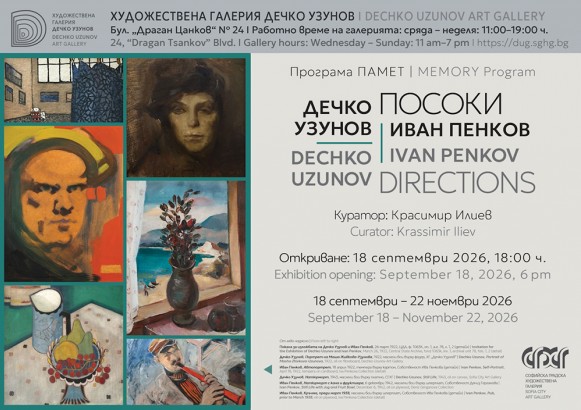 18.09.2026 - 22.11.2026
DECHKO UZUNOV/IVAN PENKOV – DIRECTIONS
Memory Programme
DECHKO UZUNOV/IVAN PENKOV – DIRECTIONS
Opening: September 18, 6:00 p.m.
The exhibition Dechko Uzunov/Ivan Penkov: Directions is part of the Memory Programme at the Dechko Uzunov Art Gallery, a branch of the Sofia City Art Gallery, which aims to contribute to raising awareness of the life and work of Dechko Uzunov by presenting research-based exhibitions that reveal different aspects of his oeuvre through artists who were part of his journey. This exhibition showcases the different paths taken by two fellow townsmen and friends during the interwar period.
In 1919, Ivan Penkov and Dechko Uzunov enrolled at the State School of Drawing; that same year, Uzunov painted a portrait of his friend that poked fun at his fascination with folk art. Three years later, the two organised a joint exhibition in Sofia to fund their studies at the Munich Art Academy. The young artists’ exhibition was noticed by Joseph Herbst, who wrote:
“Now, on the occasion of their departure abroad, the two artists had exhibited most of their works, from which their strong talents could be seen quite well. Dechko Uzunov promises to develop most in portrait painting. [...] Ivan Penkov is primarily a decorator with a strong sense of composition and a keen sensitivity to line” (J.H., Razvigor, April 1, 1922, no. 60, p. 4).
In an ironic twist of fate, the older of the two, Penkov, would go on to graduate from the Academy of Art under Prof. Uzunov. In 1939, with Uzonov’s active support, Ivan Penkov won the competition for a permanent teaching position in decorative art.
The selected works invite us to seek similarities amidst the differences between these two constantly experimenting artists during the period when Bulgarian visual arts were coming of age.
Presented in this exhibition are pieces from the collections of the Sofia City Art Gallery, the Dechko Uzunov Art Gallery, the Kazanlak Art Gallery, the Central State Archives, and private collections.
The exhibition also features the film Ivan Penkov: The Crossed-Out Classic (Bulgarian National Television, 2006), by screenwriter: Oskar Kristanov; cinematographer: Yaroslav Yachev; directors: Oskar Kristanov and Kosta Bikov; sound engineer: Petar Yosifov; music arrangement: Georgi (Johnny) Penkov. Duration: 48 min.
DECHKO UZUNOV/IVAN PENKOV – DIRECTIONS
Opening: September 18, 6:00 p.m.
The exhibition Dechko Uzunov/Ivan Penkov: Directions is part of the Memory Programme at the Dechko Uzunov Art Gallery, a branch of the Sofia City Art Gallery, which aims to contribute to raising awareness of the life and work of Dechko Uzunov by presenting research-based exhibitions that reveal different aspects of his oeuvre through artists who were part of his journey. This exhibition showcases the different paths taken by two fellow townsmen and friends during the interwar period.
In 1919, Ivan Penkov and Dechko Uzunov enrolled at the State School of Drawing; that same year, Uzunov painted a portrait of his friend that poked fun at his fascination with folk art. Three years later, the two organised a joint exhibition in Sofia to fund their studies at the Munich Art Academy. The young artists’ exhibition was noticed by Joseph Herbst, who wrote:
“Now, on the occasion of their departure abroad, the two artists had exhibited most of their works, from which their strong talents could be seen quite well. Dechko Uzunov promises to develop most in portrait painting. [...] Ivan Penkov is primarily a decorator with a strong sense of composition and a keen sensitivity to line” (J.H., Razvigor, April 1, 1922, no. 60, p. 4).
In an ironic twist of fate, the older of the two, Penkov, would go on to graduate from the Academy of Art under Prof. Uzunov. In 1939, with Uzonov’s active support, Ivan Penkov won the competition for a permanent teaching position in decorative art.
The selected works invite us to seek similarities amidst the differences between these two constantly experimenting artists during the period when Bulgarian visual arts were coming of age.
Presented in this exhibition are pieces from the collections of the Sofia City Art Gallery, the Dechko Uzunov Art Gallery, the Kazanlak Art Gallery, the Central State Archives, and private collections.
The exhibition also features the film Ivan Penkov: The Crossed-Out Classic (Bulgarian National Television, 2006), by screenwriter: Oskar Kristanov; cinematographer: Yaroslav Yachev; directors: Oskar Kristanov and Kosta Bikov; sound engineer: Petar Yosifov; music arrangement: Georgi (Johnny) Penkov. Duration: 48 min.
Exhibitions
30.07.2026 - 04.10.2026
EUGÈNE CARRIÈRE. THE VISIONARY
The exhibition offers a novel, more conceptual look at one of the most prominent French artists of the second half of the 19th century, emphasising the influence he had on his contemporaries, as well as on the oeuvres of key figures of Early Modernism in the 20th century.
Although Eugène Carrière is well represented in the National Gallery permanent exposition at Kvadrat 500, his name remains relatively unknown to the general public. The team’s ambition is to present all his paintings, lithographs and drawings from the museum collection for the first time. During the research, it was discovered that these lithographs of high collectible worth were extremely valuable copies of unique bibliophilic compendia published in limited editions in Paris in the closing quarter of the 19th century. It is only the Metropolitan Museum in New York, the State Museum in Stuttgart, the Musée d’Orsay in Paris, the State Museum in Amsterdam, and the Cleveland Museum of Art, that can boast possession of such prints.
Carrière was among those artists who won recognition during their lifetime, and whose works were displayed in major museums. He invariably worked beyond the stylistic categories of the time without claiming to belong to any specific trend. Defying any sort of labelling, the painter, engraver and draughtsman, Carrière—a contemporary of Gustave Moreau, Odilon Redon and Paul Gauguin—soon surrounded himself with the most influential figures in the artistic and literary worlds of his time. His oeuvre influenced Picasso who drew inspiration from his monochromatic painting.
Beyond the modernity of his subjects, it is precisely in the artist’s painting style that the great adventure of his art lies. A distinguished portraitist and master of family scenes and the theme of motherhood, and precursor of Minimalism, he eliminated details transforming images into archetypes and expressions of feeling beyond the conventional framework of a specific time. Achieving a soft, monochromic sfumato allowed him to create a complex and mysterious interplay of transparency and depth. Like fleeting apparitions, elusive to the brush, his figures seem to emerge from the landscape, from the background, as if from another time-space.
Although Eugène Carrière is well represented in the National Gallery permanent exposition at Kvadrat 500, his name remains relatively unknown to the general public. The team’s ambition is to present all his paintings, lithographs and drawings from the museum collection for the first time. During the research, it was discovered that these lithographs of high collectible worth were extremely valuable copies of unique bibliophilic compendia published in limited editions in Paris in the closing quarter of the 19th century. It is only the Metropolitan Museum in New York, the State Museum in Stuttgart, the Musée d’Orsay in Paris, the State Museum in Amsterdam, and the Cleveland Museum of Art, that can boast possession of such prints.
Carrière was among those artists who won recognition during their lifetime, and whose works were displayed in major museums. He invariably worked beyond the stylistic categories of the time without claiming to belong to any specific trend. Defying any sort of labelling, the painter, engraver and draughtsman, Carrière—a contemporary of Gustave Moreau, Odilon Redon and Paul Gauguin—soon surrounded himself with the most influential figures in the artistic and literary worlds of his time. His oeuvre influenced Picasso who drew inspiration from his monochromatic painting.
Beyond the modernity of his subjects, it is precisely in the artist’s painting style that the great adventure of his art lies. A distinguished portraitist and master of family scenes and the theme of motherhood, and precursor of Minimalism, he eliminated details transforming images into archetypes and expressions of feeling beyond the conventional framework of a specific time. Achieving a soft, monochromic sfumato allowed him to create a complex and mysterious interplay of transparency and depth. Like fleeting apparitions, elusive to the brush, his figures seem to emerge from the landscape, from the background, as if from another time-space.
Exhibitions
04.08.2026 - 21.10.2026
FRANCISCO GOYA - DREAMS OF A KEEN MIND
The Spaniard FRANCISCO GOYA (1746–1828) was one of the most prominent and influential creative figures in world culture. He produced over 1,000 paintings, as well as the graphic series titled Los Caprichos, Los Desastres de la Guerra, Tauromaquia, and Los Disparates.
His stylistic and philosophical spectrum had a strong influence on the subsequent dynamic development of art, defining him as the last of the Old Masters and one of the earliest of Modernism. His extensive output—paintings, graphics and drawings—served as a leading aesthetic principle for many artistic trends of the 19th and 20th centuries, including Impressionism, Expressionism and Surrealism.
The twenty-one prints from the National Gallery collection follow Goya’s development from his earliest etchings, influenced by Diego Velázquez’s style, to his peak achievements as a social interpreter, remarkable for his sharpness, and a chronicler of dour events and complex human characters. The high artistic level of his four graphic series has left a deep imprint on the history of art.
The National Gallery houses seven works from Los Caprichos (The Caprices) series, 1799. Satirising the institutional pillars of power, the church, the Inquisition, the parasitism of the feudal nobility, and the decay of the moral values of social classes, was the reason for the series to be banned from exhibiting.
Los Desastres de la Guerra (The Disasters of War) series, which Goya began ca. 1810, and returned to ca. 1820, was not published by the artist during his lifetime. One of the works is titled ‘Prisoner. The Custody Is as Barbarous as the Crime’. It is considered unique, as it is rarely found in other museum and private collections around the world.
La Tauromaquia (The Art of Bullfighting) series, probably created between 1815 and 1816, reflected the artist’s interest in bullfighting. These works combine the flagrant cruelty of the corrida and his admiration for the skill and exciting action of the games. Of the thirty-three prints in the series, the National Gallery owns five.
While still working on La Tauromaquia, the artist in all probability launched into another series titled Los Disparates (The Follies), the meaning in his time being along the lines of stupidity or madness. The fantastic compositions are encrypted allegories whose impressive depth fascinated artists such as Baudelaire, Hugo, and Delacroix. The National Gallery’s collection houses four of those; two of them—‘Little Bulls’ Folly’ and ‘A Way of Flying’—are emblematic of the artist’s genius.
The National Gallery also owns the etching ‘Blind Singer’, emotionally described by Nikolay Raynov, in his ‘History of the Plastic Arts’ (1939), as ‘first’ among the ‘curious and significant’ graphic works of Goya.
The exhibition also includes a work by the Spanish surrealist artist, Salvador Dali (1904–1989), dedicated to Goya and his Caprichos.
His stylistic and philosophical spectrum had a strong influence on the subsequent dynamic development of art, defining him as the last of the Old Masters and one of the earliest of Modernism. His extensive output—paintings, graphics and drawings—served as a leading aesthetic principle for many artistic trends of the 19th and 20th centuries, including Impressionism, Expressionism and Surrealism.
The twenty-one prints from the National Gallery collection follow Goya’s development from his earliest etchings, influenced by Diego Velázquez’s style, to his peak achievements as a social interpreter, remarkable for his sharpness, and a chronicler of dour events and complex human characters. The high artistic level of his four graphic series has left a deep imprint on the history of art.
The National Gallery houses seven works from Los Caprichos (The Caprices) series, 1799. Satirising the institutional pillars of power, the church, the Inquisition, the parasitism of the feudal nobility, and the decay of the moral values of social classes, was the reason for the series to be banned from exhibiting.
Los Desastres de la Guerra (The Disasters of War) series, which Goya began ca. 1810, and returned to ca. 1820, was not published by the artist during his lifetime. One of the works is titled ‘Prisoner. The Custody Is as Barbarous as the Crime’. It is considered unique, as it is rarely found in other museum and private collections around the world.
La Tauromaquia (The Art of Bullfighting) series, probably created between 1815 and 1816, reflected the artist’s interest in bullfighting. These works combine the flagrant cruelty of the corrida and his admiration for the skill and exciting action of the games. Of the thirty-three prints in the series, the National Gallery owns five.
While still working on La Tauromaquia, the artist in all probability launched into another series titled Los Disparates (The Follies), the meaning in his time being along the lines of stupidity or madness. The fantastic compositions are encrypted allegories whose impressive depth fascinated artists such as Baudelaire, Hugo, and Delacroix. The National Gallery’s collection houses four of those; two of them—‘Little Bulls’ Folly’ and ‘A Way of Flying’—are emblematic of the artist’s genius.
The National Gallery also owns the etching ‘Blind Singer’, emotionally described by Nikolay Raynov, in his ‘History of the Plastic Arts’ (1939), as ‘first’ among the ‘curious and significant’ graphic works of Goya.
The exhibition also includes a work by the Spanish surrealist artist, Salvador Dali (1904–1989), dedicated to Goya and his Caprichos.
Exhibitions
18.06.2026 - 20.09.2026
IVAN HRISTOV (1900–1987)
Ivan Hristov (1900–1987), one of the most prominent masters of Bulgarian landscape painting, created hundreds of canvases reflecting the intransient in our native nature and Revivalist architecture, recreating and preserving their rich spiritual impact. He worked in this genre alongside Boris Denev, Nikola Tanev, Sirak Skitnik, Vladimir Rilski, Atanas Staykov, Danail Dechev, Pencho Georgiev, Mario Zhekov, among many others. He was a member of the Native Art Society. The painter’s oeuvre is recognisable by its rich colour palette and expressive brushstrokes. The building elements of his style are in harmony with the material power of nature. Critics responded favourably to his strong individuality and idiosyncratic painting technique. High international recognition for the artist was the Gold Medal at the 1937 Paris International Exhibition, where he showed his painting, ‘Sozopol Houses’.
Ivan Hristov’s retrospectives have been held at the Nikola Petrov Art Gallery in Vidin (2015) and the Hristo Tsokev Art Gallery in Gabrovo (2017). The current extensive exposition comprises predominantly unexhibited works owned by his heirs and by admirers of his art, as well as paintings from the collections of the National Gallery and the Plovdiv City Art Gallery.
In 1919, young Hristov enrolled in the Faculty of Law of Sofia University and concurrently attended the Academy of Arts. He chose to study painting under professors Nikola Ganushev, Nikola Marinov and Stefan Ivanov. Between 1926 and 1927, he specialised in Painting in Munich. Towards the end of his stay there, he held his first solo exhibition at the Kunstverein Gallery, where, along with portraits, he also showed several townscapes of Tryavna.
After returning to his homeland, he was appointed as teacher at the Carpentry School in Tryavna, and became one of the initiators of the foundation of a local museum preserving the masterpieces of woodcarving and iconography. He continued his intensive creative work, presenting a series of over 50 solo exhibitions not only in Bulgaria but also abroad, including the Munich Kunsthaus Brakl Gallery (1928), the Camera degli Artisti Gallery in Rome (1930), the Turin Gallery at Palazzo Carignano (1931), the Salita di Santa Caterina Gallery in Genova, La Bottega dell’Arte Gallery in Brescia, the Salon Artistiozi Sztuki I Reproductsia in Warsaw (1934), the Sala Centrala a Atensumi in Bucharest (1935), and the Berlin Gallerie von der Heyde (1938).
His works are owned by the National Gallery, the Sofia City Art Gallery, and all regional galleries; state institutions, embassies and public organisations in Bulgaria; the Museum of Fine Arts in Budapest; the National Museum in Schwerin; the Anastasia Sima Museum in Bucharest; the UN, state institutions of Germany, Russia, Poland, Romania, Cuba and Hungary; the City Hall of Rome; many private collections in Bulgaria and around the world.
Bearer of high state awards and titles in the fine arts, and honorary citizen of Veliko Tarnovo and Tryavna.
Media partner: BTA / Bulgarian News Agency.
Ivan Hristov’s retrospectives have been held at the Nikola Petrov Art Gallery in Vidin (2015) and the Hristo Tsokev Art Gallery in Gabrovo (2017). The current extensive exposition comprises predominantly unexhibited works owned by his heirs and by admirers of his art, as well as paintings from the collections of the National Gallery and the Plovdiv City Art Gallery.
In 1919, young Hristov enrolled in the Faculty of Law of Sofia University and concurrently attended the Academy of Arts. He chose to study painting under professors Nikola Ganushev, Nikola Marinov and Stefan Ivanov. Between 1926 and 1927, he specialised in Painting in Munich. Towards the end of his stay there, he held his first solo exhibition at the Kunstverein Gallery, where, along with portraits, he also showed several townscapes of Tryavna.
After returning to his homeland, he was appointed as teacher at the Carpentry School in Tryavna, and became one of the initiators of the foundation of a local museum preserving the masterpieces of woodcarving and iconography. He continued his intensive creative work, presenting a series of over 50 solo exhibitions not only in Bulgaria but also abroad, including the Munich Kunsthaus Brakl Gallery (1928), the Camera degli Artisti Gallery in Rome (1930), the Turin Gallery at Palazzo Carignano (1931), the Salita di Santa Caterina Gallery in Genova, La Bottega dell’Arte Gallery in Brescia, the Salon Artistiozi Sztuki I Reproductsia in Warsaw (1934), the Sala Centrala a Atensumi in Bucharest (1935), and the Berlin Gallerie von der Heyde (1938).
His works are owned by the National Gallery, the Sofia City Art Gallery, and all regional galleries; state institutions, embassies and public organisations in Bulgaria; the Museum of Fine Arts in Budapest; the National Museum in Schwerin; the Anastasia Sima Museum in Bucharest; the UN, state institutions of Germany, Russia, Poland, Romania, Cuba and Hungary; the City Hall of Rome; many private collections in Bulgaria and around the world.
Bearer of high state awards and titles in the fine arts, and honorary citizen of Veliko Tarnovo and Tryavna.
Media partner: BTA / Bulgarian News Agency.
Exhibitions
10.09.2026 - 11.10.2026
Maya Antova – Mayoto - MACONDO
Sofia Arsenal – Museum of Contemporary Art
Maya Antova – Mayoto has transformed the exhibition space into a metaphorical Macondo, the town of solitude and magical realism in Gabriel García Márquez’s masterpiece. The exhibition is dedicated to the centenary of the birth of Ivanka Sokerova, a ‘forgotten’ and lesser-known artist whose life was a fascinating fiction.
Sokerova was an example of the triumph of the spirit: as a child, she manifested her versatile talent, but her life changed after her right hand was complete paralysed due to illness. Thus, fate directed her to devote herself to art. Her life turned into a microcosm of solitude where the borderline between reality and fantasy became invisible.
The exhibition, titled MACONDO, is here to show that solitude is not stagnation but a state of mind where art becomes the only possible language. By inverting the exhibition space, Maya Antova – Mayoto urges the viewer to look at the ‘invisible’, and to rethink Ivanka Sokerova’s persona as the architect of a magical world built on the ruins of a paralysed reality.
The exhibition, arranged in a radically different way, resembles a kind of ‘topsy-turvy world’. All objects are positioned ‘beneath the ceiling’, some reaching the floor, others hanging in the air. To observe them, the viewer must look up—a gesture of rising above earthly suffering and searching for the transcendent; a kind of gravity of the spirit.
An illusion of fiction is achieved through 3D objects replicating sculptures by Sokerova. The ‘thread-hand’ detail (a symbol of matter with no structure) serves as the leitmotif of the exhibition.
At the centre of the installation, there is an inflatable boat roaming beneath the ceiling—a symbol of transition and escape from reality. Life jackets made of paper with prints of memories are ‘floating’ around it. Paper here represents the fragile raft of knowledge that keeps the personality afloat—a reference to all intellectual activities, translations, drawings, sculptures, collages and participation in Dadaist actions, all part of Sokerova’s artistic life.
When viewers look up at the boat and the paper jackets, they do not see a ‘sinking’, but ‘rising’. They understand that escaping from reality is not desertion but an act of supreme intellectual courage.
Ivanka Sokerova did not simply translate books or model clay—she constructed life jackets from thought so as not to sink into the loneliness of her Macondo. Today, these vests hang over us as a call to seek our own haven while the world around turns topsy-turvy.
The exhibition opens with an authorial performance by Maya Antova – Mayoto, titled ‘Traveling Back’, where quotes from literary texts dedicated to Sokerova intertwine with random noises and onomatopoeic elements, creating the feeling of the fragmented world of Macondo.
…
Maya Antova – Mayoto has transformed the exhibition space into a metaphorical Macondo, the town of solitude and magical realism in Gabriel García Márquez’s masterpiece. The exhibition is dedicated to the centenary of the birth of Ivanka Sokerova, a ‘forgotten’ and lesser-known artist whose life was a fascinating fiction.
Sokerova was an example of the triumph of the spirit: as a child, she manifested her versatile talent, but her life changed after her right hand was complete paralysed due to illness. Thus, fate directed her to devote herself to art. Her life turned into a microcosm of solitude where the borderline between reality and fantasy became invisible.
The exhibition, titled MACONDO, is here to show that solitude is not stagnation but a state of mind where art becomes the only possible language. By inverting the exhibition space, Maya Antova – Mayoto urges the viewer to look at the ‘invisible’, and to rethink Ivanka Sokerova’s persona as the architect of a magical world built on the ruins of a paralysed reality.
The exhibition, arranged in a radically different way, resembles a kind of ‘topsy-turvy world’. All objects are positioned ‘beneath the ceiling’, some reaching the floor, others hanging in the air. To observe them, the viewer must look up—a gesture of rising above earthly suffering and searching for the transcendent; a kind of gravity of the spirit.
An illusion of fiction is achieved through 3D objects replicating sculptures by Sokerova. The ‘thread-hand’ detail (a symbol of matter with no structure) serves as the leitmotif of the exhibition.
At the centre of the installation, there is an inflatable boat roaming beneath the ceiling—a symbol of transition and escape from reality. Life jackets made of paper with prints of memories are ‘floating’ around it. Paper here represents the fragile raft of knowledge that keeps the personality afloat—a reference to all intellectual activities, translations, drawings, sculptures, collages and participation in Dadaist actions, all part of Sokerova’s artistic life.
When viewers look up at the boat and the paper jackets, they do not see a ‘sinking’, but ‘rising’. They understand that escaping from reality is not desertion but an act of supreme intellectual courage.
Ivanka Sokerova did not simply translate books or model clay—she constructed life jackets from thought so as not to sink into the loneliness of her Macondo. Today, these vests hang over us as a call to seek our own haven while the world around turns topsy-turvy.
The exhibition opens with an authorial performance by Maya Antova – Mayoto, titled ‘Traveling Back’, where quotes from literary texts dedicated to Sokerova intertwine with random noises and onomatopoeic elements, creating the feeling of the fragmented world of Macondo.
…
Exhibitions
12.09.2026 - 20.09.2026
Stela Blagova presents Indrishe at Sofia Gallery
From 12 to 20 September 2026, Sofia Gallery at Sofia City Library will present Indrishe, the seventh exhibition by Bulgarian artist Stela Blagova. The exhibition will be open daily from
11:00 a.m. to 6:30 p.m. Admission is free.
The exhibition brings together Blagova's newest oil paintings. The works combine realist image-making with contemporary and artist-developed techniques, including subtle gold-
toned and shimmering effects. They convey a sense of goodwill and hope, while oil paint remains the artist's primary medium for developing the images' expressive and emotional qualities.
The title Indrishe refers to scented geranium and evokes associations with friendship, comfort, freshness and childhood. The choice of Sofia Gallery continues the artist's connection with a setting where paintings are displayed close to books, in central Sofia on Petko R. Slaveykov Square.
Stela Blagova will be present during the exhibition, giving visitors an opportunity to speak with her about the works. If she briefly steps away, a representative will be available to answer visitors' questions. Her paintings are held in private collections in Bulgaria and abroad.
Visitor information
Exhibition: Indrishe - paintings by Stela Blagova
Dates: 12-20 September 2026
Opening hours: daily, 11:00 a.m.-6:30 p.m.
Venue: Sofia Gallery, Sofia City Library, 4 Petko R. Slaveykov Square, Sofia
Admission: free
11:00 a.m. to 6:30 p.m. Admission is free.
The exhibition brings together Blagova's newest oil paintings. The works combine realist image-making with contemporary and artist-developed techniques, including subtle gold-
toned and shimmering effects. They convey a sense of goodwill and hope, while oil paint remains the artist's primary medium for developing the images' expressive and emotional qualities.
The title Indrishe refers to scented geranium and evokes associations with friendship, comfort, freshness and childhood. The choice of Sofia Gallery continues the artist's connection with a setting where paintings are displayed close to books, in central Sofia on Petko R. Slaveykov Square.
Stela Blagova will be present during the exhibition, giving visitors an opportunity to speak with her about the works. If she briefly steps away, a representative will be available to answer visitors' questions. Her paintings are held in private collections in Bulgaria and abroad.
Visitor information
Exhibition: Indrishe - paintings by Stela Blagova
Dates: 12-20 September 2026
Opening hours: daily, 11:00 a.m.-6:30 p.m.
Venue: Sofia Gallery, Sofia City Library, 4 Petko R. Slaveykov Square, Sofia
Admission: free
Exhibitions
17.09.2026 - 18.09.2026
TUK-TAM HIVE
A large-scale professional event that follows the most exciting of the new technologies, the startup world and the creative industry
Business Events
16.06.2026 - 16.06.2027
Temporary Exhibition New Acquisitions
from 10:00 to 18:00 o'clock
Entrance with museum tickets
Entrance with museum tickets
Exhibitions
12.02.2026 - 31.12.2026
Temporary exhibition "Copper - Ancient and Modern"
from 10:00 to 18:00 o'clock
Entrance with museum tickets.
Entrance with museum tickets.
Exhibitions
11.04.2025 - 31.12.2026
Temporary exhibition "Minerals and Colorful Creatures. Drawings by Nature"
The Minerals of Bulgaria exposition has been expanded with a new theme: Unique mineral finds from Bulgaria, a project financed by the Ministry of culture. In 6 display cases, minerals with the most beautiful crystals, rare colors and shapes are exhibited, selected for tens of years by hundreds of geologists and collectors from all over Bulgaria.
from 10:00 to 18:00 o'clock
Entrance with museum tickets
from 10:00 to 18:00 o'clock
Entrance with museum tickets
Exhibitions
01.04.2026 - 31.12.2026
Temporary exhibition "Natural Art from Chalcedony"
from 10:00 to 18:00 o'clock
Entrance with museum tickets.
Entrance with museum tickets.
Exhibitions
01.01.2023 - 31.12.2026
Temporary exhibition "Smart Minerals for Smartphones"
from 10:00 to 18:00 o'clock
Entrance with museum tickets.
Entrance with museum tickets.
Exhibitions
01.09.2026 - 24.09.2026
We Came To Be Human. Mustafa Horasan (1965–2026) and Hüseyin Işık
UBA, Shipka 6, 2 A
A curatorial project by Krasimir Linkov
Every artist tries to transform their own reality into another reality - that is, into a work of art.
– Mustafa Horasan
We Came to Be Human brings together in Sofia the intersecting artistic paths of Mustafa Horasan and Husein Işık, shaped by friendship, shared memory, and the responsibility of being human. Developed between Istanbul and Vienna, this encounter brings together the works of two artists shaped by the same artistic education, the difficult historical experiences of their era, and a shared sensibility.
Following Horasan’s tragic death during the preparation of the exhibition, the project also takes on the powerful character of a tribute, keeping his memory alive. Focusing on human vulnerability, resilience, the search for goodness, and the invisible bonds we forge with others, the exhibition confronts the viewer not only with works of art, but also with the ethical and emotional depth of what it means to remain human.
A curatorial project by Krasimir Linkov
Every artist tries to transform their own reality into another reality - that is, into a work of art.
– Mustafa Horasan
We Came to Be Human brings together in Sofia the intersecting artistic paths of Mustafa Horasan and Husein Işık, shaped by friendship, shared memory, and the responsibility of being human. Developed between Istanbul and Vienna, this encounter brings together the works of two artists shaped by the same artistic education, the difficult historical experiences of their era, and a shared sensibility.
Following Horasan’s tragic death during the preparation of the exhibition, the project also takes on the powerful character of a tribute, keeping his memory alive. Focusing on human vulnerability, resilience, the search for goodness, and the invisible bonds we forge with others, the exhibition confronts the viewer not only with works of art, but also with the ethical and emotional depth of what it means to remain human.
Exhibitions
10.12.2025 - 30.01.2027
Zahari Zograph Immersive Exhibition
The National Gallery presents one of the most iconic figures in the history of Bulgarian art – Zahari Zograph. This first immersive exhibition introduces a new way of experiencing the masterpieces of the the museum’s collection. Harnessing new technologies, the 20-minute project, created by Senzor Studio, brings his religious and secular masterpieces to life, revealing essential elements of his creative process.
The initiative promotes Bulgarian Revival аrt, a period characterized by economic, social, and cultural growth, closely tied to the pursuit of ecclesiastical and national independence. The period traces its origins to the mid-18th century, when Paisius of Hilendar wrote Istoriya Slavyanobulgarskaya (History of the Slavs and Bulgarians) in 1762—which profoundly shaped the spiritual awakening of the population and contributed significantly to the development of national consciousness…
The exhibition features a selection of icons, drawings, copies, letters, documents, and secular portraits from the artist’s early period. It also showcases a substantive collection of murals, ranging from his earliest works—created in 1838 for the Chapel of St John the Baptist at the Church of the Holy Virgin—Annunciation in Asenovgrad—to what is considered as his “final masterpiece,” the murals adorning the narthex of the Great Lavra Monastery on Mount Athos, completed between 1851 and 1852.
Zahari Zograph emerged as a defining figure of Bulgarian Revival art. His relentlessly inquisitive artistic spirit was ahead of its era, and his extensive body of work reflects the vitality of the approaching modern age, the artistry of traditional imagery, the strength of line, and the emotive power of color.
The project is realised with the financial support of the National Culture Fund of Bulgaria under the Creation programme 2024.
Media partners: BTA / Bulgarian News Agency and SOF Connect.
The initiative promotes Bulgarian Revival аrt, a period characterized by economic, social, and cultural growth, closely tied to the pursuit of ecclesiastical and national independence. The period traces its origins to the mid-18th century, when Paisius of Hilendar wrote Istoriya Slavyanobulgarskaya (History of the Slavs and Bulgarians) in 1762—which profoundly shaped the spiritual awakening of the population and contributed significantly to the development of national consciousness…
The exhibition features a selection of icons, drawings, copies, letters, documents, and secular portraits from the artist’s early period. It also showcases a substantive collection of murals, ranging from his earliest works—created in 1838 for the Chapel of St John the Baptist at the Church of the Holy Virgin—Annunciation in Asenovgrad—to what is considered as his “final masterpiece,” the murals adorning the narthex of the Great Lavra Monastery on Mount Athos, completed between 1851 and 1852.
Zahari Zograph emerged as a defining figure of Bulgarian Revival art. His relentlessly inquisitive artistic spirit was ahead of its era, and his extensive body of work reflects the vitality of the approaching modern age, the artistry of traditional imagery, the strength of line, and the emotive power of color.
The project is realised with the financial support of the National Culture Fund of Bulgaria under the Creation programme 2024.
Media partners: BTA / Bulgarian News Agency and SOF Connect.
Exhibitions
18.09.2026 - 22.11.2026
DECHKO UZUNOV/IVAN PENKOV – DIRECTIONS
Memory Programme
DECHKO UZUNOV/IVAN PENKOV – DIRECTIONS
Opening: September 18, 6:00 p.m.
The exhibition Dechko Uzunov/Ivan Penkov: Directions is part of the Memory Programme at the Dechko Uzunov Art Gallery, a branch of the Sofia City Art Gallery, which aims to contribute to raising awareness of the life and work of Dechko Uzunov by presenting research-based exhibitions that reveal different aspects of his oeuvre through artists who were part of his journey. This exhibition showcases the different paths taken by two fellow townsmen and friends during the interwar period.
In 1919, Ivan Penkov and Dechko Uzunov enrolled at the State School of Drawing; that same year, Uzunov painted a portrait of his friend that poked fun at his fascination with folk art. Three years later, the two organised a joint exhibition in Sofia to fund their studies at the Munich Art Academy. The young artists’ exhibition was noticed by Joseph Herbst, who wrote:
“Now, on the occasion of their departure abroad, the two artists had exhibited most of their works, from which their strong talents could be seen quite well. Dechko Uzunov promises to develop most in portrait painting. [...] Ivan Penkov is primarily a decorator with a strong sense of composition and a keen sensitivity to line” (J.H., Razvigor, April 1, 1922, no. 60, p. 4).
In an ironic twist of fate, the older of the two, Penkov, would go on to graduate from the Academy of Art under Prof. Uzunov. In 1939, with Uzonov’s active support, Ivan Penkov won the competition for a permanent teaching position in decorative art.
The selected works invite us to seek similarities amidst the differences between these two constantly experimenting artists during the period when Bulgarian visual arts were coming of age.
Presented in this exhibition are pieces from the collections of the Sofia City Art Gallery, the Dechko Uzunov Art Gallery, the Kazanlak Art Gallery, the Central State Archives, and private collections.
The exhibition also features the film Ivan Penkov: The Crossed-Out Classic (Bulgarian National Television, 2006), by screenwriter: Oskar Kristanov; cinematographer: Yaroslav Yachev; directors: Oskar Kristanov and Kosta Bikov; sound engineer: Petar Yosifov; music arrangement: Georgi (Johnny) Penkov. Duration: 48 min.
DECHKO UZUNOV/IVAN PENKOV – DIRECTIONS
Opening: September 18, 6:00 p.m.
The exhibition Dechko Uzunov/Ivan Penkov: Directions is part of the Memory Programme at the Dechko Uzunov Art Gallery, a branch of the Sofia City Art Gallery, which aims to contribute to raising awareness of the life and work of Dechko Uzunov by presenting research-based exhibitions that reveal different aspects of his oeuvre through artists who were part of his journey. This exhibition showcases the different paths taken by two fellow townsmen and friends during the interwar period.
In 1919, Ivan Penkov and Dechko Uzunov enrolled at the State School of Drawing; that same year, Uzunov painted a portrait of his friend that poked fun at his fascination with folk art. Three years later, the two organised a joint exhibition in Sofia to fund their studies at the Munich Art Academy. The young artists’ exhibition was noticed by Joseph Herbst, who wrote:
“Now, on the occasion of their departure abroad, the two artists had exhibited most of their works, from which their strong talents could be seen quite well. Dechko Uzunov promises to develop most in portrait painting. [...] Ivan Penkov is primarily a decorator with a strong sense of composition and a keen sensitivity to line” (J.H., Razvigor, April 1, 1922, no. 60, p. 4).
In an ironic twist of fate, the older of the two, Penkov, would go on to graduate from the Academy of Art under Prof. Uzunov. In 1939, with Uzonov’s active support, Ivan Penkov won the competition for a permanent teaching position in decorative art.
The selected works invite us to seek similarities amidst the differences between these two constantly experimenting artists during the period when Bulgarian visual arts were coming of age.
Presented in this exhibition are pieces from the collections of the Sofia City Art Gallery, the Dechko Uzunov Art Gallery, the Kazanlak Art Gallery, the Central State Archives, and private collections.
The exhibition also features the film Ivan Penkov: The Crossed-Out Classic (Bulgarian National Television, 2006), by screenwriter: Oskar Kristanov; cinematographer: Yaroslav Yachev; directors: Oskar Kristanov and Kosta Bikov; sound engineer: Petar Yosifov; music arrangement: Georgi (Johnny) Penkov. Duration: 48 min.
Exhibitions
30.07.2026 - 04.10.2026
EUGÈNE CARRIÈRE. THE VISIONARY
The exhibition offers a novel, more conceptual look at one of the most prominent French artists of the second half of the 19th century, emphasising the influence he had on his contemporaries, as well as on the oeuvres of key figures of Early Modernism in the 20th century.
Although Eugène Carrière is well represented in the National Gallery permanent exposition at Kvadrat 500, his name remains relatively unknown to the general public. The team’s ambition is to present all his paintings, lithographs and drawings from the museum collection for the first time. During the research, it was discovered that these lithographs of high collectible worth were extremely valuable copies of unique bibliophilic compendia published in limited editions in Paris in the closing quarter of the 19th century. It is only the Metropolitan Museum in New York, the State Museum in Stuttgart, the Musée d’Orsay in Paris, the State Museum in Amsterdam, and the Cleveland Museum of Art, that can boast possession of such prints.
Carrière was among those artists who won recognition during their lifetime, and whose works were displayed in major museums. He invariably worked beyond the stylistic categories of the time without claiming to belong to any specific trend. Defying any sort of labelling, the painter, engraver and draughtsman, Carrière—a contemporary of Gustave Moreau, Odilon Redon and Paul Gauguin—soon surrounded himself with the most influential figures in the artistic and literary worlds of his time. His oeuvre influenced Picasso who drew inspiration from his monochromatic painting.
Beyond the modernity of his subjects, it is precisely in the artist’s painting style that the great adventure of his art lies. A distinguished portraitist and master of family scenes and the theme of motherhood, and precursor of Minimalism, he eliminated details transforming images into archetypes and expressions of feeling beyond the conventional framework of a specific time. Achieving a soft, monochromic sfumato allowed him to create a complex and mysterious interplay of transparency and depth. Like fleeting apparitions, elusive to the brush, his figures seem to emerge from the landscape, from the background, as if from another time-space.
Although Eugène Carrière is well represented in the National Gallery permanent exposition at Kvadrat 500, his name remains relatively unknown to the general public. The team’s ambition is to present all his paintings, lithographs and drawings from the museum collection for the first time. During the research, it was discovered that these lithographs of high collectible worth were extremely valuable copies of unique bibliophilic compendia published in limited editions in Paris in the closing quarter of the 19th century. It is only the Metropolitan Museum in New York, the State Museum in Stuttgart, the Musée d’Orsay in Paris, the State Museum in Amsterdam, and the Cleveland Museum of Art, that can boast possession of such prints.
Carrière was among those artists who won recognition during their lifetime, and whose works were displayed in major museums. He invariably worked beyond the stylistic categories of the time without claiming to belong to any specific trend. Defying any sort of labelling, the painter, engraver and draughtsman, Carrière—a contemporary of Gustave Moreau, Odilon Redon and Paul Gauguin—soon surrounded himself with the most influential figures in the artistic and literary worlds of his time. His oeuvre influenced Picasso who drew inspiration from his monochromatic painting.
Beyond the modernity of his subjects, it is precisely in the artist’s painting style that the great adventure of his art lies. A distinguished portraitist and master of family scenes and the theme of motherhood, and precursor of Minimalism, he eliminated details transforming images into archetypes and expressions of feeling beyond the conventional framework of a specific time. Achieving a soft, monochromic sfumato allowed him to create a complex and mysterious interplay of transparency and depth. Like fleeting apparitions, elusive to the brush, his figures seem to emerge from the landscape, from the background, as if from another time-space.
Exhibitions
04.08.2026 - 21.10.2026
FRANCISCO GOYA - DREAMS OF A KEEN MIND
The Spaniard FRANCISCO GOYA (1746–1828) was one of the most prominent and influential creative figures in world culture. He produced over 1,000 paintings, as well as the graphic series titled Los Caprichos, Los Desastres de la Guerra, Tauromaquia, and Los Disparates.
His stylistic and philosophical spectrum had a strong influence on the subsequent dynamic development of art, defining him as the last of the Old Masters and one of the earliest of Modernism. His extensive output—paintings, graphics and drawings—served as a leading aesthetic principle for many artistic trends of the 19th and 20th centuries, including Impressionism, Expressionism and Surrealism.
The twenty-one prints from the National Gallery collection follow Goya’s development from his earliest etchings, influenced by Diego Velázquez’s style, to his peak achievements as a social interpreter, remarkable for his sharpness, and a chronicler of dour events and complex human characters. The high artistic level of his four graphic series has left a deep imprint on the history of art.
The National Gallery houses seven works from Los Caprichos (The Caprices) series, 1799. Satirising the institutional pillars of power, the church, the Inquisition, the parasitism of the feudal nobility, and the decay of the moral values of social classes, was the reason for the series to be banned from exhibiting.
Los Desastres de la Guerra (The Disasters of War) series, which Goya began ca. 1810, and returned to ca. 1820, was not published by the artist during his lifetime. One of the works is titled ‘Prisoner. The Custody Is as Barbarous as the Crime’. It is considered unique, as it is rarely found in other museum and private collections around the world.
La Tauromaquia (The Art of Bullfighting) series, probably created between 1815 and 1816, reflected the artist’s interest in bullfighting. These works combine the flagrant cruelty of the corrida and his admiration for the skill and exciting action of the games. Of the thirty-three prints in the series, the National Gallery owns five.
While still working on La Tauromaquia, the artist in all probability launched into another series titled Los Disparates (The Follies), the meaning in his time being along the lines of stupidity or madness. The fantastic compositions are encrypted allegories whose impressive depth fascinated artists such as Baudelaire, Hugo, and Delacroix. The National Gallery’s collection houses four of those; two of them—‘Little Bulls’ Folly’ and ‘A Way of Flying’—are emblematic of the artist’s genius.
The National Gallery also owns the etching ‘Blind Singer’, emotionally described by Nikolay Raynov, in his ‘History of the Plastic Arts’ (1939), as ‘first’ among the ‘curious and significant’ graphic works of Goya.
The exhibition also includes a work by the Spanish surrealist artist, Salvador Dali (1904–1989), dedicated to Goya and his Caprichos.
His stylistic and philosophical spectrum had a strong influence on the subsequent dynamic development of art, defining him as the last of the Old Masters and one of the earliest of Modernism. His extensive output—paintings, graphics and drawings—served as a leading aesthetic principle for many artistic trends of the 19th and 20th centuries, including Impressionism, Expressionism and Surrealism.
The twenty-one prints from the National Gallery collection follow Goya’s development from his earliest etchings, influenced by Diego Velázquez’s style, to his peak achievements as a social interpreter, remarkable for his sharpness, and a chronicler of dour events and complex human characters. The high artistic level of his four graphic series has left a deep imprint on the history of art.
The National Gallery houses seven works from Los Caprichos (The Caprices) series, 1799. Satirising the institutional pillars of power, the church, the Inquisition, the parasitism of the feudal nobility, and the decay of the moral values of social classes, was the reason for the series to be banned from exhibiting.
Los Desastres de la Guerra (The Disasters of War) series, which Goya began ca. 1810, and returned to ca. 1820, was not published by the artist during his lifetime. One of the works is titled ‘Prisoner. The Custody Is as Barbarous as the Crime’. It is considered unique, as it is rarely found in other museum and private collections around the world.
La Tauromaquia (The Art of Bullfighting) series, probably created between 1815 and 1816, reflected the artist’s interest in bullfighting. These works combine the flagrant cruelty of the corrida and his admiration for the skill and exciting action of the games. Of the thirty-three prints in the series, the National Gallery owns five.
While still working on La Tauromaquia, the artist in all probability launched into another series titled Los Disparates (The Follies), the meaning in his time being along the lines of stupidity or madness. The fantastic compositions are encrypted allegories whose impressive depth fascinated artists such as Baudelaire, Hugo, and Delacroix. The National Gallery’s collection houses four of those; two of them—‘Little Bulls’ Folly’ and ‘A Way of Flying’—are emblematic of the artist’s genius.
The National Gallery also owns the etching ‘Blind Singer’, emotionally described by Nikolay Raynov, in his ‘History of the Plastic Arts’ (1939), as ‘first’ among the ‘curious and significant’ graphic works of Goya.
The exhibition also includes a work by the Spanish surrealist artist, Salvador Dali (1904–1989), dedicated to Goya and his Caprichos.
Exhibitions
18.06.2026 - 20.09.2026
IVAN HRISTOV (1900–1987)
Ivan Hristov (1900–1987), one of the most prominent masters of Bulgarian landscape painting, created hundreds of canvases reflecting the intransient in our native nature and Revivalist architecture, recreating and preserving their rich spiritual impact. He worked in this genre alongside Boris Denev, Nikola Tanev, Sirak Skitnik, Vladimir Rilski, Atanas Staykov, Danail Dechev, Pencho Georgiev, Mario Zhekov, among many others. He was a member of the Native Art Society. The painter’s oeuvre is recognisable by its rich colour palette and expressive brushstrokes. The building elements of his style are in harmony with the material power of nature. Critics responded favourably to his strong individuality and idiosyncratic painting technique. High international recognition for the artist was the Gold Medal at the 1937 Paris International Exhibition, where he showed his painting, ‘Sozopol Houses’.
Ivan Hristov’s retrospectives have been held at the Nikola Petrov Art Gallery in Vidin (2015) and the Hristo Tsokev Art Gallery in Gabrovo (2017). The current extensive exposition comprises predominantly unexhibited works owned by his heirs and by admirers of his art, as well as paintings from the collections of the National Gallery and the Plovdiv City Art Gallery.
In 1919, young Hristov enrolled in the Faculty of Law of Sofia University and concurrently attended the Academy of Arts. He chose to study painting under professors Nikola Ganushev, Nikola Marinov and Stefan Ivanov. Between 1926 and 1927, he specialised in Painting in Munich. Towards the end of his stay there, he held his first solo exhibition at the Kunstverein Gallery, where, along with portraits, he also showed several townscapes of Tryavna.
After returning to his homeland, he was appointed as teacher at the Carpentry School in Tryavna, and became one of the initiators of the foundation of a local museum preserving the masterpieces of woodcarving and iconography. He continued his intensive creative work, presenting a series of over 50 solo exhibitions not only in Bulgaria but also abroad, including the Munich Kunsthaus Brakl Gallery (1928), the Camera degli Artisti Gallery in Rome (1930), the Turin Gallery at Palazzo Carignano (1931), the Salita di Santa Caterina Gallery in Genova, La Bottega dell’Arte Gallery in Brescia, the Salon Artistiozi Sztuki I Reproductsia in Warsaw (1934), the Sala Centrala a Atensumi in Bucharest (1935), and the Berlin Gallerie von der Heyde (1938).
His works are owned by the National Gallery, the Sofia City Art Gallery, and all regional galleries; state institutions, embassies and public organisations in Bulgaria; the Museum of Fine Arts in Budapest; the National Museum in Schwerin; the Anastasia Sima Museum in Bucharest; the UN, state institutions of Germany, Russia, Poland, Romania, Cuba and Hungary; the City Hall of Rome; many private collections in Bulgaria and around the world.
Bearer of high state awards and titles in the fine arts, and honorary citizen of Veliko Tarnovo and Tryavna.
Media partner: BTA / Bulgarian News Agency.
Ivan Hristov’s retrospectives have been held at the Nikola Petrov Art Gallery in Vidin (2015) and the Hristo Tsokev Art Gallery in Gabrovo (2017). The current extensive exposition comprises predominantly unexhibited works owned by his heirs and by admirers of his art, as well as paintings from the collections of the National Gallery and the Plovdiv City Art Gallery.
In 1919, young Hristov enrolled in the Faculty of Law of Sofia University and concurrently attended the Academy of Arts. He chose to study painting under professors Nikola Ganushev, Nikola Marinov and Stefan Ivanov. Between 1926 and 1927, he specialised in Painting in Munich. Towards the end of his stay there, he held his first solo exhibition at the Kunstverein Gallery, where, along with portraits, he also showed several townscapes of Tryavna.
After returning to his homeland, he was appointed as teacher at the Carpentry School in Tryavna, and became one of the initiators of the foundation of a local museum preserving the masterpieces of woodcarving and iconography. He continued his intensive creative work, presenting a series of over 50 solo exhibitions not only in Bulgaria but also abroad, including the Munich Kunsthaus Brakl Gallery (1928), the Camera degli Artisti Gallery in Rome (1930), the Turin Gallery at Palazzo Carignano (1931), the Salita di Santa Caterina Gallery in Genova, La Bottega dell’Arte Gallery in Brescia, the Salon Artistiozi Sztuki I Reproductsia in Warsaw (1934), the Sala Centrala a Atensumi in Bucharest (1935), and the Berlin Gallerie von der Heyde (1938).
His works are owned by the National Gallery, the Sofia City Art Gallery, and all regional galleries; state institutions, embassies and public organisations in Bulgaria; the Museum of Fine Arts in Budapest; the National Museum in Schwerin; the Anastasia Sima Museum in Bucharest; the UN, state institutions of Germany, Russia, Poland, Romania, Cuba and Hungary; the City Hall of Rome; many private collections in Bulgaria and around the world.
Bearer of high state awards and titles in the fine arts, and honorary citizen of Veliko Tarnovo and Tryavna.
Media partner: BTA / Bulgarian News Agency.
Exhibitions
10.09.2026 - 11.10.2026
Maya Antova – Mayoto - MACONDO
Sofia Arsenal – Museum of Contemporary Art
Maya Antova – Mayoto has transformed the exhibition space into a metaphorical Macondo, the town of solitude and magical realism in Gabriel García Márquez’s masterpiece. The exhibition is dedicated to the centenary of the birth of Ivanka Sokerova, a ‘forgotten’ and lesser-known artist whose life was a fascinating fiction.
Sokerova was an example of the triumph of the spirit: as a child, she manifested her versatile talent, but her life changed after her right hand was complete paralysed due to illness. Thus, fate directed her to devote herself to art. Her life turned into a microcosm of solitude where the borderline between reality and fantasy became invisible.
The exhibition, titled MACONDO, is here to show that solitude is not stagnation but a state of mind where art becomes the only possible language. By inverting the exhibition space, Maya Antova – Mayoto urges the viewer to look at the ‘invisible’, and to rethink Ivanka Sokerova’s persona as the architect of a magical world built on the ruins of a paralysed reality.
The exhibition, arranged in a radically different way, resembles a kind of ‘topsy-turvy world’. All objects are positioned ‘beneath the ceiling’, some reaching the floor, others hanging in the air. To observe them, the viewer must look up—a gesture of rising above earthly suffering and searching for the transcendent; a kind of gravity of the spirit.
An illusion of fiction is achieved through 3D objects replicating sculptures by Sokerova. The ‘thread-hand’ detail (a symbol of matter with no structure) serves as the leitmotif of the exhibition.
At the centre of the installation, there is an inflatable boat roaming beneath the ceiling—a symbol of transition and escape from reality. Life jackets made of paper with prints of memories are ‘floating’ around it. Paper here represents the fragile raft of knowledge that keeps the personality afloat—a reference to all intellectual activities, translations, drawings, sculptures, collages and participation in Dadaist actions, all part of Sokerova’s artistic life.
When viewers look up at the boat and the paper jackets, they do not see a ‘sinking’, but ‘rising’. They understand that escaping from reality is not desertion but an act of supreme intellectual courage.
Ivanka Sokerova did not simply translate books or model clay—she constructed life jackets from thought so as not to sink into the loneliness of her Macondo. Today, these vests hang over us as a call to seek our own haven while the world around turns topsy-turvy.
The exhibition opens with an authorial performance by Maya Antova – Mayoto, titled ‘Traveling Back’, where quotes from literary texts dedicated to Sokerova intertwine with random noises and onomatopoeic elements, creating the feeling of the fragmented world of Macondo.
…
Maya Antova – Mayoto has transformed the exhibition space into a metaphorical Macondo, the town of solitude and magical realism in Gabriel García Márquez’s masterpiece. The exhibition is dedicated to the centenary of the birth of Ivanka Sokerova, a ‘forgotten’ and lesser-known artist whose life was a fascinating fiction.
Sokerova was an example of the triumph of the spirit: as a child, she manifested her versatile talent, but her life changed after her right hand was complete paralysed due to illness. Thus, fate directed her to devote herself to art. Her life turned into a microcosm of solitude where the borderline between reality and fantasy became invisible.
The exhibition, titled MACONDO, is here to show that solitude is not stagnation but a state of mind where art becomes the only possible language. By inverting the exhibition space, Maya Antova – Mayoto urges the viewer to look at the ‘invisible’, and to rethink Ivanka Sokerova’s persona as the architect of a magical world built on the ruins of a paralysed reality.
The exhibition, arranged in a radically different way, resembles a kind of ‘topsy-turvy world’. All objects are positioned ‘beneath the ceiling’, some reaching the floor, others hanging in the air. To observe them, the viewer must look up—a gesture of rising above earthly suffering and searching for the transcendent; a kind of gravity of the spirit.
An illusion of fiction is achieved through 3D objects replicating sculptures by Sokerova. The ‘thread-hand’ detail (a symbol of matter with no structure) serves as the leitmotif of the exhibition.
At the centre of the installation, there is an inflatable boat roaming beneath the ceiling—a symbol of transition and escape from reality. Life jackets made of paper with prints of memories are ‘floating’ around it. Paper here represents the fragile raft of knowledge that keeps the personality afloat—a reference to all intellectual activities, translations, drawings, sculptures, collages and participation in Dadaist actions, all part of Sokerova’s artistic life.
When viewers look up at the boat and the paper jackets, they do not see a ‘sinking’, but ‘rising’. They understand that escaping from reality is not desertion but an act of supreme intellectual courage.
Ivanka Sokerova did not simply translate books or model clay—she constructed life jackets from thought so as not to sink into the loneliness of her Macondo. Today, these vests hang over us as a call to seek our own haven while the world around turns topsy-turvy.
The exhibition opens with an authorial performance by Maya Antova – Mayoto, titled ‘Traveling Back’, where quotes from literary texts dedicated to Sokerova intertwine with random noises and onomatopoeic elements, creating the feeling of the fragmented world of Macondo.
…
Exhibitions
12.09.2026 - 20.09.2026
Stela Blagova presents Indrishe at Sofia Gallery
From 12 to 20 September 2026, Sofia Gallery at Sofia City Library will present Indrishe, the seventh exhibition by Bulgarian artist Stela Blagova. The exhibition will be open daily from
11:00 a.m. to 6:30 p.m. Admission is free.
The exhibition brings together Blagova's newest oil paintings. The works combine realist image-making with contemporary and artist-developed techniques, including subtle gold-
toned and shimmering effects. They convey a sense of goodwill and hope, while oil paint remains the artist's primary medium for developing the images' expressive and emotional qualities.
The title Indrishe refers to scented geranium and evokes associations with friendship, comfort, freshness and childhood. The choice of Sofia Gallery continues the artist's connection with a setting where paintings are displayed close to books, in central Sofia on Petko R. Slaveykov Square.
Stela Blagova will be present during the exhibition, giving visitors an opportunity to speak with her about the works. If she briefly steps away, a representative will be available to answer visitors' questions. Her paintings are held in private collections in Bulgaria and abroad.
Visitor information
Exhibition: Indrishe - paintings by Stela Blagova
Dates: 12-20 September 2026
Opening hours: daily, 11:00 a.m.-6:30 p.m.
Venue: Sofia Gallery, Sofia City Library, 4 Petko R. Slaveykov Square, Sofia
Admission: free
11:00 a.m. to 6:30 p.m. Admission is free.
The exhibition brings together Blagova's newest oil paintings. The works combine realist image-making with contemporary and artist-developed techniques, including subtle gold-
toned and shimmering effects. They convey a sense of goodwill and hope, while oil paint remains the artist's primary medium for developing the images' expressive and emotional qualities.
The title Indrishe refers to scented geranium and evokes associations with friendship, comfort, freshness and childhood. The choice of Sofia Gallery continues the artist's connection with a setting where paintings are displayed close to books, in central Sofia on Petko R. Slaveykov Square.
Stela Blagova will be present during the exhibition, giving visitors an opportunity to speak with her about the works. If she briefly steps away, a representative will be available to answer visitors' questions. Her paintings are held in private collections in Bulgaria and abroad.
Visitor information
Exhibition: Indrishe - paintings by Stela Blagova
Dates: 12-20 September 2026
Opening hours: daily, 11:00 a.m.-6:30 p.m.
Venue: Sofia Gallery, Sofia City Library, 4 Petko R. Slaveykov Square, Sofia
Admission: free
Exhibitions
16.06.2026 - 16.06.2027
Temporary Exhibition New Acquisitions
from 10:00 to 18:00 o'clock
Entrance with museum tickets
Entrance with museum tickets
Exhibitions
12.02.2026 - 31.12.2026
Temporary exhibition "Copper - Ancient and Modern"
from 10:00 to 18:00 o'clock
Entrance with museum tickets.
Entrance with museum tickets.
Exhibitions
11.04.2025 - 31.12.2026
Temporary exhibition "Minerals and Colorful Creatures. Drawings by Nature"
The Minerals of Bulgaria exposition has been expanded with a new theme: Unique mineral finds from Bulgaria, a project financed by the Ministry of culture. In 6 display cases, minerals with the most beautiful crystals, rare colors and shapes are exhibited, selected for tens of years by hundreds of geologists and collectors from all over Bulgaria.
from 10:00 to 18:00 o'clock
Entrance with museum tickets
from 10:00 to 18:00 o'clock
Entrance with museum tickets
Exhibitions
01.04.2026 - 31.12.2026
Temporary exhibition "Natural Art from Chalcedony"
from 10:00 to 18:00 o'clock
Entrance with museum tickets.
Entrance with museum tickets.
Exhibitions
01.01.2023 - 31.12.2026
Temporary exhibition "Smart Minerals for Smartphones"
from 10:00 to 18:00 o'clock
Entrance with museum tickets.
Entrance with museum tickets.
Exhibitions
01.09.2026 - 24.09.2026
We Came To Be Human. Mustafa Horasan (1965–2026) and Hüseyin Işık
UBA, Shipka 6, 2 A
A curatorial project by Krasimir Linkov
Every artist tries to transform their own reality into another reality - that is, into a work of art.
– Mustafa Horasan
We Came to Be Human brings together in Sofia the intersecting artistic paths of Mustafa Horasan and Husein Işık, shaped by friendship, shared memory, and the responsibility of being human. Developed between Istanbul and Vienna, this encounter brings together the works of two artists shaped by the same artistic education, the difficult historical experiences of their era, and a shared sensibility.
Following Horasan’s tragic death during the preparation of the exhibition, the project also takes on the powerful character of a tribute, keeping his memory alive. Focusing on human vulnerability, resilience, the search for goodness, and the invisible bonds we forge with others, the exhibition confronts the viewer not only with works of art, but also with the ethical and emotional depth of what it means to remain human.
A curatorial project by Krasimir Linkov
Every artist tries to transform their own reality into another reality - that is, into a work of art.
– Mustafa Horasan
We Came to Be Human brings together in Sofia the intersecting artistic paths of Mustafa Horasan and Husein Işık, shaped by friendship, shared memory, and the responsibility of being human. Developed between Istanbul and Vienna, this encounter brings together the works of two artists shaped by the same artistic education, the difficult historical experiences of their era, and a shared sensibility.
Following Horasan’s tragic death during the preparation of the exhibition, the project also takes on the powerful character of a tribute, keeping his memory alive. Focusing on human vulnerability, resilience, the search for goodness, and the invisible bonds we forge with others, the exhibition confronts the viewer not only with works of art, but also with the ethical and emotional depth of what it means to remain human.
Exhibitions
10.12.2025 - 30.01.2027
Zahari Zograph Immersive Exhibition
The National Gallery presents one of the most iconic figures in the history of Bulgarian art – Zahari Zograph. This first immersive exhibition introduces a new way of experiencing the masterpieces of the the museum’s collection. Harnessing new technologies, the 20-minute project, created by Senzor Studio, brings his religious and secular masterpieces to life, revealing essential elements of his creative process.
The initiative promotes Bulgarian Revival аrt, a period characterized by economic, social, and cultural growth, closely tied to the pursuit of ecclesiastical and national independence. The period traces its origins to the mid-18th century, when Paisius of Hilendar wrote Istoriya Slavyanobulgarskaya (History of the Slavs and Bulgarians) in 1762—which profoundly shaped the spiritual awakening of the population and contributed significantly to the development of national consciousness…
The exhibition features a selection of icons, drawings, copies, letters, documents, and secular portraits from the artist’s early period. It also showcases a substantive collection of murals, ranging from his earliest works—created in 1838 for the Chapel of St John the Baptist at the Church of the Holy Virgin—Annunciation in Asenovgrad—to what is considered as his “final masterpiece,” the murals adorning the narthex of the Great Lavra Monastery on Mount Athos, completed between 1851 and 1852.
Zahari Zograph emerged as a defining figure of Bulgarian Revival art. His relentlessly inquisitive artistic spirit was ahead of its era, and his extensive body of work reflects the vitality of the approaching modern age, the artistry of traditional imagery, the strength of line, and the emotive power of color.
The project is realised with the financial support of the National Culture Fund of Bulgaria under the Creation programme 2024.
Media partners: BTA / Bulgarian News Agency and SOF Connect.
The initiative promotes Bulgarian Revival аrt, a period characterized by economic, social, and cultural growth, closely tied to the pursuit of ecclesiastical and national independence. The period traces its origins to the mid-18th century, when Paisius of Hilendar wrote Istoriya Slavyanobulgarskaya (History of the Slavs and Bulgarians) in 1762—which profoundly shaped the spiritual awakening of the population and contributed significantly to the development of national consciousness…
The exhibition features a selection of icons, drawings, copies, letters, documents, and secular portraits from the artist’s early period. It also showcases a substantive collection of murals, ranging from his earliest works—created in 1838 for the Chapel of St John the Baptist at the Church of the Holy Virgin—Annunciation in Asenovgrad—to what is considered as his “final masterpiece,” the murals adorning the narthex of the Great Lavra Monastery on Mount Athos, completed between 1851 and 1852.
Zahari Zograph emerged as a defining figure of Bulgarian Revival art. His relentlessly inquisitive artistic spirit was ahead of its era, and his extensive body of work reflects the vitality of the approaching modern age, the artistry of traditional imagery, the strength of line, and the emotive power of color.
The project is realised with the financial support of the National Culture Fund of Bulgaria under the Creation programme 2024.
Media partners: BTA / Bulgarian News Agency and SOF Connect.
Exhibitions
18.09.2026 - 22.11.2026
DECHKO UZUNOV/IVAN PENKOV – DIRECTIONS
Memory Programme
DECHKO UZUNOV/IVAN PENKOV – DIRECTIONS
Opening: September 18, 6:00 p.m.
The exhibition Dechko Uzunov/Ivan Penkov: Directions is part of the Memory Programme at the Dechko Uzunov Art Gallery, a branch of the Sofia City Art Gallery, which aims to contribute to raising awareness of the life and work of Dechko Uzunov by presenting research-based exhibitions that reveal different aspects of his oeuvre through artists who were part of his journey. This exhibition showcases the different paths taken by two fellow townsmen and friends during the interwar period.
In 1919, Ivan Penkov and Dechko Uzunov enrolled at the State School of Drawing; that same year, Uzunov painted a portrait of his friend that poked fun at his fascination with folk art. Three years later, the two organised a joint exhibition in Sofia to fund their studies at the Munich Art Academy. The young artists’ exhibition was noticed by Joseph Herbst, who wrote:
“Now, on the occasion of their departure abroad, the two artists had exhibited most of their works, from which their strong talents could be seen quite well. Dechko Uzunov promises to develop most in portrait painting. [...] Ivan Penkov is primarily a decorator with a strong sense of composition and a keen sensitivity to line” (J.H., Razvigor, April 1, 1922, no. 60, p. 4).
In an ironic twist of fate, the older of the two, Penkov, would go on to graduate from the Academy of Art under Prof. Uzunov. In 1939, with Uzonov’s active support, Ivan Penkov won the competition for a permanent teaching position in decorative art.
The selected works invite us to seek similarities amidst the differences between these two constantly experimenting artists during the period when Bulgarian visual arts were coming of age.
Presented in this exhibition are pieces from the collections of the Sofia City Art Gallery, the Dechko Uzunov Art Gallery, the Kazanlak Art Gallery, the Central State Archives, and private collections.
The exhibition also features the film Ivan Penkov: The Crossed-Out Classic (Bulgarian National Television, 2006), by screenwriter: Oskar Kristanov; cinematographer: Yaroslav Yachev; directors: Oskar Kristanov and Kosta Bikov; sound engineer: Petar Yosifov; music arrangement: Georgi (Johnny) Penkov. Duration: 48 min.
DECHKO UZUNOV/IVAN PENKOV – DIRECTIONS
Opening: September 18, 6:00 p.m.
The exhibition Dechko Uzunov/Ivan Penkov: Directions is part of the Memory Programme at the Dechko Uzunov Art Gallery, a branch of the Sofia City Art Gallery, which aims to contribute to raising awareness of the life and work of Dechko Uzunov by presenting research-based exhibitions that reveal different aspects of his oeuvre through artists who were part of his journey. This exhibition showcases the different paths taken by two fellow townsmen and friends during the interwar period.
In 1919, Ivan Penkov and Dechko Uzunov enrolled at the State School of Drawing; that same year, Uzunov painted a portrait of his friend that poked fun at his fascination with folk art. Three years later, the two organised a joint exhibition in Sofia to fund their studies at the Munich Art Academy. The young artists’ exhibition was noticed by Joseph Herbst, who wrote:
“Now, on the occasion of their departure abroad, the two artists had exhibited most of their works, from which their strong talents could be seen quite well. Dechko Uzunov promises to develop most in portrait painting. [...] Ivan Penkov is primarily a decorator with a strong sense of composition and a keen sensitivity to line” (J.H., Razvigor, April 1, 1922, no. 60, p. 4).
In an ironic twist of fate, the older of the two, Penkov, would go on to graduate from the Academy of Art under Prof. Uzunov. In 1939, with Uzonov’s active support, Ivan Penkov won the competition for a permanent teaching position in decorative art.
The selected works invite us to seek similarities amidst the differences between these two constantly experimenting artists during the period when Bulgarian visual arts were coming of age.
Presented in this exhibition are pieces from the collections of the Sofia City Art Gallery, the Dechko Uzunov Art Gallery, the Kazanlak Art Gallery, the Central State Archives, and private collections.
The exhibition also features the film Ivan Penkov: The Crossed-Out Classic (Bulgarian National Television, 2006), by screenwriter: Oskar Kristanov; cinematographer: Yaroslav Yachev; directors: Oskar Kristanov and Kosta Bikov; sound engineer: Petar Yosifov; music arrangement: Georgi (Johnny) Penkov. Duration: 48 min.
Exhibitions
30.07.2026 - 04.10.2026
EUGÈNE CARRIÈRE. THE VISIONARY
The exhibition offers a novel, more conceptual look at one of the most prominent French artists of the second half of the 19th century, emphasising the influence he had on his contemporaries, as well as on the oeuvres of key figures of Early Modernism in the 20th century.
Although Eugène Carrière is well represented in the National Gallery permanent exposition at Kvadrat 500, his name remains relatively unknown to the general public. The team’s ambition is to present all his paintings, lithographs and drawings from the museum collection for the first time. During the research, it was discovered that these lithographs of high collectible worth were extremely valuable copies of unique bibliophilic compendia published in limited editions in Paris in the closing quarter of the 19th century. It is only the Metropolitan Museum in New York, the State Museum in Stuttgart, the Musée d’Orsay in Paris, the State Museum in Amsterdam, and the Cleveland Museum of Art, that can boast possession of such prints.
Carrière was among those artists who won recognition during their lifetime, and whose works were displayed in major museums. He invariably worked beyond the stylistic categories of the time without claiming to belong to any specific trend. Defying any sort of labelling, the painter, engraver and draughtsman, Carrière—a contemporary of Gustave Moreau, Odilon Redon and Paul Gauguin—soon surrounded himself with the most influential figures in the artistic and literary worlds of his time. His oeuvre influenced Picasso who drew inspiration from his monochromatic painting.
Beyond the modernity of his subjects, it is precisely in the artist’s painting style that the great adventure of his art lies. A distinguished portraitist and master of family scenes and the theme of motherhood, and precursor of Minimalism, he eliminated details transforming images into archetypes and expressions of feeling beyond the conventional framework of a specific time. Achieving a soft, monochromic sfumato allowed him to create a complex and mysterious interplay of transparency and depth. Like fleeting apparitions, elusive to the brush, his figures seem to emerge from the landscape, from the background, as if from another time-space.
Although Eugène Carrière is well represented in the National Gallery permanent exposition at Kvadrat 500, his name remains relatively unknown to the general public. The team’s ambition is to present all his paintings, lithographs and drawings from the museum collection for the first time. During the research, it was discovered that these lithographs of high collectible worth were extremely valuable copies of unique bibliophilic compendia published in limited editions in Paris in the closing quarter of the 19th century. It is only the Metropolitan Museum in New York, the State Museum in Stuttgart, the Musée d’Orsay in Paris, the State Museum in Amsterdam, and the Cleveland Museum of Art, that can boast possession of such prints.
Carrière was among those artists who won recognition during their lifetime, and whose works were displayed in major museums. He invariably worked beyond the stylistic categories of the time without claiming to belong to any specific trend. Defying any sort of labelling, the painter, engraver and draughtsman, Carrière—a contemporary of Gustave Moreau, Odilon Redon and Paul Gauguin—soon surrounded himself with the most influential figures in the artistic and literary worlds of his time. His oeuvre influenced Picasso who drew inspiration from his monochromatic painting.
Beyond the modernity of his subjects, it is precisely in the artist’s painting style that the great adventure of his art lies. A distinguished portraitist and master of family scenes and the theme of motherhood, and precursor of Minimalism, he eliminated details transforming images into archetypes and expressions of feeling beyond the conventional framework of a specific time. Achieving a soft, monochromic sfumato allowed him to create a complex and mysterious interplay of transparency and depth. Like fleeting apparitions, elusive to the brush, his figures seem to emerge from the landscape, from the background, as if from another time-space.
Exhibitions
04.08.2026 - 21.10.2026
FRANCISCO GOYA - DREAMS OF A KEEN MIND
The Spaniard FRANCISCO GOYA (1746–1828) was one of the most prominent and influential creative figures in world culture. He produced over 1,000 paintings, as well as the graphic series titled Los Caprichos, Los Desastres de la Guerra, Tauromaquia, and Los Disparates.
His stylistic and philosophical spectrum had a strong influence on the subsequent dynamic development of art, defining him as the last of the Old Masters and one of the earliest of Modernism. His extensive output—paintings, graphics and drawings—served as a leading aesthetic principle for many artistic trends of the 19th and 20th centuries, including Impressionism, Expressionism and Surrealism.
The twenty-one prints from the National Gallery collection follow Goya’s development from his earliest etchings, influenced by Diego Velázquez’s style, to his peak achievements as a social interpreter, remarkable for his sharpness, and a chronicler of dour events and complex human characters. The high artistic level of his four graphic series has left a deep imprint on the history of art.
The National Gallery houses seven works from Los Caprichos (The Caprices) series, 1799. Satirising the institutional pillars of power, the church, the Inquisition, the parasitism of the feudal nobility, and the decay of the moral values of social classes, was the reason for the series to be banned from exhibiting.
Los Desastres de la Guerra (The Disasters of War) series, which Goya began ca. 1810, and returned to ca. 1820, was not published by the artist during his lifetime. One of the works is titled ‘Prisoner. The Custody Is as Barbarous as the Crime’. It is considered unique, as it is rarely found in other museum and private collections around the world.
La Tauromaquia (The Art of Bullfighting) series, probably created between 1815 and 1816, reflected the artist’s interest in bullfighting. These works combine the flagrant cruelty of the corrida and his admiration for the skill and exciting action of the games. Of the thirty-three prints in the series, the National Gallery owns five.
While still working on La Tauromaquia, the artist in all probability launched into another series titled Los Disparates (The Follies), the meaning in his time being along the lines of stupidity or madness. The fantastic compositions are encrypted allegories whose impressive depth fascinated artists such as Baudelaire, Hugo, and Delacroix. The National Gallery’s collection houses four of those; two of them—‘Little Bulls’ Folly’ and ‘A Way of Flying’—are emblematic of the artist’s genius.
The National Gallery also owns the etching ‘Blind Singer’, emotionally described by Nikolay Raynov, in his ‘History of the Plastic Arts’ (1939), as ‘first’ among the ‘curious and significant’ graphic works of Goya.
The exhibition also includes a work by the Spanish surrealist artist, Salvador Dali (1904–1989), dedicated to Goya and his Caprichos.
His stylistic and philosophical spectrum had a strong influence on the subsequent dynamic development of art, defining him as the last of the Old Masters and one of the earliest of Modernism. His extensive output—paintings, graphics and drawings—served as a leading aesthetic principle for many artistic trends of the 19th and 20th centuries, including Impressionism, Expressionism and Surrealism.
The twenty-one prints from the National Gallery collection follow Goya’s development from his earliest etchings, influenced by Diego Velázquez’s style, to his peak achievements as a social interpreter, remarkable for his sharpness, and a chronicler of dour events and complex human characters. The high artistic level of his four graphic series has left a deep imprint on the history of art.
The National Gallery houses seven works from Los Caprichos (The Caprices) series, 1799. Satirising the institutional pillars of power, the church, the Inquisition, the parasitism of the feudal nobility, and the decay of the moral values of social classes, was the reason for the series to be banned from exhibiting.
Los Desastres de la Guerra (The Disasters of War) series, which Goya began ca. 1810, and returned to ca. 1820, was not published by the artist during his lifetime. One of the works is titled ‘Prisoner. The Custody Is as Barbarous as the Crime’. It is considered unique, as it is rarely found in other museum and private collections around the world.
La Tauromaquia (The Art of Bullfighting) series, probably created between 1815 and 1816, reflected the artist’s interest in bullfighting. These works combine the flagrant cruelty of the corrida and his admiration for the skill and exciting action of the games. Of the thirty-three prints in the series, the National Gallery owns five.
While still working on La Tauromaquia, the artist in all probability launched into another series titled Los Disparates (The Follies), the meaning in his time being along the lines of stupidity or madness. The fantastic compositions are encrypted allegories whose impressive depth fascinated artists such as Baudelaire, Hugo, and Delacroix. The National Gallery’s collection houses four of those; two of them—‘Little Bulls’ Folly’ and ‘A Way of Flying’—are emblematic of the artist’s genius.
The National Gallery also owns the etching ‘Blind Singer’, emotionally described by Nikolay Raynov, in his ‘History of the Plastic Arts’ (1939), as ‘first’ among the ‘curious and significant’ graphic works of Goya.
The exhibition also includes a work by the Spanish surrealist artist, Salvador Dali (1904–1989), dedicated to Goya and his Caprichos.
Exhibitions
18.06.2026 - 20.09.2026
IVAN HRISTOV (1900–1987)
Ivan Hristov (1900–1987), one of the most prominent masters of Bulgarian landscape painting, created hundreds of canvases reflecting the intransient in our native nature and Revivalist architecture, recreating and preserving their rich spiritual impact. He worked in this genre alongside Boris Denev, Nikola Tanev, Sirak Skitnik, Vladimir Rilski, Atanas Staykov, Danail Dechev, Pencho Georgiev, Mario Zhekov, among many others. He was a member of the Native Art Society. The painter’s oeuvre is recognisable by its rich colour palette and expressive brushstrokes. The building elements of his style are in harmony with the material power of nature. Critics responded favourably to his strong individuality and idiosyncratic painting technique. High international recognition for the artist was the Gold Medal at the 1937 Paris International Exhibition, where he showed his painting, ‘Sozopol Houses’.
Ivan Hristov’s retrospectives have been held at the Nikola Petrov Art Gallery in Vidin (2015) and the Hristo Tsokev Art Gallery in Gabrovo (2017). The current extensive exposition comprises predominantly unexhibited works owned by his heirs and by admirers of his art, as well as paintings from the collections of the National Gallery and the Plovdiv City Art Gallery.
In 1919, young Hristov enrolled in the Faculty of Law of Sofia University and concurrently attended the Academy of Arts. He chose to study painting under professors Nikola Ganushev, Nikola Marinov and Stefan Ivanov. Between 1926 and 1927, he specialised in Painting in Munich. Towards the end of his stay there, he held his first solo exhibition at the Kunstverein Gallery, where, along with portraits, he also showed several townscapes of Tryavna.
After returning to his homeland, he was appointed as teacher at the Carpentry School in Tryavna, and became one of the initiators of the foundation of a local museum preserving the masterpieces of woodcarving and iconography. He continued his intensive creative work, presenting a series of over 50 solo exhibitions not only in Bulgaria but also abroad, including the Munich Kunsthaus Brakl Gallery (1928), the Camera degli Artisti Gallery in Rome (1930), the Turin Gallery at Palazzo Carignano (1931), the Salita di Santa Caterina Gallery in Genova, La Bottega dell’Arte Gallery in Brescia, the Salon Artistiozi Sztuki I Reproductsia in Warsaw (1934), the Sala Centrala a Atensumi in Bucharest (1935), and the Berlin Gallerie von der Heyde (1938).
His works are owned by the National Gallery, the Sofia City Art Gallery, and all regional galleries; state institutions, embassies and public organisations in Bulgaria; the Museum of Fine Arts in Budapest; the National Museum in Schwerin; the Anastasia Sima Museum in Bucharest; the UN, state institutions of Germany, Russia, Poland, Romania, Cuba and Hungary; the City Hall of Rome; many private collections in Bulgaria and around the world.
Bearer of high state awards and titles in the fine arts, and honorary citizen of Veliko Tarnovo and Tryavna.
Media partner: BTA / Bulgarian News Agency.
Ivan Hristov’s retrospectives have been held at the Nikola Petrov Art Gallery in Vidin (2015) and the Hristo Tsokev Art Gallery in Gabrovo (2017). The current extensive exposition comprises predominantly unexhibited works owned by his heirs and by admirers of his art, as well as paintings from the collections of the National Gallery and the Plovdiv City Art Gallery.
In 1919, young Hristov enrolled in the Faculty of Law of Sofia University and concurrently attended the Academy of Arts. He chose to study painting under professors Nikola Ganushev, Nikola Marinov and Stefan Ivanov. Between 1926 and 1927, he specialised in Painting in Munich. Towards the end of his stay there, he held his first solo exhibition at the Kunstverein Gallery, where, along with portraits, he also showed several townscapes of Tryavna.
After returning to his homeland, he was appointed as teacher at the Carpentry School in Tryavna, and became one of the initiators of the foundation of a local museum preserving the masterpieces of woodcarving and iconography. He continued his intensive creative work, presenting a series of over 50 solo exhibitions not only in Bulgaria but also abroad, including the Munich Kunsthaus Brakl Gallery (1928), the Camera degli Artisti Gallery in Rome (1930), the Turin Gallery at Palazzo Carignano (1931), the Salita di Santa Caterina Gallery in Genova, La Bottega dell’Arte Gallery in Brescia, the Salon Artistiozi Sztuki I Reproductsia in Warsaw (1934), the Sala Centrala a Atensumi in Bucharest (1935), and the Berlin Gallerie von der Heyde (1938).
His works are owned by the National Gallery, the Sofia City Art Gallery, and all regional galleries; state institutions, embassies and public organisations in Bulgaria; the Museum of Fine Arts in Budapest; the National Museum in Schwerin; the Anastasia Sima Museum in Bucharest; the UN, state institutions of Germany, Russia, Poland, Romania, Cuba and Hungary; the City Hall of Rome; many private collections in Bulgaria and around the world.
Bearer of high state awards and titles in the fine arts, and honorary citizen of Veliko Tarnovo and Tryavna.
Media partner: BTA / Bulgarian News Agency.
Exhibitions
10.09.2026 - 11.10.2026
Maya Antova – Mayoto - MACONDO
Sofia Arsenal – Museum of Contemporary Art
Maya Antova – Mayoto has transformed the exhibition space into a metaphorical Macondo, the town of solitude and magical realism in Gabriel García Márquez’s masterpiece. The exhibition is dedicated to the centenary of the birth of Ivanka Sokerova, a ‘forgotten’ and lesser-known artist whose life was a fascinating fiction.
Sokerova was an example of the triumph of the spirit: as a child, she manifested her versatile talent, but her life changed after her right hand was complete paralysed due to illness. Thus, fate directed her to devote herself to art. Her life turned into a microcosm of solitude where the borderline between reality and fantasy became invisible.
The exhibition, titled MACONDO, is here to show that solitude is not stagnation but a state of mind where art becomes the only possible language. By inverting the exhibition space, Maya Antova – Mayoto urges the viewer to look at the ‘invisible’, and to rethink Ivanka Sokerova’s persona as the architect of a magical world built on the ruins of a paralysed reality.
The exhibition, arranged in a radically different way, resembles a kind of ‘topsy-turvy world’. All objects are positioned ‘beneath the ceiling’, some reaching the floor, others hanging in the air. To observe them, the viewer must look up—a gesture of rising above earthly suffering and searching for the transcendent; a kind of gravity of the spirit.
An illusion of fiction is achieved through 3D objects replicating sculptures by Sokerova. The ‘thread-hand’ detail (a symbol of matter with no structure) serves as the leitmotif of the exhibition.
At the centre of the installation, there is an inflatable boat roaming beneath the ceiling—a symbol of transition and escape from reality. Life jackets made of paper with prints of memories are ‘floating’ around it. Paper here represents the fragile raft of knowledge that keeps the personality afloat—a reference to all intellectual activities, translations, drawings, sculptures, collages and participation in Dadaist actions, all part of Sokerova’s artistic life.
When viewers look up at the boat and the paper jackets, they do not see a ‘sinking’, but ‘rising’. They understand that escaping from reality is not desertion but an act of supreme intellectual courage.
Ivanka Sokerova did not simply translate books or model clay—she constructed life jackets from thought so as not to sink into the loneliness of her Macondo. Today, these vests hang over us as a call to seek our own haven while the world around turns topsy-turvy.
The exhibition opens with an authorial performance by Maya Antova – Mayoto, titled ‘Traveling Back’, where quotes from literary texts dedicated to Sokerova intertwine with random noises and onomatopoeic elements, creating the feeling of the fragmented world of Macondo.
…
Maya Antova – Mayoto has transformed the exhibition space into a metaphorical Macondo, the town of solitude and magical realism in Gabriel García Márquez’s masterpiece. The exhibition is dedicated to the centenary of the birth of Ivanka Sokerova, a ‘forgotten’ and lesser-known artist whose life was a fascinating fiction.
Sokerova was an example of the triumph of the spirit: as a child, she manifested her versatile talent, but her life changed after her right hand was complete paralysed due to illness. Thus, fate directed her to devote herself to art. Her life turned into a microcosm of solitude where the borderline between reality and fantasy became invisible.
The exhibition, titled MACONDO, is here to show that solitude is not stagnation but a state of mind where art becomes the only possible language. By inverting the exhibition space, Maya Antova – Mayoto urges the viewer to look at the ‘invisible’, and to rethink Ivanka Sokerova’s persona as the architect of a magical world built on the ruins of a paralysed reality.
The exhibition, arranged in a radically different way, resembles a kind of ‘topsy-turvy world’. All objects are positioned ‘beneath the ceiling’, some reaching the floor, others hanging in the air. To observe them, the viewer must look up—a gesture of rising above earthly suffering and searching for the transcendent; a kind of gravity of the spirit.
An illusion of fiction is achieved through 3D objects replicating sculptures by Sokerova. The ‘thread-hand’ detail (a symbol of matter with no structure) serves as the leitmotif of the exhibition.
At the centre of the installation, there is an inflatable boat roaming beneath the ceiling—a symbol of transition and escape from reality. Life jackets made of paper with prints of memories are ‘floating’ around it. Paper here represents the fragile raft of knowledge that keeps the personality afloat—a reference to all intellectual activities, translations, drawings, sculptures, collages and participation in Dadaist actions, all part of Sokerova’s artistic life.
When viewers look up at the boat and the paper jackets, they do not see a ‘sinking’, but ‘rising’. They understand that escaping from reality is not desertion but an act of supreme intellectual courage.
Ivanka Sokerova did not simply translate books or model clay—she constructed life jackets from thought so as not to sink into the loneliness of her Macondo. Today, these vests hang over us as a call to seek our own haven while the world around turns topsy-turvy.
The exhibition opens with an authorial performance by Maya Antova – Mayoto, titled ‘Traveling Back’, where quotes from literary texts dedicated to Sokerova intertwine with random noises and onomatopoeic elements, creating the feeling of the fragmented world of Macondo.
…
Exhibitions
12.09.2026 - 20.09.2026
Stela Blagova presents Indrishe at Sofia Gallery
From 12 to 20 September 2026, Sofia Gallery at Sofia City Library will present Indrishe, the seventh exhibition by Bulgarian artist Stela Blagova. The exhibition will be open daily from
11:00 a.m. to 6:30 p.m. Admission is free.
The exhibition brings together Blagova's newest oil paintings. The works combine realist image-making with contemporary and artist-developed techniques, including subtle gold-
toned and shimmering effects. They convey a sense of goodwill and hope, while oil paint remains the artist's primary medium for developing the images' expressive and emotional qualities.
The title Indrishe refers to scented geranium and evokes associations with friendship, comfort, freshness and childhood. The choice of Sofia Gallery continues the artist's connection with a setting where paintings are displayed close to books, in central Sofia on Petko R. Slaveykov Square.
Stela Blagova will be present during the exhibition, giving visitors an opportunity to speak with her about the works. If she briefly steps away, a representative will be available to answer visitors' questions. Her paintings are held in private collections in Bulgaria and abroad.
Visitor information
Exhibition: Indrishe - paintings by Stela Blagova
Dates: 12-20 September 2026
Opening hours: daily, 11:00 a.m.-6:30 p.m.
Venue: Sofia Gallery, Sofia City Library, 4 Petko R. Slaveykov Square, Sofia
Admission: free
11:00 a.m. to 6:30 p.m. Admission is free.
The exhibition brings together Blagova's newest oil paintings. The works combine realist image-making with contemporary and artist-developed techniques, including subtle gold-
toned and shimmering effects. They convey a sense of goodwill and hope, while oil paint remains the artist's primary medium for developing the images' expressive and emotional qualities.
The title Indrishe refers to scented geranium and evokes associations with friendship, comfort, freshness and childhood. The choice of Sofia Gallery continues the artist's connection with a setting where paintings are displayed close to books, in central Sofia on Petko R. Slaveykov Square.
Stela Blagova will be present during the exhibition, giving visitors an opportunity to speak with her about the works. If she briefly steps away, a representative will be available to answer visitors' questions. Her paintings are held in private collections in Bulgaria and abroad.
Visitor information
Exhibition: Indrishe - paintings by Stela Blagova
Dates: 12-20 September 2026
Opening hours: daily, 11:00 a.m.-6:30 p.m.
Venue: Sofia Gallery, Sofia City Library, 4 Petko R. Slaveykov Square, Sofia
Admission: free
Exhibitions
16.06.2026 - 16.06.2027
Temporary Exhibition New Acquisitions
from 10:00 to 18:00 o'clock
Entrance with museum tickets
Entrance with museum tickets
Exhibitions
12.02.2026 - 31.12.2026
Temporary exhibition "Copper - Ancient and Modern"
from 10:00 to 18:00 o'clock
Entrance with museum tickets.
Entrance with museum tickets.
Exhibitions
11.04.2025 - 31.12.2026
Temporary exhibition "Minerals and Colorful Creatures. Drawings by Nature"
The Minerals of Bulgaria exposition has been expanded with a new theme: Unique mineral finds from Bulgaria, a project financed by the Ministry of culture. In 6 display cases, minerals with the most beautiful crystals, rare colors and shapes are exhibited, selected for tens of years by hundreds of geologists and collectors from all over Bulgaria.
from 10:00 to 18:00 o'clock
Entrance with museum tickets
from 10:00 to 18:00 o'clock
Entrance with museum tickets
Exhibitions
01.04.2026 - 31.12.2026
Temporary exhibition "Natural Art from Chalcedony"
from 10:00 to 18:00 o'clock
Entrance with museum tickets.
Entrance with museum tickets.
Exhibitions
01.01.2023 - 31.12.2026
Temporary exhibition "Smart Minerals for Smartphones"
from 10:00 to 18:00 o'clock
Entrance with museum tickets.
Entrance with museum tickets.
Exhibitions
01.09.2026 - 24.09.2026
We Came To Be Human. Mustafa Horasan (1965–2026) and Hüseyin Işık
UBA, Shipka 6, 2 A
A curatorial project by Krasimir Linkov
Every artist tries to transform their own reality into another reality - that is, into a work of art.
– Mustafa Horasan
We Came to Be Human brings together in Sofia the intersecting artistic paths of Mustafa Horasan and Husein Işık, shaped by friendship, shared memory, and the responsibility of being human. Developed between Istanbul and Vienna, this encounter brings together the works of two artists shaped by the same artistic education, the difficult historical experiences of their era, and a shared sensibility.
Following Horasan’s tragic death during the preparation of the exhibition, the project also takes on the powerful character of a tribute, keeping his memory alive. Focusing on human vulnerability, resilience, the search for goodness, and the invisible bonds we forge with others, the exhibition confronts the viewer not only with works of art, but also with the ethical and emotional depth of what it means to remain human.
A curatorial project by Krasimir Linkov
Every artist tries to transform their own reality into another reality - that is, into a work of art.
– Mustafa Horasan
We Came to Be Human brings together in Sofia the intersecting artistic paths of Mustafa Horasan and Husein Işık, shaped by friendship, shared memory, and the responsibility of being human. Developed between Istanbul and Vienna, this encounter brings together the works of two artists shaped by the same artistic education, the difficult historical experiences of their era, and a shared sensibility.
Following Horasan’s tragic death during the preparation of the exhibition, the project also takes on the powerful character of a tribute, keeping his memory alive. Focusing on human vulnerability, resilience, the search for goodness, and the invisible bonds we forge with others, the exhibition confronts the viewer not only with works of art, but also with the ethical and emotional depth of what it means to remain human.
Exhibitions
10.12.2025 - 30.01.2027
Zahari Zograph Immersive Exhibition
The National Gallery presents one of the most iconic figures in the history of Bulgarian art – Zahari Zograph. This first immersive exhibition introduces a new way of experiencing the masterpieces of the the museum’s collection. Harnessing new technologies, the 20-minute project, created by Senzor Studio, brings his religious and secular masterpieces to life, revealing essential elements of his creative process.
The initiative promotes Bulgarian Revival аrt, a period characterized by economic, social, and cultural growth, closely tied to the pursuit of ecclesiastical and national independence. The period traces its origins to the mid-18th century, when Paisius of Hilendar wrote Istoriya Slavyanobulgarskaya (History of the Slavs and Bulgarians) in 1762—which profoundly shaped the spiritual awakening of the population and contributed significantly to the development of national consciousness…
The exhibition features a selection of icons, drawings, copies, letters, documents, and secular portraits from the artist’s early period. It also showcases a substantive collection of murals, ranging from his earliest works—created in 1838 for the Chapel of St John the Baptist at the Church of the Holy Virgin—Annunciation in Asenovgrad—to what is considered as his “final masterpiece,” the murals adorning the narthex of the Great Lavra Monastery on Mount Athos, completed between 1851 and 1852.
Zahari Zograph emerged as a defining figure of Bulgarian Revival art. His relentlessly inquisitive artistic spirit was ahead of its era, and his extensive body of work reflects the vitality of the approaching modern age, the artistry of traditional imagery, the strength of line, and the emotive power of color.
The project is realised with the financial support of the National Culture Fund of Bulgaria under the Creation programme 2024.
Media partners: BTA / Bulgarian News Agency and SOF Connect.
The initiative promotes Bulgarian Revival аrt, a period characterized by economic, social, and cultural growth, closely tied to the pursuit of ecclesiastical and national independence. The period traces its origins to the mid-18th century, when Paisius of Hilendar wrote Istoriya Slavyanobulgarskaya (History of the Slavs and Bulgarians) in 1762—which profoundly shaped the spiritual awakening of the population and contributed significantly to the development of national consciousness…
The exhibition features a selection of icons, drawings, copies, letters, documents, and secular portraits from the artist’s early period. It also showcases a substantive collection of murals, ranging from his earliest works—created in 1838 for the Chapel of St John the Baptist at the Church of the Holy Virgin—Annunciation in Asenovgrad—to what is considered as his “final masterpiece,” the murals adorning the narthex of the Great Lavra Monastery on Mount Athos, completed between 1851 and 1852.
Zahari Zograph emerged as a defining figure of Bulgarian Revival art. His relentlessly inquisitive artistic spirit was ahead of its era, and his extensive body of work reflects the vitality of the approaching modern age, the artistry of traditional imagery, the strength of line, and the emotive power of color.
The project is realised with the financial support of the National Culture Fund of Bulgaria under the Creation programme 2024.
Media partners: BTA / Bulgarian News Agency and SOF Connect.
Exhibitions
 20.09.2026
Fortissimo Academy: Romeo & Juliet
Bulgaria Concert Hall
Conductor
Marta Gaitandjieva
Solоist/s
Ensemble
Sofia Philharmonic Orchestra
Conductor
Marta Gaitandjieva
Solоist/s
Ensemble
Sofia Philharmonic Orchestra
Music and Dance Events
18.09.2026 - 22.11.2026
DECHKO UZUNOV/IVAN PENKOV – DIRECTIONS
Memory Programme
DECHKO UZUNOV/IVAN PENKOV – DIRECTIONS
Opening: September 18, 6:00 p.m.
The exhibition Dechko Uzunov/Ivan Penkov: Directions is part of the Memory Programme at the Dechko Uzunov Art Gallery, a branch of the Sofia City Art Gallery, which aims to contribute to raising awareness of the life and work of Dechko Uzunov by presenting research-based exhibitions that reveal different aspects of his oeuvre through artists who were part of his journey. This exhibition showcases the different paths taken by two fellow townsmen and friends during the interwar period.
In 1919, Ivan Penkov and Dechko Uzunov enrolled at the State School of Drawing; that same year, Uzunov painted a portrait of his friend that poked fun at his fascination with folk art. Three years later, the two organised a joint exhibition in Sofia to fund their studies at the Munich Art Academy. The young artists’ exhibition was noticed by Joseph Herbst, who wrote:
“Now, on the occasion of their departure abroad, the two artists had exhibited most of their works, from which their strong talents could be seen quite well. Dechko Uzunov promises to develop most in portrait painting. [...] Ivan Penkov is primarily a decorator with a strong sense of composition and a keen sensitivity to line” (J.H., Razvigor, April 1, 1922, no. 60, p. 4).
In an ironic twist of fate, the older of the two, Penkov, would go on to graduate from the Academy of Art under Prof. Uzunov. In 1939, with Uzonov’s active support, Ivan Penkov won the competition for a permanent teaching position in decorative art.
The selected works invite us to seek similarities amidst the differences between these two constantly experimenting artists during the period when Bulgarian visual arts were coming of age.
Presented in this exhibition are pieces from the collections of the Sofia City Art Gallery, the Dechko Uzunov Art Gallery, the Kazanlak Art Gallery, the Central State Archives, and private collections.
The exhibition also features the film Ivan Penkov: The Crossed-Out Classic (Bulgarian National Television, 2006), by screenwriter: Oskar Kristanov; cinematographer: Yaroslav Yachev; directors: Oskar Kristanov and Kosta Bikov; sound engineer: Petar Yosifov; music arrangement: Georgi (Johnny) Penkov. Duration: 48 min.
DECHKO UZUNOV/IVAN PENKOV – DIRECTIONS
Opening: September 18, 6:00 p.m.
The exhibition Dechko Uzunov/Ivan Penkov: Directions is part of the Memory Programme at the Dechko Uzunov Art Gallery, a branch of the Sofia City Art Gallery, which aims to contribute to raising awareness of the life and work of Dechko Uzunov by presenting research-based exhibitions that reveal different aspects of his oeuvre through artists who were part of his journey. This exhibition showcases the different paths taken by two fellow townsmen and friends during the interwar period.
In 1919, Ivan Penkov and Dechko Uzunov enrolled at the State School of Drawing; that same year, Uzunov painted a portrait of his friend that poked fun at his fascination with folk art. Three years later, the two organised a joint exhibition in Sofia to fund their studies at the Munich Art Academy. The young artists’ exhibition was noticed by Joseph Herbst, who wrote:
“Now, on the occasion of their departure abroad, the two artists had exhibited most of their works, from which their strong talents could be seen quite well. Dechko Uzunov promises to develop most in portrait painting. [...] Ivan Penkov is primarily a decorator with a strong sense of composition and a keen sensitivity to line” (J.H., Razvigor, April 1, 1922, no. 60, p. 4).
In an ironic twist of fate, the older of the two, Penkov, would go on to graduate from the Academy of Art under Prof. Uzunov. In 1939, with Uzonov’s active support, Ivan Penkov won the competition for a permanent teaching position in decorative art.
The selected works invite us to seek similarities amidst the differences between these two constantly experimenting artists during the period when Bulgarian visual arts were coming of age.
Presented in this exhibition are pieces from the collections of the Sofia City Art Gallery, the Dechko Uzunov Art Gallery, the Kazanlak Art Gallery, the Central State Archives, and private collections.
The exhibition also features the film Ivan Penkov: The Crossed-Out Classic (Bulgarian National Television, 2006), by screenwriter: Oskar Kristanov; cinematographer: Yaroslav Yachev; directors: Oskar Kristanov and Kosta Bikov; sound engineer: Petar Yosifov; music arrangement: Georgi (Johnny) Penkov. Duration: 48 min.
Exhibitions
30.07.2026 - 04.10.2026
EUGÈNE CARRIÈRE. THE VISIONARY
The exhibition offers a novel, more conceptual look at one of the most prominent French artists of the second half of the 19th century, emphasising the influence he had on his contemporaries, as well as on the oeuvres of key figures of Early Modernism in the 20th century.
Although Eugène Carrière is well represented in the National Gallery permanent exposition at Kvadrat 500, his name remains relatively unknown to the general public. The team’s ambition is to present all his paintings, lithographs and drawings from the museum collection for the first time. During the research, it was discovered that these lithographs of high collectible worth were extremely valuable copies of unique bibliophilic compendia published in limited editions in Paris in the closing quarter of the 19th century. It is only the Metropolitan Museum in New York, the State Museum in Stuttgart, the Musée d’Orsay in Paris, the State Museum in Amsterdam, and the Cleveland Museum of Art, that can boast possession of such prints.
Carrière was among those artists who won recognition during their lifetime, and whose works were displayed in major museums. He invariably worked beyond the stylistic categories of the time without claiming to belong to any specific trend. Defying any sort of labelling, the painter, engraver and draughtsman, Carrière—a contemporary of Gustave Moreau, Odilon Redon and Paul Gauguin—soon surrounded himself with the most influential figures in the artistic and literary worlds of his time. His oeuvre influenced Picasso who drew inspiration from his monochromatic painting.
Beyond the modernity of his subjects, it is precisely in the artist’s painting style that the great adventure of his art lies. A distinguished portraitist and master of family scenes and the theme of motherhood, and precursor of Minimalism, he eliminated details transforming images into archetypes and expressions of feeling beyond the conventional framework of a specific time. Achieving a soft, monochromic sfumato allowed him to create a complex and mysterious interplay of transparency and depth. Like fleeting apparitions, elusive to the brush, his figures seem to emerge from the landscape, from the background, as if from another time-space.
Although Eugène Carrière is well represented in the National Gallery permanent exposition at Kvadrat 500, his name remains relatively unknown to the general public. The team’s ambition is to present all his paintings, lithographs and drawings from the museum collection for the first time. During the research, it was discovered that these lithographs of high collectible worth were extremely valuable copies of unique bibliophilic compendia published in limited editions in Paris in the closing quarter of the 19th century. It is only the Metropolitan Museum in New York, the State Museum in Stuttgart, the Musée d’Orsay in Paris, the State Museum in Amsterdam, and the Cleveland Museum of Art, that can boast possession of such prints.
Carrière was among those artists who won recognition during their lifetime, and whose works were displayed in major museums. He invariably worked beyond the stylistic categories of the time without claiming to belong to any specific trend. Defying any sort of labelling, the painter, engraver and draughtsman, Carrière—a contemporary of Gustave Moreau, Odilon Redon and Paul Gauguin—soon surrounded himself with the most influential figures in the artistic and literary worlds of his time. His oeuvre influenced Picasso who drew inspiration from his monochromatic painting.
Beyond the modernity of his subjects, it is precisely in the artist’s painting style that the great adventure of his art lies. A distinguished portraitist and master of family scenes and the theme of motherhood, and precursor of Minimalism, he eliminated details transforming images into archetypes and expressions of feeling beyond the conventional framework of a specific time. Achieving a soft, monochromic sfumato allowed him to create a complex and mysterious interplay of transparency and depth. Like fleeting apparitions, elusive to the brush, his figures seem to emerge from the landscape, from the background, as if from another time-space.
Exhibitions
04.08.2026 - 21.10.2026
FRANCISCO GOYA - DREAMS OF A KEEN MIND
The Spaniard FRANCISCO GOYA (1746–1828) was one of the most prominent and influential creative figures in world culture. He produced over 1,000 paintings, as well as the graphic series titled Los Caprichos, Los Desastres de la Guerra, Tauromaquia, and Los Disparates.
His stylistic and philosophical spectrum had a strong influence on the subsequent dynamic development of art, defining him as the last of the Old Masters and one of the earliest of Modernism. His extensive output—paintings, graphics and drawings—served as a leading aesthetic principle for many artistic trends of the 19th and 20th centuries, including Impressionism, Expressionism and Surrealism.
The twenty-one prints from the National Gallery collection follow Goya’s development from his earliest etchings, influenced by Diego Velázquez’s style, to his peak achievements as a social interpreter, remarkable for his sharpness, and a chronicler of dour events and complex human characters. The high artistic level of his four graphic series has left a deep imprint on the history of art.
The National Gallery houses seven works from Los Caprichos (The Caprices) series, 1799. Satirising the institutional pillars of power, the church, the Inquisition, the parasitism of the feudal nobility, and the decay of the moral values of social classes, was the reason for the series to be banned from exhibiting.
Los Desastres de la Guerra (The Disasters of War) series, which Goya began ca. 1810, and returned to ca. 1820, was not published by the artist during his lifetime. One of the works is titled ‘Prisoner. The Custody Is as Barbarous as the Crime’. It is considered unique, as it is rarely found in other museum and private collections around the world.
La Tauromaquia (The Art of Bullfighting) series, probably created between 1815 and 1816, reflected the artist’s interest in bullfighting. These works combine the flagrant cruelty of the corrida and his admiration for the skill and exciting action of the games. Of the thirty-three prints in the series, the National Gallery owns five.
While still working on La Tauromaquia, the artist in all probability launched into another series titled Los Disparates (The Follies), the meaning in his time being along the lines of stupidity or madness. The fantastic compositions are encrypted allegories whose impressive depth fascinated artists such as Baudelaire, Hugo, and Delacroix. The National Gallery’s collection houses four of those; two of them—‘Little Bulls’ Folly’ and ‘A Way of Flying’—are emblematic of the artist’s genius.
The National Gallery also owns the etching ‘Blind Singer’, emotionally described by Nikolay Raynov, in his ‘History of the Plastic Arts’ (1939), as ‘first’ among the ‘curious and significant’ graphic works of Goya.
The exhibition also includes a work by the Spanish surrealist artist, Salvador Dali (1904–1989), dedicated to Goya and his Caprichos.
His stylistic and philosophical spectrum had a strong influence on the subsequent dynamic development of art, defining him as the last of the Old Masters and one of the earliest of Modernism. His extensive output—paintings, graphics and drawings—served as a leading aesthetic principle for many artistic trends of the 19th and 20th centuries, including Impressionism, Expressionism and Surrealism.
The twenty-one prints from the National Gallery collection follow Goya’s development from his earliest etchings, influenced by Diego Velázquez’s style, to his peak achievements as a social interpreter, remarkable for his sharpness, and a chronicler of dour events and complex human characters. The high artistic level of his four graphic series has left a deep imprint on the history of art.
The National Gallery houses seven works from Los Caprichos (The Caprices) series, 1799. Satirising the institutional pillars of power, the church, the Inquisition, the parasitism of the feudal nobility, and the decay of the moral values of social classes, was the reason for the series to be banned from exhibiting.
Los Desastres de la Guerra (The Disasters of War) series, which Goya began ca. 1810, and returned to ca. 1820, was not published by the artist during his lifetime. One of the works is titled ‘Prisoner. The Custody Is as Barbarous as the Crime’. It is considered unique, as it is rarely found in other museum and private collections around the world.
La Tauromaquia (The Art of Bullfighting) series, probably created between 1815 and 1816, reflected the artist’s interest in bullfighting. These works combine the flagrant cruelty of the corrida and his admiration for the skill and exciting action of the games. Of the thirty-three prints in the series, the National Gallery owns five.
While still working on La Tauromaquia, the artist in all probability launched into another series titled Los Disparates (The Follies), the meaning in his time being along the lines of stupidity or madness. The fantastic compositions are encrypted allegories whose impressive depth fascinated artists such as Baudelaire, Hugo, and Delacroix. The National Gallery’s collection houses four of those; two of them—‘Little Bulls’ Folly’ and ‘A Way of Flying’—are emblematic of the artist’s genius.
The National Gallery also owns the etching ‘Blind Singer’, emotionally described by Nikolay Raynov, in his ‘History of the Plastic Arts’ (1939), as ‘first’ among the ‘curious and significant’ graphic works of Goya.
The exhibition also includes a work by the Spanish surrealist artist, Salvador Dali (1904–1989), dedicated to Goya and his Caprichos.
Exhibitions
10.09.2026 - 11.10.2026
Maya Antova – Mayoto - MACONDO
Sofia Arsenal – Museum of Contemporary Art
Maya Antova – Mayoto has transformed the exhibition space into a metaphorical Macondo, the town of solitude and magical realism in Gabriel García Márquez’s masterpiece. The exhibition is dedicated to the centenary of the birth of Ivanka Sokerova, a ‘forgotten’ and lesser-known artist whose life was a fascinating fiction.
Sokerova was an example of the triumph of the spirit: as a child, she manifested her versatile talent, but her life changed after her right hand was complete paralysed due to illness. Thus, fate directed her to devote herself to art. Her life turned into a microcosm of solitude where the borderline between reality and fantasy became invisible.
The exhibition, titled MACONDO, is here to show that solitude is not stagnation but a state of mind where art becomes the only possible language. By inverting the exhibition space, Maya Antova – Mayoto urges the viewer to look at the ‘invisible’, and to rethink Ivanka Sokerova’s persona as the architect of a magical world built on the ruins of a paralysed reality.
The exhibition, arranged in a radically different way, resembles a kind of ‘topsy-turvy world’. All objects are positioned ‘beneath the ceiling’, some reaching the floor, others hanging in the air. To observe them, the viewer must look up—a gesture of rising above earthly suffering and searching for the transcendent; a kind of gravity of the spirit.
An illusion of fiction is achieved through 3D objects replicating sculptures by Sokerova. The ‘thread-hand’ detail (a symbol of matter with no structure) serves as the leitmotif of the exhibition.
At the centre of the installation, there is an inflatable boat roaming beneath the ceiling—a symbol of transition and escape from reality. Life jackets made of paper with prints of memories are ‘floating’ around it. Paper here represents the fragile raft of knowledge that keeps the personality afloat—a reference to all intellectual activities, translations, drawings, sculptures, collages and participation in Dadaist actions, all part of Sokerova’s artistic life.
When viewers look up at the boat and the paper jackets, they do not see a ‘sinking’, but ‘rising’. They understand that escaping from reality is not desertion but an act of supreme intellectual courage.
Ivanka Sokerova did not simply translate books or model clay—she constructed life jackets from thought so as not to sink into the loneliness of her Macondo. Today, these vests hang over us as a call to seek our own haven while the world around turns topsy-turvy.
The exhibition opens with an authorial performance by Maya Antova – Mayoto, titled ‘Traveling Back’, where quotes from literary texts dedicated to Sokerova intertwine with random noises and onomatopoeic elements, creating the feeling of the fragmented world of Macondo.
…
Maya Antova – Mayoto has transformed the exhibition space into a metaphorical Macondo, the town of solitude and magical realism in Gabriel García Márquez’s masterpiece. The exhibition is dedicated to the centenary of the birth of Ivanka Sokerova, a ‘forgotten’ and lesser-known artist whose life was a fascinating fiction.
Sokerova was an example of the triumph of the spirit: as a child, she manifested her versatile talent, but her life changed after her right hand was complete paralysed due to illness. Thus, fate directed her to devote herself to art. Her life turned into a microcosm of solitude where the borderline between reality and fantasy became invisible.
The exhibition, titled MACONDO, is here to show that solitude is not stagnation but a state of mind where art becomes the only possible language. By inverting the exhibition space, Maya Antova – Mayoto urges the viewer to look at the ‘invisible’, and to rethink Ivanka Sokerova’s persona as the architect of a magical world built on the ruins of a paralysed reality.
The exhibition, arranged in a radically different way, resembles a kind of ‘topsy-turvy world’. All objects are positioned ‘beneath the ceiling’, some reaching the floor, others hanging in the air. To observe them, the viewer must look up—a gesture of rising above earthly suffering and searching for the transcendent; a kind of gravity of the spirit.
An illusion of fiction is achieved through 3D objects replicating sculptures by Sokerova. The ‘thread-hand’ detail (a symbol of matter with no structure) serves as the leitmotif of the exhibition.
At the centre of the installation, there is an inflatable boat roaming beneath the ceiling—a symbol of transition and escape from reality. Life jackets made of paper with prints of memories are ‘floating’ around it. Paper here represents the fragile raft of knowledge that keeps the personality afloat—a reference to all intellectual activities, translations, drawings, sculptures, collages and participation in Dadaist actions, all part of Sokerova’s artistic life.
When viewers look up at the boat and the paper jackets, they do not see a ‘sinking’, but ‘rising’. They understand that escaping from reality is not desertion but an act of supreme intellectual courage.
Ivanka Sokerova did not simply translate books or model clay—she constructed life jackets from thought so as not to sink into the loneliness of her Macondo. Today, these vests hang over us as a call to seek our own haven while the world around turns topsy-turvy.
The exhibition opens with an authorial performance by Maya Antova – Mayoto, titled ‘Traveling Back’, where quotes from literary texts dedicated to Sokerova intertwine with random noises and onomatopoeic elements, creating the feeling of the fragmented world of Macondo.
…
Exhibitions
16.06.2026 - 16.06.2027
Temporary Exhibition New Acquisitions
from 10:00 to 18:00 o'clock
Entrance with museum tickets
Entrance with museum tickets
Exhibitions
12.02.2026 - 31.12.2026
Temporary exhibition "Copper - Ancient and Modern"
from 10:00 to 18:00 o'clock
Entrance with museum tickets.
Entrance with museum tickets.
Exhibitions
11.04.2025 - 31.12.2026
Temporary exhibition "Minerals and Colorful Creatures. Drawings by Nature"
The Minerals of Bulgaria exposition has been expanded with a new theme: Unique mineral finds from Bulgaria, a project financed by the Ministry of culture. In 6 display cases, minerals with the most beautiful crystals, rare colors and shapes are exhibited, selected for tens of years by hundreds of geologists and collectors from all over Bulgaria.
from 10:00 to 18:00 o'clock
Entrance with museum tickets
from 10:00 to 18:00 o'clock
Entrance with museum tickets
Exhibitions
01.04.2026 - 31.12.2026
Temporary exhibition "Natural Art from Chalcedony"
from 10:00 to 18:00 o'clock
Entrance with museum tickets.
Entrance with museum tickets.
Exhibitions
01.01.2023 - 31.12.2026
Temporary exhibition "Smart Minerals for Smartphones"
from 10:00 to 18:00 o'clock
Entrance with museum tickets.
Entrance with museum tickets.
Exhibitions
01.09.2026 - 24.09.2026
We Came To Be Human. Mustafa Horasan (1965–2026) and Hüseyin Işık
UBA, Shipka 6, 2 A
A curatorial project by Krasimir Linkov
Every artist tries to transform their own reality into another reality - that is, into a work of art.
– Mustafa Horasan
We Came to Be Human brings together in Sofia the intersecting artistic paths of Mustafa Horasan and Husein Işık, shaped by friendship, shared memory, and the responsibility of being human. Developed between Istanbul and Vienna, this encounter brings together the works of two artists shaped by the same artistic education, the difficult historical experiences of their era, and a shared sensibility.
Following Horasan’s tragic death during the preparation of the exhibition, the project also takes on the powerful character of a tribute, keeping his memory alive. Focusing on human vulnerability, resilience, the search for goodness, and the invisible bonds we forge with others, the exhibition confronts the viewer not only with works of art, but also with the ethical and emotional depth of what it means to remain human.
A curatorial project by Krasimir Linkov
Every artist tries to transform their own reality into another reality - that is, into a work of art.
– Mustafa Horasan
We Came to Be Human brings together in Sofia the intersecting artistic paths of Mustafa Horasan and Husein Işık, shaped by friendship, shared memory, and the responsibility of being human. Developed between Istanbul and Vienna, this encounter brings together the works of two artists shaped by the same artistic education, the difficult historical experiences of their era, and a shared sensibility.
Following Horasan’s tragic death during the preparation of the exhibition, the project also takes on the powerful character of a tribute, keeping his memory alive. Focusing on human vulnerability, resilience, the search for goodness, and the invisible bonds we forge with others, the exhibition confronts the viewer not only with works of art, but also with the ethical and emotional depth of what it means to remain human.
Exhibitions
10.12.2025 - 30.01.2027
Zahari Zograph Immersive Exhibition
The National Gallery presents one of the most iconic figures in the history of Bulgarian art – Zahari Zograph. This first immersive exhibition introduces a new way of experiencing the masterpieces of the the museum’s collection. Harnessing new technologies, the 20-minute project, created by Senzor Studio, brings his religious and secular masterpieces to life, revealing essential elements of his creative process.
The initiative promotes Bulgarian Revival аrt, a period characterized by economic, social, and cultural growth, closely tied to the pursuit of ecclesiastical and national independence. The period traces its origins to the mid-18th century, when Paisius of Hilendar wrote Istoriya Slavyanobulgarskaya (History of the Slavs and Bulgarians) in 1762—which profoundly shaped the spiritual awakening of the population and contributed significantly to the development of national consciousness…
The exhibition features a selection of icons, drawings, copies, letters, documents, and secular portraits from the artist’s early period. It also showcases a substantive collection of murals, ranging from his earliest works—created in 1838 for the Chapel of St John the Baptist at the Church of the Holy Virgin—Annunciation in Asenovgrad—to what is considered as his “final masterpiece,” the murals adorning the narthex of the Great Lavra Monastery on Mount Athos, completed between 1851 and 1852.
Zahari Zograph emerged as a defining figure of Bulgarian Revival art. His relentlessly inquisitive artistic spirit was ahead of its era, and his extensive body of work reflects the vitality of the approaching modern age, the artistry of traditional imagery, the strength of line, and the emotive power of color.
The project is realised with the financial support of the National Culture Fund of Bulgaria under the Creation programme 2024.
Media partners: BTA / Bulgarian News Agency and SOF Connect.
The initiative promotes Bulgarian Revival аrt, a period characterized by economic, social, and cultural growth, closely tied to the pursuit of ecclesiastical and national independence. The period traces its origins to the mid-18th century, when Paisius of Hilendar wrote Istoriya Slavyanobulgarskaya (History of the Slavs and Bulgarians) in 1762—which profoundly shaped the spiritual awakening of the population and contributed significantly to the development of national consciousness…
The exhibition features a selection of icons, drawings, copies, letters, documents, and secular portraits from the artist’s early period. It also showcases a substantive collection of murals, ranging from his earliest works—created in 1838 for the Chapel of St John the Baptist at the Church of the Holy Virgin—Annunciation in Asenovgrad—to what is considered as his “final masterpiece,” the murals adorning the narthex of the Great Lavra Monastery on Mount Athos, completed between 1851 and 1852.
Zahari Zograph emerged as a defining figure of Bulgarian Revival art. His relentlessly inquisitive artistic spirit was ahead of its era, and his extensive body of work reflects the vitality of the approaching modern age, the artistry of traditional imagery, the strength of line, and the emotive power of color.
The project is realised with the financial support of the National Culture Fund of Bulgaria under the Creation programme 2024.
Media partners: BTA / Bulgarian News Agency and SOF Connect.
Exhibitions
18.09.2026 - 22.11.2026
DECHKO UZUNOV/IVAN PENKOV – DIRECTIONS
Memory Programme
DECHKO UZUNOV/IVAN PENKOV – DIRECTIONS
Opening: September 18, 6:00 p.m.
The exhibition Dechko Uzunov/Ivan Penkov: Directions is part of the Memory Programme at the Dechko Uzunov Art Gallery, a branch of the Sofia City Art Gallery, which aims to contribute to raising awareness of the life and work of Dechko Uzunov by presenting research-based exhibitions that reveal different aspects of his oeuvre through artists who were part of his journey. This exhibition showcases the different paths taken by two fellow townsmen and friends during the interwar period.
In 1919, Ivan Penkov and Dechko Uzunov enrolled at the State School of Drawing; that same year, Uzunov painted a portrait of his friend that poked fun at his fascination with folk art. Three years later, the two organised a joint exhibition in Sofia to fund their studies at the Munich Art Academy. The young artists’ exhibition was noticed by Joseph Herbst, who wrote:
“Now, on the occasion of their departure abroad, the two artists had exhibited most of their works, from which their strong talents could be seen quite well. Dechko Uzunov promises to develop most in portrait painting. [...] Ivan Penkov is primarily a decorator with a strong sense of composition and a keen sensitivity to line” (J.H., Razvigor, April 1, 1922, no. 60, p. 4).
In an ironic twist of fate, the older of the two, Penkov, would go on to graduate from the Academy of Art under Prof. Uzunov. In 1939, with Uzonov’s active support, Ivan Penkov won the competition for a permanent teaching position in decorative art.
The selected works invite us to seek similarities amidst the differences between these two constantly experimenting artists during the period when Bulgarian visual arts were coming of age.
Presented in this exhibition are pieces from the collections of the Sofia City Art Gallery, the Dechko Uzunov Art Gallery, the Kazanlak Art Gallery, the Central State Archives, and private collections.
The exhibition also features the film Ivan Penkov: The Crossed-Out Classic (Bulgarian National Television, 2006), by screenwriter: Oskar Kristanov; cinematographer: Yaroslav Yachev; directors: Oskar Kristanov and Kosta Bikov; sound engineer: Petar Yosifov; music arrangement: Georgi (Johnny) Penkov. Duration: 48 min.
DECHKO UZUNOV/IVAN PENKOV – DIRECTIONS
Opening: September 18, 6:00 p.m.
The exhibition Dechko Uzunov/Ivan Penkov: Directions is part of the Memory Programme at the Dechko Uzunov Art Gallery, a branch of the Sofia City Art Gallery, which aims to contribute to raising awareness of the life and work of Dechko Uzunov by presenting research-based exhibitions that reveal different aspects of his oeuvre through artists who were part of his journey. This exhibition showcases the different paths taken by two fellow townsmen and friends during the interwar period.
In 1919, Ivan Penkov and Dechko Uzunov enrolled at the State School of Drawing; that same year, Uzunov painted a portrait of his friend that poked fun at his fascination with folk art. Three years later, the two organised a joint exhibition in Sofia to fund their studies at the Munich Art Academy. The young artists’ exhibition was noticed by Joseph Herbst, who wrote:
“Now, on the occasion of their departure abroad, the two artists had exhibited most of their works, from which their strong talents could be seen quite well. Dechko Uzunov promises to develop most in portrait painting. [...] Ivan Penkov is primarily a decorator with a strong sense of composition and a keen sensitivity to line” (J.H., Razvigor, April 1, 1922, no. 60, p. 4).
In an ironic twist of fate, the older of the two, Penkov, would go on to graduate from the Academy of Art under Prof. Uzunov. In 1939, with Uzonov’s active support, Ivan Penkov won the competition for a permanent teaching position in decorative art.
The selected works invite us to seek similarities amidst the differences between these two constantly experimenting artists during the period when Bulgarian visual arts were coming of age.
Presented in this exhibition are pieces from the collections of the Sofia City Art Gallery, the Dechko Uzunov Art Gallery, the Kazanlak Art Gallery, the Central State Archives, and private collections.
The exhibition also features the film Ivan Penkov: The Crossed-Out Classic (Bulgarian National Television, 2006), by screenwriter: Oskar Kristanov; cinematographer: Yaroslav Yachev; directors: Oskar Kristanov and Kosta Bikov; sound engineer: Petar Yosifov; music arrangement: Georgi (Johnny) Penkov. Duration: 48 min.
Exhibitions
30.07.2026 - 04.10.2026
EUGÈNE CARRIÈRE. THE VISIONARY
The exhibition offers a novel, more conceptual look at one of the most prominent French artists of the second half of the 19th century, emphasising the influence he had on his contemporaries, as well as on the oeuvres of key figures of Early Modernism in the 20th century.
Although Eugène Carrière is well represented in the National Gallery permanent exposition at Kvadrat 500, his name remains relatively unknown to the general public. The team’s ambition is to present all his paintings, lithographs and drawings from the museum collection for the first time. During the research, it was discovered that these lithographs of high collectible worth were extremely valuable copies of unique bibliophilic compendia published in limited editions in Paris in the closing quarter of the 19th century. It is only the Metropolitan Museum in New York, the State Museum in Stuttgart, the Musée d’Orsay in Paris, the State Museum in Amsterdam, and the Cleveland Museum of Art, that can boast possession of such prints.
Carrière was among those artists who won recognition during their lifetime, and whose works were displayed in major museums. He invariably worked beyond the stylistic categories of the time without claiming to belong to any specific trend. Defying any sort of labelling, the painter, engraver and draughtsman, Carrière—a contemporary of Gustave Moreau, Odilon Redon and Paul Gauguin—soon surrounded himself with the most influential figures in the artistic and literary worlds of his time. His oeuvre influenced Picasso who drew inspiration from his monochromatic painting.
Beyond the modernity of his subjects, it is precisely in the artist’s painting style that the great adventure of his art lies. A distinguished portraitist and master of family scenes and the theme of motherhood, and precursor of Minimalism, he eliminated details transforming images into archetypes and expressions of feeling beyond the conventional framework of a specific time. Achieving a soft, monochromic sfumato allowed him to create a complex and mysterious interplay of transparency and depth. Like fleeting apparitions, elusive to the brush, his figures seem to emerge from the landscape, from the background, as if from another time-space.
Although Eugène Carrière is well represented in the National Gallery permanent exposition at Kvadrat 500, his name remains relatively unknown to the general public. The team’s ambition is to present all his paintings, lithographs and drawings from the museum collection for the first time. During the research, it was discovered that these lithographs of high collectible worth were extremely valuable copies of unique bibliophilic compendia published in limited editions in Paris in the closing quarter of the 19th century. It is only the Metropolitan Museum in New York, the State Museum in Stuttgart, the Musée d’Orsay in Paris, the State Museum in Amsterdam, and the Cleveland Museum of Art, that can boast possession of such prints.
Carrière was among those artists who won recognition during their lifetime, and whose works were displayed in major museums. He invariably worked beyond the stylistic categories of the time without claiming to belong to any specific trend. Defying any sort of labelling, the painter, engraver and draughtsman, Carrière—a contemporary of Gustave Moreau, Odilon Redon and Paul Gauguin—soon surrounded himself with the most influential figures in the artistic and literary worlds of his time. His oeuvre influenced Picasso who drew inspiration from his monochromatic painting.
Beyond the modernity of his subjects, it is precisely in the artist’s painting style that the great adventure of his art lies. A distinguished portraitist and master of family scenes and the theme of motherhood, and precursor of Minimalism, he eliminated details transforming images into archetypes and expressions of feeling beyond the conventional framework of a specific time. Achieving a soft, monochromic sfumato allowed him to create a complex and mysterious interplay of transparency and depth. Like fleeting apparitions, elusive to the brush, his figures seem to emerge from the landscape, from the background, as if from another time-space.
Exhibitions
04.08.2026 - 21.10.2026
FRANCISCO GOYA - DREAMS OF A KEEN MIND
The Spaniard FRANCISCO GOYA (1746–1828) was one of the most prominent and influential creative figures in world culture. He produced over 1,000 paintings, as well as the graphic series titled Los Caprichos, Los Desastres de la Guerra, Tauromaquia, and Los Disparates.
His stylistic and philosophical spectrum had a strong influence on the subsequent dynamic development of art, defining him as the last of the Old Masters and one of the earliest of Modernism. His extensive output—paintings, graphics and drawings—served as a leading aesthetic principle for many artistic trends of the 19th and 20th centuries, including Impressionism, Expressionism and Surrealism.
The twenty-one prints from the National Gallery collection follow Goya’s development from his earliest etchings, influenced by Diego Velázquez’s style, to his peak achievements as a social interpreter, remarkable for his sharpness, and a chronicler of dour events and complex human characters. The high artistic level of his four graphic series has left a deep imprint on the history of art.
The National Gallery houses seven works from Los Caprichos (The Caprices) series, 1799. Satirising the institutional pillars of power, the church, the Inquisition, the parasitism of the feudal nobility, and the decay of the moral values of social classes, was the reason for the series to be banned from exhibiting.
Los Desastres de la Guerra (The Disasters of War) series, which Goya began ca. 1810, and returned to ca. 1820, was not published by the artist during his lifetime. One of the works is titled ‘Prisoner. The Custody Is as Barbarous as the Crime’. It is considered unique, as it is rarely found in other museum and private collections around the world.
La Tauromaquia (The Art of Bullfighting) series, probably created between 1815 and 1816, reflected the artist’s interest in bullfighting. These works combine the flagrant cruelty of the corrida and his admiration for the skill and exciting action of the games. Of the thirty-three prints in the series, the National Gallery owns five.
While still working on La Tauromaquia, the artist in all probability launched into another series titled Los Disparates (The Follies), the meaning in his time being along the lines of stupidity or madness. The fantastic compositions are encrypted allegories whose impressive depth fascinated artists such as Baudelaire, Hugo, and Delacroix. The National Gallery’s collection houses four of those; two of them—‘Little Bulls’ Folly’ and ‘A Way of Flying’—are emblematic of the artist’s genius.
The National Gallery also owns the etching ‘Blind Singer’, emotionally described by Nikolay Raynov, in his ‘History of the Plastic Arts’ (1939), as ‘first’ among the ‘curious and significant’ graphic works of Goya.
The exhibition also includes a work by the Spanish surrealist artist, Salvador Dali (1904–1989), dedicated to Goya and his Caprichos.
His stylistic and philosophical spectrum had a strong influence on the subsequent dynamic development of art, defining him as the last of the Old Masters and one of the earliest of Modernism. His extensive output—paintings, graphics and drawings—served as a leading aesthetic principle for many artistic trends of the 19th and 20th centuries, including Impressionism, Expressionism and Surrealism.
The twenty-one prints from the National Gallery collection follow Goya’s development from his earliest etchings, influenced by Diego Velázquez’s style, to his peak achievements as a social interpreter, remarkable for his sharpness, and a chronicler of dour events and complex human characters. The high artistic level of his four graphic series has left a deep imprint on the history of art.
The National Gallery houses seven works from Los Caprichos (The Caprices) series, 1799. Satirising the institutional pillars of power, the church, the Inquisition, the parasitism of the feudal nobility, and the decay of the moral values of social classes, was the reason for the series to be banned from exhibiting.
Los Desastres de la Guerra (The Disasters of War) series, which Goya began ca. 1810, and returned to ca. 1820, was not published by the artist during his lifetime. One of the works is titled ‘Prisoner. The Custody Is as Barbarous as the Crime’. It is considered unique, as it is rarely found in other museum and private collections around the world.
La Tauromaquia (The Art of Bullfighting) series, probably created between 1815 and 1816, reflected the artist’s interest in bullfighting. These works combine the flagrant cruelty of the corrida and his admiration for the skill and exciting action of the games. Of the thirty-three prints in the series, the National Gallery owns five.
While still working on La Tauromaquia, the artist in all probability launched into another series titled Los Disparates (The Follies), the meaning in his time being along the lines of stupidity or madness. The fantastic compositions are encrypted allegories whose impressive depth fascinated artists such as Baudelaire, Hugo, and Delacroix. The National Gallery’s collection houses four of those; two of them—‘Little Bulls’ Folly’ and ‘A Way of Flying’—are emblematic of the artist’s genius.
The National Gallery also owns the etching ‘Blind Singer’, emotionally described by Nikolay Raynov, in his ‘History of the Plastic Arts’ (1939), as ‘first’ among the ‘curious and significant’ graphic works of Goya.
The exhibition also includes a work by the Spanish surrealist artist, Salvador Dali (1904–1989), dedicated to Goya and his Caprichos.
Exhibitions
 10.09.2026 - 11.10.2026
Maya Antova – Mayoto - MACONDO
Sofia Arsenal – Museum of Contemporary Art
Maya Antova – Mayoto has transformed the exhibition space into a metaphorical Macondo, the town of solitude and magical realism in Gabriel García Márquez’s masterpiece. The exhibition is dedicated to the centenary of the birth of Ivanka Sokerova, a ‘forgotten’ and lesser-known artist whose life was a fascinating fiction.
Sokerova was an example of the triumph of the spirit: as a child, she manifested her versatile talent, but her life changed after her right hand was complete paralysed due to illness. Thus, fate directed her to devote herself to art. Her life turned into a microcosm of solitude where the borderline between reality and fantasy became invisible.
The exhibition, titled MACONDO, is here to show that solitude is not stagnation but a state of mind where art becomes the only possible language. By inverting the exhibition space, Maya Antova – Mayoto urges the viewer to look at the ‘invisible’, and to rethink Ivanka Sokerova’s persona as the architect of a magical world built on the ruins of a paralysed reality.
The exhibition, arranged in a radically different way, resembles a kind of ‘topsy-turvy world’. All objects are positioned ‘beneath the ceiling’, some reaching the floor, others hanging in the air. To observe them, the viewer must look up—a gesture of rising above earthly suffering and searching for the transcendent; a kind of gravity of the spirit.
An illusion of fiction is achieved through 3D objects replicating sculptures by Sokerova. The ‘thread-hand’ detail (a symbol of matter with no structure) serves as the leitmotif of the exhibition.
At the centre of the installation, there is an inflatable boat roaming beneath the ceiling—a symbol of transition and escape from reality. Life jackets made of paper with prints of memories are ‘floating’ around it. Paper here represents the fragile raft of knowledge that keeps the personality afloat—a reference to all intellectual activities, translations, drawings, sculptures, collages and participation in Dadaist actions, all part of Sokerova’s artistic life.
When viewers look up at the boat and the paper jackets, they do not see a ‘sinking’, but ‘rising’. They understand that escaping from reality is not desertion but an act of supreme intellectual courage.
Ivanka Sokerova did not simply translate books or model clay—she constructed life jackets from thought so as not to sink into the loneliness of her Macondo. Today, these vests hang over us as a call to seek our own haven while the world around turns topsy-turvy.
The exhibition opens with an authorial performance by Maya Antova – Mayoto, titled ‘Traveling Back’, where quotes from literary texts dedicated to Sokerova intertwine with random noises and onomatopoeic elements, creating the feeling of the fragmented world of Macondo.
…
Maya Antova – Mayoto has transformed the exhibition space into a metaphorical Macondo, the town of solitude and magical realism in Gabriel García Márquez’s masterpiece. The exhibition is dedicated to the centenary of the birth of Ivanka Sokerova, a ‘forgotten’ and lesser-known artist whose life was a fascinating fiction.
Sokerova was an example of the triumph of the spirit: as a child, she manifested her versatile talent, but her life changed after her right hand was complete paralysed due to illness. Thus, fate directed her to devote herself to art. Her life turned into a microcosm of solitude where the borderline between reality and fantasy became invisible.
The exhibition, titled MACONDO, is here to show that solitude is not stagnation but a state of mind where art becomes the only possible language. By inverting the exhibition space, Maya Antova – Mayoto urges the viewer to look at the ‘invisible’, and to rethink Ivanka Sokerova’s persona as the architect of a magical world built on the ruins of a paralysed reality.
The exhibition, arranged in a radically different way, resembles a kind of ‘topsy-turvy world’. All objects are positioned ‘beneath the ceiling’, some reaching the floor, others hanging in the air. To observe them, the viewer must look up—a gesture of rising above earthly suffering and searching for the transcendent; a kind of gravity of the spirit.
An illusion of fiction is achieved through 3D objects replicating sculptures by Sokerova. The ‘thread-hand’ detail (a symbol of matter with no structure) serves as the leitmotif of the exhibition.
At the centre of the installation, there is an inflatable boat roaming beneath the ceiling—a symbol of transition and escape from reality. Life jackets made of paper with prints of memories are ‘floating’ around it. Paper here represents the fragile raft of knowledge that keeps the personality afloat—a reference to all intellectual activities, translations, drawings, sculptures, collages and participation in Dadaist actions, all part of Sokerova’s artistic life.
When viewers look up at the boat and the paper jackets, they do not see a ‘sinking’, but ‘rising’. They understand that escaping from reality is not desertion but an act of supreme intellectual courage.
Ivanka Sokerova did not simply translate books or model clay—she constructed life jackets from thought so as not to sink into the loneliness of her Macondo. Today, these vests hang over us as a call to seek our own haven while the world around turns topsy-turvy.
The exhibition opens with an authorial performance by Maya Antova – Mayoto, titled ‘Traveling Back’, where quotes from literary texts dedicated to Sokerova intertwine with random noises and onomatopoeic elements, creating the feeling of the fragmented world of Macondo.
…
Exhibitions
16.06.2026 - 16.06.2027
Temporary Exhibition New Acquisitions
from 10:00 to 18:00 o'clock
Entrance with museum tickets
Entrance with museum tickets
Exhibitions
12.02.2026 - 31.12.2026
Temporary exhibition "Copper - Ancient and Modern"
from 10:00 to 18:00 o'clock
Entrance with museum tickets.
Entrance with museum tickets.
Exhibitions
11.04.2025 - 31.12.2026
Temporary exhibition "Minerals and Colorful Creatures. Drawings by Nature"
The Minerals of Bulgaria exposition has been expanded with a new theme: Unique mineral finds from Bulgaria, a project financed by the Ministry of culture. In 6 display cases, minerals with the most beautiful crystals, rare colors and shapes are exhibited, selected for tens of years by hundreds of geologists and collectors from all over Bulgaria.
from 10:00 to 18:00 o'clock
Entrance with museum tickets
from 10:00 to 18:00 o'clock
Entrance with museum tickets
Exhibitions
01.04.2026 - 31.12.2026
Temporary exhibition "Natural Art from Chalcedony"
from 10:00 to 18:00 o'clock
Entrance with museum tickets.
Entrance with museum tickets.
Exhibitions
01.01.2023 - 31.12.2026
Temporary exhibition "Smart Minerals for Smartphones"
from 10:00 to 18:00 o'clock
Entrance with museum tickets.
Entrance with museum tickets.
Exhibitions
01.09.2026 - 24.09.2026
We Came To Be Human. Mustafa Horasan (1965–2026) and Hüseyin Işık
UBA, Shipka 6, 2 A
A curatorial project by Krasimir Linkov
Every artist tries to transform their own reality into another reality - that is, into a work of art.
– Mustafa Horasan
We Came to Be Human brings together in Sofia the intersecting artistic paths of Mustafa Horasan and Husein Işık, shaped by friendship, shared memory, and the responsibility of being human. Developed between Istanbul and Vienna, this encounter brings together the works of two artists shaped by the same artistic education, the difficult historical experiences of their era, and a shared sensibility.
Following Horasan’s tragic death during the preparation of the exhibition, the project also takes on the powerful character of a tribute, keeping his memory alive. Focusing on human vulnerability, resilience, the search for goodness, and the invisible bonds we forge with others, the exhibition confronts the viewer not only with works of art, but also with the ethical and emotional depth of what it means to remain human.
A curatorial project by Krasimir Linkov
Every artist tries to transform their own reality into another reality - that is, into a work of art.
– Mustafa Horasan
We Came to Be Human brings together in Sofia the intersecting artistic paths of Mustafa Horasan and Husein Işık, shaped by friendship, shared memory, and the responsibility of being human. Developed between Istanbul and Vienna, this encounter brings together the works of two artists shaped by the same artistic education, the difficult historical experiences of their era, and a shared sensibility.
Following Horasan’s tragic death during the preparation of the exhibition, the project also takes on the powerful character of a tribute, keeping his memory alive. Focusing on human vulnerability, resilience, the search for goodness, and the invisible bonds we forge with others, the exhibition confronts the viewer not only with works of art, but also with the ethical and emotional depth of what it means to remain human.
Exhibitions
10.12.2025 - 30.01.2027
Zahari Zograph Immersive Exhibition
The National Gallery presents one of the most iconic figures in the history of Bulgarian art – Zahari Zograph. This first immersive exhibition introduces a new way of experiencing the masterpieces of the the museum’s collection. Harnessing new technologies, the 20-minute project, created by Senzor Studio, brings his religious and secular masterpieces to life, revealing essential elements of his creative process.
The initiative promotes Bulgarian Revival аrt, a period characterized by economic, social, and cultural growth, closely tied to the pursuit of ecclesiastical and national independence. The period traces its origins to the mid-18th century, when Paisius of Hilendar wrote Istoriya Slavyanobulgarskaya (History of the Slavs and Bulgarians) in 1762—which profoundly shaped the spiritual awakening of the population and contributed significantly to the development of national consciousness…
The exhibition features a selection of icons, drawings, copies, letters, documents, and secular portraits from the artist’s early period. It also showcases a substantive collection of murals, ranging from his earliest works—created in 1838 for the Chapel of St John the Baptist at the Church of the Holy Virgin—Annunciation in Asenovgrad—to what is considered as his “final masterpiece,” the murals adorning the narthex of the Great Lavra Monastery on Mount Athos, completed between 1851 and 1852.
Zahari Zograph emerged as a defining figure of Bulgarian Revival art. His relentlessly inquisitive artistic spirit was ahead of its era, and his extensive body of work reflects the vitality of the approaching modern age, the artistry of traditional imagery, the strength of line, and the emotive power of color.
The project is realised with the financial support of the National Culture Fund of Bulgaria under the Creation programme 2024.
Media partners: BTA / Bulgarian News Agency and SOF Connect.
The initiative promotes Bulgarian Revival аrt, a period characterized by economic, social, and cultural growth, closely tied to the pursuit of ecclesiastical and national independence. The period traces its origins to the mid-18th century, when Paisius of Hilendar wrote Istoriya Slavyanobulgarskaya (History of the Slavs and Bulgarians) in 1762—which profoundly shaped the spiritual awakening of the population and contributed significantly to the development of national consciousness…
The exhibition features a selection of icons, drawings, copies, letters, documents, and secular portraits from the artist’s early period. It also showcases a substantive collection of murals, ranging from his earliest works—created in 1838 for the Chapel of St John the Baptist at the Church of the Holy Virgin—Annunciation in Asenovgrad—to what is considered as his “final masterpiece,” the murals adorning the narthex of the Great Lavra Monastery on Mount Athos, completed between 1851 and 1852.
Zahari Zograph emerged as a defining figure of Bulgarian Revival art. His relentlessly inquisitive artistic spirit was ahead of its era, and his extensive body of work reflects the vitality of the approaching modern age, the artistry of traditional imagery, the strength of line, and the emotive power of color.
The project is realised with the financial support of the National Culture Fund of Bulgaria under the Creation programme 2024.
Media partners: BTA / Bulgarian News Agency and SOF Connect.
Exhibitions
22.09.2026
OFFICIAL CHANGE OF THE GUARD IN FRONT OF THE PRESIDENCY
In front of the Presidency
The ceremonial change of the guard in front of the Presidency marks the national and public holidays in Bulgaria. The officialchange of the guard takes place on the first Wednesday of every month at 12:00 o’clock.
Festivals
18.09.2026 - 22.11.2026
DECHKO UZUNOV/IVAN PENKOV – DIRECTIONS
Memory Programme
DECHKO UZUNOV/IVAN PENKOV – DIRECTIONS
Opening: September 18, 6:00 p.m.
The exhibition Dechko Uzunov/Ivan Penkov: Directions is part of the Memory Programme at the Dechko Uzunov Art Gallery, a branch of the Sofia City Art Gallery, which aims to contribute to raising awareness of the life and work of Dechko Uzunov by presenting research-based exhibitions that reveal different aspects of his oeuvre through artists who were part of his journey. This exhibition showcases the different paths taken by two fellow townsmen and friends during the interwar period.
In 1919, Ivan Penkov and Dechko Uzunov enrolled at the State School of Drawing; that same year, Uzunov painted a portrait of his friend that poked fun at his fascination with folk art. Three years later, the two organised a joint exhibition in Sofia to fund their studies at the Munich Art Academy. The young artists’ exhibition was noticed by Joseph Herbst, who wrote:
“Now, on the occasion of their departure abroad, the two artists had exhibited most of their works, from which their strong talents could be seen quite well. Dechko Uzunov promises to develop most in portrait painting. [...] Ivan Penkov is primarily a decorator with a strong sense of composition and a keen sensitivity to line” (J.H., Razvigor, April 1, 1922, no. 60, p. 4).
In an ironic twist of fate, the older of the two, Penkov, would go on to graduate from the Academy of Art under Prof. Uzunov. In 1939, with Uzonov’s active support, Ivan Penkov won the competition for a permanent teaching position in decorative art.
The selected works invite us to seek similarities amidst the differences between these two constantly experimenting artists during the period when Bulgarian visual arts were coming of age.
Presented in this exhibition are pieces from the collections of the Sofia City Art Gallery, the Dechko Uzunov Art Gallery, the Kazanlak Art Gallery, the Central State Archives, and private collections.
The exhibition also features the film Ivan Penkov: The Crossed-Out Classic (Bulgarian National Television, 2006), by screenwriter: Oskar Kristanov; cinematographer: Yaroslav Yachev; directors: Oskar Kristanov and Kosta Bikov; sound engineer: Petar Yosifov; music arrangement: Georgi (Johnny) Penkov. Duration: 48 min.
DECHKO UZUNOV/IVAN PENKOV – DIRECTIONS
Opening: September 18, 6:00 p.m.
The exhibition Dechko Uzunov/Ivan Penkov: Directions is part of the Memory Programme at the Dechko Uzunov Art Gallery, a branch of the Sofia City Art Gallery, which aims to contribute to raising awareness of the life and work of Dechko Uzunov by presenting research-based exhibitions that reveal different aspects of his oeuvre through artists who were part of his journey. This exhibition showcases the different paths taken by two fellow townsmen and friends during the interwar period.
In 1919, Ivan Penkov and Dechko Uzunov enrolled at the State School of Drawing; that same year, Uzunov painted a portrait of his friend that poked fun at his fascination with folk art. Three years later, the two organised a joint exhibition in Sofia to fund their studies at the Munich Art Academy. The young artists’ exhibition was noticed by Joseph Herbst, who wrote:
“Now, on the occasion of their departure abroad, the two artists had exhibited most of their works, from which their strong talents could be seen quite well. Dechko Uzunov promises to develop most in portrait painting. [...] Ivan Penkov is primarily a decorator with a strong sense of composition and a keen sensitivity to line” (J.H., Razvigor, April 1, 1922, no. 60, p. 4).
In an ironic twist of fate, the older of the two, Penkov, would go on to graduate from the Academy of Art under Prof. Uzunov. In 1939, with Uzonov’s active support, Ivan Penkov won the competition for a permanent teaching position in decorative art.
The selected works invite us to seek similarities amidst the differences between these two constantly experimenting artists during the period when Bulgarian visual arts were coming of age.
Presented in this exhibition are pieces from the collections of the Sofia City Art Gallery, the Dechko Uzunov Art Gallery, the Kazanlak Art Gallery, the Central State Archives, and private collections.
The exhibition also features the film Ivan Penkov: The Crossed-Out Classic (Bulgarian National Television, 2006), by screenwriter: Oskar Kristanov; cinematographer: Yaroslav Yachev; directors: Oskar Kristanov and Kosta Bikov; sound engineer: Petar Yosifov; music arrangement: Georgi (Johnny) Penkov. Duration: 48 min.
Exhibitions
30.07.2026 - 04.10.2026
EUGÈNE CARRIÈRE. THE VISIONARY
The exhibition offers a novel, more conceptual look at one of the most prominent French artists of the second half of the 19th century, emphasising the influence he had on his contemporaries, as well as on the oeuvres of key figures of Early Modernism in the 20th century.
Although Eugène Carrière is well represented in the National Gallery permanent exposition at Kvadrat 500, his name remains relatively unknown to the general public. The team’s ambition is to present all his paintings, lithographs and drawings from the museum collection for the first time. During the research, it was discovered that these lithographs of high collectible worth were extremely valuable copies of unique bibliophilic compendia published in limited editions in Paris in the closing quarter of the 19th century. It is only the Metropolitan Museum in New York, the State Museum in Stuttgart, the Musée d’Orsay in Paris, the State Museum in Amsterdam, and the Cleveland Museum of Art, that can boast possession of such prints.
Carrière was among those artists who won recognition during their lifetime, and whose works were displayed in major museums. He invariably worked beyond the stylistic categories of the time without claiming to belong to any specific trend. Defying any sort of labelling, the painter, engraver and draughtsman, Carrière—a contemporary of Gustave Moreau, Odilon Redon and Paul Gauguin—soon surrounded himself with the most influential figures in the artistic and literary worlds of his time. His oeuvre influenced Picasso who drew inspiration from his monochromatic painting.
Beyond the modernity of his subjects, it is precisely in the artist’s painting style that the great adventure of his art lies. A distinguished portraitist and master of family scenes and the theme of motherhood, and precursor of Minimalism, he eliminated details transforming images into archetypes and expressions of feeling beyond the conventional framework of a specific time. Achieving a soft, monochromic sfumato allowed him to create a complex and mysterious interplay of transparency and depth. Like fleeting apparitions, elusive to the brush, his figures seem to emerge from the landscape, from the background, as if from another time-space.
Although Eugène Carrière is well represented in the National Gallery permanent exposition at Kvadrat 500, his name remains relatively unknown to the general public. The team’s ambition is to present all his paintings, lithographs and drawings from the museum collection for the first time. During the research, it was discovered that these lithographs of high collectible worth were extremely valuable copies of unique bibliophilic compendia published in limited editions in Paris in the closing quarter of the 19th century. It is only the Metropolitan Museum in New York, the State Museum in Stuttgart, the Musée d’Orsay in Paris, the State Museum in Amsterdam, and the Cleveland Museum of Art, that can boast possession of such prints.
Carrière was among those artists who won recognition during their lifetime, and whose works were displayed in major museums. He invariably worked beyond the stylistic categories of the time without claiming to belong to any specific trend. Defying any sort of labelling, the painter, engraver and draughtsman, Carrière—a contemporary of Gustave Moreau, Odilon Redon and Paul Gauguin—soon surrounded himself with the most influential figures in the artistic and literary worlds of his time. His oeuvre influenced Picasso who drew inspiration from his monochromatic painting.
Beyond the modernity of his subjects, it is precisely in the artist’s painting style that the great adventure of his art lies. A distinguished portraitist and master of family scenes and the theme of motherhood, and precursor of Minimalism, he eliminated details transforming images into archetypes and expressions of feeling beyond the conventional framework of a specific time. Achieving a soft, monochromic sfumato allowed him to create a complex and mysterious interplay of transparency and depth. Like fleeting apparitions, elusive to the brush, his figures seem to emerge from the landscape, from the background, as if from another time-space.
Exhibitions
04.08.2026 - 21.10.2026
FRANCISCO GOYA - DREAMS OF A KEEN MIND
The Spaniard FRANCISCO GOYA (1746–1828) was one of the most prominent and influential creative figures in world culture. He produced over 1,000 paintings, as well as the graphic series titled Los Caprichos, Los Desastres de la Guerra, Tauromaquia, and Los Disparates.
His stylistic and philosophical spectrum had a strong influence on the subsequent dynamic development of art, defining him as the last of the Old Masters and one of the earliest of Modernism. His extensive output—paintings, graphics and drawings—served as a leading aesthetic principle for many artistic trends of the 19th and 20th centuries, including Impressionism, Expressionism and Surrealism.
The twenty-one prints from the National Gallery collection follow Goya’s development from his earliest etchings, influenced by Diego Velázquez’s style, to his peak achievements as a social interpreter, remarkable for his sharpness, and a chronicler of dour events and complex human characters. The high artistic level of his four graphic series has left a deep imprint on the history of art.
The National Gallery houses seven works from Los Caprichos (The Caprices) series, 1799. Satirising the institutional pillars of power, the church, the Inquisition, the parasitism of the feudal nobility, and the decay of the moral values of social classes, was the reason for the series to be banned from exhibiting.
Los Desastres de la Guerra (The Disasters of War) series, which Goya began ca. 1810, and returned to ca. 1820, was not published by the artist during his lifetime. One of the works is titled ‘Prisoner. The Custody Is as Barbarous as the Crime’. It is considered unique, as it is rarely found in other museum and private collections around the world.
La Tauromaquia (The Art of Bullfighting) series, probably created between 1815 and 1816, reflected the artist’s interest in bullfighting. These works combine the flagrant cruelty of the corrida and his admiration for the skill and exciting action of the games. Of the thirty-three prints in the series, the National Gallery owns five.
While still working on La Tauromaquia, the artist in all probability launched into another series titled Los Disparates (The Follies), the meaning in his time being along the lines of stupidity or madness. The fantastic compositions are encrypted allegories whose impressive depth fascinated artists such as Baudelaire, Hugo, and Delacroix. The National Gallery’s collection houses four of those; two of them—‘Little Bulls’ Folly’ and ‘A Way of Flying’—are emblematic of the artist’s genius.
The National Gallery also owns the etching ‘Blind Singer’, emotionally described by Nikolay Raynov, in his ‘History of the Plastic Arts’ (1939), as ‘first’ among the ‘curious and significant’ graphic works of Goya.
The exhibition also includes a work by the Spanish surrealist artist, Salvador Dali (1904–1989), dedicated to Goya and his Caprichos.
His stylistic and philosophical spectrum had a strong influence on the subsequent dynamic development of art, defining him as the last of the Old Masters and one of the earliest of Modernism. His extensive output—paintings, graphics and drawings—served as a leading aesthetic principle for many artistic trends of the 19th and 20th centuries, including Impressionism, Expressionism and Surrealism.
The twenty-one prints from the National Gallery collection follow Goya’s development from his earliest etchings, influenced by Diego Velázquez’s style, to his peak achievements as a social interpreter, remarkable for his sharpness, and a chronicler of dour events and complex human characters. The high artistic level of his four graphic series has left a deep imprint on the history of art.
The National Gallery houses seven works from Los Caprichos (The Caprices) series, 1799. Satirising the institutional pillars of power, the church, the Inquisition, the parasitism of the feudal nobility, and the decay of the moral values of social classes, was the reason for the series to be banned from exhibiting.
Los Desastres de la Guerra (The Disasters of War) series, which Goya began ca. 1810, and returned to ca. 1820, was not published by the artist during his lifetime. One of the works is titled ‘Prisoner. The Custody Is as Barbarous as the Crime’. It is considered unique, as it is rarely found in other museum and private collections around the world.
La Tauromaquia (The Art of Bullfighting) series, probably created between 1815 and 1816, reflected the artist’s interest in bullfighting. These works combine the flagrant cruelty of the corrida and his admiration for the skill and exciting action of the games. Of the thirty-three prints in the series, the National Gallery owns five.
While still working on La Tauromaquia, the artist in all probability launched into another series titled Los Disparates (The Follies), the meaning in his time being along the lines of stupidity or madness. The fantastic compositions are encrypted allegories whose impressive depth fascinated artists such as Baudelaire, Hugo, and Delacroix. The National Gallery’s collection houses four of those; two of them—‘Little Bulls’ Folly’ and ‘A Way of Flying’—are emblematic of the artist’s genius.
The National Gallery also owns the etching ‘Blind Singer’, emotionally described by Nikolay Raynov, in his ‘History of the Plastic Arts’ (1939), as ‘first’ among the ‘curious and significant’ graphic works of Goya.
The exhibition also includes a work by the Spanish surrealist artist, Salvador Dali (1904–1989), dedicated to Goya and his Caprichos.
Exhibitions
10.09.2026 - 11.10.2026
Maya Antova – Mayoto - MACONDO
Sofia Arsenal – Museum of Contemporary Art
Maya Antova – Mayoto has transformed the exhibition space into a metaphorical Macondo, the town of solitude and magical realism in Gabriel García Márquez’s masterpiece. The exhibition is dedicated to the centenary of the birth of Ivanka Sokerova, a ‘forgotten’ and lesser-known artist whose life was a fascinating fiction.
Sokerova was an example of the triumph of the spirit: as a child, she manifested her versatile talent, but her life changed after her right hand was complete paralysed due to illness. Thus, fate directed her to devote herself to art. Her life turned into a microcosm of solitude where the borderline between reality and fantasy became invisible.
The exhibition, titled MACONDO, is here to show that solitude is not stagnation but a state of mind where art becomes the only possible language. By inverting the exhibition space, Maya Antova – Mayoto urges the viewer to look at the ‘invisible’, and to rethink Ivanka Sokerova’s persona as the architect of a magical world built on the ruins of a paralysed reality.
The exhibition, arranged in a radically different way, resembles a kind of ‘topsy-turvy world’. All objects are positioned ‘beneath the ceiling’, some reaching the floor, others hanging in the air. To observe them, the viewer must look up—a gesture of rising above earthly suffering and searching for the transcendent; a kind of gravity of the spirit.
An illusion of fiction is achieved through 3D objects replicating sculptures by Sokerova. The ‘thread-hand’ detail (a symbol of matter with no structure) serves as the leitmotif of the exhibition.
At the centre of the installation, there is an inflatable boat roaming beneath the ceiling—a symbol of transition and escape from reality. Life jackets made of paper with prints of memories are ‘floating’ around it. Paper here represents the fragile raft of knowledge that keeps the personality afloat—a reference to all intellectual activities, translations, drawings, sculptures, collages and participation in Dadaist actions, all part of Sokerova’s artistic life.
When viewers look up at the boat and the paper jackets, they do not see a ‘sinking’, but ‘rising’. They understand that escaping from reality is not desertion but an act of supreme intellectual courage.
Ivanka Sokerova did not simply translate books or model clay—she constructed life jackets from thought so as not to sink into the loneliness of her Macondo. Today, these vests hang over us as a call to seek our own haven while the world around turns topsy-turvy.
The exhibition opens with an authorial performance by Maya Antova – Mayoto, titled ‘Traveling Back’, where quotes from literary texts dedicated to Sokerova intertwine with random noises and onomatopoeic elements, creating the feeling of the fragmented world of Macondo.
…
Maya Antova – Mayoto has transformed the exhibition space into a metaphorical Macondo, the town of solitude and magical realism in Gabriel García Márquez’s masterpiece. The exhibition is dedicated to the centenary of the birth of Ivanka Sokerova, a ‘forgotten’ and lesser-known artist whose life was a fascinating fiction.
Sokerova was an example of the triumph of the spirit: as a child, she manifested her versatile talent, but her life changed after her right hand was complete paralysed due to illness. Thus, fate directed her to devote herself to art. Her life turned into a microcosm of solitude where the borderline between reality and fantasy became invisible.
The exhibition, titled MACONDO, is here to show that solitude is not stagnation but a state of mind where art becomes the only possible language. By inverting the exhibition space, Maya Antova – Mayoto urges the viewer to look at the ‘invisible’, and to rethink Ivanka Sokerova’s persona as the architect of a magical world built on the ruins of a paralysed reality.
The exhibition, arranged in a radically different way, resembles a kind of ‘topsy-turvy world’. All objects are positioned ‘beneath the ceiling’, some reaching the floor, others hanging in the air. To observe them, the viewer must look up—a gesture of rising above earthly suffering and searching for the transcendent; a kind of gravity of the spirit.
An illusion of fiction is achieved through 3D objects replicating sculptures by Sokerova. The ‘thread-hand’ detail (a symbol of matter with no structure) serves as the leitmotif of the exhibition.
At the centre of the installation, there is an inflatable boat roaming beneath the ceiling—a symbol of transition and escape from reality. Life jackets made of paper with prints of memories are ‘floating’ around it. Paper here represents the fragile raft of knowledge that keeps the personality afloat—a reference to all intellectual activities, translations, drawings, sculptures, collages and participation in Dadaist actions, all part of Sokerova’s artistic life.
When viewers look up at the boat and the paper jackets, they do not see a ‘sinking’, but ‘rising’. They understand that escaping from reality is not desertion but an act of supreme intellectual courage.
Ivanka Sokerova did not simply translate books or model clay—she constructed life jackets from thought so as not to sink into the loneliness of her Macondo. Today, these vests hang over us as a call to seek our own haven while the world around turns topsy-turvy.
The exhibition opens with an authorial performance by Maya Antova – Mayoto, titled ‘Traveling Back’, where quotes from literary texts dedicated to Sokerova intertwine with random noises and onomatopoeic elements, creating the feeling of the fragmented world of Macondo.
…
Exhibitions
 23.09.2026 - 18.11.2026
Piano Extravaganza Festival 2026
Within this year’s edition, Piano Extravaganza Festival will present four piano recitals and two chamber music concerts. We hope that our extraordinary artists and the variety of the repertoire for those 6 events would satisfy even the most sophisticated connoisseur. We would be delighted to welcome you at the wonderful venues of the Central Military Club and the “Bulgaria” Chamber Hall in Sofia!
Tickets at EVENTIM.
Tickets at EVENTIM.
Festivals
16.06.2026 - 16.06.2027
Temporary Exhibition New Acquisitions
from 10:00 to 18:00 o'clock
Entrance with museum tickets
Entrance with museum tickets
Exhibitions
12.02.2026 - 31.12.2026
Temporary exhibition "Copper - Ancient and Modern"
from 10:00 to 18:00 o'clock
Entrance with museum tickets.
Entrance with museum tickets.
Exhibitions
11.04.2025 - 31.12.2026
Temporary exhibition "Minerals and Colorful Creatures. Drawings by Nature"
The Minerals of Bulgaria exposition has been expanded with a new theme: Unique mineral finds from Bulgaria, a project financed by the Ministry of culture. In 6 display cases, minerals with the most beautiful crystals, rare colors and shapes are exhibited, selected for tens of years by hundreds of geologists and collectors from all over Bulgaria.
from 10:00 to 18:00 o'clock
Entrance with museum tickets
from 10:00 to 18:00 o'clock
Entrance with museum tickets
Exhibitions
01.04.2026 - 31.12.2026
Temporary exhibition "Natural Art from Chalcedony"
from 10:00 to 18:00 o'clock
Entrance with museum tickets.
Entrance with museum tickets.
Exhibitions
01.01.2023 - 31.12.2026
Temporary exhibition "Smart Minerals for Smartphones"
from 10:00 to 18:00 o'clock
Entrance with museum tickets.
Entrance with museum tickets.
Exhibitions
01.09.2026 - 24.09.2026
We Came To Be Human. Mustafa Horasan (1965–2026) and Hüseyin Işık
UBA, Shipka 6, 2 A
A curatorial project by Krasimir Linkov
Every artist tries to transform their own reality into another reality - that is, into a work of art.
– Mustafa Horasan
We Came to Be Human brings together in Sofia the intersecting artistic paths of Mustafa Horasan and Husein Işık, shaped by friendship, shared memory, and the responsibility of being human. Developed between Istanbul and Vienna, this encounter brings together the works of two artists shaped by the same artistic education, the difficult historical experiences of their era, and a shared sensibility.
Following Horasan’s tragic death during the preparation of the exhibition, the project also takes on the powerful character of a tribute, keeping his memory alive. Focusing on human vulnerability, resilience, the search for goodness, and the invisible bonds we forge with others, the exhibition confronts the viewer not only with works of art, but also with the ethical and emotional depth of what it means to remain human.
A curatorial project by Krasimir Linkov
Every artist tries to transform their own reality into another reality - that is, into a work of art.
– Mustafa Horasan
We Came to Be Human brings together in Sofia the intersecting artistic paths of Mustafa Horasan and Husein Işık, shaped by friendship, shared memory, and the responsibility of being human. Developed between Istanbul and Vienna, this encounter brings together the works of two artists shaped by the same artistic education, the difficult historical experiences of their era, and a shared sensibility.
Following Horasan’s tragic death during the preparation of the exhibition, the project also takes on the powerful character of a tribute, keeping his memory alive. Focusing on human vulnerability, resilience, the search for goodness, and the invisible bonds we forge with others, the exhibition confronts the viewer not only with works of art, but also with the ethical and emotional depth of what it means to remain human.
Exhibitions
10.12.2025 - 30.01.2027
Zahari Zograph Immersive Exhibition
The National Gallery presents one of the most iconic figures in the history of Bulgarian art – Zahari Zograph. This first immersive exhibition introduces a new way of experiencing the masterpieces of the the museum’s collection. Harnessing new technologies, the 20-minute project, created by Senzor Studio, brings his religious and secular masterpieces to life, revealing essential elements of his creative process.
The initiative promotes Bulgarian Revival аrt, a period characterized by economic, social, and cultural growth, closely tied to the pursuit of ecclesiastical and national independence. The period traces its origins to the mid-18th century, when Paisius of Hilendar wrote Istoriya Slavyanobulgarskaya (History of the Slavs and Bulgarians) in 1762—which profoundly shaped the spiritual awakening of the population and contributed significantly to the development of national consciousness…
The exhibition features a selection of icons, drawings, copies, letters, documents, and secular portraits from the artist’s early period. It also showcases a substantive collection of murals, ranging from his earliest works—created in 1838 for the Chapel of St John the Baptist at the Church of the Holy Virgin—Annunciation in Asenovgrad—to what is considered as his “final masterpiece,” the murals adorning the narthex of the Great Lavra Monastery on Mount Athos, completed between 1851 and 1852.
Zahari Zograph emerged as a defining figure of Bulgarian Revival art. His relentlessly inquisitive artistic spirit was ahead of its era, and his extensive body of work reflects the vitality of the approaching modern age, the artistry of traditional imagery, the strength of line, and the emotive power of color.
The project is realised with the financial support of the National Culture Fund of Bulgaria under the Creation programme 2024.
Media partners: BTA / Bulgarian News Agency and SOF Connect.
The initiative promotes Bulgarian Revival аrt, a period characterized by economic, social, and cultural growth, closely tied to the pursuit of ecclesiastical and national independence. The period traces its origins to the mid-18th century, when Paisius of Hilendar wrote Istoriya Slavyanobulgarskaya (History of the Slavs and Bulgarians) in 1762—which profoundly shaped the spiritual awakening of the population and contributed significantly to the development of national consciousness…
The exhibition features a selection of icons, drawings, copies, letters, documents, and secular portraits from the artist’s early period. It also showcases a substantive collection of murals, ranging from his earliest works—created in 1838 for the Chapel of St John the Baptist at the Church of the Holy Virgin—Annunciation in Asenovgrad—to what is considered as his “final masterpiece,” the murals adorning the narthex of the Great Lavra Monastery on Mount Athos, completed between 1851 and 1852.
Zahari Zograph emerged as a defining figure of Bulgarian Revival art. His relentlessly inquisitive artistic spirit was ahead of its era, and his extensive body of work reflects the vitality of the approaching modern age, the artistry of traditional imagery, the strength of line, and the emotive power of color.
The project is realised with the financial support of the National Culture Fund of Bulgaria under the Creation programme 2024.
Media partners: BTA / Bulgarian News Agency and SOF Connect.
Exhibitions
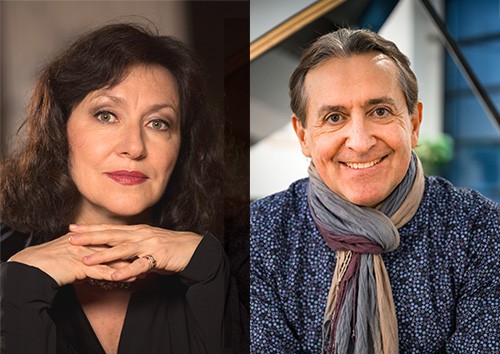 23.09.2026
Piano Extravaganza Festival 2026 - Chamber music concert of Krassimira Stoyanova, soprano and Ludmil Angelov, piano
Works of Mozart, Gounod, Puccini, Verdi, Dvorak, Rimsky-Korsakov.
The concert is part of the Cultural Calendar of the Ministry of Culture for 2026.
The concert is part of the Cultural Calendar of the Ministry of Culture for 2026.
Festivals
18.09.2026 - 22.11.2026
DECHKO UZUNOV/IVAN PENKOV – DIRECTIONS
Memory Programme
DECHKO UZUNOV/IVAN PENKOV – DIRECTIONS
Opening: September 18, 6:00 p.m.
The exhibition Dechko Uzunov/Ivan Penkov: Directions is part of the Memory Programme at the Dechko Uzunov Art Gallery, a branch of the Sofia City Art Gallery, which aims to contribute to raising awareness of the life and work of Dechko Uzunov by presenting research-based exhibitions that reveal different aspects of his oeuvre through artists who were part of his journey. This exhibition showcases the different paths taken by two fellow townsmen and friends during the interwar period.
In 1919, Ivan Penkov and Dechko Uzunov enrolled at the State School of Drawing; that same year, Uzunov painted a portrait of his friend that poked fun at his fascination with folk art. Three years later, the two organised a joint exhibition in Sofia to fund their studies at the Munich Art Academy. The young artists’ exhibition was noticed by Joseph Herbst, who wrote:
“Now, on the occasion of their departure abroad, the two artists had exhibited most of their works, from which their strong talents could be seen quite well. Dechko Uzunov promises to develop most in portrait painting. [...] Ivan Penkov is primarily a decorator with a strong sense of composition and a keen sensitivity to line” (J.H., Razvigor, April 1, 1922, no. 60, p. 4).
In an ironic twist of fate, the older of the two, Penkov, would go on to graduate from the Academy of Art under Prof. Uzunov. In 1939, with Uzonov’s active support, Ivan Penkov won the competition for a permanent teaching position in decorative art.
The selected works invite us to seek similarities amidst the differences between these two constantly experimenting artists during the period when Bulgarian visual arts were coming of age.
Presented in this exhibition are pieces from the collections of the Sofia City Art Gallery, the Dechko Uzunov Art Gallery, the Kazanlak Art Gallery, the Central State Archives, and private collections.
The exhibition also features the film Ivan Penkov: The Crossed-Out Classic (Bulgarian National Television, 2006), by screenwriter: Oskar Kristanov; cinematographer: Yaroslav Yachev; directors: Oskar Kristanov and Kosta Bikov; sound engineer: Petar Yosifov; music arrangement: Georgi (Johnny) Penkov. Duration: 48 min.
DECHKO UZUNOV/IVAN PENKOV – DIRECTIONS
Opening: September 18, 6:00 p.m.
The exhibition Dechko Uzunov/Ivan Penkov: Directions is part of the Memory Programme at the Dechko Uzunov Art Gallery, a branch of the Sofia City Art Gallery, which aims to contribute to raising awareness of the life and work of Dechko Uzunov by presenting research-based exhibitions that reveal different aspects of his oeuvre through artists who were part of his journey. This exhibition showcases the different paths taken by two fellow townsmen and friends during the interwar period.
In 1919, Ivan Penkov and Dechko Uzunov enrolled at the State School of Drawing; that same year, Uzunov painted a portrait of his friend that poked fun at his fascination with folk art. Three years later, the two organised a joint exhibition in Sofia to fund their studies at the Munich Art Academy. The young artists’ exhibition was noticed by Joseph Herbst, who wrote:
“Now, on the occasion of their departure abroad, the two artists had exhibited most of their works, from which their strong talents could be seen quite well. Dechko Uzunov promises to develop most in portrait painting. [...] Ivan Penkov is primarily a decorator with a strong sense of composition and a keen sensitivity to line” (J.H., Razvigor, April 1, 1922, no. 60, p. 4).
In an ironic twist of fate, the older of the two, Penkov, would go on to graduate from the Academy of Art under Prof. Uzunov. In 1939, with Uzonov’s active support, Ivan Penkov won the competition for a permanent teaching position in decorative art.
The selected works invite us to seek similarities amidst the differences between these two constantly experimenting artists during the period when Bulgarian visual arts were coming of age.
Presented in this exhibition are pieces from the collections of the Sofia City Art Gallery, the Dechko Uzunov Art Gallery, the Kazanlak Art Gallery, the Central State Archives, and private collections.
The exhibition also features the film Ivan Penkov: The Crossed-Out Classic (Bulgarian National Television, 2006), by screenwriter: Oskar Kristanov; cinematographer: Yaroslav Yachev; directors: Oskar Kristanov and Kosta Bikov; sound engineer: Petar Yosifov; music arrangement: Georgi (Johnny) Penkov. Duration: 48 min.
Exhibitions
30.07.2026 - 04.10.2026
EUGÈNE CARRIÈRE. THE VISIONARY
The exhibition offers a novel, more conceptual look at one of the most prominent French artists of the second half of the 19th century, emphasising the influence he had on his contemporaries, as well as on the oeuvres of key figures of Early Modernism in the 20th century.
Although Eugène Carrière is well represented in the National Gallery permanent exposition at Kvadrat 500, his name remains relatively unknown to the general public. The team’s ambition is to present all his paintings, lithographs and drawings from the museum collection for the first time. During the research, it was discovered that these lithographs of high collectible worth were extremely valuable copies of unique bibliophilic compendia published in limited editions in Paris in the closing quarter of the 19th century. It is only the Metropolitan Museum in New York, the State Museum in Stuttgart, the Musée d’Orsay in Paris, the State Museum in Amsterdam, and the Cleveland Museum of Art, that can boast possession of such prints.
Carrière was among those artists who won recognition during their lifetime, and whose works were displayed in major museums. He invariably worked beyond the stylistic categories of the time without claiming to belong to any specific trend. Defying any sort of labelling, the painter, engraver and draughtsman, Carrière—a contemporary of Gustave Moreau, Odilon Redon and Paul Gauguin—soon surrounded himself with the most influential figures in the artistic and literary worlds of his time. His oeuvre influenced Picasso who drew inspiration from his monochromatic painting.
Beyond the modernity of his subjects, it is precisely in the artist’s painting style that the great adventure of his art lies. A distinguished portraitist and master of family scenes and the theme of motherhood, and precursor of Minimalism, he eliminated details transforming images into archetypes and expressions of feeling beyond the conventional framework of a specific time. Achieving a soft, monochromic sfumato allowed him to create a complex and mysterious interplay of transparency and depth. Like fleeting apparitions, elusive to the brush, his figures seem to emerge from the landscape, from the background, as if from another time-space.
Although Eugène Carrière is well represented in the National Gallery permanent exposition at Kvadrat 500, his name remains relatively unknown to the general public. The team’s ambition is to present all his paintings, lithographs and drawings from the museum collection for the first time. During the research, it was discovered that these lithographs of high collectible worth were extremely valuable copies of unique bibliophilic compendia published in limited editions in Paris in the closing quarter of the 19th century. It is only the Metropolitan Museum in New York, the State Museum in Stuttgart, the Musée d’Orsay in Paris, the State Museum in Amsterdam, and the Cleveland Museum of Art, that can boast possession of such prints.
Carrière was among those artists who won recognition during their lifetime, and whose works were displayed in major museums. He invariably worked beyond the stylistic categories of the time without claiming to belong to any specific trend. Defying any sort of labelling, the painter, engraver and draughtsman, Carrière—a contemporary of Gustave Moreau, Odilon Redon and Paul Gauguin—soon surrounded himself with the most influential figures in the artistic and literary worlds of his time. His oeuvre influenced Picasso who drew inspiration from his monochromatic painting.
Beyond the modernity of his subjects, it is precisely in the artist’s painting style that the great adventure of his art lies. A distinguished portraitist and master of family scenes and the theme of motherhood, and precursor of Minimalism, he eliminated details transforming images into archetypes and expressions of feeling beyond the conventional framework of a specific time. Achieving a soft, monochromic sfumato allowed him to create a complex and mysterious interplay of transparency and depth. Like fleeting apparitions, elusive to the brush, his figures seem to emerge from the landscape, from the background, as if from another time-space.
Exhibitions
04.08.2026 - 21.10.2026
FRANCISCO GOYA - DREAMS OF A KEEN MIND
The Spaniard FRANCISCO GOYA (1746–1828) was one of the most prominent and influential creative figures in world culture. He produced over 1,000 paintings, as well as the graphic series titled Los Caprichos, Los Desastres de la Guerra, Tauromaquia, and Los Disparates.
His stylistic and philosophical spectrum had a strong influence on the subsequent dynamic development of art, defining him as the last of the Old Masters and one of the earliest of Modernism. His extensive output—paintings, graphics and drawings—served as a leading aesthetic principle for many artistic trends of the 19th and 20th centuries, including Impressionism, Expressionism and Surrealism.
The twenty-one prints from the National Gallery collection follow Goya’s development from his earliest etchings, influenced by Diego Velázquez’s style, to his peak achievements as a social interpreter, remarkable for his sharpness, and a chronicler of dour events and complex human characters. The high artistic level of his four graphic series has left a deep imprint on the history of art.
The National Gallery houses seven works from Los Caprichos (The Caprices) series, 1799. Satirising the institutional pillars of power, the church, the Inquisition, the parasitism of the feudal nobility, and the decay of the moral values of social classes, was the reason for the series to be banned from exhibiting.
Los Desastres de la Guerra (The Disasters of War) series, which Goya began ca. 1810, and returned to ca. 1820, was not published by the artist during his lifetime. One of the works is titled ‘Prisoner. The Custody Is as Barbarous as the Crime’. It is considered unique, as it is rarely found in other museum and private collections around the world.
La Tauromaquia (The Art of Bullfighting) series, probably created between 1815 and 1816, reflected the artist’s interest in bullfighting. These works combine the flagrant cruelty of the corrida and his admiration for the skill and exciting action of the games. Of the thirty-three prints in the series, the National Gallery owns five.
While still working on La Tauromaquia, the artist in all probability launched into another series titled Los Disparates (The Follies), the meaning in his time being along the lines of stupidity or madness. The fantastic compositions are encrypted allegories whose impressive depth fascinated artists such as Baudelaire, Hugo, and Delacroix. The National Gallery’s collection houses four of those; two of them—‘Little Bulls’ Folly’ and ‘A Way of Flying’—are emblematic of the artist’s genius.
The National Gallery also owns the etching ‘Blind Singer’, emotionally described by Nikolay Raynov, in his ‘History of the Plastic Arts’ (1939), as ‘first’ among the ‘curious and significant’ graphic works of Goya.
The exhibition also includes a work by the Spanish surrealist artist, Salvador Dali (1904–1989), dedicated to Goya and his Caprichos.
His stylistic and philosophical spectrum had a strong influence on the subsequent dynamic development of art, defining him as the last of the Old Masters and one of the earliest of Modernism. His extensive output—paintings, graphics and drawings—served as a leading aesthetic principle for many artistic trends of the 19th and 20th centuries, including Impressionism, Expressionism and Surrealism.
The twenty-one prints from the National Gallery collection follow Goya’s development from his earliest etchings, influenced by Diego Velázquez’s style, to his peak achievements as a social interpreter, remarkable for his sharpness, and a chronicler of dour events and complex human characters. The high artistic level of his four graphic series has left a deep imprint on the history of art.
The National Gallery houses seven works from Los Caprichos (The Caprices) series, 1799. Satirising the institutional pillars of power, the church, the Inquisition, the parasitism of the feudal nobility, and the decay of the moral values of social classes, was the reason for the series to be banned from exhibiting.
Los Desastres de la Guerra (The Disasters of War) series, which Goya began ca. 1810, and returned to ca. 1820, was not published by the artist during his lifetime. One of the works is titled ‘Prisoner. The Custody Is as Barbarous as the Crime’. It is considered unique, as it is rarely found in other museum and private collections around the world.
La Tauromaquia (The Art of Bullfighting) series, probably created between 1815 and 1816, reflected the artist’s interest in bullfighting. These works combine the flagrant cruelty of the corrida and his admiration for the skill and exciting action of the games. Of the thirty-three prints in the series, the National Gallery owns five.
While still working on La Tauromaquia, the artist in all probability launched into another series titled Los Disparates (The Follies), the meaning in his time being along the lines of stupidity or madness. The fantastic compositions are encrypted allegories whose impressive depth fascinated artists such as Baudelaire, Hugo, and Delacroix. The National Gallery’s collection houses four of those; two of them—‘Little Bulls’ Folly’ and ‘A Way of Flying’—are emblematic of the artist’s genius.
The National Gallery also owns the etching ‘Blind Singer’, emotionally described by Nikolay Raynov, in his ‘History of the Plastic Arts’ (1939), as ‘first’ among the ‘curious and significant’ graphic works of Goya.
The exhibition also includes a work by the Spanish surrealist artist, Salvador Dali (1904–1989), dedicated to Goya and his Caprichos.
Exhibitions
10.09.2026 - 11.10.2026
Maya Antova – Mayoto - MACONDO
Sofia Arsenal – Museum of Contemporary Art
Maya Antova – Mayoto has transformed the exhibition space into a metaphorical Macondo, the town of solitude and magical realism in Gabriel García Márquez’s masterpiece. The exhibition is dedicated to the centenary of the birth of Ivanka Sokerova, a ‘forgotten’ and lesser-known artist whose life was a fascinating fiction.
Sokerova was an example of the triumph of the spirit: as a child, she manifested her versatile talent, but her life changed after her right hand was complete paralysed due to illness. Thus, fate directed her to devote herself to art. Her life turned into a microcosm of solitude where the borderline between reality and fantasy became invisible.
The exhibition, titled MACONDO, is here to show that solitude is not stagnation but a state of mind where art becomes the only possible language. By inverting the exhibition space, Maya Antova – Mayoto urges the viewer to look at the ‘invisible’, and to rethink Ivanka Sokerova’s persona as the architect of a magical world built on the ruins of a paralysed reality.
The exhibition, arranged in a radically different way, resembles a kind of ‘topsy-turvy world’. All objects are positioned ‘beneath the ceiling’, some reaching the floor, others hanging in the air. To observe them, the viewer must look up—a gesture of rising above earthly suffering and searching for the transcendent; a kind of gravity of the spirit.
An illusion of fiction is achieved through 3D objects replicating sculptures by Sokerova. The ‘thread-hand’ detail (a symbol of matter with no structure) serves as the leitmotif of the exhibition.
At the centre of the installation, there is an inflatable boat roaming beneath the ceiling—a symbol of transition and escape from reality. Life jackets made of paper with prints of memories are ‘floating’ around it. Paper here represents the fragile raft of knowledge that keeps the personality afloat—a reference to all intellectual activities, translations, drawings, sculptures, collages and participation in Dadaist actions, all part of Sokerova’s artistic life.
When viewers look up at the boat and the paper jackets, they do not see a ‘sinking’, but ‘rising’. They understand that escaping from reality is not desertion but an act of supreme intellectual courage.
Ivanka Sokerova did not simply translate books or model clay—she constructed life jackets from thought so as not to sink into the loneliness of her Macondo. Today, these vests hang over us as a call to seek our own haven while the world around turns topsy-turvy.
The exhibition opens with an authorial performance by Maya Antova – Mayoto, titled ‘Traveling Back’, where quotes from literary texts dedicated to Sokerova intertwine with random noises and onomatopoeic elements, creating the feeling of the fragmented world of Macondo.
…
Maya Antova – Mayoto has transformed the exhibition space into a metaphorical Macondo, the town of solitude and magical realism in Gabriel García Márquez’s masterpiece. The exhibition is dedicated to the centenary of the birth of Ivanka Sokerova, a ‘forgotten’ and lesser-known artist whose life was a fascinating fiction.
Sokerova was an example of the triumph of the spirit: as a child, she manifested her versatile talent, but her life changed after her right hand was complete paralysed due to illness. Thus, fate directed her to devote herself to art. Her life turned into a microcosm of solitude where the borderline between reality and fantasy became invisible.
The exhibition, titled MACONDO, is here to show that solitude is not stagnation but a state of mind where art becomes the only possible language. By inverting the exhibition space, Maya Antova – Mayoto urges the viewer to look at the ‘invisible’, and to rethink Ivanka Sokerova’s persona as the architect of a magical world built on the ruins of a paralysed reality.
The exhibition, arranged in a radically different way, resembles a kind of ‘topsy-turvy world’. All objects are positioned ‘beneath the ceiling’, some reaching the floor, others hanging in the air. To observe them, the viewer must look up—a gesture of rising above earthly suffering and searching for the transcendent; a kind of gravity of the spirit.
An illusion of fiction is achieved through 3D objects replicating sculptures by Sokerova. The ‘thread-hand’ detail (a symbol of matter with no structure) serves as the leitmotif of the exhibition.
At the centre of the installation, there is an inflatable boat roaming beneath the ceiling—a symbol of transition and escape from reality. Life jackets made of paper with prints of memories are ‘floating’ around it. Paper here represents the fragile raft of knowledge that keeps the personality afloat—a reference to all intellectual activities, translations, drawings, sculptures, collages and participation in Dadaist actions, all part of Sokerova’s artistic life.
When viewers look up at the boat and the paper jackets, they do not see a ‘sinking’, but ‘rising’. They understand that escaping from reality is not desertion but an act of supreme intellectual courage.
Ivanka Sokerova did not simply translate books or model clay—she constructed life jackets from thought so as not to sink into the loneliness of her Macondo. Today, these vests hang over us as a call to seek our own haven while the world around turns topsy-turvy.
The exhibition opens with an authorial performance by Maya Antova – Mayoto, titled ‘Traveling Back’, where quotes from literary texts dedicated to Sokerova intertwine with random noises and onomatopoeic elements, creating the feeling of the fragmented world of Macondo.
…
Exhibitions
23.09.2026 - 18.11.2026
Piano Extravaganza Festival 2026
Within this year’s edition, Piano Extravaganza Festival will present four piano recitals and two chamber music concerts. We hope that our extraordinary artists and the variety of the repertoire for those 6 events would satisfy even the most sophisticated connoisseur. We would be delighted to welcome you at the wonderful venues of the Central Military Club and the “Bulgaria” Chamber Hall in Sofia!
Tickets at EVENTIM.
Tickets at EVENTIM.
Festivals
16.06.2026 - 16.06.2027
Temporary Exhibition New Acquisitions
from 10:00 to 18:00 o'clock
Entrance with museum tickets
Entrance with museum tickets
Exhibitions
12.02.2026 - 31.12.2026
Temporary exhibition "Copper - Ancient and Modern"
from 10:00 to 18:00 o'clock
Entrance with museum tickets.
Entrance with museum tickets.
Exhibitions
11.04.2025 - 31.12.2026
Temporary exhibition "Minerals and Colorful Creatures. Drawings by Nature"
The Minerals of Bulgaria exposition has been expanded with a new theme: Unique mineral finds from Bulgaria, a project financed by the Ministry of culture. In 6 display cases, minerals with the most beautiful crystals, rare colors and shapes are exhibited, selected for tens of years by hundreds of geologists and collectors from all over Bulgaria.
from 10:00 to 18:00 o'clock
Entrance with museum tickets
from 10:00 to 18:00 o'clock
Entrance with museum tickets
Exhibitions
01.04.2026 - 31.12.2026
Temporary exhibition "Natural Art from Chalcedony"
from 10:00 to 18:00 o'clock
Entrance with museum tickets.
Entrance with museum tickets.
Exhibitions
01.01.2023 - 31.12.2026
Temporary exhibition "Smart Minerals for Smartphones"
from 10:00 to 18:00 o'clock
Entrance with museum tickets.
Entrance with museum tickets.
Exhibitions
01.09.2026 - 24.09.2026
We Came To Be Human. Mustafa Horasan (1965–2026) and Hüseyin Işık
UBA, Shipka 6, 2 A
A curatorial project by Krasimir Linkov
Every artist tries to transform their own reality into another reality - that is, into a work of art.
– Mustafa Horasan
We Came to Be Human brings together in Sofia the intersecting artistic paths of Mustafa Horasan and Husein Işık, shaped by friendship, shared memory, and the responsibility of being human. Developed between Istanbul and Vienna, this encounter brings together the works of two artists shaped by the same artistic education, the difficult historical experiences of their era, and a shared sensibility.
Following Horasan’s tragic death during the preparation of the exhibition, the project also takes on the powerful character of a tribute, keeping his memory alive. Focusing on human vulnerability, resilience, the search for goodness, and the invisible bonds we forge with others, the exhibition confronts the viewer not only with works of art, but also with the ethical and emotional depth of what it means to remain human.
A curatorial project by Krasimir Linkov
Every artist tries to transform their own reality into another reality - that is, into a work of art.
– Mustafa Horasan
We Came to Be Human brings together in Sofia the intersecting artistic paths of Mustafa Horasan and Husein Işık, shaped by friendship, shared memory, and the responsibility of being human. Developed between Istanbul and Vienna, this encounter brings together the works of two artists shaped by the same artistic education, the difficult historical experiences of their era, and a shared sensibility.
Following Horasan’s tragic death during the preparation of the exhibition, the project also takes on the powerful character of a tribute, keeping his memory alive. Focusing on human vulnerability, resilience, the search for goodness, and the invisible bonds we forge with others, the exhibition confronts the viewer not only with works of art, but also with the ethical and emotional depth of what it means to remain human.
Exhibitions
10.12.2025 - 30.01.2027
Zahari Zograph Immersive Exhibition
The National Gallery presents one of the most iconic figures in the history of Bulgarian art – Zahari Zograph. This first immersive exhibition introduces a new way of experiencing the masterpieces of the the museum’s collection. Harnessing new technologies, the 20-minute project, created by Senzor Studio, brings his religious and secular masterpieces to life, revealing essential elements of his creative process.
The initiative promotes Bulgarian Revival аrt, a period characterized by economic, social, and cultural growth, closely tied to the pursuit of ecclesiastical and national independence. The period traces its origins to the mid-18th century, when Paisius of Hilendar wrote Istoriya Slavyanobulgarskaya (History of the Slavs and Bulgarians) in 1762—which profoundly shaped the spiritual awakening of the population and contributed significantly to the development of national consciousness…
The exhibition features a selection of icons, drawings, copies, letters, documents, and secular portraits from the artist’s early period. It also showcases a substantive collection of murals, ranging from his earliest works—created in 1838 for the Chapel of St John the Baptist at the Church of the Holy Virgin—Annunciation in Asenovgrad—to what is considered as his “final masterpiece,” the murals adorning the narthex of the Great Lavra Monastery on Mount Athos, completed between 1851 and 1852.
Zahari Zograph emerged as a defining figure of Bulgarian Revival art. His relentlessly inquisitive artistic spirit was ahead of its era, and his extensive body of work reflects the vitality of the approaching modern age, the artistry of traditional imagery, the strength of line, and the emotive power of color.
The project is realised with the financial support of the National Culture Fund of Bulgaria under the Creation programme 2024.
Media partners: BTA / Bulgarian News Agency and SOF Connect.
The initiative promotes Bulgarian Revival аrt, a period characterized by economic, social, and cultural growth, closely tied to the pursuit of ecclesiastical and national independence. The period traces its origins to the mid-18th century, when Paisius of Hilendar wrote Istoriya Slavyanobulgarskaya (History of the Slavs and Bulgarians) in 1762—which profoundly shaped the spiritual awakening of the population and contributed significantly to the development of national consciousness…
The exhibition features a selection of icons, drawings, copies, letters, documents, and secular portraits from the artist’s early period. It also showcases a substantive collection of murals, ranging from his earliest works—created in 1838 for the Chapel of St John the Baptist at the Church of the Holy Virgin—Annunciation in Asenovgrad—to what is considered as his “final masterpiece,” the murals adorning the narthex of the Great Lavra Monastery on Mount Athos, completed between 1851 and 1852.
Zahari Zograph emerged as a defining figure of Bulgarian Revival art. His relentlessly inquisitive artistic spirit was ahead of its era, and his extensive body of work reflects the vitality of the approaching modern age, the artistry of traditional imagery, the strength of line, and the emotive power of color.
The project is realised with the financial support of the National Culture Fund of Bulgaria under the Creation programme 2024.
Media partners: BTA / Bulgarian News Agency and SOF Connect.
Exhibitions
 24.09.2026
Simeon Pironkoff Presents
Bulgaria Concert Hall
Conductor
Simeon Pironkoff
Solоist/s
Joanna Ruseva
Ensemble
Sofia Philharmonic Orchestra
National Philharmonic Choir
Program
Claude Debussy – “Prélude à l’après-midi d’un faune” – Symphonic Prelude, L. 86
Simeon Pironkov – Concerto for Violin and Orchestra
Béla Bartók – “The Miraculous Mandarin”
Conductor
Simeon Pironkoff
Solоist/s
Joanna Ruseva
Ensemble
Sofia Philharmonic Orchestra
National Philharmonic Choir
Program
Claude Debussy – “Prélude à l’après-midi d’un faune” – Symphonic Prelude, L. 86
Simeon Pironkov – Concerto for Violin and Orchestra
Béla Bartók – “The Miraculous Mandarin”
Music and Dance Events
 24.09.2026
VOCAL WATERCOLORS
Chamber Concert
Chamber hall
Children under 6 are not admitted to adult performances!
Chamber hall
Children under 6 are not admitted to adult performances!
Music and Dance Events
18.09.2026 - 22.11.2026
DECHKO UZUNOV/IVAN PENKOV – DIRECTIONS
Memory Programme
DECHKO UZUNOV/IVAN PENKOV – DIRECTIONS
Opening: September 18, 6:00 p.m.
The exhibition Dechko Uzunov/Ivan Penkov: Directions is part of the Memory Programme at the Dechko Uzunov Art Gallery, a branch of the Sofia City Art Gallery, which aims to contribute to raising awareness of the life and work of Dechko Uzunov by presenting research-based exhibitions that reveal different aspects of his oeuvre through artists who were part of his journey. This exhibition showcases the different paths taken by two fellow townsmen and friends during the interwar period.
In 1919, Ivan Penkov and Dechko Uzunov enrolled at the State School of Drawing; that same year, Uzunov painted a portrait of his friend that poked fun at his fascination with folk art. Three years later, the two organised a joint exhibition in Sofia to fund their studies at the Munich Art Academy. The young artists’ exhibition was noticed by Joseph Herbst, who wrote:
“Now, on the occasion of their departure abroad, the two artists had exhibited most of their works, from which their strong talents could be seen quite well. Dechko Uzunov promises to develop most in portrait painting. [...] Ivan Penkov is primarily a decorator with a strong sense of composition and a keen sensitivity to line” (J.H., Razvigor, April 1, 1922, no. 60, p. 4).
In an ironic twist of fate, the older of the two, Penkov, would go on to graduate from the Academy of Art under Prof. Uzunov. In 1939, with Uzonov’s active support, Ivan Penkov won the competition for a permanent teaching position in decorative art.
The selected works invite us to seek similarities amidst the differences between these two constantly experimenting artists during the period when Bulgarian visual arts were coming of age.
Presented in this exhibition are pieces from the collections of the Sofia City Art Gallery, the Dechko Uzunov Art Gallery, the Kazanlak Art Gallery, the Central State Archives, and private collections.
The exhibition also features the film Ivan Penkov: The Crossed-Out Classic (Bulgarian National Television, 2006), by screenwriter: Oskar Kristanov; cinematographer: Yaroslav Yachev; directors: Oskar Kristanov and Kosta Bikov; sound engineer: Petar Yosifov; music arrangement: Georgi (Johnny) Penkov. Duration: 48 min.
DECHKO UZUNOV/IVAN PENKOV – DIRECTIONS
Opening: September 18, 6:00 p.m.
The exhibition Dechko Uzunov/Ivan Penkov: Directions is part of the Memory Programme at the Dechko Uzunov Art Gallery, a branch of the Sofia City Art Gallery, which aims to contribute to raising awareness of the life and work of Dechko Uzunov by presenting research-based exhibitions that reveal different aspects of his oeuvre through artists who were part of his journey. This exhibition showcases the different paths taken by two fellow townsmen and friends during the interwar period.
In 1919, Ivan Penkov and Dechko Uzunov enrolled at the State School of Drawing; that same year, Uzunov painted a portrait of his friend that poked fun at his fascination with folk art. Three years later, the two organised a joint exhibition in Sofia to fund their studies at the Munich Art Academy. The young artists’ exhibition was noticed by Joseph Herbst, who wrote:
“Now, on the occasion of their departure abroad, the two artists had exhibited most of their works, from which their strong talents could be seen quite well. Dechko Uzunov promises to develop most in portrait painting. [...] Ivan Penkov is primarily a decorator with a strong sense of composition and a keen sensitivity to line” (J.H., Razvigor, April 1, 1922, no. 60, p. 4).
In an ironic twist of fate, the older of the two, Penkov, would go on to graduate from the Academy of Art under Prof. Uzunov. In 1939, with Uzonov’s active support, Ivan Penkov won the competition for a permanent teaching position in decorative art.
The selected works invite us to seek similarities amidst the differences between these two constantly experimenting artists during the period when Bulgarian visual arts were coming of age.
Presented in this exhibition are pieces from the collections of the Sofia City Art Gallery, the Dechko Uzunov Art Gallery, the Kazanlak Art Gallery, the Central State Archives, and private collections.
The exhibition also features the film Ivan Penkov: The Crossed-Out Classic (Bulgarian National Television, 2006), by screenwriter: Oskar Kristanov; cinematographer: Yaroslav Yachev; directors: Oskar Kristanov and Kosta Bikov; sound engineer: Petar Yosifov; music arrangement: Georgi (Johnny) Penkov. Duration: 48 min.
Exhibitions
30.07.2026 - 04.10.2026
EUGÈNE CARRIÈRE. THE VISIONARY
The exhibition offers a novel, more conceptual look at one of the most prominent French artists of the second half of the 19th century, emphasising the influence he had on his contemporaries, as well as on the oeuvres of key figures of Early Modernism in the 20th century.
Although Eugène Carrière is well represented in the National Gallery permanent exposition at Kvadrat 500, his name remains relatively unknown to the general public. The team’s ambition is to present all his paintings, lithographs and drawings from the museum collection for the first time. During the research, it was discovered that these lithographs of high collectible worth were extremely valuable copies of unique bibliophilic compendia published in limited editions in Paris in the closing quarter of the 19th century. It is only the Metropolitan Museum in New York, the State Museum in Stuttgart, the Musée d’Orsay in Paris, the State Museum in Amsterdam, and the Cleveland Museum of Art, that can boast possession of such prints.
Carrière was among those artists who won recognition during their lifetime, and whose works were displayed in major museums. He invariably worked beyond the stylistic categories of the time without claiming to belong to any specific trend. Defying any sort of labelling, the painter, engraver and draughtsman, Carrière—a contemporary of Gustave Moreau, Odilon Redon and Paul Gauguin—soon surrounded himself with the most influential figures in the artistic and literary worlds of his time. His oeuvre influenced Picasso who drew inspiration from his monochromatic painting.
Beyond the modernity of his subjects, it is precisely in the artist’s painting style that the great adventure of his art lies. A distinguished portraitist and master of family scenes and the theme of motherhood, and precursor of Minimalism, he eliminated details transforming images into archetypes and expressions of feeling beyond the conventional framework of a specific time. Achieving a soft, monochromic sfumato allowed him to create a complex and mysterious interplay of transparency and depth. Like fleeting apparitions, elusive to the brush, his figures seem to emerge from the landscape, from the background, as if from another time-space.
Although Eugène Carrière is well represented in the National Gallery permanent exposition at Kvadrat 500, his name remains relatively unknown to the general public. The team’s ambition is to present all his paintings, lithographs and drawings from the museum collection for the first time. During the research, it was discovered that these lithographs of high collectible worth were extremely valuable copies of unique bibliophilic compendia published in limited editions in Paris in the closing quarter of the 19th century. It is only the Metropolitan Museum in New York, the State Museum in Stuttgart, the Musée d’Orsay in Paris, the State Museum in Amsterdam, and the Cleveland Museum of Art, that can boast possession of such prints.
Carrière was among those artists who won recognition during their lifetime, and whose works were displayed in major museums. He invariably worked beyond the stylistic categories of the time without claiming to belong to any specific trend. Defying any sort of labelling, the painter, engraver and draughtsman, Carrière—a contemporary of Gustave Moreau, Odilon Redon and Paul Gauguin—soon surrounded himself with the most influential figures in the artistic and literary worlds of his time. His oeuvre influenced Picasso who drew inspiration from his monochromatic painting.
Beyond the modernity of his subjects, it is precisely in the artist’s painting style that the great adventure of his art lies. A distinguished portraitist and master of family scenes and the theme of motherhood, and precursor of Minimalism, he eliminated details transforming images into archetypes and expressions of feeling beyond the conventional framework of a specific time. Achieving a soft, monochromic sfumato allowed him to create a complex and mysterious interplay of transparency and depth. Like fleeting apparitions, elusive to the brush, his figures seem to emerge from the landscape, from the background, as if from another time-space.
Exhibitions
04.08.2026 - 21.10.2026
FRANCISCO GOYA - DREAMS OF A KEEN MIND
The Spaniard FRANCISCO GOYA (1746–1828) was one of the most prominent and influential creative figures in world culture. He produced over 1,000 paintings, as well as the graphic series titled Los Caprichos, Los Desastres de la Guerra, Tauromaquia, and Los Disparates.
His stylistic and philosophical spectrum had a strong influence on the subsequent dynamic development of art, defining him as the last of the Old Masters and one of the earliest of Modernism. His extensive output—paintings, graphics and drawings—served as a leading aesthetic principle for many artistic trends of the 19th and 20th centuries, including Impressionism, Expressionism and Surrealism.
The twenty-one prints from the National Gallery collection follow Goya’s development from his earliest etchings, influenced by Diego Velázquez’s style, to his peak achievements as a social interpreter, remarkable for his sharpness, and a chronicler of dour events and complex human characters. The high artistic level of his four graphic series has left a deep imprint on the history of art.
The National Gallery houses seven works from Los Caprichos (The Caprices) series, 1799. Satirising the institutional pillars of power, the church, the Inquisition, the parasitism of the feudal nobility, and the decay of the moral values of social classes, was the reason for the series to be banned from exhibiting.
Los Desastres de la Guerra (The Disasters of War) series, which Goya began ca. 1810, and returned to ca. 1820, was not published by the artist during his lifetime. One of the works is titled ‘Prisoner. The Custody Is as Barbarous as the Crime’. It is considered unique, as it is rarely found in other museum and private collections around the world.
La Tauromaquia (The Art of Bullfighting) series, probably created between 1815 and 1816, reflected the artist’s interest in bullfighting. These works combine the flagrant cruelty of the corrida and his admiration for the skill and exciting action of the games. Of the thirty-three prints in the series, the National Gallery owns five.
While still working on La Tauromaquia, the artist in all probability launched into another series titled Los Disparates (The Follies), the meaning in his time being along the lines of stupidity or madness. The fantastic compositions are encrypted allegories whose impressive depth fascinated artists such as Baudelaire, Hugo, and Delacroix. The National Gallery’s collection houses four of those; two of them—‘Little Bulls’ Folly’ and ‘A Way of Flying’—are emblematic of the artist’s genius.
The National Gallery also owns the etching ‘Blind Singer’, emotionally described by Nikolay Raynov, in his ‘History of the Plastic Arts’ (1939), as ‘first’ among the ‘curious and significant’ graphic works of Goya.
The exhibition also includes a work by the Spanish surrealist artist, Salvador Dali (1904–1989), dedicated to Goya and his Caprichos.
His stylistic and philosophical spectrum had a strong influence on the subsequent dynamic development of art, defining him as the last of the Old Masters and one of the earliest of Modernism. His extensive output—paintings, graphics and drawings—served as a leading aesthetic principle for many artistic trends of the 19th and 20th centuries, including Impressionism, Expressionism and Surrealism.
The twenty-one prints from the National Gallery collection follow Goya’s development from his earliest etchings, influenced by Diego Velázquez’s style, to his peak achievements as a social interpreter, remarkable for his sharpness, and a chronicler of dour events and complex human characters. The high artistic level of his four graphic series has left a deep imprint on the history of art.
The National Gallery houses seven works from Los Caprichos (The Caprices) series, 1799. Satirising the institutional pillars of power, the church, the Inquisition, the parasitism of the feudal nobility, and the decay of the moral values of social classes, was the reason for the series to be banned from exhibiting.
Los Desastres de la Guerra (The Disasters of War) series, which Goya began ca. 1810, and returned to ca. 1820, was not published by the artist during his lifetime. One of the works is titled ‘Prisoner. The Custody Is as Barbarous as the Crime’. It is considered unique, as it is rarely found in other museum and private collections around the world.
La Tauromaquia (The Art of Bullfighting) series, probably created between 1815 and 1816, reflected the artist’s interest in bullfighting. These works combine the flagrant cruelty of the corrida and his admiration for the skill and exciting action of the games. Of the thirty-three prints in the series, the National Gallery owns five.
While still working on La Tauromaquia, the artist in all probability launched into another series titled Los Disparates (The Follies), the meaning in his time being along the lines of stupidity or madness. The fantastic compositions are encrypted allegories whose impressive depth fascinated artists such as Baudelaire, Hugo, and Delacroix. The National Gallery’s collection houses four of those; two of them—‘Little Bulls’ Folly’ and ‘A Way of Flying’—are emblematic of the artist’s genius.
The National Gallery also owns the etching ‘Blind Singer’, emotionally described by Nikolay Raynov, in his ‘History of the Plastic Arts’ (1939), as ‘first’ among the ‘curious and significant’ graphic works of Goya.
The exhibition also includes a work by the Spanish surrealist artist, Salvador Dali (1904–1989), dedicated to Goya and his Caprichos.
Exhibitions
10.09.2026 - 11.10.2026
Maya Antova – Mayoto - MACONDO
Sofia Arsenal – Museum of Contemporary Art
Maya Antova – Mayoto has transformed the exhibition space into a metaphorical Macondo, the town of solitude and magical realism in Gabriel García Márquez’s masterpiece. The exhibition is dedicated to the centenary of the birth of Ivanka Sokerova, a ‘forgotten’ and lesser-known artist whose life was a fascinating fiction.
Sokerova was an example of the triumph of the spirit: as a child, she manifested her versatile talent, but her life changed after her right hand was complete paralysed due to illness. Thus, fate directed her to devote herself to art. Her life turned into a microcosm of solitude where the borderline between reality and fantasy became invisible.
The exhibition, titled MACONDO, is here to show that solitude is not stagnation but a state of mind where art becomes the only possible language. By inverting the exhibition space, Maya Antova – Mayoto urges the viewer to look at the ‘invisible’, and to rethink Ivanka Sokerova’s persona as the architect of a magical world built on the ruins of a paralysed reality.
The exhibition, arranged in a radically different way, resembles a kind of ‘topsy-turvy world’. All objects are positioned ‘beneath the ceiling’, some reaching the floor, others hanging in the air. To observe them, the viewer must look up—a gesture of rising above earthly suffering and searching for the transcendent; a kind of gravity of the spirit.
An illusion of fiction is achieved through 3D objects replicating sculptures by Sokerova. The ‘thread-hand’ detail (a symbol of matter with no structure) serves as the leitmotif of the exhibition.
At the centre of the installation, there is an inflatable boat roaming beneath the ceiling—a symbol of transition and escape from reality. Life jackets made of paper with prints of memories are ‘floating’ around it. Paper here represents the fragile raft of knowledge that keeps the personality afloat—a reference to all intellectual activities, translations, drawings, sculptures, collages and participation in Dadaist actions, all part of Sokerova’s artistic life.
When viewers look up at the boat and the paper jackets, they do not see a ‘sinking’, but ‘rising’. They understand that escaping from reality is not desertion but an act of supreme intellectual courage.
Ivanka Sokerova did not simply translate books or model clay—she constructed life jackets from thought so as not to sink into the loneliness of her Macondo. Today, these vests hang over us as a call to seek our own haven while the world around turns topsy-turvy.
The exhibition opens with an authorial performance by Maya Antova – Mayoto, titled ‘Traveling Back’, where quotes from literary texts dedicated to Sokerova intertwine with random noises and onomatopoeic elements, creating the feeling of the fragmented world of Macondo.
…
Maya Antova – Mayoto has transformed the exhibition space into a metaphorical Macondo, the town of solitude and magical realism in Gabriel García Márquez’s masterpiece. The exhibition is dedicated to the centenary of the birth of Ivanka Sokerova, a ‘forgotten’ and lesser-known artist whose life was a fascinating fiction.
Sokerova was an example of the triumph of the spirit: as a child, she manifested her versatile talent, but her life changed after her right hand was complete paralysed due to illness. Thus, fate directed her to devote herself to art. Her life turned into a microcosm of solitude where the borderline between reality and fantasy became invisible.
The exhibition, titled MACONDO, is here to show that solitude is not stagnation but a state of mind where art becomes the only possible language. By inverting the exhibition space, Maya Antova – Mayoto urges the viewer to look at the ‘invisible’, and to rethink Ivanka Sokerova’s persona as the architect of a magical world built on the ruins of a paralysed reality.
The exhibition, arranged in a radically different way, resembles a kind of ‘topsy-turvy world’. All objects are positioned ‘beneath the ceiling’, some reaching the floor, others hanging in the air. To observe them, the viewer must look up—a gesture of rising above earthly suffering and searching for the transcendent; a kind of gravity of the spirit.
An illusion of fiction is achieved through 3D objects replicating sculptures by Sokerova. The ‘thread-hand’ detail (a symbol of matter with no structure) serves as the leitmotif of the exhibition.
At the centre of the installation, there is an inflatable boat roaming beneath the ceiling—a symbol of transition and escape from reality. Life jackets made of paper with prints of memories are ‘floating’ around it. Paper here represents the fragile raft of knowledge that keeps the personality afloat—a reference to all intellectual activities, translations, drawings, sculptures, collages and participation in Dadaist actions, all part of Sokerova’s artistic life.
When viewers look up at the boat and the paper jackets, they do not see a ‘sinking’, but ‘rising’. They understand that escaping from reality is not desertion but an act of supreme intellectual courage.
Ivanka Sokerova did not simply translate books or model clay—she constructed life jackets from thought so as not to sink into the loneliness of her Macondo. Today, these vests hang over us as a call to seek our own haven while the world around turns topsy-turvy.
The exhibition opens with an authorial performance by Maya Antova – Mayoto, titled ‘Traveling Back’, where quotes from literary texts dedicated to Sokerova intertwine with random noises and onomatopoeic elements, creating the feeling of the fragmented world of Macondo.
…
Exhibitions
23.09.2026 - 18.11.2026
Piano Extravaganza Festival 2026
Within this year’s edition, Piano Extravaganza Festival will present four piano recitals and two chamber music concerts. We hope that our extraordinary artists and the variety of the repertoire for those 6 events would satisfy even the most sophisticated connoisseur. We would be delighted to welcome you at the wonderful venues of the Central Military Club and the “Bulgaria” Chamber Hall in Sofia!
Tickets at EVENTIM.
Tickets at EVENTIM.
Festivals
16.06.2026 - 16.06.2027
Temporary Exhibition New Acquisitions
from 10:00 to 18:00 o'clock
Entrance with museum tickets
Entrance with museum tickets
Exhibitions
12.02.2026 - 31.12.2026
Temporary exhibition "Copper - Ancient and Modern"
from 10:00 to 18:00 o'clock
Entrance with museum tickets.
Entrance with museum tickets.
Exhibitions
11.04.2025 - 31.12.2026
Temporary exhibition "Minerals and Colorful Creatures. Drawings by Nature"
The Minerals of Bulgaria exposition has been expanded with a new theme: Unique mineral finds from Bulgaria, a project financed by the Ministry of culture. In 6 display cases, minerals with the most beautiful crystals, rare colors and shapes are exhibited, selected for tens of years by hundreds of geologists and collectors from all over Bulgaria.
from 10:00 to 18:00 o'clock
Entrance with museum tickets
from 10:00 to 18:00 o'clock
Entrance with museum tickets
Exhibitions
01.04.2026 - 31.12.2026
Temporary exhibition "Natural Art from Chalcedony"
from 10:00 to 18:00 o'clock
Entrance with museum tickets.
Entrance with museum tickets.
Exhibitions
01.01.2023 - 31.12.2026
Temporary exhibition "Smart Minerals for Smartphones"
from 10:00 to 18:00 o'clock
Entrance with museum tickets.
Entrance with museum tickets.
Exhibitions
10.12.2025 - 30.01.2027
Zahari Zograph Immersive Exhibition
The National Gallery presents one of the most iconic figures in the history of Bulgarian art – Zahari Zograph. This first immersive exhibition introduces a new way of experiencing the masterpieces of the the museum’s collection. Harnessing new technologies, the 20-minute project, created by Senzor Studio, brings his religious and secular masterpieces to life, revealing essential elements of his creative process.
The initiative promotes Bulgarian Revival аrt, a period characterized by economic, social, and cultural growth, closely tied to the pursuit of ecclesiastical and national independence. The period traces its origins to the mid-18th century, when Paisius of Hilendar wrote Istoriya Slavyanobulgarskaya (History of the Slavs and Bulgarians) in 1762—which profoundly shaped the spiritual awakening of the population and contributed significantly to the development of national consciousness…
The exhibition features a selection of icons, drawings, copies, letters, documents, and secular portraits from the artist’s early period. It also showcases a substantive collection of murals, ranging from his earliest works—created in 1838 for the Chapel of St John the Baptist at the Church of the Holy Virgin—Annunciation in Asenovgrad—to what is considered as his “final masterpiece,” the murals adorning the narthex of the Great Lavra Monastery on Mount Athos, completed between 1851 and 1852.
Zahari Zograph emerged as a defining figure of Bulgarian Revival art. His relentlessly inquisitive artistic spirit was ahead of its era, and his extensive body of work reflects the vitality of the approaching modern age, the artistry of traditional imagery, the strength of line, and the emotive power of color.
The project is realised with the financial support of the National Culture Fund of Bulgaria under the Creation programme 2024.
Media partners: BTA / Bulgarian News Agency and SOF Connect.
The initiative promotes Bulgarian Revival аrt, a period characterized by economic, social, and cultural growth, closely tied to the pursuit of ecclesiastical and national independence. The period traces its origins to the mid-18th century, when Paisius of Hilendar wrote Istoriya Slavyanobulgarskaya (History of the Slavs and Bulgarians) in 1762—which profoundly shaped the spiritual awakening of the population and contributed significantly to the development of national consciousness…
The exhibition features a selection of icons, drawings, copies, letters, documents, and secular portraits from the artist’s early period. It also showcases a substantive collection of murals, ranging from his earliest works—created in 1838 for the Chapel of St John the Baptist at the Church of the Holy Virgin—Annunciation in Asenovgrad—to what is considered as his “final masterpiece,” the murals adorning the narthex of the Great Lavra Monastery on Mount Athos, completed between 1851 and 1852.
Zahari Zograph emerged as a defining figure of Bulgarian Revival art. His relentlessly inquisitive artistic spirit was ahead of its era, and his extensive body of work reflects the vitality of the approaching modern age, the artistry of traditional imagery, the strength of line, and the emotive power of color.
The project is realised with the financial support of the National Culture Fund of Bulgaria under the Creation programme 2024.
Media partners: BTA / Bulgarian News Agency and SOF Connect.
Exhibitions
18.09.2026 - 22.11.2026
DECHKO UZUNOV/IVAN PENKOV – DIRECTIONS
Memory Programme
DECHKO UZUNOV/IVAN PENKOV – DIRECTIONS
Opening: September 18, 6:00 p.m.
The exhibition Dechko Uzunov/Ivan Penkov: Directions is part of the Memory Programme at the Dechko Uzunov Art Gallery, a branch of the Sofia City Art Gallery, which aims to contribute to raising awareness of the life and work of Dechko Uzunov by presenting research-based exhibitions that reveal different aspects of his oeuvre through artists who were part of his journey. This exhibition showcases the different paths taken by two fellow townsmen and friends during the interwar period.
In 1919, Ivan Penkov and Dechko Uzunov enrolled at the State School of Drawing; that same year, Uzunov painted a portrait of his friend that poked fun at his fascination with folk art. Three years later, the two organised a joint exhibition in Sofia to fund their studies at the Munich Art Academy. The young artists’ exhibition was noticed by Joseph Herbst, who wrote:
“Now, on the occasion of their departure abroad, the two artists had exhibited most of their works, from which their strong talents could be seen quite well. Dechko Uzunov promises to develop most in portrait painting. [...] Ivan Penkov is primarily a decorator with a strong sense of composition and a keen sensitivity to line” (J.H., Razvigor, April 1, 1922, no. 60, p. 4).
In an ironic twist of fate, the older of the two, Penkov, would go on to graduate from the Academy of Art under Prof. Uzunov. In 1939, with Uzonov’s active support, Ivan Penkov won the competition for a permanent teaching position in decorative art.
The selected works invite us to seek similarities amidst the differences between these two constantly experimenting artists during the period when Bulgarian visual arts were coming of age.
Presented in this exhibition are pieces from the collections of the Sofia City Art Gallery, the Dechko Uzunov Art Gallery, the Kazanlak Art Gallery, the Central State Archives, and private collections.
The exhibition also features the film Ivan Penkov: The Crossed-Out Classic (Bulgarian National Television, 2006), by screenwriter: Oskar Kristanov; cinematographer: Yaroslav Yachev; directors: Oskar Kristanov and Kosta Bikov; sound engineer: Petar Yosifov; music arrangement: Georgi (Johnny) Penkov. Duration: 48 min.
DECHKO UZUNOV/IVAN PENKOV – DIRECTIONS
Opening: September 18, 6:00 p.m.
The exhibition Dechko Uzunov/Ivan Penkov: Directions is part of the Memory Programme at the Dechko Uzunov Art Gallery, a branch of the Sofia City Art Gallery, which aims to contribute to raising awareness of the life and work of Dechko Uzunov by presenting research-based exhibitions that reveal different aspects of his oeuvre through artists who were part of his journey. This exhibition showcases the different paths taken by two fellow townsmen and friends during the interwar period.
In 1919, Ivan Penkov and Dechko Uzunov enrolled at the State School of Drawing; that same year, Uzunov painted a portrait of his friend that poked fun at his fascination with folk art. Three years later, the two organised a joint exhibition in Sofia to fund their studies at the Munich Art Academy. The young artists’ exhibition was noticed by Joseph Herbst, who wrote:
“Now, on the occasion of their departure abroad, the two artists had exhibited most of their works, from which their strong talents could be seen quite well. Dechko Uzunov promises to develop most in portrait painting. [...] Ivan Penkov is primarily a decorator with a strong sense of composition and a keen sensitivity to line” (J.H., Razvigor, April 1, 1922, no. 60, p. 4).
In an ironic twist of fate, the older of the two, Penkov, would go on to graduate from the Academy of Art under Prof. Uzunov. In 1939, with Uzonov’s active support, Ivan Penkov won the competition for a permanent teaching position in decorative art.
The selected works invite us to seek similarities amidst the differences between these two constantly experimenting artists during the period when Bulgarian visual arts were coming of age.
Presented in this exhibition are pieces from the collections of the Sofia City Art Gallery, the Dechko Uzunov Art Gallery, the Kazanlak Art Gallery, the Central State Archives, and private collections.
The exhibition also features the film Ivan Penkov: The Crossed-Out Classic (Bulgarian National Television, 2006), by screenwriter: Oskar Kristanov; cinematographer: Yaroslav Yachev; directors: Oskar Kristanov and Kosta Bikov; sound engineer: Petar Yosifov; music arrangement: Georgi (Johnny) Penkov. Duration: 48 min.
Exhibitions
30.07.2026 - 04.10.2026
EUGÈNE CARRIÈRE. THE VISIONARY
The exhibition offers a novel, more conceptual look at one of the most prominent French artists of the second half of the 19th century, emphasising the influence he had on his contemporaries, as well as on the oeuvres of key figures of Early Modernism in the 20th century.
Although Eugène Carrière is well represented in the National Gallery permanent exposition at Kvadrat 500, his name remains relatively unknown to the general public. The team’s ambition is to present all his paintings, lithographs and drawings from the museum collection for the first time. During the research, it was discovered that these lithographs of high collectible worth were extremely valuable copies of unique bibliophilic compendia published in limited editions in Paris in the closing quarter of the 19th century. It is only the Metropolitan Museum in New York, the State Museum in Stuttgart, the Musée d’Orsay in Paris, the State Museum in Amsterdam, and the Cleveland Museum of Art, that can boast possession of such prints.
Carrière was among those artists who won recognition during their lifetime, and whose works were displayed in major museums. He invariably worked beyond the stylistic categories of the time without claiming to belong to any specific trend. Defying any sort of labelling, the painter, engraver and draughtsman, Carrière—a contemporary of Gustave Moreau, Odilon Redon and Paul Gauguin—soon surrounded himself with the most influential figures in the artistic and literary worlds of his time. His oeuvre influenced Picasso who drew inspiration from his monochromatic painting.
Beyond the modernity of his subjects, it is precisely in the artist’s painting style that the great adventure of his art lies. A distinguished portraitist and master of family scenes and the theme of motherhood, and precursor of Minimalism, he eliminated details transforming images into archetypes and expressions of feeling beyond the conventional framework of a specific time. Achieving a soft, monochromic sfumato allowed him to create a complex and mysterious interplay of transparency and depth. Like fleeting apparitions, elusive to the brush, his figures seem to emerge from the landscape, from the background, as if from another time-space.
Although Eugène Carrière is well represented in the National Gallery permanent exposition at Kvadrat 500, his name remains relatively unknown to the general public. The team’s ambition is to present all his paintings, lithographs and drawings from the museum collection for the first time. During the research, it was discovered that these lithographs of high collectible worth were extremely valuable copies of unique bibliophilic compendia published in limited editions in Paris in the closing quarter of the 19th century. It is only the Metropolitan Museum in New York, the State Museum in Stuttgart, the Musée d’Orsay in Paris, the State Museum in Amsterdam, and the Cleveland Museum of Art, that can boast possession of such prints.
Carrière was among those artists who won recognition during their lifetime, and whose works were displayed in major museums. He invariably worked beyond the stylistic categories of the time without claiming to belong to any specific trend. Defying any sort of labelling, the painter, engraver and draughtsman, Carrière—a contemporary of Gustave Moreau, Odilon Redon and Paul Gauguin—soon surrounded himself with the most influential figures in the artistic and literary worlds of his time. His oeuvre influenced Picasso who drew inspiration from his monochromatic painting.
Beyond the modernity of his subjects, it is precisely in the artist’s painting style that the great adventure of his art lies. A distinguished portraitist and master of family scenes and the theme of motherhood, and precursor of Minimalism, he eliminated details transforming images into archetypes and expressions of feeling beyond the conventional framework of a specific time. Achieving a soft, monochromic sfumato allowed him to create a complex and mysterious interplay of transparency and depth. Like fleeting apparitions, elusive to the brush, his figures seem to emerge from the landscape, from the background, as if from another time-space.
Exhibitions
04.08.2026 - 21.10.2026
FRANCISCO GOYA - DREAMS OF A KEEN MIND
The Spaniard FRANCISCO GOYA (1746–1828) was one of the most prominent and influential creative figures in world culture. He produced over 1,000 paintings, as well as the graphic series titled Los Caprichos, Los Desastres de la Guerra, Tauromaquia, and Los Disparates.
His stylistic and philosophical spectrum had a strong influence on the subsequent dynamic development of art, defining him as the last of the Old Masters and one of the earliest of Modernism. His extensive output—paintings, graphics and drawings—served as a leading aesthetic principle for many artistic trends of the 19th and 20th centuries, including Impressionism, Expressionism and Surrealism.
The twenty-one prints from the National Gallery collection follow Goya’s development from his earliest etchings, influenced by Diego Velázquez’s style, to his peak achievements as a social interpreter, remarkable for his sharpness, and a chronicler of dour events and complex human characters. The high artistic level of his four graphic series has left a deep imprint on the history of art.
The National Gallery houses seven works from Los Caprichos (The Caprices) series, 1799. Satirising the institutional pillars of power, the church, the Inquisition, the parasitism of the feudal nobility, and the decay of the moral values of social classes, was the reason for the series to be banned from exhibiting.
Los Desastres de la Guerra (The Disasters of War) series, which Goya began ca. 1810, and returned to ca. 1820, was not published by the artist during his lifetime. One of the works is titled ‘Prisoner. The Custody Is as Barbarous as the Crime’. It is considered unique, as it is rarely found in other museum and private collections around the world.
La Tauromaquia (The Art of Bullfighting) series, probably created between 1815 and 1816, reflected the artist’s interest in bullfighting. These works combine the flagrant cruelty of the corrida and his admiration for the skill and exciting action of the games. Of the thirty-three prints in the series, the National Gallery owns five.
While still working on La Tauromaquia, the artist in all probability launched into another series titled Los Disparates (The Follies), the meaning in his time being along the lines of stupidity or madness. The fantastic compositions are encrypted allegories whose impressive depth fascinated artists such as Baudelaire, Hugo, and Delacroix. The National Gallery’s collection houses four of those; two of them—‘Little Bulls’ Folly’ and ‘A Way of Flying’—are emblematic of the artist’s genius.
The National Gallery also owns the etching ‘Blind Singer’, emotionally described by Nikolay Raynov, in his ‘History of the Plastic Arts’ (1939), as ‘first’ among the ‘curious and significant’ graphic works of Goya.
The exhibition also includes a work by the Spanish surrealist artist, Salvador Dali (1904–1989), dedicated to Goya and his Caprichos.
His stylistic and philosophical spectrum had a strong influence on the subsequent dynamic development of art, defining him as the last of the Old Masters and one of the earliest of Modernism. His extensive output—paintings, graphics and drawings—served as a leading aesthetic principle for many artistic trends of the 19th and 20th centuries, including Impressionism, Expressionism and Surrealism.
The twenty-one prints from the National Gallery collection follow Goya’s development from his earliest etchings, influenced by Diego Velázquez’s style, to his peak achievements as a social interpreter, remarkable for his sharpness, and a chronicler of dour events and complex human characters. The high artistic level of his four graphic series has left a deep imprint on the history of art.
The National Gallery houses seven works from Los Caprichos (The Caprices) series, 1799. Satirising the institutional pillars of power, the church, the Inquisition, the parasitism of the feudal nobility, and the decay of the moral values of social classes, was the reason for the series to be banned from exhibiting.
Los Desastres de la Guerra (The Disasters of War) series, which Goya began ca. 1810, and returned to ca. 1820, was not published by the artist during his lifetime. One of the works is titled ‘Prisoner. The Custody Is as Barbarous as the Crime’. It is considered unique, as it is rarely found in other museum and private collections around the world.
La Tauromaquia (The Art of Bullfighting) series, probably created between 1815 and 1816, reflected the artist’s interest in bullfighting. These works combine the flagrant cruelty of the corrida and his admiration for the skill and exciting action of the games. Of the thirty-three prints in the series, the National Gallery owns five.
While still working on La Tauromaquia, the artist in all probability launched into another series titled Los Disparates (The Follies), the meaning in his time being along the lines of stupidity or madness. The fantastic compositions are encrypted allegories whose impressive depth fascinated artists such as Baudelaire, Hugo, and Delacroix. The National Gallery’s collection houses four of those; two of them—‘Little Bulls’ Folly’ and ‘A Way of Flying’—are emblematic of the artist’s genius.
The National Gallery also owns the etching ‘Blind Singer’, emotionally described by Nikolay Raynov, in his ‘History of the Plastic Arts’ (1939), as ‘first’ among the ‘curious and significant’ graphic works of Goya.
The exhibition also includes a work by the Spanish surrealist artist, Salvador Dali (1904–1989), dedicated to Goya and his Caprichos.
Exhibitions
10.09.2026 - 11.10.2026
Maya Antova – Mayoto - MACONDO
Sofia Arsenal – Museum of Contemporary Art
Maya Antova – Mayoto has transformed the exhibition space into a metaphorical Macondo, the town of solitude and magical realism in Gabriel García Márquez’s masterpiece. The exhibition is dedicated to the centenary of the birth of Ivanka Sokerova, a ‘forgotten’ and lesser-known artist whose life was a fascinating fiction.
Sokerova was an example of the triumph of the spirit: as a child, she manifested her versatile talent, but her life changed after her right hand was complete paralysed due to illness. Thus, fate directed her to devote herself to art. Her life turned into a microcosm of solitude where the borderline between reality and fantasy became invisible.
The exhibition, titled MACONDO, is here to show that solitude is not stagnation but a state of mind where art becomes the only possible language. By inverting the exhibition space, Maya Antova – Mayoto urges the viewer to look at the ‘invisible’, and to rethink Ivanka Sokerova’s persona as the architect of a magical world built on the ruins of a paralysed reality.
The exhibition, arranged in a radically different way, resembles a kind of ‘topsy-turvy world’. All objects are positioned ‘beneath the ceiling’, some reaching the floor, others hanging in the air. To observe them, the viewer must look up—a gesture of rising above earthly suffering and searching for the transcendent; a kind of gravity of the spirit.
An illusion of fiction is achieved through 3D objects replicating sculptures by Sokerova. The ‘thread-hand’ detail (a symbol of matter with no structure) serves as the leitmotif of the exhibition.
At the centre of the installation, there is an inflatable boat roaming beneath the ceiling—a symbol of transition and escape from reality. Life jackets made of paper with prints of memories are ‘floating’ around it. Paper here represents the fragile raft of knowledge that keeps the personality afloat—a reference to all intellectual activities, translations, drawings, sculptures, collages and participation in Dadaist actions, all part of Sokerova’s artistic life.
When viewers look up at the boat and the paper jackets, they do not see a ‘sinking’, but ‘rising’. They understand that escaping from reality is not desertion but an act of supreme intellectual courage.
Ivanka Sokerova did not simply translate books or model clay—she constructed life jackets from thought so as not to sink into the loneliness of her Macondo. Today, these vests hang over us as a call to seek our own haven while the world around turns topsy-turvy.
The exhibition opens with an authorial performance by Maya Antova – Mayoto, titled ‘Traveling Back’, where quotes from literary texts dedicated to Sokerova intertwine with random noises and onomatopoeic elements, creating the feeling of the fragmented world of Macondo.
…
Maya Antova – Mayoto has transformed the exhibition space into a metaphorical Macondo, the town of solitude and magical realism in Gabriel García Márquez’s masterpiece. The exhibition is dedicated to the centenary of the birth of Ivanka Sokerova, a ‘forgotten’ and lesser-known artist whose life was a fascinating fiction.
Sokerova was an example of the triumph of the spirit: as a child, she manifested her versatile talent, but her life changed after her right hand was complete paralysed due to illness. Thus, fate directed her to devote herself to art. Her life turned into a microcosm of solitude where the borderline between reality and fantasy became invisible.
The exhibition, titled MACONDO, is here to show that solitude is not stagnation but a state of mind where art becomes the only possible language. By inverting the exhibition space, Maya Antova – Mayoto urges the viewer to look at the ‘invisible’, and to rethink Ivanka Sokerova’s persona as the architect of a magical world built on the ruins of a paralysed reality.
The exhibition, arranged in a radically different way, resembles a kind of ‘topsy-turvy world’. All objects are positioned ‘beneath the ceiling’, some reaching the floor, others hanging in the air. To observe them, the viewer must look up—a gesture of rising above earthly suffering and searching for the transcendent; a kind of gravity of the spirit.
An illusion of fiction is achieved through 3D objects replicating sculptures by Sokerova. The ‘thread-hand’ detail (a symbol of matter with no structure) serves as the leitmotif of the exhibition.
At the centre of the installation, there is an inflatable boat roaming beneath the ceiling—a symbol of transition and escape from reality. Life jackets made of paper with prints of memories are ‘floating’ around it. Paper here represents the fragile raft of knowledge that keeps the personality afloat—a reference to all intellectual activities, translations, drawings, sculptures, collages and participation in Dadaist actions, all part of Sokerova’s artistic life.
When viewers look up at the boat and the paper jackets, they do not see a ‘sinking’, but ‘rising’. They understand that escaping from reality is not desertion but an act of supreme intellectual courage.
Ivanka Sokerova did not simply translate books or model clay—she constructed life jackets from thought so as not to sink into the loneliness of her Macondo. Today, these vests hang over us as a call to seek our own haven while the world around turns topsy-turvy.
The exhibition opens with an authorial performance by Maya Antova – Mayoto, titled ‘Traveling Back’, where quotes from literary texts dedicated to Sokerova intertwine with random noises and onomatopoeic elements, creating the feeling of the fragmented world of Macondo.
…
Exhibitions
23.09.2026 - 18.11.2026
Piano Extravaganza Festival 2026
Within this year’s edition, Piano Extravaganza Festival will present four piano recitals and two chamber music concerts. We hope that our extraordinary artists and the variety of the repertoire for those 6 events would satisfy even the most sophisticated connoisseur. We would be delighted to welcome you at the wonderful venues of the Central Military Club and the “Bulgaria” Chamber Hall in Sofia!
Tickets at EVENTIM.
Tickets at EVENTIM.
Festivals
16.06.2026 - 16.06.2027
Temporary Exhibition New Acquisitions
from 10:00 to 18:00 o'clock
Entrance with museum tickets
Entrance with museum tickets
Exhibitions
12.02.2026 - 31.12.2026
Temporary exhibition "Copper - Ancient and Modern"
from 10:00 to 18:00 o'clock
Entrance with museum tickets.
Entrance with museum tickets.
Exhibitions
11.04.2025 - 31.12.2026
Temporary exhibition "Minerals and Colorful Creatures. Drawings by Nature"
The Minerals of Bulgaria exposition has been expanded with a new theme: Unique mineral finds from Bulgaria, a project financed by the Ministry of culture. In 6 display cases, minerals with the most beautiful crystals, rare colors and shapes are exhibited, selected for tens of years by hundreds of geologists and collectors from all over Bulgaria.
from 10:00 to 18:00 o'clock
Entrance with museum tickets
from 10:00 to 18:00 o'clock
Entrance with museum tickets
Exhibitions
01.04.2026 - 31.12.2026
Temporary exhibition "Natural Art from Chalcedony"
from 10:00 to 18:00 o'clock
Entrance with museum tickets.
Entrance with museum tickets.
Exhibitions
01.01.2023 - 31.12.2026
Temporary exhibition "Smart Minerals for Smartphones"
from 10:00 to 18:00 o'clock
Entrance with museum tickets.
Entrance with museum tickets.
Exhibitions
 10.12.2025 - 30.01.2027
Zahari Zograph Immersive Exhibition
The National Gallery presents one of the most iconic figures in the history of Bulgarian art – Zahari Zograph. This first immersive exhibition introduces a new way of experiencing the masterpieces of the the museum’s collection. Harnessing new technologies, the 20-minute project, created by Senzor Studio, brings his religious and secular masterpieces to life, revealing essential elements of his creative process.
The initiative promotes Bulgarian Revival аrt, a period characterized by economic, social, and cultural growth, closely tied to the pursuit of ecclesiastical and national independence. The period traces its origins to the mid-18th century, when Paisius of Hilendar wrote Istoriya Slavyanobulgarskaya (History of the Slavs and Bulgarians) in 1762—which profoundly shaped the spiritual awakening of the population and contributed significantly to the development of national consciousness…
The exhibition features a selection of icons, drawings, copies, letters, documents, and secular portraits from the artist’s early period. It also showcases a substantive collection of murals, ranging from his earliest works—created in 1838 for the Chapel of St John the Baptist at the Church of the Holy Virgin—Annunciation in Asenovgrad—to what is considered as his “final masterpiece,” the murals adorning the narthex of the Great Lavra Monastery on Mount Athos, completed between 1851 and 1852.
Zahari Zograph emerged as a defining figure of Bulgarian Revival art. His relentlessly inquisitive artistic spirit was ahead of its era, and his extensive body of work reflects the vitality of the approaching modern age, the artistry of traditional imagery, the strength of line, and the emotive power of color.
The project is realised with the financial support of the National Culture Fund of Bulgaria under the Creation programme 2024.
Media partners: BTA / Bulgarian News Agency and SOF Connect.
The initiative promotes Bulgarian Revival аrt, a period characterized by economic, social, and cultural growth, closely tied to the pursuit of ecclesiastical and national independence. The period traces its origins to the mid-18th century, when Paisius of Hilendar wrote Istoriya Slavyanobulgarskaya (History of the Slavs and Bulgarians) in 1762—which profoundly shaped the spiritual awakening of the population and contributed significantly to the development of national consciousness…
The exhibition features a selection of icons, drawings, copies, letters, documents, and secular portraits from the artist’s early period. It also showcases a substantive collection of murals, ranging from his earliest works—created in 1838 for the Chapel of St John the Baptist at the Church of the Holy Virgin—Annunciation in Asenovgrad—to what is considered as his “final masterpiece,” the murals adorning the narthex of the Great Lavra Monastery on Mount Athos, completed between 1851 and 1852.
Zahari Zograph emerged as a defining figure of Bulgarian Revival art. His relentlessly inquisitive artistic spirit was ahead of its era, and his extensive body of work reflects the vitality of the approaching modern age, the artistry of traditional imagery, the strength of line, and the emotive power of color.
The project is realised with the financial support of the National Culture Fund of Bulgaria under the Creation programme 2024.
Media partners: BTA / Bulgarian News Agency and SOF Connect.
Exhibitions
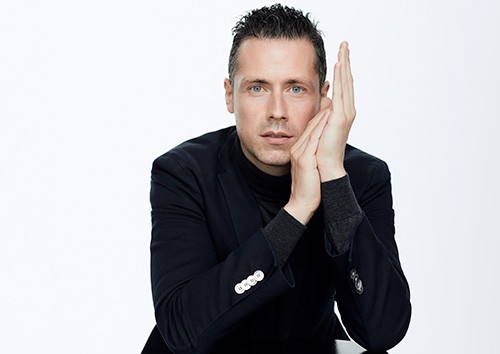 26.09.2026
Piano Extravaganza Festival 2026 - Piano recital of Eduardo Frias (Spain)
Works of García, Bortkiewicz, Brahms, Rachmaninov.
In partnership with the Embassy of the Kingdom of Spain.
In partnership with the Embassy of the Kingdom of Spain.
Festivals
18.09.2026 - 22.11.2026
DECHKO UZUNOV/IVAN PENKOV – DIRECTIONS
Memory Programme
DECHKO UZUNOV/IVAN PENKOV – DIRECTIONS
Opening: September 18, 6:00 p.m.
The exhibition Dechko Uzunov/Ivan Penkov: Directions is part of the Memory Programme at the Dechko Uzunov Art Gallery, a branch of the Sofia City Art Gallery, which aims to contribute to raising awareness of the life and work of Dechko Uzunov by presenting research-based exhibitions that reveal different aspects of his oeuvre through artists who were part of his journey. This exhibition showcases the different paths taken by two fellow townsmen and friends during the interwar period.
In 1919, Ivan Penkov and Dechko Uzunov enrolled at the State School of Drawing; that same year, Uzunov painted a portrait of his friend that poked fun at his fascination with folk art. Three years later, the two organised a joint exhibition in Sofia to fund their studies at the Munich Art Academy. The young artists’ exhibition was noticed by Joseph Herbst, who wrote:
“Now, on the occasion of their departure abroad, the two artists had exhibited most of their works, from which their strong talents could be seen quite well. Dechko Uzunov promises to develop most in portrait painting. [...] Ivan Penkov is primarily a decorator with a strong sense of composition and a keen sensitivity to line” (J.H., Razvigor, April 1, 1922, no. 60, p. 4).
In an ironic twist of fate, the older of the two, Penkov, would go on to graduate from the Academy of Art under Prof. Uzunov. In 1939, with Uzonov’s active support, Ivan Penkov won the competition for a permanent teaching position in decorative art.
The selected works invite us to seek similarities amidst the differences between these two constantly experimenting artists during the period when Bulgarian visual arts were coming of age.
Presented in this exhibition are pieces from the collections of the Sofia City Art Gallery, the Dechko Uzunov Art Gallery, the Kazanlak Art Gallery, the Central State Archives, and private collections.
The exhibition also features the film Ivan Penkov: The Crossed-Out Classic (Bulgarian National Television, 2006), by screenwriter: Oskar Kristanov; cinematographer: Yaroslav Yachev; directors: Oskar Kristanov and Kosta Bikov; sound engineer: Petar Yosifov; music arrangement: Georgi (Johnny) Penkov. Duration: 48 min.
DECHKO UZUNOV/IVAN PENKOV – DIRECTIONS
Opening: September 18, 6:00 p.m.
The exhibition Dechko Uzunov/Ivan Penkov: Directions is part of the Memory Programme at the Dechko Uzunov Art Gallery, a branch of the Sofia City Art Gallery, which aims to contribute to raising awareness of the life and work of Dechko Uzunov by presenting research-based exhibitions that reveal different aspects of his oeuvre through artists who were part of his journey. This exhibition showcases the different paths taken by two fellow townsmen and friends during the interwar period.
In 1919, Ivan Penkov and Dechko Uzunov enrolled at the State School of Drawing; that same year, Uzunov painted a portrait of his friend that poked fun at his fascination with folk art. Three years later, the two organised a joint exhibition in Sofia to fund their studies at the Munich Art Academy. The young artists’ exhibition was noticed by Joseph Herbst, who wrote:
“Now, on the occasion of their departure abroad, the two artists had exhibited most of their works, from which their strong talents could be seen quite well. Dechko Uzunov promises to develop most in portrait painting. [...] Ivan Penkov is primarily a decorator with a strong sense of composition and a keen sensitivity to line” (J.H., Razvigor, April 1, 1922, no. 60, p. 4).
In an ironic twist of fate, the older of the two, Penkov, would go on to graduate from the Academy of Art under Prof. Uzunov. In 1939, with Uzonov’s active support, Ivan Penkov won the competition for a permanent teaching position in decorative art.
The selected works invite us to seek similarities amidst the differences between these two constantly experimenting artists during the period when Bulgarian visual arts were coming of age.
Presented in this exhibition are pieces from the collections of the Sofia City Art Gallery, the Dechko Uzunov Art Gallery, the Kazanlak Art Gallery, the Central State Archives, and private collections.
The exhibition also features the film Ivan Penkov: The Crossed-Out Classic (Bulgarian National Television, 2006), by screenwriter: Oskar Kristanov; cinematographer: Yaroslav Yachev; directors: Oskar Kristanov and Kosta Bikov; sound engineer: Petar Yosifov; music arrangement: Georgi (Johnny) Penkov. Duration: 48 min.
Exhibitions
30.07.2026 - 04.10.2026
EUGÈNE CARRIÈRE. THE VISIONARY
The exhibition offers a novel, more conceptual look at one of the most prominent French artists of the second half of the 19th century, emphasising the influence he had on his contemporaries, as well as on the oeuvres of key figures of Early Modernism in the 20th century.
Although Eugène Carrière is well represented in the National Gallery permanent exposition at Kvadrat 500, his name remains relatively unknown to the general public. The team’s ambition is to present all his paintings, lithographs and drawings from the museum collection for the first time. During the research, it was discovered that these lithographs of high collectible worth were extremely valuable copies of unique bibliophilic compendia published in limited editions in Paris in the closing quarter of the 19th century. It is only the Metropolitan Museum in New York, the State Museum in Stuttgart, the Musée d’Orsay in Paris, the State Museum in Amsterdam, and the Cleveland Museum of Art, that can boast possession of such prints.
Carrière was among those artists who won recognition during their lifetime, and whose works were displayed in major museums. He invariably worked beyond the stylistic categories of the time without claiming to belong to any specific trend. Defying any sort of labelling, the painter, engraver and draughtsman, Carrière—a contemporary of Gustave Moreau, Odilon Redon and Paul Gauguin—soon surrounded himself with the most influential figures in the artistic and literary worlds of his time. His oeuvre influenced Picasso who drew inspiration from his monochromatic painting.
Beyond the modernity of his subjects, it is precisely in the artist’s painting style that the great adventure of his art lies. A distinguished portraitist and master of family scenes and the theme of motherhood, and precursor of Minimalism, he eliminated details transforming images into archetypes and expressions of feeling beyond the conventional framework of a specific time. Achieving a soft, monochromic sfumato allowed him to create a complex and mysterious interplay of transparency and depth. Like fleeting apparitions, elusive to the brush, his figures seem to emerge from the landscape, from the background, as if from another time-space.
Although Eugène Carrière is well represented in the National Gallery permanent exposition at Kvadrat 500, his name remains relatively unknown to the general public. The team’s ambition is to present all his paintings, lithographs and drawings from the museum collection for the first time. During the research, it was discovered that these lithographs of high collectible worth were extremely valuable copies of unique bibliophilic compendia published in limited editions in Paris in the closing quarter of the 19th century. It is only the Metropolitan Museum in New York, the State Museum in Stuttgart, the Musée d’Orsay in Paris, the State Museum in Amsterdam, and the Cleveland Museum of Art, that can boast possession of such prints.
Carrière was among those artists who won recognition during their lifetime, and whose works were displayed in major museums. He invariably worked beyond the stylistic categories of the time without claiming to belong to any specific trend. Defying any sort of labelling, the painter, engraver and draughtsman, Carrière—a contemporary of Gustave Moreau, Odilon Redon and Paul Gauguin—soon surrounded himself with the most influential figures in the artistic and literary worlds of his time. His oeuvre influenced Picasso who drew inspiration from his monochromatic painting.
Beyond the modernity of his subjects, it is precisely in the artist’s painting style that the great adventure of his art lies. A distinguished portraitist and master of family scenes and the theme of motherhood, and precursor of Minimalism, he eliminated details transforming images into archetypes and expressions of feeling beyond the conventional framework of a specific time. Achieving a soft, monochromic sfumato allowed him to create a complex and mysterious interplay of transparency and depth. Like fleeting apparitions, elusive to the brush, his figures seem to emerge from the landscape, from the background, as if from another time-space.
Exhibitions
04.08.2026 - 21.10.2026
FRANCISCO GOYA - DREAMS OF A KEEN MIND
The Spaniard FRANCISCO GOYA (1746–1828) was one of the most prominent and influential creative figures in world culture. He produced over 1,000 paintings, as well as the graphic series titled Los Caprichos, Los Desastres de la Guerra, Tauromaquia, and Los Disparates.
His stylistic and philosophical spectrum had a strong influence on the subsequent dynamic development of art, defining him as the last of the Old Masters and one of the earliest of Modernism. His extensive output—paintings, graphics and drawings—served as a leading aesthetic principle for many artistic trends of the 19th and 20th centuries, including Impressionism, Expressionism and Surrealism.
The twenty-one prints from the National Gallery collection follow Goya’s development from his earliest etchings, influenced by Diego Velázquez’s style, to his peak achievements as a social interpreter, remarkable for his sharpness, and a chronicler of dour events and complex human characters. The high artistic level of his four graphic series has left a deep imprint on the history of art.
The National Gallery houses seven works from Los Caprichos (The Caprices) series, 1799. Satirising the institutional pillars of power, the church, the Inquisition, the parasitism of the feudal nobility, and the decay of the moral values of social classes, was the reason for the series to be banned from exhibiting.
Los Desastres de la Guerra (The Disasters of War) series, which Goya began ca. 1810, and returned to ca. 1820, was not published by the artist during his lifetime. One of the works is titled ‘Prisoner. The Custody Is as Barbarous as the Crime’. It is considered unique, as it is rarely found in other museum and private collections around the world.
La Tauromaquia (The Art of Bullfighting) series, probably created between 1815 and 1816, reflected the artist’s interest in bullfighting. These works combine the flagrant cruelty of the corrida and his admiration for the skill and exciting action of the games. Of the thirty-three prints in the series, the National Gallery owns five.
While still working on La Tauromaquia, the artist in all probability launched into another series titled Los Disparates (The Follies), the meaning in his time being along the lines of stupidity or madness. The fantastic compositions are encrypted allegories whose impressive depth fascinated artists such as Baudelaire, Hugo, and Delacroix. The National Gallery’s collection houses four of those; two of them—‘Little Bulls’ Folly’ and ‘A Way of Flying’—are emblematic of the artist’s genius.
The National Gallery also owns the etching ‘Blind Singer’, emotionally described by Nikolay Raynov, in his ‘History of the Plastic Arts’ (1939), as ‘first’ among the ‘curious and significant’ graphic works of Goya.
The exhibition also includes a work by the Spanish surrealist artist, Salvador Dali (1904–1989), dedicated to Goya and his Caprichos.
His stylistic and philosophical spectrum had a strong influence on the subsequent dynamic development of art, defining him as the last of the Old Masters and one of the earliest of Modernism. His extensive output—paintings, graphics and drawings—served as a leading aesthetic principle for many artistic trends of the 19th and 20th centuries, including Impressionism, Expressionism and Surrealism.
The twenty-one prints from the National Gallery collection follow Goya’s development from his earliest etchings, influenced by Diego Velázquez’s style, to his peak achievements as a social interpreter, remarkable for his sharpness, and a chronicler of dour events and complex human characters. The high artistic level of his four graphic series has left a deep imprint on the history of art.
The National Gallery houses seven works from Los Caprichos (The Caprices) series, 1799. Satirising the institutional pillars of power, the church, the Inquisition, the parasitism of the feudal nobility, and the decay of the moral values of social classes, was the reason for the series to be banned from exhibiting.
Los Desastres de la Guerra (The Disasters of War) series, which Goya began ca. 1810, and returned to ca. 1820, was not published by the artist during his lifetime. One of the works is titled ‘Prisoner. The Custody Is as Barbarous as the Crime’. It is considered unique, as it is rarely found in other museum and private collections around the world.
La Tauromaquia (The Art of Bullfighting) series, probably created between 1815 and 1816, reflected the artist’s interest in bullfighting. These works combine the flagrant cruelty of the corrida and his admiration for the skill and exciting action of the games. Of the thirty-three prints in the series, the National Gallery owns five.
While still working on La Tauromaquia, the artist in all probability launched into another series titled Los Disparates (The Follies), the meaning in his time being along the lines of stupidity or madness. The fantastic compositions are encrypted allegories whose impressive depth fascinated artists such as Baudelaire, Hugo, and Delacroix. The National Gallery’s collection houses four of those; two of them—‘Little Bulls’ Folly’ and ‘A Way of Flying’—are emblematic of the artist’s genius.
The National Gallery also owns the etching ‘Blind Singer’, emotionally described by Nikolay Raynov, in his ‘History of the Plastic Arts’ (1939), as ‘first’ among the ‘curious and significant’ graphic works of Goya.
The exhibition also includes a work by the Spanish surrealist artist, Salvador Dali (1904–1989), dedicated to Goya and his Caprichos.
Exhibitions
10.09.2026 - 11.10.2026
Maya Antova – Mayoto - MACONDO
Sofia Arsenal – Museum of Contemporary Art
Maya Antova – Mayoto has transformed the exhibition space into a metaphorical Macondo, the town of solitude and magical realism in Gabriel García Márquez’s masterpiece. The exhibition is dedicated to the centenary of the birth of Ivanka Sokerova, a ‘forgotten’ and lesser-known artist whose life was a fascinating fiction.
Sokerova was an example of the triumph of the spirit: as a child, she manifested her versatile talent, but her life changed after her right hand was complete paralysed due to illness. Thus, fate directed her to devote herself to art. Her life turned into a microcosm of solitude where the borderline between reality and fantasy became invisible.
The exhibition, titled MACONDO, is here to show that solitude is not stagnation but a state of mind where art becomes the only possible language. By inverting the exhibition space, Maya Antova – Mayoto urges the viewer to look at the ‘invisible’, and to rethink Ivanka Sokerova’s persona as the architect of a magical world built on the ruins of a paralysed reality.
The exhibition, arranged in a radically different way, resembles a kind of ‘topsy-turvy world’. All objects are positioned ‘beneath the ceiling’, some reaching the floor, others hanging in the air. To observe them, the viewer must look up—a gesture of rising above earthly suffering and searching for the transcendent; a kind of gravity of the spirit.
An illusion of fiction is achieved through 3D objects replicating sculptures by Sokerova. The ‘thread-hand’ detail (a symbol of matter with no structure) serves as the leitmotif of the exhibition.
At the centre of the installation, there is an inflatable boat roaming beneath the ceiling—a symbol of transition and escape from reality. Life jackets made of paper with prints of memories are ‘floating’ around it. Paper here represents the fragile raft of knowledge that keeps the personality afloat—a reference to all intellectual activities, translations, drawings, sculptures, collages and participation in Dadaist actions, all part of Sokerova’s artistic life.
When viewers look up at the boat and the paper jackets, they do not see a ‘sinking’, but ‘rising’. They understand that escaping from reality is not desertion but an act of supreme intellectual courage.
Ivanka Sokerova did not simply translate books or model clay—she constructed life jackets from thought so as not to sink into the loneliness of her Macondo. Today, these vests hang over us as a call to seek our own haven while the world around turns topsy-turvy.
The exhibition opens with an authorial performance by Maya Antova – Mayoto, titled ‘Traveling Back’, where quotes from literary texts dedicated to Sokerova intertwine with random noises and onomatopoeic elements, creating the feeling of the fragmented world of Macondo.
…
Maya Antova – Mayoto has transformed the exhibition space into a metaphorical Macondo, the town of solitude and magical realism in Gabriel García Márquez’s masterpiece. The exhibition is dedicated to the centenary of the birth of Ivanka Sokerova, a ‘forgotten’ and lesser-known artist whose life was a fascinating fiction.
Sokerova was an example of the triumph of the spirit: as a child, she manifested her versatile talent, but her life changed after her right hand was complete paralysed due to illness. Thus, fate directed her to devote herself to art. Her life turned into a microcosm of solitude where the borderline between reality and fantasy became invisible.
The exhibition, titled MACONDO, is here to show that solitude is not stagnation but a state of mind where art becomes the only possible language. By inverting the exhibition space, Maya Antova – Mayoto urges the viewer to look at the ‘invisible’, and to rethink Ivanka Sokerova’s persona as the architect of a magical world built on the ruins of a paralysed reality.
The exhibition, arranged in a radically different way, resembles a kind of ‘topsy-turvy world’. All objects are positioned ‘beneath the ceiling’, some reaching the floor, others hanging in the air. To observe them, the viewer must look up—a gesture of rising above earthly suffering and searching for the transcendent; a kind of gravity of the spirit.
An illusion of fiction is achieved through 3D objects replicating sculptures by Sokerova. The ‘thread-hand’ detail (a symbol of matter with no structure) serves as the leitmotif of the exhibition.
At the centre of the installation, there is an inflatable boat roaming beneath the ceiling—a symbol of transition and escape from reality. Life jackets made of paper with prints of memories are ‘floating’ around it. Paper here represents the fragile raft of knowledge that keeps the personality afloat—a reference to all intellectual activities, translations, drawings, sculptures, collages and participation in Dadaist actions, all part of Sokerova’s artistic life.
When viewers look up at the boat and the paper jackets, they do not see a ‘sinking’, but ‘rising’. They understand that escaping from reality is not desertion but an act of supreme intellectual courage.
Ivanka Sokerova did not simply translate books or model clay—she constructed life jackets from thought so as not to sink into the loneliness of her Macondo. Today, these vests hang over us as a call to seek our own haven while the world around turns topsy-turvy.
The exhibition opens with an authorial performance by Maya Antova – Mayoto, titled ‘Traveling Back’, where quotes from literary texts dedicated to Sokerova intertwine with random noises and onomatopoeic elements, creating the feeling of the fragmented world of Macondo.
…
Exhibitions
23.09.2026 - 18.11.2026
Piano Extravaganza Festival 2026
Within this year’s edition, Piano Extravaganza Festival will present four piano recitals and two chamber music concerts. We hope that our extraordinary artists and the variety of the repertoire for those 6 events would satisfy even the most sophisticated connoisseur. We would be delighted to welcome you at the wonderful venues of the Central Military Club and the “Bulgaria” Chamber Hall in Sofia!
Tickets at EVENTIM.
Tickets at EVENTIM.
Festivals
16.06.2026 - 16.06.2027
Temporary Exhibition New Acquisitions
from 10:00 to 18:00 o'clock
Entrance with museum tickets
Entrance with museum tickets
Exhibitions
12.02.2026 - 31.12.2026
Temporary exhibition "Copper - Ancient and Modern"
from 10:00 to 18:00 o'clock
Entrance with museum tickets.
Entrance with museum tickets.
Exhibitions
11.04.2025 - 31.12.2026
Temporary exhibition "Minerals and Colorful Creatures. Drawings by Nature"
The Minerals of Bulgaria exposition has been expanded with a new theme: Unique mineral finds from Bulgaria, a project financed by the Ministry of culture. In 6 display cases, minerals with the most beautiful crystals, rare colors and shapes are exhibited, selected for tens of years by hundreds of geologists and collectors from all over Bulgaria.
from 10:00 to 18:00 o'clock
Entrance with museum tickets
from 10:00 to 18:00 o'clock
Entrance with museum tickets
Exhibitions
01.04.2026 - 31.12.2026
Temporary exhibition "Natural Art from Chalcedony"
from 10:00 to 18:00 o'clock
Entrance with museum tickets.
Entrance with museum tickets.
Exhibitions
01.01.2023 - 31.12.2026
Temporary exhibition "Smart Minerals for Smartphones"
from 10:00 to 18:00 o'clock
Entrance with museum tickets.
Entrance with museum tickets.
Exhibitions
10.12.2025 - 30.01.2027
Zahari Zograph Immersive Exhibition
The National Gallery presents one of the most iconic figures in the history of Bulgarian art – Zahari Zograph. This first immersive exhibition introduces a new way of experiencing the masterpieces of the the museum’s collection. Harnessing new technologies, the 20-minute project, created by Senzor Studio, brings his religious and secular masterpieces to life, revealing essential elements of his creative process.
The initiative promotes Bulgarian Revival аrt, a period characterized by economic, social, and cultural growth, closely tied to the pursuit of ecclesiastical and national independence. The period traces its origins to the mid-18th century, when Paisius of Hilendar wrote Istoriya Slavyanobulgarskaya (History of the Slavs and Bulgarians) in 1762—which profoundly shaped the spiritual awakening of the population and contributed significantly to the development of national consciousness…
The exhibition features a selection of icons, drawings, copies, letters, documents, and secular portraits from the artist’s early period. It also showcases a substantive collection of murals, ranging from his earliest works—created in 1838 for the Chapel of St John the Baptist at the Church of the Holy Virgin—Annunciation in Asenovgrad—to what is considered as his “final masterpiece,” the murals adorning the narthex of the Great Lavra Monastery on Mount Athos, completed between 1851 and 1852.
Zahari Zograph emerged as a defining figure of Bulgarian Revival art. His relentlessly inquisitive artistic spirit was ahead of its era, and his extensive body of work reflects the vitality of the approaching modern age, the artistry of traditional imagery, the strength of line, and the emotive power of color.
The project is realised with the financial support of the National Culture Fund of Bulgaria under the Creation programme 2024.
Media partners: BTA / Bulgarian News Agency and SOF Connect.
The initiative promotes Bulgarian Revival аrt, a period characterized by economic, social, and cultural growth, closely tied to the pursuit of ecclesiastical and national independence. The period traces its origins to the mid-18th century, when Paisius of Hilendar wrote Istoriya Slavyanobulgarskaya (History of the Slavs and Bulgarians) in 1762—which profoundly shaped the spiritual awakening of the population and contributed significantly to the development of national consciousness…
The exhibition features a selection of icons, drawings, copies, letters, documents, and secular portraits from the artist’s early period. It also showcases a substantive collection of murals, ranging from his earliest works—created in 1838 for the Chapel of St John the Baptist at the Church of the Holy Virgin—Annunciation in Asenovgrad—to what is considered as his “final masterpiece,” the murals adorning the narthex of the Great Lavra Monastery on Mount Athos, completed between 1851 and 1852.
Zahari Zograph emerged as a defining figure of Bulgarian Revival art. His relentlessly inquisitive artistic spirit was ahead of its era, and his extensive body of work reflects the vitality of the approaching modern age, the artistry of traditional imagery, the strength of line, and the emotive power of color.
The project is realised with the financial support of the National Culture Fund of Bulgaria under the Creation programme 2024.
Media partners: BTA / Bulgarian News Agency and SOF Connect.
Exhibitions
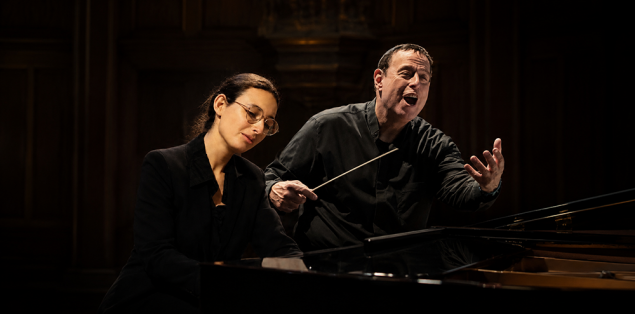 27.09.2026
PASSION AND DESTINY
Symphony concert
Conductor DANIEL OREN
Children under 6 are not admitted to adult performances!
Conductor DANIEL OREN
Children under 6 are not admitted to adult performances!
Music and Dance Events
18.09.2026 - 22.11.2026
DECHKO UZUNOV/IVAN PENKOV – DIRECTIONS
Memory Programme
DECHKO UZUNOV/IVAN PENKOV – DIRECTIONS
Opening: September 18, 6:00 p.m.
The exhibition Dechko Uzunov/Ivan Penkov: Directions is part of the Memory Programme at the Dechko Uzunov Art Gallery, a branch of the Sofia City Art Gallery, which aims to contribute to raising awareness of the life and work of Dechko Uzunov by presenting research-based exhibitions that reveal different aspects of his oeuvre through artists who were part of his journey. This exhibition showcases the different paths taken by two fellow townsmen and friends during the interwar period.
In 1919, Ivan Penkov and Dechko Uzunov enrolled at the State School of Drawing; that same year, Uzunov painted a portrait of his friend that poked fun at his fascination with folk art. Three years later, the two organised a joint exhibition in Sofia to fund their studies at the Munich Art Academy. The young artists’ exhibition was noticed by Joseph Herbst, who wrote:
“Now, on the occasion of their departure abroad, the two artists had exhibited most of their works, from which their strong talents could be seen quite well. Dechko Uzunov promises to develop most in portrait painting. [...] Ivan Penkov is primarily a decorator with a strong sense of composition and a keen sensitivity to line” (J.H., Razvigor, April 1, 1922, no. 60, p. 4).
In an ironic twist of fate, the older of the two, Penkov, would go on to graduate from the Academy of Art under Prof. Uzunov. In 1939, with Uzonov’s active support, Ivan Penkov won the competition for a permanent teaching position in decorative art.
The selected works invite us to seek similarities amidst the differences between these two constantly experimenting artists during the period when Bulgarian visual arts were coming of age.
Presented in this exhibition are pieces from the collections of the Sofia City Art Gallery, the Dechko Uzunov Art Gallery, the Kazanlak Art Gallery, the Central State Archives, and private collections.
The exhibition also features the film Ivan Penkov: The Crossed-Out Classic (Bulgarian National Television, 2006), by screenwriter: Oskar Kristanov; cinematographer: Yaroslav Yachev; directors: Oskar Kristanov and Kosta Bikov; sound engineer: Petar Yosifov; music arrangement: Georgi (Johnny) Penkov. Duration: 48 min.
DECHKO UZUNOV/IVAN PENKOV – DIRECTIONS
Opening: September 18, 6:00 p.m.
The exhibition Dechko Uzunov/Ivan Penkov: Directions is part of the Memory Programme at the Dechko Uzunov Art Gallery, a branch of the Sofia City Art Gallery, which aims to contribute to raising awareness of the life and work of Dechko Uzunov by presenting research-based exhibitions that reveal different aspects of his oeuvre through artists who were part of his journey. This exhibition showcases the different paths taken by two fellow townsmen and friends during the interwar period.
In 1919, Ivan Penkov and Dechko Uzunov enrolled at the State School of Drawing; that same year, Uzunov painted a portrait of his friend that poked fun at his fascination with folk art. Three years later, the two organised a joint exhibition in Sofia to fund their studies at the Munich Art Academy. The young artists’ exhibition was noticed by Joseph Herbst, who wrote:
“Now, on the occasion of their departure abroad, the two artists had exhibited most of their works, from which their strong talents could be seen quite well. Dechko Uzunov promises to develop most in portrait painting. [...] Ivan Penkov is primarily a decorator with a strong sense of composition and a keen sensitivity to line” (J.H., Razvigor, April 1, 1922, no. 60, p. 4).
In an ironic twist of fate, the older of the two, Penkov, would go on to graduate from the Academy of Art under Prof. Uzunov. In 1939, with Uzonov’s active support, Ivan Penkov won the competition for a permanent teaching position in decorative art.
The selected works invite us to seek similarities amidst the differences between these two constantly experimenting artists during the period when Bulgarian visual arts were coming of age.
Presented in this exhibition are pieces from the collections of the Sofia City Art Gallery, the Dechko Uzunov Art Gallery, the Kazanlak Art Gallery, the Central State Archives, and private collections.
The exhibition also features the film Ivan Penkov: The Crossed-Out Classic (Bulgarian National Television, 2006), by screenwriter: Oskar Kristanov; cinematographer: Yaroslav Yachev; directors: Oskar Kristanov and Kosta Bikov; sound engineer: Petar Yosifov; music arrangement: Georgi (Johnny) Penkov. Duration: 48 min.
Exhibitions
30.07.2026 - 04.10.2026
EUGÈNE CARRIÈRE. THE VISIONARY
The exhibition offers a novel, more conceptual look at one of the most prominent French artists of the second half of the 19th century, emphasising the influence he had on his contemporaries, as well as on the oeuvres of key figures of Early Modernism in the 20th century.
Although Eugène Carrière is well represented in the National Gallery permanent exposition at Kvadrat 500, his name remains relatively unknown to the general public. The team’s ambition is to present all his paintings, lithographs and drawings from the museum collection for the first time. During the research, it was discovered that these lithographs of high collectible worth were extremely valuable copies of unique bibliophilic compendia published in limited editions in Paris in the closing quarter of the 19th century. It is only the Metropolitan Museum in New York, the State Museum in Stuttgart, the Musée d’Orsay in Paris, the State Museum in Amsterdam, and the Cleveland Museum of Art, that can boast possession of such prints.
Carrière was among those artists who won recognition during their lifetime, and whose works were displayed in major museums. He invariably worked beyond the stylistic categories of the time without claiming to belong to any specific trend. Defying any sort of labelling, the painter, engraver and draughtsman, Carrière—a contemporary of Gustave Moreau, Odilon Redon and Paul Gauguin—soon surrounded himself with the most influential figures in the artistic and literary worlds of his time. His oeuvre influenced Picasso who drew inspiration from his monochromatic painting.
Beyond the modernity of his subjects, it is precisely in the artist’s painting style that the great adventure of his art lies. A distinguished portraitist and master of family scenes and the theme of motherhood, and precursor of Minimalism, he eliminated details transforming images into archetypes and expressions of feeling beyond the conventional framework of a specific time. Achieving a soft, monochromic sfumato allowed him to create a complex and mysterious interplay of transparency and depth. Like fleeting apparitions, elusive to the brush, his figures seem to emerge from the landscape, from the background, as if from another time-space.
Although Eugène Carrière is well represented in the National Gallery permanent exposition at Kvadrat 500, his name remains relatively unknown to the general public. The team’s ambition is to present all his paintings, lithographs and drawings from the museum collection for the first time. During the research, it was discovered that these lithographs of high collectible worth were extremely valuable copies of unique bibliophilic compendia published in limited editions in Paris in the closing quarter of the 19th century. It is only the Metropolitan Museum in New York, the State Museum in Stuttgart, the Musée d’Orsay in Paris, the State Museum in Amsterdam, and the Cleveland Museum of Art, that can boast possession of such prints.
Carrière was among those artists who won recognition during their lifetime, and whose works were displayed in major museums. He invariably worked beyond the stylistic categories of the time without claiming to belong to any specific trend. Defying any sort of labelling, the painter, engraver and draughtsman, Carrière—a contemporary of Gustave Moreau, Odilon Redon and Paul Gauguin—soon surrounded himself with the most influential figures in the artistic and literary worlds of his time. His oeuvre influenced Picasso who drew inspiration from his monochromatic painting.
Beyond the modernity of his subjects, it is precisely in the artist’s painting style that the great adventure of his art lies. A distinguished portraitist and master of family scenes and the theme of motherhood, and precursor of Minimalism, he eliminated details transforming images into archetypes and expressions of feeling beyond the conventional framework of a specific time. Achieving a soft, monochromic sfumato allowed him to create a complex and mysterious interplay of transparency and depth. Like fleeting apparitions, elusive to the brush, his figures seem to emerge from the landscape, from the background, as if from another time-space.
Exhibitions
04.08.2026 - 21.10.2026
FRANCISCO GOYA - DREAMS OF A KEEN MIND
The Spaniard FRANCISCO GOYA (1746–1828) was one of the most prominent and influential creative figures in world culture. He produced over 1,000 paintings, as well as the graphic series titled Los Caprichos, Los Desastres de la Guerra, Tauromaquia, and Los Disparates.
His stylistic and philosophical spectrum had a strong influence on the subsequent dynamic development of art, defining him as the last of the Old Masters and one of the earliest of Modernism. His extensive output—paintings, graphics and drawings—served as a leading aesthetic principle for many artistic trends of the 19th and 20th centuries, including Impressionism, Expressionism and Surrealism.
The twenty-one prints from the National Gallery collection follow Goya’s development from his earliest etchings, influenced by Diego Velázquez’s style, to his peak achievements as a social interpreter, remarkable for his sharpness, and a chronicler of dour events and complex human characters. The high artistic level of his four graphic series has left a deep imprint on the history of art.
The National Gallery houses seven works from Los Caprichos (The Caprices) series, 1799. Satirising the institutional pillars of power, the church, the Inquisition, the parasitism of the feudal nobility, and the decay of the moral values of social classes, was the reason for the series to be banned from exhibiting.
Los Desastres de la Guerra (The Disasters of War) series, which Goya began ca. 1810, and returned to ca. 1820, was not published by the artist during his lifetime. One of the works is titled ‘Prisoner. The Custody Is as Barbarous as the Crime’. It is considered unique, as it is rarely found in other museum and private collections around the world.
La Tauromaquia (The Art of Bullfighting) series, probably created between 1815 and 1816, reflected the artist’s interest in bullfighting. These works combine the flagrant cruelty of the corrida and his admiration for the skill and exciting action of the games. Of the thirty-three prints in the series, the National Gallery owns five.
While still working on La Tauromaquia, the artist in all probability launched into another series titled Los Disparates (The Follies), the meaning in his time being along the lines of stupidity or madness. The fantastic compositions are encrypted allegories whose impressive depth fascinated artists such as Baudelaire, Hugo, and Delacroix. The National Gallery’s collection houses four of those; two of them—‘Little Bulls’ Folly’ and ‘A Way of Flying’—are emblematic of the artist’s genius.
The National Gallery also owns the etching ‘Blind Singer’, emotionally described by Nikolay Raynov, in his ‘History of the Plastic Arts’ (1939), as ‘first’ among the ‘curious and significant’ graphic works of Goya.
The exhibition also includes a work by the Spanish surrealist artist, Salvador Dali (1904–1989), dedicated to Goya and his Caprichos.
His stylistic and philosophical spectrum had a strong influence on the subsequent dynamic development of art, defining him as the last of the Old Masters and one of the earliest of Modernism. His extensive output—paintings, graphics and drawings—served as a leading aesthetic principle for many artistic trends of the 19th and 20th centuries, including Impressionism, Expressionism and Surrealism.
The twenty-one prints from the National Gallery collection follow Goya’s development from his earliest etchings, influenced by Diego Velázquez’s style, to his peak achievements as a social interpreter, remarkable for his sharpness, and a chronicler of dour events and complex human characters. The high artistic level of his four graphic series has left a deep imprint on the history of art.
The National Gallery houses seven works from Los Caprichos (The Caprices) series, 1799. Satirising the institutional pillars of power, the church, the Inquisition, the parasitism of the feudal nobility, and the decay of the moral values of social classes, was the reason for the series to be banned from exhibiting.
Los Desastres de la Guerra (The Disasters of War) series, which Goya began ca. 1810, and returned to ca. 1820, was not published by the artist during his lifetime. One of the works is titled ‘Prisoner. The Custody Is as Barbarous as the Crime’. It is considered unique, as it is rarely found in other museum and private collections around the world.
La Tauromaquia (The Art of Bullfighting) series, probably created between 1815 and 1816, reflected the artist’s interest in bullfighting. These works combine the flagrant cruelty of the corrida and his admiration for the skill and exciting action of the games. Of the thirty-three prints in the series, the National Gallery owns five.
While still working on La Tauromaquia, the artist in all probability launched into another series titled Los Disparates (The Follies), the meaning in his time being along the lines of stupidity or madness. The fantastic compositions are encrypted allegories whose impressive depth fascinated artists such as Baudelaire, Hugo, and Delacroix. The National Gallery’s collection houses four of those; two of them—‘Little Bulls’ Folly’ and ‘A Way of Flying’—are emblematic of the artist’s genius.
The National Gallery also owns the etching ‘Blind Singer’, emotionally described by Nikolay Raynov, in his ‘History of the Plastic Arts’ (1939), as ‘first’ among the ‘curious and significant’ graphic works of Goya.
The exhibition also includes a work by the Spanish surrealist artist, Salvador Dali (1904–1989), dedicated to Goya and his Caprichos.
Exhibitions
 28.09.2026
Jerusalem Symphony Orchestra with Nayden Todorov & Julian Rachlin
Bulgaria Concert Hall
Conductor
Julian Rachlin
Nayden Todorov
Solоist/s
Alisa Medvedeva
Ensemble
Jerusalem Symphony Orchestra
Program
Giuseppe Verdi – Overture from Opera “La forza del destino”
Charles Gounod – Marguerite’s aria/the Jewel Song (Ah! je ris de me voir si belle en ce miroir) from “Faust”, Act III
Franz Lehár – Giuditta’s aria (Meine Lippen, sie küssen so heiβ) from the Operetta “Giuditta”, Act 4
Antonín Dvořák – Mermaid Aria, Act I from”Rusalka”
Giacomo Puccini – Aria of Lauretta ((O mio babbino caro) from Opera Gianni Schicchi
Pyotr Ilyich Tchaikovsky – Symphony No.6 “Pathétique” in B minor, Op.74
Conductor
Julian Rachlin
Nayden Todorov
Solоist/s
Alisa Medvedeva
Ensemble
Jerusalem Symphony Orchestra
Program
Giuseppe Verdi – Overture from Opera “La forza del destino”
Charles Gounod – Marguerite’s aria/the Jewel Song (Ah! je ris de me voir si belle en ce miroir) from “Faust”, Act III
Franz Lehár – Giuditta’s aria (Meine Lippen, sie küssen so heiβ) from the Operetta “Giuditta”, Act 4
Antonín Dvořák – Mermaid Aria, Act I from”Rusalka”
Giacomo Puccini – Aria of Lauretta ((O mio babbino caro) from Opera Gianni Schicchi
Pyotr Ilyich Tchaikovsky – Symphony No.6 “Pathétique” in B minor, Op.74
Music and Dance Events
10.09.2026 - 11.10.2026
Maya Antova – Mayoto - MACONDO
Sofia Arsenal – Museum of Contemporary Art
Maya Antova – Mayoto has transformed the exhibition space into a metaphorical Macondo, the town of solitude and magical realism in Gabriel García Márquez’s masterpiece. The exhibition is dedicated to the centenary of the birth of Ivanka Sokerova, a ‘forgotten’ and lesser-known artist whose life was a fascinating fiction.
Sokerova was an example of the triumph of the spirit: as a child, she manifested her versatile talent, but her life changed after her right hand was complete paralysed due to illness. Thus, fate directed her to devote herself to art. Her life turned into a microcosm of solitude where the borderline between reality and fantasy became invisible.
The exhibition, titled MACONDO, is here to show that solitude is not stagnation but a state of mind where art becomes the only possible language. By inverting the exhibition space, Maya Antova – Mayoto urges the viewer to look at the ‘invisible’, and to rethink Ivanka Sokerova’s persona as the architect of a magical world built on the ruins of a paralysed reality.
The exhibition, arranged in a radically different way, resembles a kind of ‘topsy-turvy world’. All objects are positioned ‘beneath the ceiling’, some reaching the floor, others hanging in the air. To observe them, the viewer must look up—a gesture of rising above earthly suffering and searching for the transcendent; a kind of gravity of the spirit.
An illusion of fiction is achieved through 3D objects replicating sculptures by Sokerova. The ‘thread-hand’ detail (a symbol of matter with no structure) serves as the leitmotif of the exhibition.
At the centre of the installation, there is an inflatable boat roaming beneath the ceiling—a symbol of transition and escape from reality. Life jackets made of paper with prints of memories are ‘floating’ around it. Paper here represents the fragile raft of knowledge that keeps the personality afloat—a reference to all intellectual activities, translations, drawings, sculptures, collages and participation in Dadaist actions, all part of Sokerova’s artistic life.
When viewers look up at the boat and the paper jackets, they do not see a ‘sinking’, but ‘rising’. They understand that escaping from reality is not desertion but an act of supreme intellectual courage.
Ivanka Sokerova did not simply translate books or model clay—she constructed life jackets from thought so as not to sink into the loneliness of her Macondo. Today, these vests hang over us as a call to seek our own haven while the world around turns topsy-turvy.
The exhibition opens with an authorial performance by Maya Antova – Mayoto, titled ‘Traveling Back’, where quotes from literary texts dedicated to Sokerova intertwine with random noises and onomatopoeic elements, creating the feeling of the fragmented world of Macondo.
…
Maya Antova – Mayoto has transformed the exhibition space into a metaphorical Macondo, the town of solitude and magical realism in Gabriel García Márquez’s masterpiece. The exhibition is dedicated to the centenary of the birth of Ivanka Sokerova, a ‘forgotten’ and lesser-known artist whose life was a fascinating fiction.
Sokerova was an example of the triumph of the spirit: as a child, she manifested her versatile talent, but her life changed after her right hand was complete paralysed due to illness. Thus, fate directed her to devote herself to art. Her life turned into a microcosm of solitude where the borderline between reality and fantasy became invisible.
The exhibition, titled MACONDO, is here to show that solitude is not stagnation but a state of mind where art becomes the only possible language. By inverting the exhibition space, Maya Antova – Mayoto urges the viewer to look at the ‘invisible’, and to rethink Ivanka Sokerova’s persona as the architect of a magical world built on the ruins of a paralysed reality.
The exhibition, arranged in a radically different way, resembles a kind of ‘topsy-turvy world’. All objects are positioned ‘beneath the ceiling’, some reaching the floor, others hanging in the air. To observe them, the viewer must look up—a gesture of rising above earthly suffering and searching for the transcendent; a kind of gravity of the spirit.
An illusion of fiction is achieved through 3D objects replicating sculptures by Sokerova. The ‘thread-hand’ detail (a symbol of matter with no structure) serves as the leitmotif of the exhibition.
At the centre of the installation, there is an inflatable boat roaming beneath the ceiling—a symbol of transition and escape from reality. Life jackets made of paper with prints of memories are ‘floating’ around it. Paper here represents the fragile raft of knowledge that keeps the personality afloat—a reference to all intellectual activities, translations, drawings, sculptures, collages and participation in Dadaist actions, all part of Sokerova’s artistic life.
When viewers look up at the boat and the paper jackets, they do not see a ‘sinking’, but ‘rising’. They understand that escaping from reality is not desertion but an act of supreme intellectual courage.
Ivanka Sokerova did not simply translate books or model clay—she constructed life jackets from thought so as not to sink into the loneliness of her Macondo. Today, these vests hang over us as a call to seek our own haven while the world around turns topsy-turvy.
The exhibition opens with an authorial performance by Maya Antova – Mayoto, titled ‘Traveling Back’, where quotes from literary texts dedicated to Sokerova intertwine with random noises and onomatopoeic elements, creating the feeling of the fragmented world of Macondo.
…
Exhibitions
23.09.2026 - 18.11.2026
Piano Extravaganza Festival 2026
Within this year’s edition, Piano Extravaganza Festival will present four piano recitals and two chamber music concerts. We hope that our extraordinary artists and the variety of the repertoire for those 6 events would satisfy even the most sophisticated connoisseur. We would be delighted to welcome you at the wonderful venues of the Central Military Club and the “Bulgaria” Chamber Hall in Sofia!
Tickets at EVENTIM.
Tickets at EVENTIM.
Festivals
16.06.2026 - 16.06.2027
Temporary Exhibition New Acquisitions
from 10:00 to 18:00 o'clock
Entrance with museum tickets
Entrance with museum tickets
Exhibitions
12.02.2026 - 31.12.2026
Temporary exhibition "Copper - Ancient and Modern"
from 10:00 to 18:00 o'clock
Entrance with museum tickets.
Entrance with museum tickets.
Exhibitions
11.04.2025 - 31.12.2026
Temporary exhibition "Minerals and Colorful Creatures. Drawings by Nature"
The Minerals of Bulgaria exposition has been expanded with a new theme: Unique mineral finds from Bulgaria, a project financed by the Ministry of culture. In 6 display cases, minerals with the most beautiful crystals, rare colors and shapes are exhibited, selected for tens of years by hundreds of geologists and collectors from all over Bulgaria.
from 10:00 to 18:00 o'clock
Entrance with museum tickets
from 10:00 to 18:00 o'clock
Entrance with museum tickets
Exhibitions
01.04.2026 - 31.12.2026
Temporary exhibition "Natural Art from Chalcedony"
from 10:00 to 18:00 o'clock
Entrance with museum tickets.
Entrance with museum tickets.
Exhibitions
01.01.2023 - 31.12.2026
Temporary exhibition "Smart Minerals for Smartphones"
from 10:00 to 18:00 o'clock
Entrance with museum tickets.
Entrance with museum tickets.
Exhibitions
10.12.2025 - 30.01.2027
Zahari Zograph Immersive Exhibition
The National Gallery presents one of the most iconic figures in the history of Bulgarian art – Zahari Zograph. This first immersive exhibition introduces a new way of experiencing the masterpieces of the the museum’s collection. Harnessing new technologies, the 20-minute project, created by Senzor Studio, brings his religious and secular masterpieces to life, revealing essential elements of his creative process.
The initiative promotes Bulgarian Revival аrt, a period characterized by economic, social, and cultural growth, closely tied to the pursuit of ecclesiastical and national independence. The period traces its origins to the mid-18th century, when Paisius of Hilendar wrote Istoriya Slavyanobulgarskaya (History of the Slavs and Bulgarians) in 1762—which profoundly shaped the spiritual awakening of the population and contributed significantly to the development of national consciousness…
The exhibition features a selection of icons, drawings, copies, letters, documents, and secular portraits from the artist’s early period. It also showcases a substantive collection of murals, ranging from his earliest works—created in 1838 for the Chapel of St John the Baptist at the Church of the Holy Virgin—Annunciation in Asenovgrad—to what is considered as his “final masterpiece,” the murals adorning the narthex of the Great Lavra Monastery on Mount Athos, completed between 1851 and 1852.
Zahari Zograph emerged as a defining figure of Bulgarian Revival art. His relentlessly inquisitive artistic spirit was ahead of its era, and his extensive body of work reflects the vitality of the approaching modern age, the artistry of traditional imagery, the strength of line, and the emotive power of color.
The project is realised with the financial support of the National Culture Fund of Bulgaria under the Creation programme 2024.
Media partners: BTA / Bulgarian News Agency and SOF Connect.
The initiative promotes Bulgarian Revival аrt, a period characterized by economic, social, and cultural growth, closely tied to the pursuit of ecclesiastical and national independence. The period traces its origins to the mid-18th century, when Paisius of Hilendar wrote Istoriya Slavyanobulgarskaya (History of the Slavs and Bulgarians) in 1762—which profoundly shaped the spiritual awakening of the population and contributed significantly to the development of national consciousness…
The exhibition features a selection of icons, drawings, copies, letters, documents, and secular portraits from the artist’s early period. It also showcases a substantive collection of murals, ranging from his earliest works—created in 1838 for the Chapel of St John the Baptist at the Church of the Holy Virgin—Annunciation in Asenovgrad—to what is considered as his “final masterpiece,” the murals adorning the narthex of the Great Lavra Monastery on Mount Athos, completed between 1851 and 1852.
Zahari Zograph emerged as a defining figure of Bulgarian Revival art. His relentlessly inquisitive artistic spirit was ahead of its era, and his extensive body of work reflects the vitality of the approaching modern age, the artistry of traditional imagery, the strength of line, and the emotive power of color.
The project is realised with the financial support of the National Culture Fund of Bulgaria under the Creation programme 2024.
Media partners: BTA / Bulgarian News Agency and SOF Connect.
Exhibitions
18.09.2026 - 22.11.2026
DECHKO UZUNOV/IVAN PENKOV – DIRECTIONS
Memory Programme
DECHKO UZUNOV/IVAN PENKOV – DIRECTIONS
Opening: September 18, 6:00 p.m.
The exhibition Dechko Uzunov/Ivan Penkov: Directions is part of the Memory Programme at the Dechko Uzunov Art Gallery, a branch of the Sofia City Art Gallery, which aims to contribute to raising awareness of the life and work of Dechko Uzunov by presenting research-based exhibitions that reveal different aspects of his oeuvre through artists who were part of his journey. This exhibition showcases the different paths taken by two fellow townsmen and friends during the interwar period.
In 1919, Ivan Penkov and Dechko Uzunov enrolled at the State School of Drawing; that same year, Uzunov painted a portrait of his friend that poked fun at his fascination with folk art. Three years later, the two organised a joint exhibition in Sofia to fund their studies at the Munich Art Academy. The young artists’ exhibition was noticed by Joseph Herbst, who wrote:
“Now, on the occasion of their departure abroad, the two artists had exhibited most of their works, from which their strong talents could be seen quite well. Dechko Uzunov promises to develop most in portrait painting. [...] Ivan Penkov is primarily a decorator with a strong sense of composition and a keen sensitivity to line” (J.H., Razvigor, April 1, 1922, no. 60, p. 4).
In an ironic twist of fate, the older of the two, Penkov, would go on to graduate from the Academy of Art under Prof. Uzunov. In 1939, with Uzonov’s active support, Ivan Penkov won the competition for a permanent teaching position in decorative art.
The selected works invite us to seek similarities amidst the differences between these two constantly experimenting artists during the period when Bulgarian visual arts were coming of age.
Presented in this exhibition are pieces from the collections of the Sofia City Art Gallery, the Dechko Uzunov Art Gallery, the Kazanlak Art Gallery, the Central State Archives, and private collections.
The exhibition also features the film Ivan Penkov: The Crossed-Out Classic (Bulgarian National Television, 2006), by screenwriter: Oskar Kristanov; cinematographer: Yaroslav Yachev; directors: Oskar Kristanov and Kosta Bikov; sound engineer: Petar Yosifov; music arrangement: Georgi (Johnny) Penkov. Duration: 48 min.
DECHKO UZUNOV/IVAN PENKOV – DIRECTIONS
Opening: September 18, 6:00 p.m.
The exhibition Dechko Uzunov/Ivan Penkov: Directions is part of the Memory Programme at the Dechko Uzunov Art Gallery, a branch of the Sofia City Art Gallery, which aims to contribute to raising awareness of the life and work of Dechko Uzunov by presenting research-based exhibitions that reveal different aspects of his oeuvre through artists who were part of his journey. This exhibition showcases the different paths taken by two fellow townsmen and friends during the interwar period.
In 1919, Ivan Penkov and Dechko Uzunov enrolled at the State School of Drawing; that same year, Uzunov painted a portrait of his friend that poked fun at his fascination with folk art. Three years later, the two organised a joint exhibition in Sofia to fund their studies at the Munich Art Academy. The young artists’ exhibition was noticed by Joseph Herbst, who wrote:
“Now, on the occasion of their departure abroad, the two artists had exhibited most of their works, from which their strong talents could be seen quite well. Dechko Uzunov promises to develop most in portrait painting. [...] Ivan Penkov is primarily a decorator with a strong sense of composition and a keen sensitivity to line” (J.H., Razvigor, April 1, 1922, no. 60, p. 4).
In an ironic twist of fate, the older of the two, Penkov, would go on to graduate from the Academy of Art under Prof. Uzunov. In 1939, with Uzonov’s active support, Ivan Penkov won the competition for a permanent teaching position in decorative art.
The selected works invite us to seek similarities amidst the differences between these two constantly experimenting artists during the period when Bulgarian visual arts were coming of age.
Presented in this exhibition are pieces from the collections of the Sofia City Art Gallery, the Dechko Uzunov Art Gallery, the Kazanlak Art Gallery, the Central State Archives, and private collections.
The exhibition also features the film Ivan Penkov: The Crossed-Out Classic (Bulgarian National Television, 2006), by screenwriter: Oskar Kristanov; cinematographer: Yaroslav Yachev; directors: Oskar Kristanov and Kosta Bikov; sound engineer: Petar Yosifov; music arrangement: Georgi (Johnny) Penkov. Duration: 48 min.
Exhibitions
30.07.2026 - 04.10.2026
EUGÈNE CARRIÈRE. THE VISIONARY
The exhibition offers a novel, more conceptual look at one of the most prominent French artists of the second half of the 19th century, emphasising the influence he had on his contemporaries, as well as on the oeuvres of key figures of Early Modernism in the 20th century.
Although Eugène Carrière is well represented in the National Gallery permanent exposition at Kvadrat 500, his name remains relatively unknown to the general public. The team’s ambition is to present all his paintings, lithographs and drawings from the museum collection for the first time. During the research, it was discovered that these lithographs of high collectible worth were extremely valuable copies of unique bibliophilic compendia published in limited editions in Paris in the closing quarter of the 19th century. It is only the Metropolitan Museum in New York, the State Museum in Stuttgart, the Musée d’Orsay in Paris, the State Museum in Amsterdam, and the Cleveland Museum of Art, that can boast possession of such prints.
Carrière was among those artists who won recognition during their lifetime, and whose works were displayed in major museums. He invariably worked beyond the stylistic categories of the time without claiming to belong to any specific trend. Defying any sort of labelling, the painter, engraver and draughtsman, Carrière—a contemporary of Gustave Moreau, Odilon Redon and Paul Gauguin—soon surrounded himself with the most influential figures in the artistic and literary worlds of his time. His oeuvre influenced Picasso who drew inspiration from his monochromatic painting.
Beyond the modernity of his subjects, it is precisely in the artist’s painting style that the great adventure of his art lies. A distinguished portraitist and master of family scenes and the theme of motherhood, and precursor of Minimalism, he eliminated details transforming images into archetypes and expressions of feeling beyond the conventional framework of a specific time. Achieving a soft, monochromic sfumato allowed him to create a complex and mysterious interplay of transparency and depth. Like fleeting apparitions, elusive to the brush, his figures seem to emerge from the landscape, from the background, as if from another time-space.
Although Eugène Carrière is well represented in the National Gallery permanent exposition at Kvadrat 500, his name remains relatively unknown to the general public. The team’s ambition is to present all his paintings, lithographs and drawings from the museum collection for the first time. During the research, it was discovered that these lithographs of high collectible worth were extremely valuable copies of unique bibliophilic compendia published in limited editions in Paris in the closing quarter of the 19th century. It is only the Metropolitan Museum in New York, the State Museum in Stuttgart, the Musée d’Orsay in Paris, the State Museum in Amsterdam, and the Cleveland Museum of Art, that can boast possession of such prints.
Carrière was among those artists who won recognition during their lifetime, and whose works were displayed in major museums. He invariably worked beyond the stylistic categories of the time without claiming to belong to any specific trend. Defying any sort of labelling, the painter, engraver and draughtsman, Carrière—a contemporary of Gustave Moreau, Odilon Redon and Paul Gauguin—soon surrounded himself with the most influential figures in the artistic and literary worlds of his time. His oeuvre influenced Picasso who drew inspiration from his monochromatic painting.
Beyond the modernity of his subjects, it is precisely in the artist’s painting style that the great adventure of his art lies. A distinguished portraitist and master of family scenes and the theme of motherhood, and precursor of Minimalism, he eliminated details transforming images into archetypes and expressions of feeling beyond the conventional framework of a specific time. Achieving a soft, monochromic sfumato allowed him to create a complex and mysterious interplay of transparency and depth. Like fleeting apparitions, elusive to the brush, his figures seem to emerge from the landscape, from the background, as if from another time-space.
Exhibitions
04.08.2026 - 21.10.2026
FRANCISCO GOYA - DREAMS OF A KEEN MIND
The Spaniard FRANCISCO GOYA (1746–1828) was one of the most prominent and influential creative figures in world culture. He produced over 1,000 paintings, as well as the graphic series titled Los Caprichos, Los Desastres de la Guerra, Tauromaquia, and Los Disparates.
His stylistic and philosophical spectrum had a strong influence on the subsequent dynamic development of art, defining him as the last of the Old Masters and one of the earliest of Modernism. His extensive output—paintings, graphics and drawings—served as a leading aesthetic principle for many artistic trends of the 19th and 20th centuries, including Impressionism, Expressionism and Surrealism.
The twenty-one prints from the National Gallery collection follow Goya’s development from his earliest etchings, influenced by Diego Velázquez’s style, to his peak achievements as a social interpreter, remarkable for his sharpness, and a chronicler of dour events and complex human characters. The high artistic level of his four graphic series has left a deep imprint on the history of art.
The National Gallery houses seven works from Los Caprichos (The Caprices) series, 1799. Satirising the institutional pillars of power, the church, the Inquisition, the parasitism of the feudal nobility, and the decay of the moral values of social classes, was the reason for the series to be banned from exhibiting.
Los Desastres de la Guerra (The Disasters of War) series, which Goya began ca. 1810, and returned to ca. 1820, was not published by the artist during his lifetime. One of the works is titled ‘Prisoner. The Custody Is as Barbarous as the Crime’. It is considered unique, as it is rarely found in other museum and private collections around the world.
La Tauromaquia (The Art of Bullfighting) series, probably created between 1815 and 1816, reflected the artist’s interest in bullfighting. These works combine the flagrant cruelty of the corrida and his admiration for the skill and exciting action of the games. Of the thirty-three prints in the series, the National Gallery owns five.
While still working on La Tauromaquia, the artist in all probability launched into another series titled Los Disparates (The Follies), the meaning in his time being along the lines of stupidity or madness. The fantastic compositions are encrypted allegories whose impressive depth fascinated artists such as Baudelaire, Hugo, and Delacroix. The National Gallery’s collection houses four of those; two of them—‘Little Bulls’ Folly’ and ‘A Way of Flying’—are emblematic of the artist’s genius.
The National Gallery also owns the etching ‘Blind Singer’, emotionally described by Nikolay Raynov, in his ‘History of the Plastic Arts’ (1939), as ‘first’ among the ‘curious and significant’ graphic works of Goya.
The exhibition also includes a work by the Spanish surrealist artist, Salvador Dali (1904–1989), dedicated to Goya and his Caprichos.
His stylistic and philosophical spectrum had a strong influence on the subsequent dynamic development of art, defining him as the last of the Old Masters and one of the earliest of Modernism. His extensive output—paintings, graphics and drawings—served as a leading aesthetic principle for many artistic trends of the 19th and 20th centuries, including Impressionism, Expressionism and Surrealism.
The twenty-one prints from the National Gallery collection follow Goya’s development from his earliest etchings, influenced by Diego Velázquez’s style, to his peak achievements as a social interpreter, remarkable for his sharpness, and a chronicler of dour events and complex human characters. The high artistic level of his four graphic series has left a deep imprint on the history of art.
The National Gallery houses seven works from Los Caprichos (The Caprices) series, 1799. Satirising the institutional pillars of power, the church, the Inquisition, the parasitism of the feudal nobility, and the decay of the moral values of social classes, was the reason for the series to be banned from exhibiting.
Los Desastres de la Guerra (The Disasters of War) series, which Goya began ca. 1810, and returned to ca. 1820, was not published by the artist during his lifetime. One of the works is titled ‘Prisoner. The Custody Is as Barbarous as the Crime’. It is considered unique, as it is rarely found in other museum and private collections around the world.
La Tauromaquia (The Art of Bullfighting) series, probably created between 1815 and 1816, reflected the artist’s interest in bullfighting. These works combine the flagrant cruelty of the corrida and his admiration for the skill and exciting action of the games. Of the thirty-three prints in the series, the National Gallery owns five.
While still working on La Tauromaquia, the artist in all probability launched into another series titled Los Disparates (The Follies), the meaning in his time being along the lines of stupidity or madness. The fantastic compositions are encrypted allegories whose impressive depth fascinated artists such as Baudelaire, Hugo, and Delacroix. The National Gallery’s collection houses four of those; two of them—‘Little Bulls’ Folly’ and ‘A Way of Flying’—are emblematic of the artist’s genius.
The National Gallery also owns the etching ‘Blind Singer’, emotionally described by Nikolay Raynov, in his ‘History of the Plastic Arts’ (1939), as ‘first’ among the ‘curious and significant’ graphic works of Goya.
The exhibition also includes a work by the Spanish surrealist artist, Salvador Dali (1904–1989), dedicated to Goya and his Caprichos.
Exhibitions
 29.09.2026
ISACA Day 2026: Threat-Led Security & Digital Trust
ISACA Sofia Chapter is gearing up for its flagship conference this fall, uniting forward-thinkers in Cybersecurity, IT Governance, Risk management, and Digital trust.
Business Events
10.09.2026 - 11.10.2026
Maya Antova – Mayoto - MACONDO
Sofia Arsenal – Museum of Contemporary Art
Maya Antova – Mayoto has transformed the exhibition space into a metaphorical Macondo, the town of solitude and magical realism in Gabriel García Márquez’s masterpiece. The exhibition is dedicated to the centenary of the birth of Ivanka Sokerova, a ‘forgotten’ and lesser-known artist whose life was a fascinating fiction.
Sokerova was an example of the triumph of the spirit: as a child, she manifested her versatile talent, but her life changed after her right hand was complete paralysed due to illness. Thus, fate directed her to devote herself to art. Her life turned into a microcosm of solitude where the borderline between reality and fantasy became invisible.
The exhibition, titled MACONDO, is here to show that solitude is not stagnation but a state of mind where art becomes the only possible language. By inverting the exhibition space, Maya Antova – Mayoto urges the viewer to look at the ‘invisible’, and to rethink Ivanka Sokerova’s persona as the architect of a magical world built on the ruins of a paralysed reality.
The exhibition, arranged in a radically different way, resembles a kind of ‘topsy-turvy world’. All objects are positioned ‘beneath the ceiling’, some reaching the floor, others hanging in the air. To observe them, the viewer must look up—a gesture of rising above earthly suffering and searching for the transcendent; a kind of gravity of the spirit.
An illusion of fiction is achieved through 3D objects replicating sculptures by Sokerova. The ‘thread-hand’ detail (a symbol of matter with no structure) serves as the leitmotif of the exhibition.
At the centre of the installation, there is an inflatable boat roaming beneath the ceiling—a symbol of transition and escape from reality. Life jackets made of paper with prints of memories are ‘floating’ around it. Paper here represents the fragile raft of knowledge that keeps the personality afloat—a reference to all intellectual activities, translations, drawings, sculptures, collages and participation in Dadaist actions, all part of Sokerova’s artistic life.
When viewers look up at the boat and the paper jackets, they do not see a ‘sinking’, but ‘rising’. They understand that escaping from reality is not desertion but an act of supreme intellectual courage.
Ivanka Sokerova did not simply translate books or model clay—she constructed life jackets from thought so as not to sink into the loneliness of her Macondo. Today, these vests hang over us as a call to seek our own haven while the world around turns topsy-turvy.
The exhibition opens with an authorial performance by Maya Antova – Mayoto, titled ‘Traveling Back’, where quotes from literary texts dedicated to Sokerova intertwine with random noises and onomatopoeic elements, creating the feeling of the fragmented world of Macondo.
…
Maya Antova – Mayoto has transformed the exhibition space into a metaphorical Macondo, the town of solitude and magical realism in Gabriel García Márquez’s masterpiece. The exhibition is dedicated to the centenary of the birth of Ivanka Sokerova, a ‘forgotten’ and lesser-known artist whose life was a fascinating fiction.
Sokerova was an example of the triumph of the spirit: as a child, she manifested her versatile talent, but her life changed after her right hand was complete paralysed due to illness. Thus, fate directed her to devote herself to art. Her life turned into a microcosm of solitude where the borderline between reality and fantasy became invisible.
The exhibition, titled MACONDO, is here to show that solitude is not stagnation but a state of mind where art becomes the only possible language. By inverting the exhibition space, Maya Antova – Mayoto urges the viewer to look at the ‘invisible’, and to rethink Ivanka Sokerova’s persona as the architect of a magical world built on the ruins of a paralysed reality.
The exhibition, arranged in a radically different way, resembles a kind of ‘topsy-turvy world’. All objects are positioned ‘beneath the ceiling’, some reaching the floor, others hanging in the air. To observe them, the viewer must look up—a gesture of rising above earthly suffering and searching for the transcendent; a kind of gravity of the spirit.
An illusion of fiction is achieved through 3D objects replicating sculptures by Sokerova. The ‘thread-hand’ detail (a symbol of matter with no structure) serves as the leitmotif of the exhibition.
At the centre of the installation, there is an inflatable boat roaming beneath the ceiling—a symbol of transition and escape from reality. Life jackets made of paper with prints of memories are ‘floating’ around it. Paper here represents the fragile raft of knowledge that keeps the personality afloat—a reference to all intellectual activities, translations, drawings, sculptures, collages and participation in Dadaist actions, all part of Sokerova’s artistic life.
When viewers look up at the boat and the paper jackets, they do not see a ‘sinking’, but ‘rising’. They understand that escaping from reality is not desertion but an act of supreme intellectual courage.
Ivanka Sokerova did not simply translate books or model clay—she constructed life jackets from thought so as not to sink into the loneliness of her Macondo. Today, these vests hang over us as a call to seek our own haven while the world around turns topsy-turvy.
The exhibition opens with an authorial performance by Maya Antova – Mayoto, titled ‘Traveling Back’, where quotes from literary texts dedicated to Sokerova intertwine with random noises and onomatopoeic elements, creating the feeling of the fragmented world of Macondo.
…
Exhibitions
23.09.2026 - 18.11.2026
Piano Extravaganza Festival 2026
Within this year’s edition, Piano Extravaganza Festival will present four piano recitals and two chamber music concerts. We hope that our extraordinary artists and the variety of the repertoire for those 6 events would satisfy even the most sophisticated connoisseur. We would be delighted to welcome you at the wonderful venues of the Central Military Club and the “Bulgaria” Chamber Hall in Sofia!
Tickets at EVENTIM.
Tickets at EVENTIM.
Festivals
16.06.2026 - 16.06.2027
Temporary Exhibition New Acquisitions
from 10:00 to 18:00 o'clock
Entrance with museum tickets
Entrance with museum tickets
Exhibitions
12.02.2026 - 31.12.2026
Temporary exhibition "Copper - Ancient and Modern"
from 10:00 to 18:00 o'clock
Entrance with museum tickets.
Entrance with museum tickets.
Exhibitions
11.04.2025 - 31.12.2026
Temporary exhibition "Minerals and Colorful Creatures. Drawings by Nature"
The Minerals of Bulgaria exposition has been expanded with a new theme: Unique mineral finds from Bulgaria, a project financed by the Ministry of culture. In 6 display cases, minerals with the most beautiful crystals, rare colors and shapes are exhibited, selected for tens of years by hundreds of geologists and collectors from all over Bulgaria.
from 10:00 to 18:00 o'clock
Entrance with museum tickets
from 10:00 to 18:00 o'clock
Entrance with museum tickets
Exhibitions
01.04.2026 - 31.12.2026
Temporary exhibition "Natural Art from Chalcedony"
from 10:00 to 18:00 o'clock
Entrance with museum tickets.
Entrance with museum tickets.
Exhibitions
01.01.2023 - 31.12.2026
Temporary exhibition "Smart Minerals for Smartphones"
from 10:00 to 18:00 o'clock
Entrance with museum tickets.
Entrance with museum tickets.
Exhibitions
10.12.2025 - 30.01.2027
Zahari Zograph Immersive Exhibition
The National Gallery presents one of the most iconic figures in the history of Bulgarian art – Zahari Zograph. This first immersive exhibition introduces a new way of experiencing the masterpieces of the the museum’s collection. Harnessing new technologies, the 20-minute project, created by Senzor Studio, brings his religious and secular masterpieces to life, revealing essential elements of his creative process.
The initiative promotes Bulgarian Revival аrt, a period characterized by economic, social, and cultural growth, closely tied to the pursuit of ecclesiastical and national independence. The period traces its origins to the mid-18th century, when Paisius of Hilendar wrote Istoriya Slavyanobulgarskaya (History of the Slavs and Bulgarians) in 1762—which profoundly shaped the spiritual awakening of the population and contributed significantly to the development of national consciousness…
The exhibition features a selection of icons, drawings, copies, letters, documents, and secular portraits from the artist’s early period. It also showcases a substantive collection of murals, ranging from his earliest works—created in 1838 for the Chapel of St John the Baptist at the Church of the Holy Virgin—Annunciation in Asenovgrad—to what is considered as his “final masterpiece,” the murals adorning the narthex of the Great Lavra Monastery on Mount Athos, completed between 1851 and 1852.
Zahari Zograph emerged as a defining figure of Bulgarian Revival art. His relentlessly inquisitive artistic spirit was ahead of its era, and his extensive body of work reflects the vitality of the approaching modern age, the artistry of traditional imagery, the strength of line, and the emotive power of color.
The project is realised with the financial support of the National Culture Fund of Bulgaria under the Creation programme 2024.
Media partners: BTA / Bulgarian News Agency and SOF Connect.
The initiative promotes Bulgarian Revival аrt, a period characterized by economic, social, and cultural growth, closely tied to the pursuit of ecclesiastical and national independence. The period traces its origins to the mid-18th century, when Paisius of Hilendar wrote Istoriya Slavyanobulgarskaya (History of the Slavs and Bulgarians) in 1762—which profoundly shaped the spiritual awakening of the population and contributed significantly to the development of national consciousness…
The exhibition features a selection of icons, drawings, copies, letters, documents, and secular portraits from the artist’s early period. It also showcases a substantive collection of murals, ranging from his earliest works—created in 1838 for the Chapel of St John the Baptist at the Church of the Holy Virgin—Annunciation in Asenovgrad—to what is considered as his “final masterpiece,” the murals adorning the narthex of the Great Lavra Monastery on Mount Athos, completed between 1851 and 1852.
Zahari Zograph emerged as a defining figure of Bulgarian Revival art. His relentlessly inquisitive artistic spirit was ahead of its era, and his extensive body of work reflects the vitality of the approaching modern age, the artistry of traditional imagery, the strength of line, and the emotive power of color.
The project is realised with the financial support of the National Culture Fund of Bulgaria under the Creation programme 2024.
Media partners: BTA / Bulgarian News Agency and SOF Connect.
Exhibitions
 30.09.2026
Construction of Tomorrow
Today, AI, smart technologies and environmental thinking are laying the foundation for Construction of Tomorrow – the next generation of projects, solutions and innovations for urban development.
Business Events
18.09.2026 - 22.11.2026
DECHKO UZUNOV/IVAN PENKOV – DIRECTIONS
Memory Programme
DECHKO UZUNOV/IVAN PENKOV – DIRECTIONS
Opening: September 18, 6:00 p.m.
The exhibition Dechko Uzunov/Ivan Penkov: Directions is part of the Memory Programme at the Dechko Uzunov Art Gallery, a branch of the Sofia City Art Gallery, which aims to contribute to raising awareness of the life and work of Dechko Uzunov by presenting research-based exhibitions that reveal different aspects of his oeuvre through artists who were part of his journey. This exhibition showcases the different paths taken by two fellow townsmen and friends during the interwar period.
In 1919, Ivan Penkov and Dechko Uzunov enrolled at the State School of Drawing; that same year, Uzunov painted a portrait of his friend that poked fun at his fascination with folk art. Three years later, the two organised a joint exhibition in Sofia to fund their studies at the Munich Art Academy. The young artists’ exhibition was noticed by Joseph Herbst, who wrote:
“Now, on the occasion of their departure abroad, the two artists had exhibited most of their works, from which their strong talents could be seen quite well. Dechko Uzunov promises to develop most in portrait painting. [...] Ivan Penkov is primarily a decorator with a strong sense of composition and a keen sensitivity to line” (J.H., Razvigor, April 1, 1922, no. 60, p. 4).
In an ironic twist of fate, the older of the two, Penkov, would go on to graduate from the Academy of Art under Prof. Uzunov. In 1939, with Uzonov’s active support, Ivan Penkov won the competition for a permanent teaching position in decorative art.
The selected works invite us to seek similarities amidst the differences between these two constantly experimenting artists during the period when Bulgarian visual arts were coming of age.
Presented in this exhibition are pieces from the collections of the Sofia City Art Gallery, the Dechko Uzunov Art Gallery, the Kazanlak Art Gallery, the Central State Archives, and private collections.
The exhibition also features the film Ivan Penkov: The Crossed-Out Classic (Bulgarian National Television, 2006), by screenwriter: Oskar Kristanov; cinematographer: Yaroslav Yachev; directors: Oskar Kristanov and Kosta Bikov; sound engineer: Petar Yosifov; music arrangement: Georgi (Johnny) Penkov. Duration: 48 min.
DECHKO UZUNOV/IVAN PENKOV – DIRECTIONS
Opening: September 18, 6:00 p.m.
The exhibition Dechko Uzunov/Ivan Penkov: Directions is part of the Memory Programme at the Dechko Uzunov Art Gallery, a branch of the Sofia City Art Gallery, which aims to contribute to raising awareness of the life and work of Dechko Uzunov by presenting research-based exhibitions that reveal different aspects of his oeuvre through artists who were part of his journey. This exhibition showcases the different paths taken by two fellow townsmen and friends during the interwar period.
In 1919, Ivan Penkov and Dechko Uzunov enrolled at the State School of Drawing; that same year, Uzunov painted a portrait of his friend that poked fun at his fascination with folk art. Three years later, the two organised a joint exhibition in Sofia to fund their studies at the Munich Art Academy. The young artists’ exhibition was noticed by Joseph Herbst, who wrote:
“Now, on the occasion of their departure abroad, the two artists had exhibited most of their works, from which their strong talents could be seen quite well. Dechko Uzunov promises to develop most in portrait painting. [...] Ivan Penkov is primarily a decorator with a strong sense of composition and a keen sensitivity to line” (J.H., Razvigor, April 1, 1922, no. 60, p. 4).
In an ironic twist of fate, the older of the two, Penkov, would go on to graduate from the Academy of Art under Prof. Uzunov. In 1939, with Uzonov’s active support, Ivan Penkov won the competition for a permanent teaching position in decorative art.
The selected works invite us to seek similarities amidst the differences between these two constantly experimenting artists during the period when Bulgarian visual arts were coming of age.
Presented in this exhibition are pieces from the collections of the Sofia City Art Gallery, the Dechko Uzunov Art Gallery, the Kazanlak Art Gallery, the Central State Archives, and private collections.
The exhibition also features the film Ivan Penkov: The Crossed-Out Classic (Bulgarian National Television, 2006), by screenwriter: Oskar Kristanov; cinematographer: Yaroslav Yachev; directors: Oskar Kristanov and Kosta Bikov; sound engineer: Petar Yosifov; music arrangement: Georgi (Johnny) Penkov. Duration: 48 min.
Exhibitions
30.07.2026 - 04.10.2026
EUGÈNE CARRIÈRE. THE VISIONARY
The exhibition offers a novel, more conceptual look at one of the most prominent French artists of the second half of the 19th century, emphasising the influence he had on his contemporaries, as well as on the oeuvres of key figures of Early Modernism in the 20th century.
Although Eugène Carrière is well represented in the National Gallery permanent exposition at Kvadrat 500, his name remains relatively unknown to the general public. The team’s ambition is to present all his paintings, lithographs and drawings from the museum collection for the first time. During the research, it was discovered that these lithographs of high collectible worth were extremely valuable copies of unique bibliophilic compendia published in limited editions in Paris in the closing quarter of the 19th century. It is only the Metropolitan Museum in New York, the State Museum in Stuttgart, the Musée d’Orsay in Paris, the State Museum in Amsterdam, and the Cleveland Museum of Art, that can boast possession of such prints.
Carrière was among those artists who won recognition during their lifetime, and whose works were displayed in major museums. He invariably worked beyond the stylistic categories of the time without claiming to belong to any specific trend. Defying any sort of labelling, the painter, engraver and draughtsman, Carrière—a contemporary of Gustave Moreau, Odilon Redon and Paul Gauguin—soon surrounded himself with the most influential figures in the artistic and literary worlds of his time. His oeuvre influenced Picasso who drew inspiration from his monochromatic painting.
Beyond the modernity of his subjects, it is precisely in the artist’s painting style that the great adventure of his art lies. A distinguished portraitist and master of family scenes and the theme of motherhood, and precursor of Minimalism, he eliminated details transforming images into archetypes and expressions of feeling beyond the conventional framework of a specific time. Achieving a soft, monochromic sfumato allowed him to create a complex and mysterious interplay of transparency and depth. Like fleeting apparitions, elusive to the brush, his figures seem to emerge from the landscape, from the background, as if from another time-space.
Although Eugène Carrière is well represented in the National Gallery permanent exposition at Kvadrat 500, his name remains relatively unknown to the general public. The team’s ambition is to present all his paintings, lithographs and drawings from the museum collection for the first time. During the research, it was discovered that these lithographs of high collectible worth were extremely valuable copies of unique bibliophilic compendia published in limited editions in Paris in the closing quarter of the 19th century. It is only the Metropolitan Museum in New York, the State Museum in Stuttgart, the Musée d’Orsay in Paris, the State Museum in Amsterdam, and the Cleveland Museum of Art, that can boast possession of such prints.
Carrière was among those artists who won recognition during their lifetime, and whose works were displayed in major museums. He invariably worked beyond the stylistic categories of the time without claiming to belong to any specific trend. Defying any sort of labelling, the painter, engraver and draughtsman, Carrière—a contemporary of Gustave Moreau, Odilon Redon and Paul Gauguin—soon surrounded himself with the most influential figures in the artistic and literary worlds of his time. His oeuvre influenced Picasso who drew inspiration from his monochromatic painting.
Beyond the modernity of his subjects, it is precisely in the artist’s painting style that the great adventure of his art lies. A distinguished portraitist and master of family scenes and the theme of motherhood, and precursor of Minimalism, he eliminated details transforming images into archetypes and expressions of feeling beyond the conventional framework of a specific time. Achieving a soft, monochromic sfumato allowed him to create a complex and mysterious interplay of transparency and depth. Like fleeting apparitions, elusive to the brush, his figures seem to emerge from the landscape, from the background, as if from another time-space.
Exhibitions
04.08.2026 - 21.10.2026
FRANCISCO GOYA - DREAMS OF A KEEN MIND
The Spaniard FRANCISCO GOYA (1746–1828) was one of the most prominent and influential creative figures in world culture. He produced over 1,000 paintings, as well as the graphic series titled Los Caprichos, Los Desastres de la Guerra, Tauromaquia, and Los Disparates.
His stylistic and philosophical spectrum had a strong influence on the subsequent dynamic development of art, defining him as the last of the Old Masters and one of the earliest of Modernism. His extensive output—paintings, graphics and drawings—served as a leading aesthetic principle for many artistic trends of the 19th and 20th centuries, including Impressionism, Expressionism and Surrealism.
The twenty-one prints from the National Gallery collection follow Goya’s development from his earliest etchings, influenced by Diego Velázquez’s style, to his peak achievements as a social interpreter, remarkable for his sharpness, and a chronicler of dour events and complex human characters. The high artistic level of his four graphic series has left a deep imprint on the history of art.
The National Gallery houses seven works from Los Caprichos (The Caprices) series, 1799. Satirising the institutional pillars of power, the church, the Inquisition, the parasitism of the feudal nobility, and the decay of the moral values of social classes, was the reason for the series to be banned from exhibiting.
Los Desastres de la Guerra (The Disasters of War) series, which Goya began ca. 1810, and returned to ca. 1820, was not published by the artist during his lifetime. One of the works is titled ‘Prisoner. The Custody Is as Barbarous as the Crime’. It is considered unique, as it is rarely found in other museum and private collections around the world.
La Tauromaquia (The Art of Bullfighting) series, probably created between 1815 and 1816, reflected the artist’s interest in bullfighting. These works combine the flagrant cruelty of the corrida and his admiration for the skill and exciting action of the games. Of the thirty-three prints in the series, the National Gallery owns five.
While still working on La Tauromaquia, the artist in all probability launched into another series titled Los Disparates (The Follies), the meaning in his time being along the lines of stupidity or madness. The fantastic compositions are encrypted allegories whose impressive depth fascinated artists such as Baudelaire, Hugo, and Delacroix. The National Gallery’s collection houses four of those; two of them—‘Little Bulls’ Folly’ and ‘A Way of Flying’—are emblematic of the artist’s genius.
The National Gallery also owns the etching ‘Blind Singer’, emotionally described by Nikolay Raynov, in his ‘History of the Plastic Arts’ (1939), as ‘first’ among the ‘curious and significant’ graphic works of Goya.
The exhibition also includes a work by the Spanish surrealist artist, Salvador Dali (1904–1989), dedicated to Goya and his Caprichos.
His stylistic and philosophical spectrum had a strong influence on the subsequent dynamic development of art, defining him as the last of the Old Masters and one of the earliest of Modernism. His extensive output—paintings, graphics and drawings—served as a leading aesthetic principle for many artistic trends of the 19th and 20th centuries, including Impressionism, Expressionism and Surrealism.
The twenty-one prints from the National Gallery collection follow Goya’s development from his earliest etchings, influenced by Diego Velázquez’s style, to his peak achievements as a social interpreter, remarkable for his sharpness, and a chronicler of dour events and complex human characters. The high artistic level of his four graphic series has left a deep imprint on the history of art.
The National Gallery houses seven works from Los Caprichos (The Caprices) series, 1799. Satirising the institutional pillars of power, the church, the Inquisition, the parasitism of the feudal nobility, and the decay of the moral values of social classes, was the reason for the series to be banned from exhibiting.
Los Desastres de la Guerra (The Disasters of War) series, which Goya began ca. 1810, and returned to ca. 1820, was not published by the artist during his lifetime. One of the works is titled ‘Prisoner. The Custody Is as Barbarous as the Crime’. It is considered unique, as it is rarely found in other museum and private collections around the world.
La Tauromaquia (The Art of Bullfighting) series, probably created between 1815 and 1816, reflected the artist’s interest in bullfighting. These works combine the flagrant cruelty of the corrida and his admiration for the skill and exciting action of the games. Of the thirty-three prints in the series, the National Gallery owns five.
While still working on La Tauromaquia, the artist in all probability launched into another series titled Los Disparates (The Follies), the meaning in his time being along the lines of stupidity or madness. The fantastic compositions are encrypted allegories whose impressive depth fascinated artists such as Baudelaire, Hugo, and Delacroix. The National Gallery’s collection houses four of those; two of them—‘Little Bulls’ Folly’ and ‘A Way of Flying’—are emblematic of the artist’s genius.
The National Gallery also owns the etching ‘Blind Singer’, emotionally described by Nikolay Raynov, in his ‘History of the Plastic Arts’ (1939), as ‘first’ among the ‘curious and significant’ graphic works of Goya.
The exhibition also includes a work by the Spanish surrealist artist, Salvador Dali (1904–1989), dedicated to Goya and his Caprichos.
Exhibitions
10.09.2026 - 11.10.2026
Maya Antova – Mayoto - MACONDO
Sofia Arsenal – Museum of Contemporary Art
Maya Antova – Mayoto has transformed the exhibition space into a metaphorical Macondo, the town of solitude and magical realism in Gabriel García Márquez’s masterpiece. The exhibition is dedicated to the centenary of the birth of Ivanka Sokerova, a ‘forgotten’ and lesser-known artist whose life was a fascinating fiction.
Sokerova was an example of the triumph of the spirit: as a child, she manifested her versatile talent, but her life changed after her right hand was complete paralysed due to illness. Thus, fate directed her to devote herself to art. Her life turned into a microcosm of solitude where the borderline between reality and fantasy became invisible.
The exhibition, titled MACONDO, is here to show that solitude is not stagnation but a state of mind where art becomes the only possible language. By inverting the exhibition space, Maya Antova – Mayoto urges the viewer to look at the ‘invisible’, and to rethink Ivanka Sokerova’s persona as the architect of a magical world built on the ruins of a paralysed reality.
The exhibition, arranged in a radically different way, resembles a kind of ‘topsy-turvy world’. All objects are positioned ‘beneath the ceiling’, some reaching the floor, others hanging in the air. To observe them, the viewer must look up—a gesture of rising above earthly suffering and searching for the transcendent; a kind of gravity of the spirit.
An illusion of fiction is achieved through 3D objects replicating sculptures by Sokerova. The ‘thread-hand’ detail (a symbol of matter with no structure) serves as the leitmotif of the exhibition.
At the centre of the installation, there is an inflatable boat roaming beneath the ceiling—a symbol of transition and escape from reality. Life jackets made of paper with prints of memories are ‘floating’ around it. Paper here represents the fragile raft of knowledge that keeps the personality afloat—a reference to all intellectual activities, translations, drawings, sculptures, collages and participation in Dadaist actions, all part of Sokerova’s artistic life.
When viewers look up at the boat and the paper jackets, they do not see a ‘sinking’, but ‘rising’. They understand that escaping from reality is not desertion but an act of supreme intellectual courage.
Ivanka Sokerova did not simply translate books or model clay—she constructed life jackets from thought so as not to sink into the loneliness of her Macondo. Today, these vests hang over us as a call to seek our own haven while the world around turns topsy-turvy.
The exhibition opens with an authorial performance by Maya Antova – Mayoto, titled ‘Traveling Back’, where quotes from literary texts dedicated to Sokerova intertwine with random noises and onomatopoeic elements, creating the feeling of the fragmented world of Macondo.
…
Maya Antova – Mayoto has transformed the exhibition space into a metaphorical Macondo, the town of solitude and magical realism in Gabriel García Márquez’s masterpiece. The exhibition is dedicated to the centenary of the birth of Ivanka Sokerova, a ‘forgotten’ and lesser-known artist whose life was a fascinating fiction.
Sokerova was an example of the triumph of the spirit: as a child, she manifested her versatile talent, but her life changed after her right hand was complete paralysed due to illness. Thus, fate directed her to devote herself to art. Her life turned into a microcosm of solitude where the borderline between reality and fantasy became invisible.
The exhibition, titled MACONDO, is here to show that solitude is not stagnation but a state of mind where art becomes the only possible language. By inverting the exhibition space, Maya Antova – Mayoto urges the viewer to look at the ‘invisible’, and to rethink Ivanka Sokerova’s persona as the architect of a magical world built on the ruins of a paralysed reality.
The exhibition, arranged in a radically different way, resembles a kind of ‘topsy-turvy world’. All objects are positioned ‘beneath the ceiling’, some reaching the floor, others hanging in the air. To observe them, the viewer must look up—a gesture of rising above earthly suffering and searching for the transcendent; a kind of gravity of the spirit.
An illusion of fiction is achieved through 3D objects replicating sculptures by Sokerova. The ‘thread-hand’ detail (a symbol of matter with no structure) serves as the leitmotif of the exhibition.
At the centre of the installation, there is an inflatable boat roaming beneath the ceiling—a symbol of transition and escape from reality. Life jackets made of paper with prints of memories are ‘floating’ around it. Paper here represents the fragile raft of knowledge that keeps the personality afloat—a reference to all intellectual activities, translations, drawings, sculptures, collages and participation in Dadaist actions, all part of Sokerova’s artistic life.
When viewers look up at the boat and the paper jackets, they do not see a ‘sinking’, but ‘rising’. They understand that escaping from reality is not desertion but an act of supreme intellectual courage.
Ivanka Sokerova did not simply translate books or model clay—she constructed life jackets from thought so as not to sink into the loneliness of her Macondo. Today, these vests hang over us as a call to seek our own haven while the world around turns topsy-turvy.
The exhibition opens with an authorial performance by Maya Antova – Mayoto, titled ‘Traveling Back’, where quotes from literary texts dedicated to Sokerova intertwine with random noises and onomatopoeic elements, creating the feeling of the fragmented world of Macondo.
…
Exhibitions
23.09.2026 - 18.11.2026
Piano Extravaganza Festival 2026
Within this year’s edition, Piano Extravaganza Festival will present four piano recitals and two chamber music concerts. We hope that our extraordinary artists and the variety of the repertoire for those 6 events would satisfy even the most sophisticated connoisseur. We would be delighted to welcome you at the wonderful venues of the Central Military Club and the “Bulgaria” Chamber Hall in Sofia!
Tickets at EVENTIM.
Tickets at EVENTIM.
Festivals
16.06.2026 - 16.06.2027
Temporary Exhibition New Acquisitions
from 10:00 to 18:00 o'clock
Entrance with museum tickets
Entrance with museum tickets
Exhibitions
12.02.2026 - 31.12.2026
Temporary exhibition "Copper - Ancient and Modern"
from 10:00 to 18:00 o'clock
Entrance with museum tickets.
Entrance with museum tickets.
Exhibitions
11.04.2025 - 31.12.2026
Temporary exhibition "Minerals and Colorful Creatures. Drawings by Nature"
The Minerals of Bulgaria exposition has been expanded with a new theme: Unique mineral finds from Bulgaria, a project financed by the Ministry of culture. In 6 display cases, minerals with the most beautiful crystals, rare colors and shapes are exhibited, selected for tens of years by hundreds of geologists and collectors from all over Bulgaria.
from 10:00 to 18:00 o'clock
Entrance with museum tickets
from 10:00 to 18:00 o'clock
Entrance with museum tickets
Exhibitions
01.04.2026 - 31.12.2026
Temporary exhibition "Natural Art from Chalcedony"
from 10:00 to 18:00 o'clock
Entrance with museum tickets.
Entrance with museum tickets.
Exhibitions
01.01.2023 - 31.12.2026
Temporary exhibition "Smart Minerals for Smartphones"
from 10:00 to 18:00 o'clock
Entrance with museum tickets.
Entrance with museum tickets.
Exhibitions
10.12.2025 - 30.01.2027
Zahari Zograph Immersive Exhibition
The National Gallery presents one of the most iconic figures in the history of Bulgarian art – Zahari Zograph. This first immersive exhibition introduces a new way of experiencing the masterpieces of the the museum’s collection. Harnessing new technologies, the 20-minute project, created by Senzor Studio, brings his religious and secular masterpieces to life, revealing essential elements of his creative process.
The initiative promotes Bulgarian Revival аrt, a period characterized by economic, social, and cultural growth, closely tied to the pursuit of ecclesiastical and national independence. The period traces its origins to the mid-18th century, when Paisius of Hilendar wrote Istoriya Slavyanobulgarskaya (History of the Slavs and Bulgarians) in 1762—which profoundly shaped the spiritual awakening of the population and contributed significantly to the development of national consciousness…
The exhibition features a selection of icons, drawings, copies, letters, documents, and secular portraits from the artist’s early period. It also showcases a substantive collection of murals, ranging from his earliest works—created in 1838 for the Chapel of St John the Baptist at the Church of the Holy Virgin—Annunciation in Asenovgrad—to what is considered as his “final masterpiece,” the murals adorning the narthex of the Great Lavra Monastery on Mount Athos, completed between 1851 and 1852.
Zahari Zograph emerged as a defining figure of Bulgarian Revival art. His relentlessly inquisitive artistic spirit was ahead of its era, and his extensive body of work reflects the vitality of the approaching modern age, the artistry of traditional imagery, the strength of line, and the emotive power of color.
The project is realised with the financial support of the National Culture Fund of Bulgaria under the Creation programme 2024.
Media partners: BTA / Bulgarian News Agency and SOF Connect.
The initiative promotes Bulgarian Revival аrt, a period characterized by economic, social, and cultural growth, closely tied to the pursuit of ecclesiastical and national independence. The period traces its origins to the mid-18th century, when Paisius of Hilendar wrote Istoriya Slavyanobulgarskaya (History of the Slavs and Bulgarians) in 1762—which profoundly shaped the spiritual awakening of the population and contributed significantly to the development of national consciousness…
The exhibition features a selection of icons, drawings, copies, letters, documents, and secular portraits from the artist’s early period. It also showcases a substantive collection of murals, ranging from his earliest works—created in 1838 for the Chapel of St John the Baptist at the Church of the Holy Virgin—Annunciation in Asenovgrad—to what is considered as his “final masterpiece,” the murals adorning the narthex of the Great Lavra Monastery on Mount Athos, completed between 1851 and 1852.
Zahari Zograph emerged as a defining figure of Bulgarian Revival art. His relentlessly inquisitive artistic spirit was ahead of its era, and his extensive body of work reflects the vitality of the approaching modern age, the artistry of traditional imagery, the strength of line, and the emotive power of color.
The project is realised with the financial support of the National Culture Fund of Bulgaria under the Creation programme 2024.
Media partners: BTA / Bulgarian News Agency and SOF Connect.
Exhibitions
 30.09.2026
Voices from the Source
Bulgaria Concert Hall
Conductor
Mariya Valchanova
Solоist/s
Ensemble
National Philharmonic Choir
About this event
Works by PETKO STAYNOV and ZOLTÁN KODÁLY
Conductor
Mariya Valchanova
Solоist/s
Ensemble
National Philharmonic Choir
About this event
Works by PETKO STAYNOV and ZOLTÁN KODÁLY
Music and Dance Events